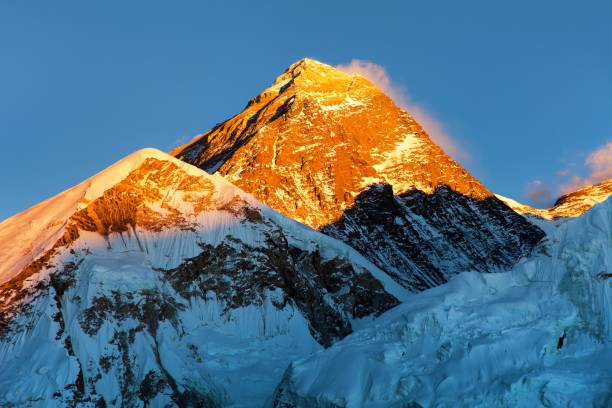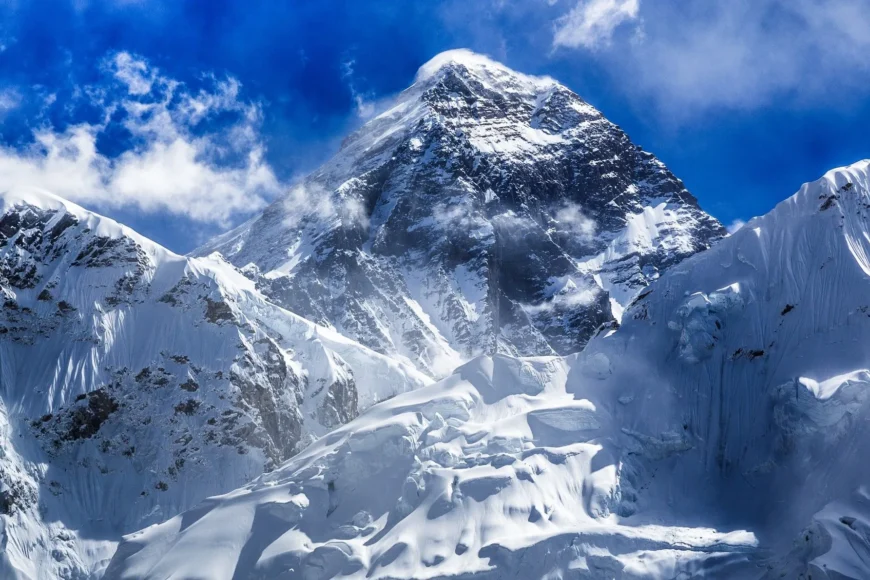
Have you ever had an interest in Everest or dreamt of climbing the Mount Everest Summit yourself? You will find plenty of helpful and useful information about the History of the Mount Everest summit in this blog. From heroic attempts in the early 20th century to modern-day attempts, Everest continues to attract the most fascinating climbers.
Overview: History of Mount Everest summits
Mount Everest, the highest mountain in the world, stands as a symbol of natural magnificence and human ambition. The history of Everest begins from the name itself, which was named after Sir George Everest, a British Surveyor General of India in the 19th century.
In Nepal, it is known as Sagarmatha, meaning Goddess of the Sky, while in Tibet, it is called Chomolungma, which means Goddess, Mother of the World.

Early Years: British Expeditions around the 1920s and Unsuccessful Attempts
Early attempts and political challenges
Climbing Everest was initially a political as well as a physical challenge. Political tensions between nations prevented British explorers from entering Nepal in the early 1900s. This marked a difficult phase in the early history of Everest expeditions. And as a result, their only option was to travel from Tibet, which faces Everest from the north.
In 1921, the first British investigation expedition was officially launched. Under the guidance of a group of seasoned climbers, they accomplished the remarkable feat of reaching 26,985 feet (8,225 meters) before having to retreat because of unsuitable weather. Even though they were unable to reach the summit, their accomplishment was a major turning point in mountaineering history. It was one of the earliest attempts to reach the Mount Everest summit.
The Mystery of Mallory and Irvine
George Mallory and Andrew Irvine made a bold attempt to climb Everest from the north side a few years later, in 1924. Unfortunately, the climbers vanished high on the mountain as the weather changed and heavy clouds moved in. They were never again seen alive.
To this day, a haunting question remains: Did Mallory, Irvine reach the top before they died? In 1999, Mallory’s body was discovered at 26,700 feet (8,138 meters)—still far from the summit but high enough to keep the mystery alive. This mystery adds intrigue to the history of Everest.
The first Successful Summit: Tenzing and Hillary make history
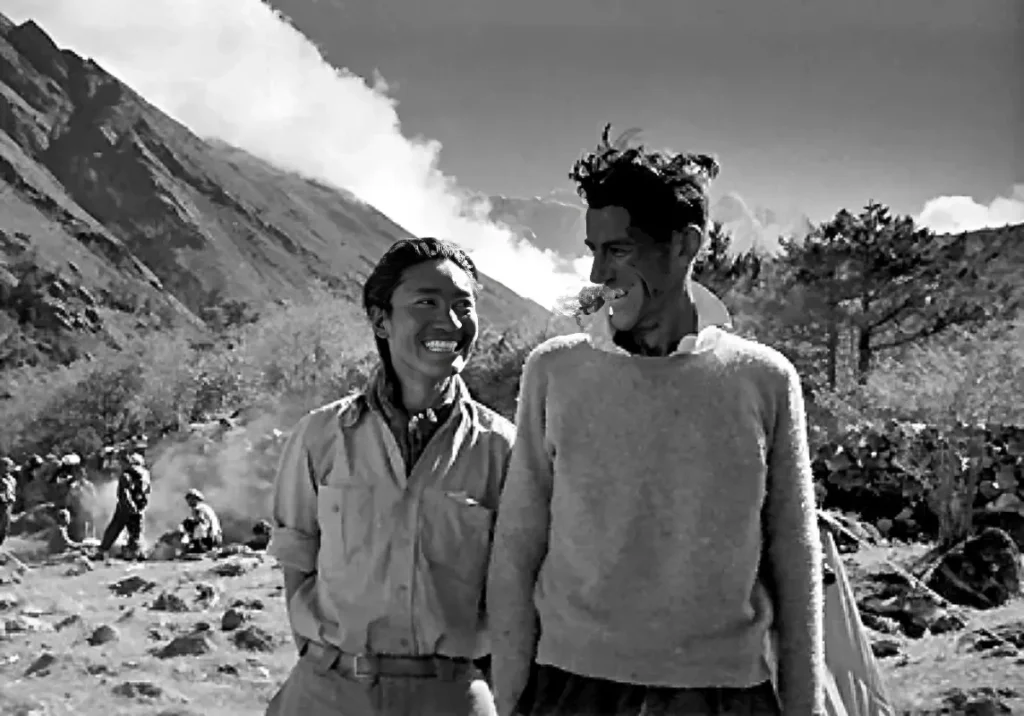
The dream of climbing Mount Everest was finally accomplished after nearly seven significant expeditions full of hardship, danger, and perseverance, as well as numerous failed attempts.
The first people to successfully climb Mount Everest in history to successfully to the highest peak on Earth were Sir Edmund Hillary of New Zealand and Tenzing Norgay Sherpa of Nepal on May 29, 1953. This was the first official Mount Everest summit in recorded history.
After Hillary and Tenzing reached the Everest summit through Nepal on the South Col route, which would later be the most popular way to reach the summit of Mount Everest, and made their historic ascent.
In addition to being a personal victory, their ascent was a landmark in mountaineering history and a source of great pride for both Nepal and New Zealand. An important turning point was reached with this successful expedition. This marked a new chapter in the History of Mount Everest Summits.
When Guided Expeditions Became Popular?
As the world was already mesmerized by the 1953 success of Hillary and Tenzing, Mount Everest quickly became a goal for everyone, achievable. However, for decades, only professional mountaineers and national expeditions dared to attempt it.
That changed in the 1990s when guided expeditions began to rise in popularity. When specialised adventure companies started offering commercial climbs to Mount Everest, opening the door for non-professional climbers, those with determination, money, and proper training, to chase their dream of reaching the summit. This trend reshaped the history of Everest by making it accessible to more climbers.
Tragedies in Everest: Disaster and Beyond
While Mount Everest was a symbol of adventure, it also witnessed heartbreaking tragedies that remind us of the mountain’s unforgiving nature.
1996 Mount Everest Disaster
A powerful storm passed through Everest during a summit attempt in May 1996. They included Rob Hall’s Adventure Consultants team and Scott Fischer‘s Mountain Madness team. During the storm, eight climbers, including seasoned guides and customers, were killed.
After journalist and survivor Jon Krakauer described the event in his compelling book Into Thin Air, this catastrophe gained widespread attention. 1996 was the deadliest year at the time, with a total of 12 climbers losing their lives on Everest during that season.
Mount Everest Avalanche

An avalanche roared through the Khumbu Icefall, one of the route’s most hazardous sections, early in the 2014 climbing season, causing tragedy. 16 Sherpas were killed by the avalanche, all of whom were assisting in preparing the path for clients.
The mountaineering community was rocked by this misfortune. In protest and to call for improved protection and restitution, Sherpa guides who put their lives in danger each season skipped the rest of the season.
Everest Avalanches and the Nepal Earthquake
A 7.8-magnitude earthquake that struck Nepal on April 25, 2015, killed thousands of people there. At least 22 people were killed when a huge avalanche swept through Base Camp on Everest as a result of the earthquake.
The deadliest day in Everest’s history was this one. Climbers were buried, tents were destroyed, and the season ended tragically. Ten Nepali Sherpas, five foreign climbers (from the USA, China, and Australia), and
How many people died climbing Mount Everest?
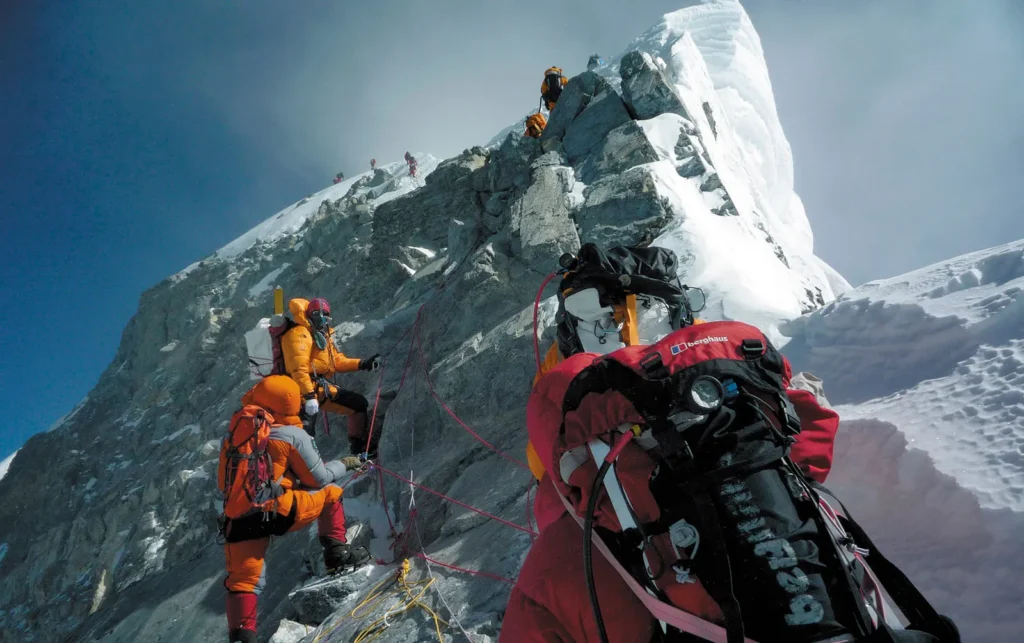
Every year, over 800 people try to climb Mount Everest, and roughly five to six climbers pass away on average. In the history of Everest, over 340 people have died while climbing or returning from the summit, due to various circumstances; they have lost their lives from the first expedition in 1921 to the current date.
Among all who lost their life, 130 were Nepalese citizens, while others were from other nations such as the USA, the UK, India, and many more.
Common Causes of Death on Everest
- Avalanches
- Falls
- Crevasse accidents
- Altitude sickness (HAPE/HACE)
- Exhaustion/frostbite
- Exposure to cold/weather
- Traffic jams on summit routes
Records and Risks in Everest
Records
These achievements mark significant milestones in the History of Mount Everest Summits.
- First person to climb Mount Everest:
Sir Edmund Hillary (New Zealand) and Tenzing Norgay (Nepal) on May 29, 1953 - First lady to climb Mount Everest:
Junko Tabei from Japan, on May 16, 1975 - First man to summit Everest twice:
Nawang Gombu from India, in 1963 and 1965 - First woman to summit Everest twice:
Santosh Yadav from India, in 1992 and 1993 - Most Everest summits by one person:
Kami Rita Sherpa from Nepal – 31 summits (as of now) - Fastest Everest climb without oxygen:
Lhakpa Gelu Sherpa from Nepal – 10 hours, 56 minutes, 46 seconds from South on May 26, 2003, and Hans Kammerlander from Italy, Fastest from North Base Camp on May 24, 1996 - Oldest Person to climb Mount Everest:
Yuichiro Miura from Japan, age 80, on May 23, 2013 - Oldest woman to summit Everest:
Tamae Watanabe from Japan, age 73, on May 19, 2012 - Youngest person on Mount Everest:
Jordan Romero from the United States, age 13, on May 22, 2010 - Youngest girl to summit Everest:
Malavath Purna from India, age 13, on May 25, 2014
Risk at Everest

Despite advanced technology, Everest remains a tough task. It is a place where even the strongest can fall, and survival is never guaranteed.
- Above 8,000 meters (26,247 feet) lies the “Mount Everest Death Zone”, where the air is too thin to sustain human life for long.
- The weather in Everest can change in minutes; clear skies can turn into deadly blizzards.
- On peak days, long lines form near the summit, forcing climbers to wait in the Death Zone, burning oxygen and energy.
- Helicopter rescues above 7,000 meters are rare and risky.
Everest in the Present Day: Crowds, Climate, Controversy
Everest is more reachable but also more dangerous now. The current challenge is striking a balance between preserving the mountain’s integrity and allowing visitors to appreciate its grandeur.
1. Crowds
Over 700 climbers from Tibet and Nepal try to reach the summit of Everest every spring. Traffic jams form near the summit, sometimes forcing climbers to wait hours in freezing temperatures due to limited weather windows and narrow paths, particularly in the “death zone” (above 8,000 m).
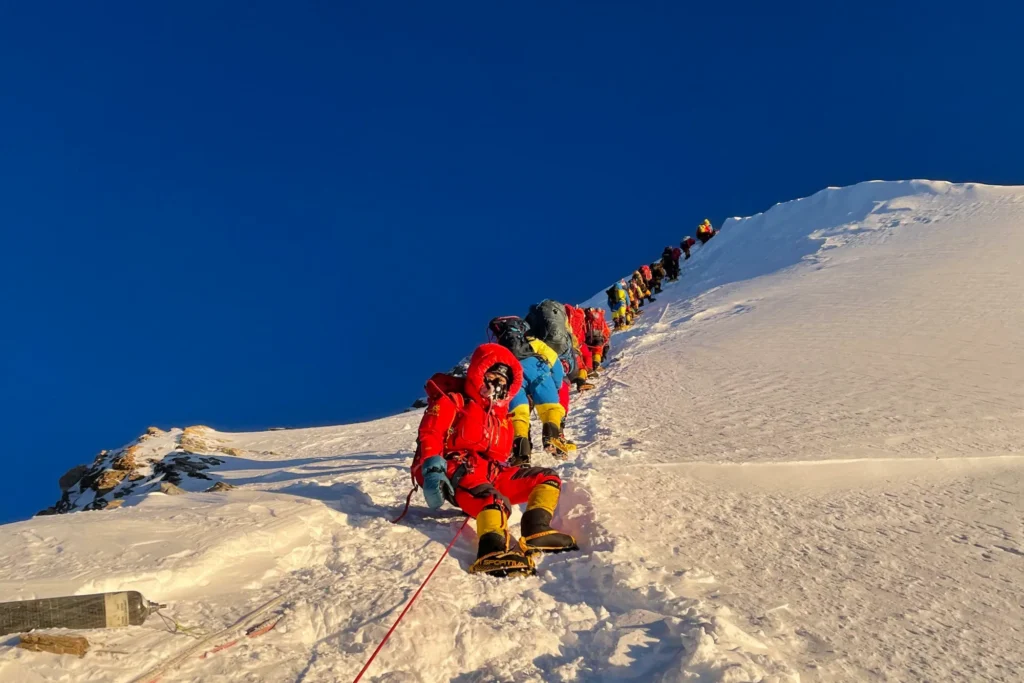
In 2019, viral photos showed a “human traffic jam” on the summit ridge haunting reminder that on Everest, delays can be deadly.
2. Climate Crisis on the Mountain
The consequences of climate change are unexpected. Everest’s glaciers are melting quickly, particularly the South Col Glacier. According to studies, in a matter of decades, 2,000 years’ worth of ice has melted. Frozen debris and even long-lost bodies are resurfacing as the ice melts.
The once stable ice walls are now erratic, raising the possibility of avalanches and exposing climbers to even greater danger.
3. Controversy and Change
To manage risks and environmental damage, Nepal has introduced stricter rules:
- No solo climbs
- Mandatory guides and permits
- GPS tracking for climbers
- Fines for leaving trash behind
However, some behaviours give rise to ethical discussions. Climbers have been speeding up summits lately by using performance-enhancing techniques like xenon gas. Others, particularly Sherpas, believe it denigrates the spirit of mountaineering and their traditional role, even though they claim it saves time and waste.
Reaching the summit isn’t the only goal of climbing Everest; you also need to respect the route, the people,
Sherpas: The Heroes of the Mountains
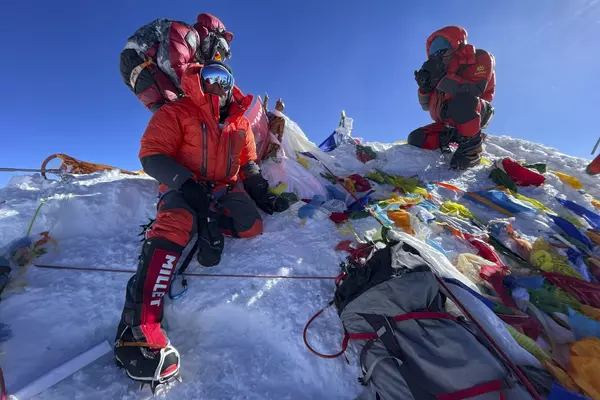
Behind every successful Everest summit, there’s a story that often goes untold, the story of the Sherpas. Their role is central to the history of Everest.
These tough people, natives of the high Himalayan regions of Nepal, are the unrecognised heroes of the Mount Everest journey. While climbers come from all over the world chasing their dreams, it is the Sherpas who carry the weight of those dreams up the mountain.
- Sherpas are the backbone of Everest expeditions. From carrying heavy loads of oxygen, tents, and food, to fixing ropes and ladders across dangerous icefalls, Sherpas risk their lives with every step.
- Sherpas face some of the most dangerous conditions on the mountain, especially in sections like the Khumbu Icefall, where avalanches and collapsing ice towers are common.
- Despite the dangers, Sherpas continue to guide climbers with unmatched strength, patience, and heart.
- Behind every flag, the climbers celebrate their victories, on there is a Sherpa who made that moment possible. Let’s not just remember them but also honour them.
For Sherpas, climbing to Mount Everest is not just a climb; it’s spiritual, sacred, and personal. Over the years, many Sherpas have lost their lives while helping others reach the summit.
Today, many voices in the mountaineering community are calling for more respect, better pay, and safety protections for Sherpas. Their role in the history of Mount Everest is not just supportive, it’s central.
Conclusion
Everest is a timeless representation of bravery and pursuing one’s dreams. From Mallory and Irvine’s early hardships to Hillary and Tenzing’s reach the summit historic victory to the hundreds of climbers who reach the summit today, Everest never stops challenging and inspiring. Understanding the History of Mount Everest Summits reminds us of the courage, ambition, and responsibility required for this climb.
However, Everest is no longer the unspoiled giant mountain it was. New risks and responsibilities have been brought by commercialisation, crowds, and climate change. Through rising mortality, melting glaciers, and the stories of Sherpas whose courage makes every summit possible.
Whether you dream of standing on its peak or simply admire it from afar, Mount Everest reminds us of what humans can achieve and what we must protect.
READ MORE: Incredible Facts About Mount Everest – The World’s Highest Peak
FAQs (Frequently Asked Questions)
1. Who was Mount Everest named after?
Mount Everest, known as Sagarmatha in Nepal and Chomolungma in Tibet, is the highest mountain in the world, standing at the border between Nepal and China (Tibet).
It was first measured in 1856 by British surveyors and later named after Sir George Everest, a British surveyor general.
2. South base camp vs North base camp, which is easier?
Generally south base camp is considered easier and safer as it’s easier to access via Lukla and more popular and better supported by Sherpa
3. Who was the first person to climb Mount Everest?
The first successful climbers were Sir Edmund Hillary from New Zealand and Tenzing Norgay Sherpa from Nepal on May 29, 1953.
4. What is the mystery of Mount Everest?
Mount Everest holds many mysteries, including the fate of George Mallory and Andrew Irvine, who disappeared in 1924. Many still wonder if they reached the summit before dying.
5. What is the death zone on Mount Everest?
The Death Zone refers to altitudes above 8,000 meters (26,247 feet). The air here has very little oxygen, making it extremely
6. How many people climb Mount Everest every year?
Every year, around 800 to 1,200 climbers attempt to summit Mount Everest – primarily in the spring climbing season. Of these climbers, approximately 600 to 900 make the summit. The amount varies each year due to weather, permit rules, and climbing conditions. Most summits are performed from the Nepal (south) side, which is the most popular route.
7. How many dead people are on Mount Everest?
There are an estimated 200 to 300 frozen corpses on Mount Everest, many of them left on the mountain itself. Many climbers died of altitude sickness, exhaustion, cold, calamitous accidents, avalanches, or even falls, with most of them taking their last breath over 8,000m in the so-called “Death Zone”, where the oxygen is extremely limited and attempts to rescue are barely possible.