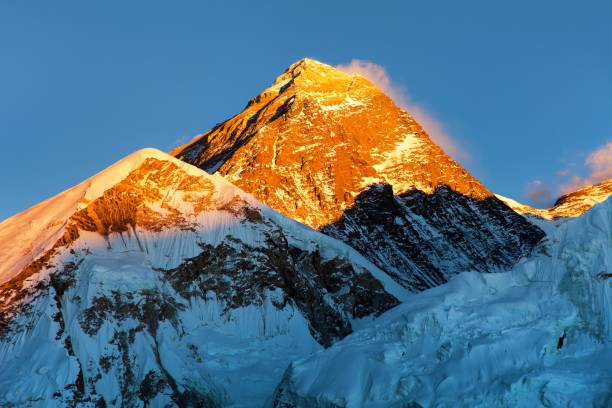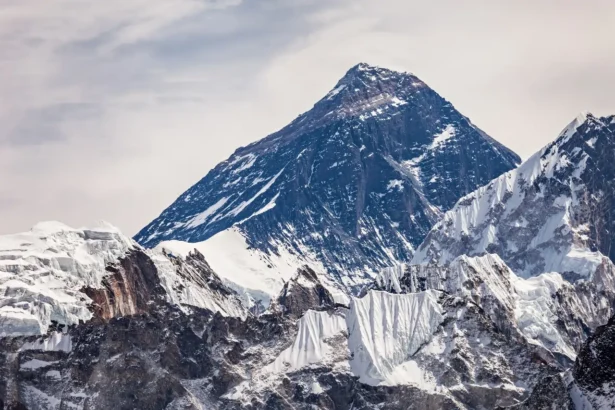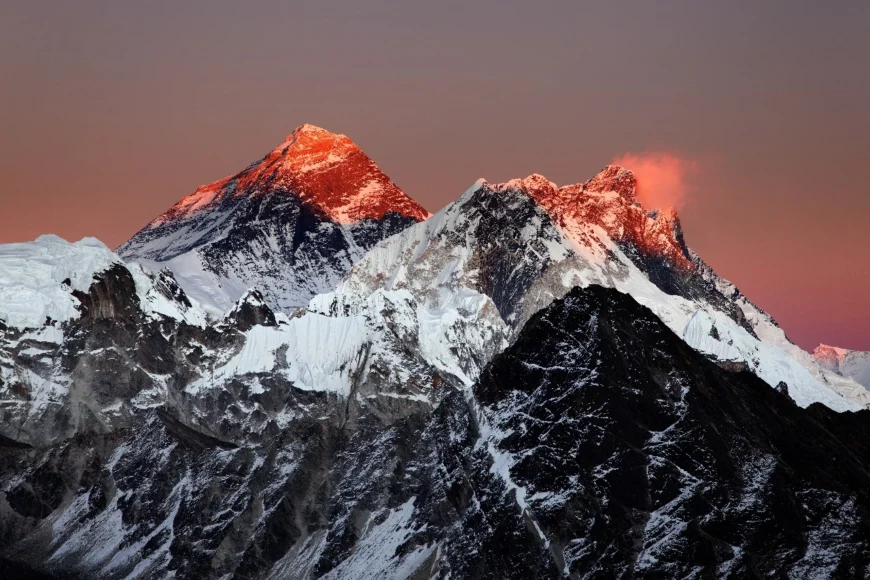
Mount Everest has been regarded as the ultimate pursuit for climbers and adventurers worldwide. The mountain was first successfully climbed in 1953, and since then, thousands have tried to overcome this challenge and scale the peak. But there is a chilling price for this dream: There have been more than 340 deaths on Mount Everest.
Numerous frozen bodies have remained on the mountain, bearing mute testament to the dangers that one faces in this cruel environment. Some of these well-known dead bodies on Mount Everest have turned into horrific landmarks, especially within the infamous Everest death zone. Today, we will discuss what makes Everest so deadly, what actually happens in the death zone, and why the bodies, in many cases, are left there.
Mount Everest Death Zone: Where Survival Ends
The Mount Everest death zone is among the scariest concepts in mountaineering. The zone is thought to begin at around 8,000 meters above sea level, which is roughly 3 kilometers from the highest point on Earth. Here, air pressure becomes so low that the amount of breathable oxygen present is less than one-third of that at sea level.
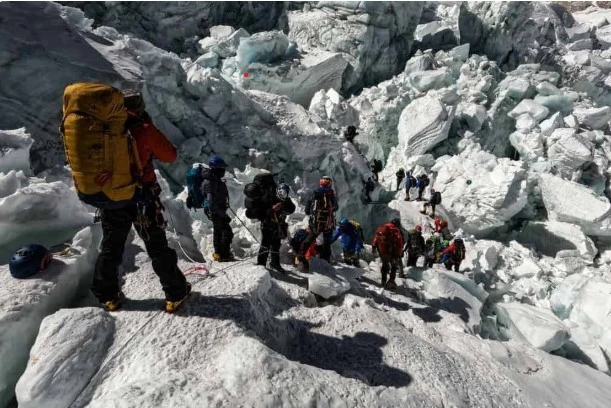
Such reduced levels of oxygen prove fatal to any living person. The death zone on Everest gets its name because even the fittest and healthiest of climbers cannot survive here for an extended period without an additional source of oxygen. The thin air slows down various bodily functions, eventually bringing life-sustaining organs to failure. In such an environment, every breath is a painful effort, and exhaustion sets in quite rapidly.
Camp 4 is located squarely inside the death zone and often marks the climbers’ last stop before pushing for the summit. But time here must be kept short because deterioration sets in fast. Many Mount Everest death incidents have occurred during this critical stage. The climbers either push on, despite being weak, or they make it back to survive.
This zone is where most Mount Everest deaths occur. Climbers are not just contesting altitude but extreme cold, high winds, and sometimes fatal storms. Thin air affects mental capacity, and poor judgments made can be fatal in such terrain.
What Happens to Your Body in the Everest Death Zone?
Once trekkers enter to climb Everest in the death zone, their bodies begin to suffer rapid changes. Offering little oxygen, this zone combines cold with extreme physical exhaustion to dangerous effects, leading to the person’s death. This area, known as the Everest Death Zone, is responsible for many Mount Everest death cases.
Hypoxia remains among many dangerous conditions. It arises when oxygen reaches neither the body nor the brain sensibly. Symptoms include confusion, dizziness, impaired coordination, and judgment, which translate into fatal blunders. This is why climbers cannot know to what extent the hypoxia has already affected them, killing them silently.
The extreme cold causes frostbite to erupt within minutes; fingers, toes, noses, and ears are particularly vulnerable as the tissue in these areas freezes and dies. Where there is advanced frostbite, disability follows, though the climber may survive.
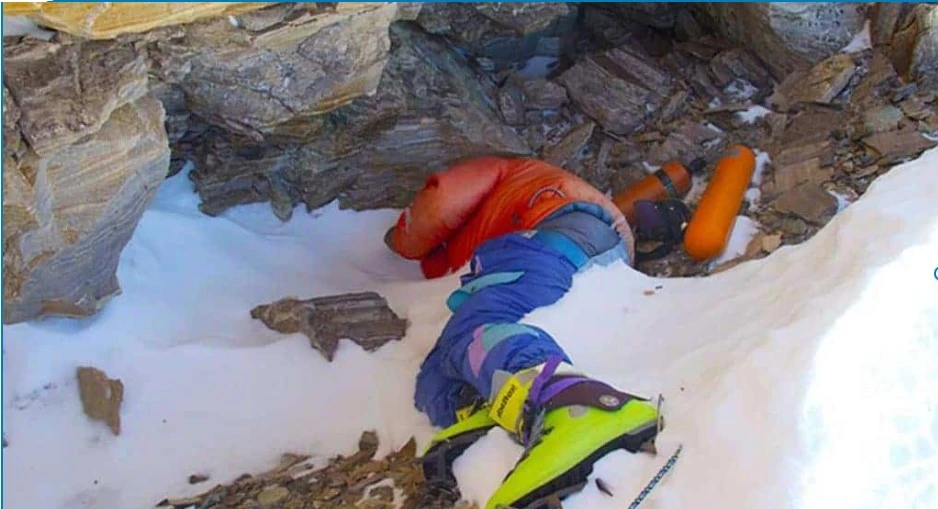
HAPE and HACE stand for high-altitude pulmonary edema and high-altitude cerebral edema, respectively; both carry life-threatening consequences due to the fluid accumulating in the lungs and the brain. Breathlessness, persistent cough, headache, nausea, and loss of consciousness mark the symptoms.
Even these selective protective measures might be considered a small thing for the more powerful death zone of Everest: thermal suits, oxygen tanks, insulated gloves, they still allow a human body to survive in the zones for just a short while. In the death zone, the physical toll can be swift and very severe, killing even those climbers who had taken every precaution on Mount Everest.
Knowing these hazards explains why so many climbers never make it down alive, and why the mountain is still somewhat like a graveyard. The trail to the summit is marked with reminders -dead bodies on Mount Everest left frozen in time.
How Many Dead Bodies Are on Everest? How Many People Have Died on Everest?
The status of exactly how many deaths have taken place on Mount Everest has always remained hard to figure out due to a lack of accommodation in the past and good record-keeping that is only a few decades old. Official counts since 1922 report over 330 fatalities on Everest as per the records, with 1922 being the year of the very first major expedition. Each season tells another tale of tragedy. 2023 witnessed at least 17 deaths in or around the summit attempt, including climbers and Sherpas. 2024 was deadlier than even these, however, with an estimated 20+ deaths, surpassing any other beforehand.
The unfortunate victims lost on Everest were never recovered. The bodies of some 200 unlucky ones rest even now on Everest. Preserved by the temperature and low oxygen, some are covered under snow and ice, while others are exposed to the eyes of mountaineers.
Some of the frozen bodies of Mount Everest have become a sort of grim landmark on the route, often being named by climbers as a reference point or warning for others. Even so, seeing one of these frozen bodies on the path brings a reminder of the mountain’s ruthless nature. Bodies have sometimes been retrieved; however, many remain due to the logistical nightmare of the recovery.
Death Rate of Mount Everest
Putting the death rate on Mount Everest into perspective could help in estimating the risks involved. Historically, from around 1% to 2% of the climbers attempting the summit die on the mountain. This rate has improved over the decades thanks to better equipment, weather forecasting, and guided expeditions, though Everest still ranks among one of the deadliest peaks.
The death rate may vary from year to year, depending on weather, crowding, and other factors. For instance, some seasons have been far deadlier: the 1996 disaster saw eight climbers perish in a sudden storm. Trekking to Everest Base Camp is, comparatively, considered quite safe, with only a couple of deaths recorded annually. Nevertheless, the threat to life quickly mounts once a climber crosses into the death zone. The lack of oxygen, sheer physical fatigue, and hostile weather situation do not paint much of a safer picture.
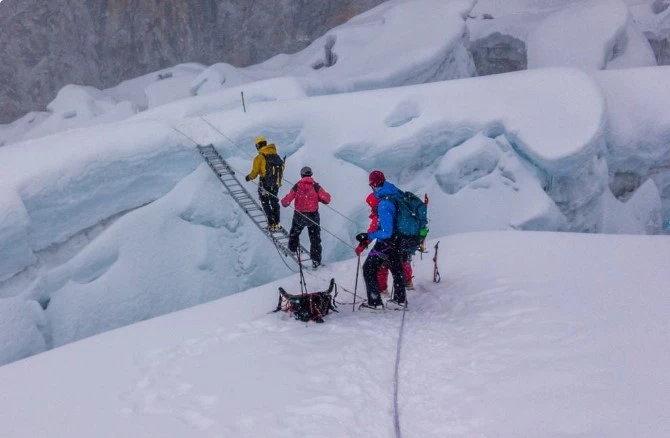
Sherpas-included indigenous mountaineers who guide expeditions thought to be some of the riskiest too. Over 120 Sherpas have gone to their death on Everest process of fixing ropes or transporting heavy loads. The story of Everest would be incomplete without their sacrifices, which often go unacknowledged. Even more so, statistically speaking, a 1-2% rate could still be a large number considering the life that is lost, and all for the mountain never being conquered yet.
Mount Everest death is not just a statistic—it’s an ongoing reality etched into the ice.
The Deadly Dilemma: Why Bodies Are Left Behind on Everest
One of the tragic sights of Everest is the sheer number of frozen bodies that lie scattered on the mountain. The retrieval of dead bodies on Mount Everest is a complex undertaking: difficult, expensive, and dangerous. It is said to run into tens of thousands of dollars for a recovery operation in the Everest Death Zone while putting the rescuers in the same life-threatening conditions.
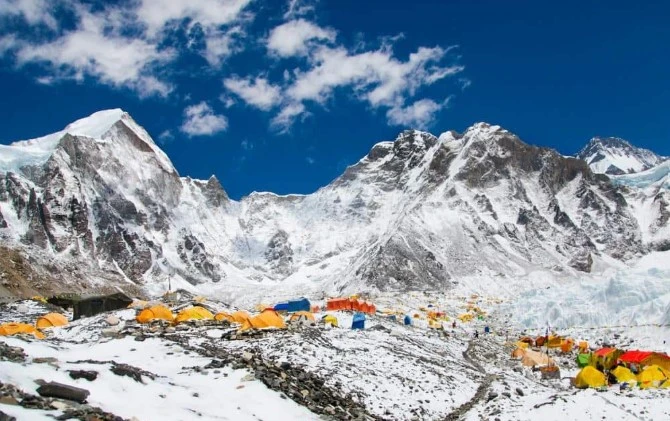
The terrain is treacherous, with steep ice cliffs and avalanches now and then, just making an impossible task of trying to haul a body down again. Sometimes, the families themselves may not be willing or even in a position to pay for the charges of recovery. Thus, bodies are left where they drop. Some are eventually covered by snow, but many remain exposed. The frozen dead of Everest have even been given nicknames like “Green Boots,” after a late climber whose boots served as a landmark for years.”
This chilling truth means every climber must walk past the remains of those who perished before them- an unforgettable, grim reminder of the deadly Everest Death Zone and the harsh reality of Mount Everest death.
Famous Dead Bodies on Mount Everest
Everest has come to symbolize the highest point on Earth and a cemetery for a few renowned climbers. Many famous bodies on Mount Everest have been there for decades, serving as tragic monuments and cautionary tales to future climbers. The histories of these people exist in the annals of mountaineering, in documentaries, books, and even Hollywood movies. These people are remembered not only for how they died but also for how they lived and climbed.
George Mallory and Sandy Irvine – The Enduring Mystery of Everest
Arguably the most iconic name of the famous Mount Everest climbers, Mallory, with his partner Andrew “Sandy” Irvine in 1924, tried to be the first men on Everest. They were last seen near the summit before disappearing into the clouds. The fate of the two climbers remained unknown for decades, until 1999. Mallory’s body was found in a superb state of preservation at 8,155 meters. Whether they reached the top before dying or not remains a mystery. His name became synonymous with Everest itself, and with that haunting reply he gave when asked why he wanted to climb the mountain: “Because it’s there.”
Francys Arsentiev – The “Sleeping Beauty of Everest”
Late in 1998, Francys Arsentiev set a record as the first woman from the United States to summit Mount Everest without the assistance of supplemental oxygen. But the descent proved fatal. She lost contact with her husband and climbing partner, Sergei Arsentiev, was found barely alive by other climbers near the summit, and finally died despite their attempts at rescue in the death zone of Everest. Her body lay on Mount Everest, alongside the trail, visible for years. The benevolent look she kept on her face and the manner of her lying posture led to the name “Sleeping Beauty Everest.”
Scott Fischer – The Tragic Guide of 1996
One American mountaineer was guiding an expedition during the 1996 Everest tragedy. High gusts of wind, exhaustion, all delayed summit timings, thus creating the perfect storm for one day to become one of the deadliest in Everest’s short history-wimping eight lives. Fischer died near the South Summit, and his body remains there as a terrible testimony to the storm’s fury. He was portrayed in the 2015 film “Everest,” starring Jake Gyllenhaal, which dramatized the infamous expedition. Today, Fischer is counted among the famous Everest climbers who met their deaths in the line of passion and duty.
Yasuko Namba – The Determined Summiteer
Yasuko Namba was a Japanese businesswoman and mountaineer who had successfully climbed six of the Seven Summits before Everest. She summited Everest in 1996, becoming the second Japanese female to accomplish this feat. Unfortunately, she was caught in the very same storm that caught Fisher. She was found alive the morning after, yet too weak to descend with assistance, and died near Camp 4 in the death zone of Everest. Her dedication in pursuit of her dream has become a symbol of both the bravery and the harshness of the mountain.
Green Boots-The Unidentified Everest Marker
Only called “Green Boots,” he went on to become one of the most famous bodies on Mt Everest because of his famous location in a limestone alcove right along the main northeast route. For more than two decades, every climber who attempted to do the summit via the North Col route had to pass by the frozen body of a climber wearing bright green climbing boots. His exact identity is still under debate, but many believe he was Tsewang Paljor, an Indian climber who died in the 1996 storm.
David Sharp– The Bystander Controversy
The British climber David Sharp met an untimely death in 2006 on the already singularly treacherous slopes of Mount Everest, resting there without adequate oxygen and support. Shockingly, there are reports that forty or so climbers passed him when he was still alive, thinking that he was already dead or just not willing to risk their own lives. Sharp’s death caused an international furor and debates on climbing ethics in the Everest death zone. The case of Sharp remains one of the most controversial incidents in mountaineering, stirring up a debate of humanity versus summit ambition. His body was left lying in the death zone on Everest for years, and his tragic legacy was henceforth deepened.
These are more than just names carved in snow: the famous climbers of Mount Everest whose lives and deaths have shaped the world around the mountain. Their stories warn and inspire, and remind that each ascent of Everest entails a steep price, the ultimate one in some cases.
Sherpas Who Died on Everest: The Unsung Heroes of the Himalayas
No discussion of Mount Everest can be complete without paying tribute to the Sherpa climbers. They are the indigenous people of the Khumbu region who make every expedition possible. Sherpas act as guides, porters, and sometimes the very soul of logistics behind every amateur and professional climbing attempt. They become so used to the high altitudes, severe cold, and utter exhaustion that they shoulder the dreams of others’ ascent to the top of the world, often several times over in one single climbing season.
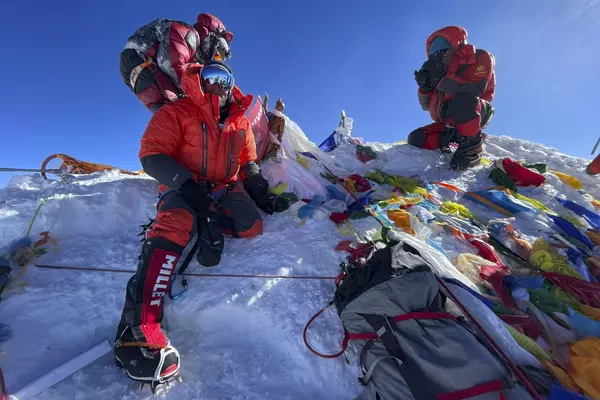
These Sherpas remain so essential that every modern Everest climb may never be accomplished without their sheer fortitude and skill. Despite the huge contributions made by the Sherpas, they barely get recognized, even though they are at the greatest risk in the Everest death zone.
Unfortunately, while aiding fellow men, many Sherpas have lost their lives, which adds to more than an estimated one-third of total deaths on Everest. If one asks how many Sherpas have died on Mount Everest, the answer is more than 120 alarming figure for the level of skill and acclimatization the Sherpas possess. Some of them were killed by avalanches, some by the collapse of icefalls, while others were killed by falling into crevasses. The avalanche near Khumbu Icefall in 2014 was one of the worst tragedies ever, taking away 16 Sherpas in one morning. This event exposed dangers the Sherpas faced and lit an international discussion on insurance, fair pay, and ethical expedition practices.
Babu Chiri Sherpa, one of the most respected Sherpas, died on Everest, once held the records of fastest ascent and longest stay on the summit. He perished in 2001 after falling into a crevasse. Ang Dorje Sherpa has lost many close friends to similar fates. He has guided over dozens of climbers to their summits. Mount Everest Sherpa climbers are not mere support staff; they are elite mountain climbers in their own right. Their sacrifices are what make every summit photo possible, yet most of them never make it to the global media. To climb Everest is to walk in their footsteps- and often, over their graves.
Why Do So Many People Die on Mount Everest?
Mount Everest remains one of the most desired peaks in the world, but the route to its summit can be costly to human life. The reasons for so many deaths on Mount Everest are complex and intertwined, involving physical, environmental, and human factors.
One of the most deadly challenges is altitude sickness, particularly HAPE (High-Altitude Pulmonary Edema) and HACE (High-Altitude Cerebral Edema). They can strike within minutes, even to experienced climbers, and death will follow if immediate descent or medical treatments are not administered. Above 8,000 meters, the air is thin; hence, very few can remain there long. The very thin air of this elevation stage makes each breath harder to take and every step more exhausting. The oxygen deficiency or hypoxia caused by it dulls the senses, makes the body weaker, and in most cases, ends up as an irreversible error.
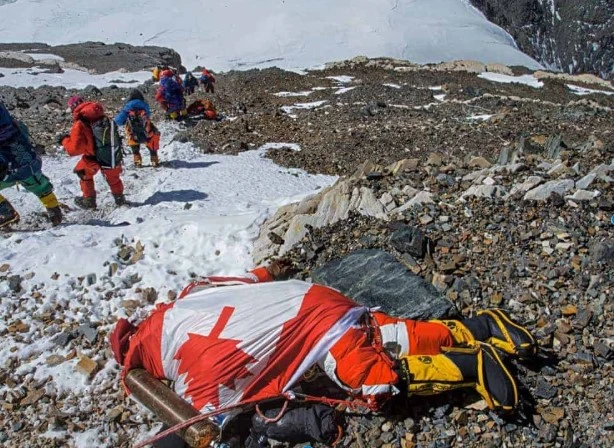
Another major cause of death on the mountain is its notoriously volatile weather. A bright sunny day can be turned into a deadly whiteout in a matter of moments. High winds, bitter cold, and sudden storms are frequently employed to trap climbers far up the slopes. Many bodies in the Everest death zone lie in the surprise; these climbers simply ran out of time to descend, or they ran out of strength, oxygen, or plain luck.
Overcrowding has emerged as a deadly issue in recent decades. Waiting in line for hours is a common thing for climbers near the summit ridge in peak season. This congestion in the death zone wastes precious oxygen and exhausts the physical strength of climbers. Several highly publicized deaths in 2019 and 2023 were due directly to climbers waiting too long, and their bodies just could not withstand the extra time up there above 8,000 meters. Many of Everest death zone bodies, did not die ascending, but died descending when exhaustion set in conjunction with the deteriorating weather.
An accountability factor is another? Most climbers, with so many commercial expeditions offering a guided summit climb, just do not consider it that dangerous. Some of these people may be untrained in high-altitude mountaineering, proper rope work, or even emergency rescue. Failure in decision making-an excellent storm of things where the brain, starved of oxygen, goes wrong. That is how it usually goes. Most people die on Everest not from a single mistake but from a chain of poor decisions that add up in deterioration of health and bad timing.
Everest is, in essence, an unforgiving mountain. Weather, illness, crowding, or just plain being underprepared, the smallest slip-up can be life or death. And there’s no second chance in the death zone.
Should You Climb Mount Everest?
Climbers from every part of the Earth have been attracted to Mount Everest despite all the dangers. It is the apex of personal achievement to many, a lifelong aspiration, and the ultimate test of endurance, courage, and human will. But what lies underneath this charm is the uncomfortable truth: not every climber returns down.
Before putting in any effort, bring to realization that some crucial questions must be asked.
Should one climb Mount Everest? Are you physically, mentally, and emotionally prepared? And do you understand to your core what it means to take the risk of dying on Everest?
The summit had been supposed to bring glory to its achievers; by contrast, the way down was full of stories of tragedy. Frozen bodies lying there along the ascent are haunting reminders of climbers who, once among the dead, aspired to stand where you stand today, under the same dream. Their remains have become markers in the ice, chimes from the death knell for ambition.
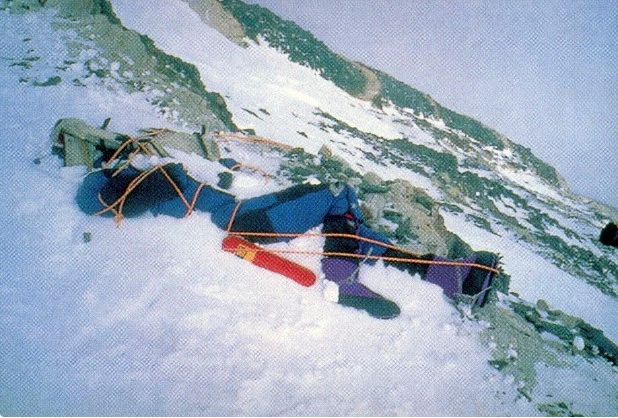
Everest cannot be conquered by fitness alone. It calls upon something of very high-altitude experience, some mega respect for the mountain, and the capability to make life-or-death choices under extreme pressure in harmony with destiny and nature, who may not grant a second chance anyhow, even to those prepared.
How many souls have gone away on the climb of Mount Everest? Beyond 330, the number seems to rise with each passing year. Some feel it’s worth the gamble. Some others feel the stakes are way too high. There is no shame in turning back or walking away. Choosing to live is often the bravest thing you can do on Everest.
So before you go into the death zone, ask yourself:
Can I accept the risks?
And, if I must walk among ghosts, will I be ready?
If you decide to climb, know you’re stepping onto a trail shared with those who never returned; frozen bodies on Mount Everest are a harsh reality.
Conclusion: Dying for Everest – The Price of the Peak
Mount Everest is more than a mere tallest mountain on Earth; it is a frozen monument to ambition, triumph, and tragedy. More than 330 climbers have died on Mount Everest, with most fatalities occurring in the Mount Everest death zone, where oxygen is scarce and rescue is nearly impossible.
Some of these climbers remain frozen bodies on Everest, lying on the route like terrible reminders of the mountain’s deadly toll. These are not just statistics; these were real people who had dreams, families, friends, and life stories-now dead on Everest. Each frozen corpse on Everest stands as both a physical landmark and a tragic caution to those who follow. The Mount Everest death toll continues to rise each season.”
Mount Everest’s death zone is a location where the body rapidly undergoes deterioration, and even trained climbers have to face a nightmare struggle for survival. Beyond 8,000 meters in this region, dying on Everest is not uncommon but a very real and ever-present possibility.
If you finally feel the urge to plant a flag on the roof of the world, then another question remains:
“How far will I go to chase this dream?”
Because not all who went to Everest have come back home-and sometimes one goes to reach the top never to come down again.
Read More: History of Mount Everest Summits
FAQs
1. How many have died on Mount Everest?
Over 330 climbers have already died on Mount Everest while trying to reach the summit by 2024. Since then, this record has grown every year due to overcrowding and severe weather patterns. Frozen bodies of many victims are still resting on the mountain within the Everest death zone.
2. What does the death zone on Mount Everest mean?
The death zone in Everest is the altitude above 8,000 m (26,247 ft) where the oxygen supply is extremely low. At this altitude, the body fast-tracks to degeneration and cannot go through acclimatization. Most of the Mount Everest deaths occur within this death zone.
3. Why do people die on Mount Everest?
People die on Everest from altitude sickness, falls, avalanches, exhaustion, and lack of oxygen in the death zone. Death on-mount Everest is usually caused by a hypoxic state where judgment and motor skills go off, leading to fatal mistakes.
4. How many bodies are there on Everest?
There are approximately 200 dead bodies on Mount Everest, most of them in the Everest death zone. Adverse conditions kept many bodies unrecovered, while they now serve as grim trail markers on widely used pathways of climbing.
5. What happens to bodies in the Everest death zone?
Because of the sub-zero temperature, frozen bodies on Everest do not rot. They remain preserved practically in the exact postures in which they died. Such sights help develop a very eerie, yet unforgettable, scene beyond the height of the mountain.
6. Are there influential dead bodies on Mount Everest?
Yes, some climbers became famous after their deaths. Among the famed bodies on Mount Everest are Francys Arsentiev (also called “Sleeping Beauty”), Scott Fischer, and Green Boots, a name that now stands for the perils of climbing Mount Everest.
7. How many people died on Everest in 2023 and 2024?
There have been over 30 climber fatalities in 2023 and 2024, respectively. The majority of the deaths happened either in or near the Everest death zone, where hazards of oxygen deficiency and weather disturbances are constant.
8. Can bodies be removed from Mount Everest?
Any recovery of a body in the Death Zone of Mount Everest is a threatening and cost-intensive operation. Retrieval projects might sit on the order of tens of thousands of dollars and could potentially entrap the lives of others; hence, many frozen corpses in the Everest area are left to their fate.
9. Who was the first person to climb Mount Everest?
On May 29, 1953, Sir Edmund Hillary and Tenzing Norgay became the first set of remaining bodies in Mount Everest. Their historic ascent paved the way for thousands to follow, many of whom have gone on to become casualties on Everest.
10. What protective gear is needed in the Everest death zone?
In the death zone, climbers require protective gear such as insulated clothing, oxygen, goggles, crampons, and very specialized boots. Without it, there is a chance of immediate death.
11. Were some Sherpas amongst those who died on Mount Everest?
Indeed, many Sherpas have died on the mountain while assisting and guiding clients. Despite their enormous experience, they face astronomical risk factors, particularly in the death zone of Mount Everest and the Khumbu Icefall.
12. Why do bodies remain on Everest?
Quite a few Mount Everest bodies are left there mainly because retrieval poses undue harm and prohibitive costs. The altitude, icy terrain, and lack of oxygen make a recovery almost impossible in the Everest ‘death zone’ where even one step can be life and death.
13. How many people die while climbing Everest every year?
Between 5 and 10 mountaineers perish on Everest every year in an average year, but with bad weather and crowding, spikes do happen. Such deaths are always above Camp IV, in the Mount Everest death zone.
14. What is the death rate on Mount Everest?
Overall, the death rate on Everest is said to reach about 1.5%, though it changes according to the route and the year. Improvements in gear and better weather forecasts may have helped in reducing some risks, but the risk of dying on Everest is there, especially for inexperienced climbers.
15. To climb or not to climb Mount Everest-with all the risk?
The choice of climbing Everest comes down to the individual, but it is one with the highest risks. Without adequate training, acclimatization, and preparation, one stands a very real chance of joining the many lives lost on Mount Everest. These frozen bodies on Everest give a loud warning of what is at stake.