Contents
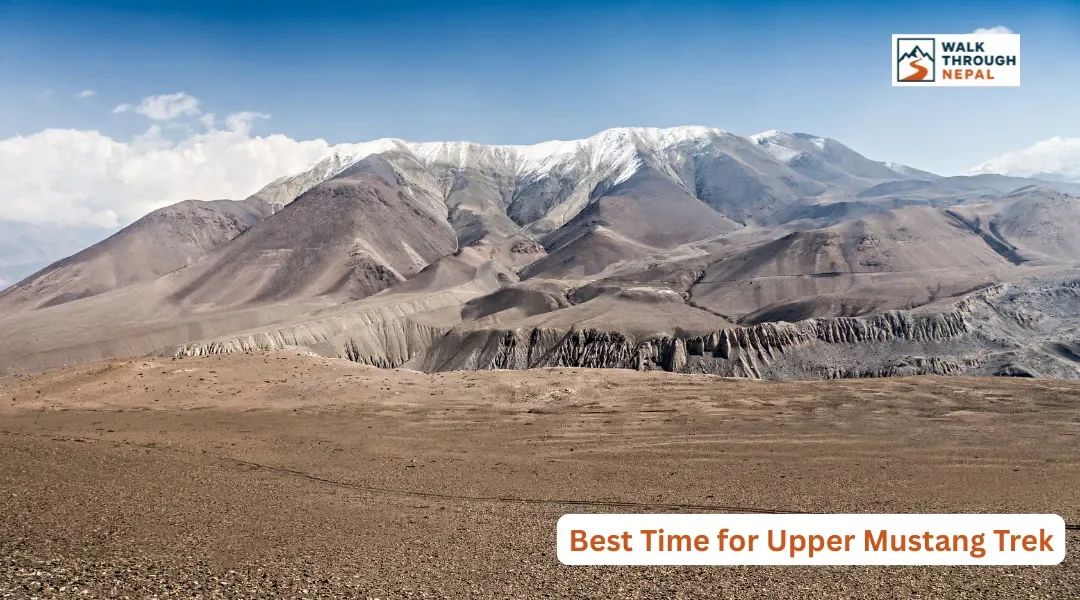
Upper Mustang plays by a different rulebook than the rest of Nepal. While trekkers in Everest and Annapurna are wiping mud off their boots and watching monsoon clouds swallow the peaks, the trails around Lo Manthang stay bone-dry, wide open, and painted in reds, ochres, and grey. This is the old Kingdom of Lo, a slice of Tibetan plateau tucked inside Nepal's northern border, and knowing exactly when to walk it makes all the difference.
We coordinate treks into this restricted region every season, and the single most common planning mistake we see is travelers applying standard Nepal trekking logic to Mustang. It doesn't fit. Below is the honest, month-by-month picture, plus the permit facts and 2026 rules you need before you commit.
When Is the Best Time for the Upper Mustang Trek?
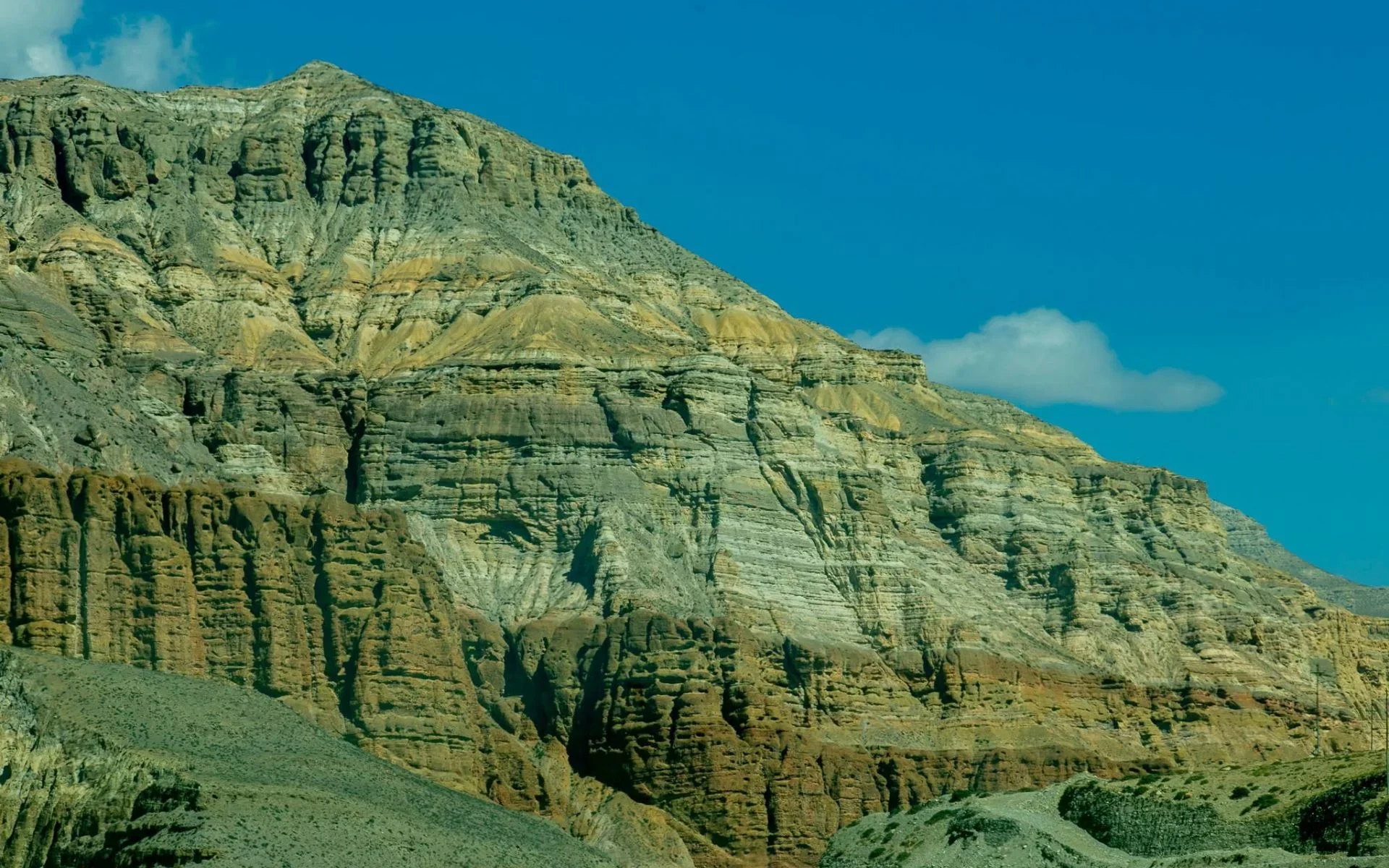
The best time for the Upper Mustang trek is March to November, with two standout windows: spring (March–May) for the Tiji Festival and greening valleys, and the monsoon months (June–August) when Mustang's rain shadow keeps it dry while the rest of Nepal is soaked. Autumn (September–November) offers the clearest skies and most stable weather.
Unlike almost every other trek in the country, Upper Mustang is a genuine year-round option outside of deep winter. That flexibility exists because of geography, not luck.
The Rain Shadow Advantage: Why Monsoon Works Here
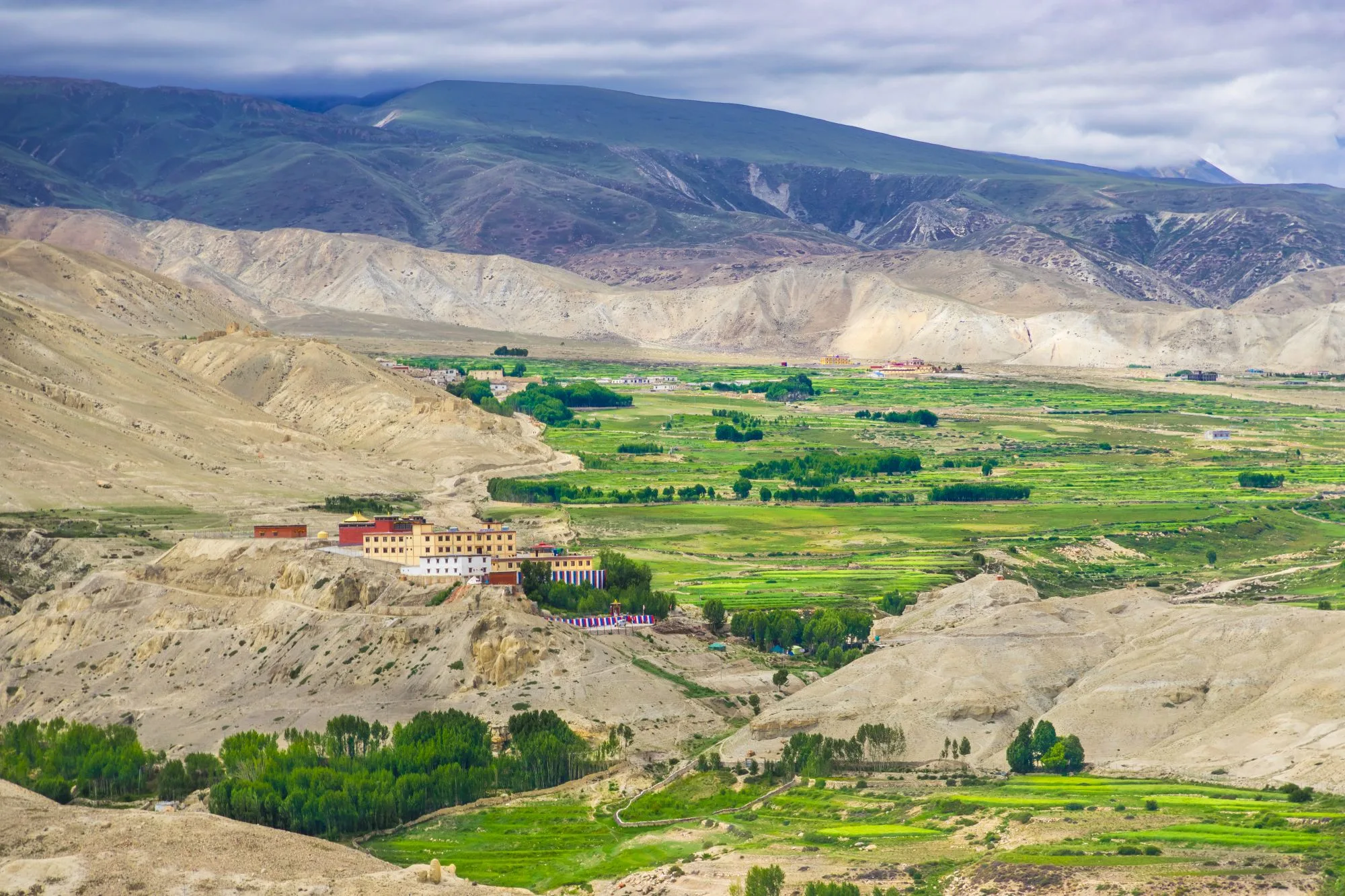
Upper Mustang lies behind the Annapurna and Dhaulagiri massifs, both towering above 8,000 meters. These giants block the monsoon clouds pushing up from the south, so the moisture dumps as rain on Pokhara and the lower Annapurna region while Mustang stays arid. This is the Himalayan rain shadow, and it is Mustang's biggest secret.
During June, July, and August, when leeches and landslides plague the Annapurna Base Camp and Ghorepani trails, Mustang stays walkable. The famous winds of the Kali Gandaki valley pick up in the afternoons, but mornings are calm and clear. If your only free travel window is the summer holidays, Upper Mustang (alongside Upper Dolpo) is one of the very few premier treks in Nepal that actually delivers in monsoon.
Season-by-Season Weather Breakdown
Mustang's climate is high, dry, and cold at altitude. Lo Manthang sits at roughly 3,840 meters, and the trek crosses several passes and villages between 2,800 meters and 4,200 meters. Expect strong sun by day, sharp temperature drops at night, and relentless afternoon wind through the Kali Gandaki gorge year-round.
Season | Months | Day Temp (Lo Manthang) | Trail Conditions |
Spring | Mar–May | 10°C to 16°C | Dry, greening, Tiji Festival, moderate wind |
Monsoon | Jun–Aug | 16°C to 22°C | Dry rain shadow, strong afternoon wind, warmest nights |
Autumn | Sep–Nov | 10°C to 15°C | Clearest skies, stable, cool nights |
Winter | Dec–Feb | -2°C to 6°C | Very cold, many lodges closed, snow on passes |
Spring: March to May
Spring delivers stable weather, mild days, and the region's headline event, the Tiji Festival at Lo Manthang, usually held in May. This three-day Buddhist ritual draws monks in ornate masks and fills the walled city courtyard with drums and chanting. It is the single best cultural reason to time your trek.
Trails are dry and the barley fields around the villages begin to green up. Nights are still cold, so pack a proper down layer. Because Tiji dates shift with the Tibetan lunar calendar, confirm the exact festival window before booking flights.
Monsoon: June to August
This is Mustang's quiet superpower. While guides across Nepal pause operations, we keep running Mustang treks through summer. Rain is minimal, temperatures are at their warmest, and the crowds thin out considerably.
The trade-off is the wind. The Kali Gandaki funnels powerful gusts from late morning onward, so we start walking early and aim to reach each village by early afternoon. Occasional cloud can obscure the high peaks, but the dramatic desert landscape stays fully exposed.
Autumn: September to November
Autumn brings the clearest, most stable skies of the year. Once the monsoon fully retreats from the rest of Nepal by mid-September, Mustang enjoys crisp visibility and comfortable daytime walking. This is the most popular and most reliable window.
Nights get progressively colder into November as winter approaches. Lodges are fully open and staffed, food supply is best, and the light on the cliffs is spectacular for photography. Book guides and flights early, as this overlaps with Nepal's peak trekking rush.
Winter: December to February
We generally steer travelers away from deep winter unless you are experienced and prepared for serious cold. Temperatures at Lo Manthang plunge well below freezing at night, snow closes the higher passes, and many local families and lodge owners migrate down to lower elevations or Pokhara for the season.
Early December is still doable with the right gear. January and February are for hardy, self-sufficient trekkers only, and services shrink dramatically.
Getting There: Flights and Road Realities
Most treks begin with a flight from Pokhara to Jomsom, a short and scenic hop into the heart of the Kali Gandaki. Domestic flight prices swing with season and demand, so treat any figure as a moving target and verify live rates before you book. Weather delays are common, especially in the wind-prone afternoons, so we build in 1–2 buffer days around flights.
A jeep road now runs deep into Mustang, and much of the classic trail shares space with vehicles and dust. We route our itineraries onto quieter high trails and alternative footpaths wherever possible to keep you off the road and away from passing traffic. Ask your guide to prioritize walking routes over the jeep track.
Altitude and Acclimatization
The Upper Mustang trek is moderate rather than extreme, but you still cross above 3,000 meters for most of the journey. We enforce standard altitude safety: once above 3,000 meters, sleeping elevation should not climb more than 300–500 meters per day, with a built-in rest day around Lo Manthang for both acclimatization and cultural exploration.
Mustang's gradual profile helps, but do not rush it. Hydrate constantly, walk at a steady pace, and tell your guide immediately if you get a headache, nausea, or dizziness.
Cash, Connectivity & Trail Costs
There are no reliable ATMs once you leave Jomsom, so carry enough Nepalese Rupees cash for your entire trek plus a cushion. Expect common trail upcharges: charging a phone or power bank, gas-heated hot showers, and Wi-Fi access typically cost an extra NPR 200 to 700 per service and are rarely included in your room rate.
Food, Water & Cultural Respect
Stick to fresh, locally grown carbohydrates. The traditional Dal Bhat (lentil soup, rice, and vegetable curry) is your best fuel, filling, clean, and usually served with free refills. We advise prioritizing vegetarian meals; meat is trucked or carried in without steady refrigeration and is not worth the risk at altitude.
For water, skip plastic bottles to protect this fragile desert environment. Carry a reusable bottle and an active purification system such as a UV purifier, a Sawyer squeeze filter, or chlorine dioxide drops.
Mustang is deeply Buddhist. Always walk clockwise around mani walls, stupas, and chortens, keeping them on your right. Remove your shoes and hat before entering any monastery, and never photograph inside prayer halls unless a resident monk gives you clear permission. Outdoor photography of the buildings and landscape is fine.
Tipping Your Crew
Tipping is culturally expected and forms a vital part of your guide and porter income. A standard range is 10% to 15% of your total trek cost, pooled and distributed among the crew at the end of the journey.
Timing Upper Mustang well is really about matching your travel window to what you want: the Tiji Festival in spring, a rare dry escape in monsoon, or flawless skies in autumn. Any of those choices reward you with one of the most otherworldly landscapes in the Himalaya. If you are planning further afield, our region guides on the Annapurna Circuit route and elevation and the best time to visit Nepal pair well with a Mustang add-on.
FAQs
What is the best time for the Upper Mustang Trek?
The best time is March to November, with spring offering the Tiji Festival, monsoon providing dry trails, and autumn bringing the clearest skies.
Why is Upper Mustang suitable for trekking during the monsoon?
Upper Mustang lies in the Himalayan rain shadow, so June to August remains relatively dry while monsoon rains affect most of Nepal.
Can you trek Upper Mustang in winter?
Yes, but winter trekking is challenging. December to February brings freezing temperatures, snow-covered passes, closed lodges, and significantly reduced services.
Which month is best for the Upper Mustang Trek?
October is among the best months, offering stable weather, clear mountain views, comfortable daytime temperatures, and fully operational trekking services.
What is the weather like in Upper Mustang during spring and autumn?
Spring brings mild, dry days and occasional wind, while autumn offers cooler temperatures, exceptionally clear skies, stable conditions, and excellent mountain visibility.
How does the weather affect the Upper Mustang Trek?
Weather affects flight schedules, trail conditions, wind, and accommodation availability. Afternoon winds are common, while winter snow can close higher passes and reduce services.
Conclusion
Upper Mustang rewards travelers who understand its unusual climate. Spring brings Tiji and greener valleys, monsoon keeps the desert trails dry, and autumn delivers the clearest skies. Winter is possible, but the cold and reduced services make it far less practical.
If you’re ready to experience the old Kingdom of Lo, explore our Upper Mustang Trek itinerary and talk to our local trekking team about choosing the right season for your journey.