Contents
If you asked three different trekkers about how high the Mardi Himal Trek goes, and you probably get three different answers.
The reason is simple: the highest point you reach, the highest place you sleep, and the altitude you gain each day varies.
Although Mardi Himal is a shorter trek than most of Nepal's famous routes, the altitude rises quickly once you move above 3,000 m.
Knowing where you walk, where you sleep, and how fast you gain elevation makes it easier to prepare for the trek.
This guide breaks down the Mardi Himal Trek altitude stop by stop, including the highest point, sleeping elevations, daily altitude gains, what the altitude may feel like, and how itinerary length affects acclimatization.
How High Is the Mardi Himal Trek?
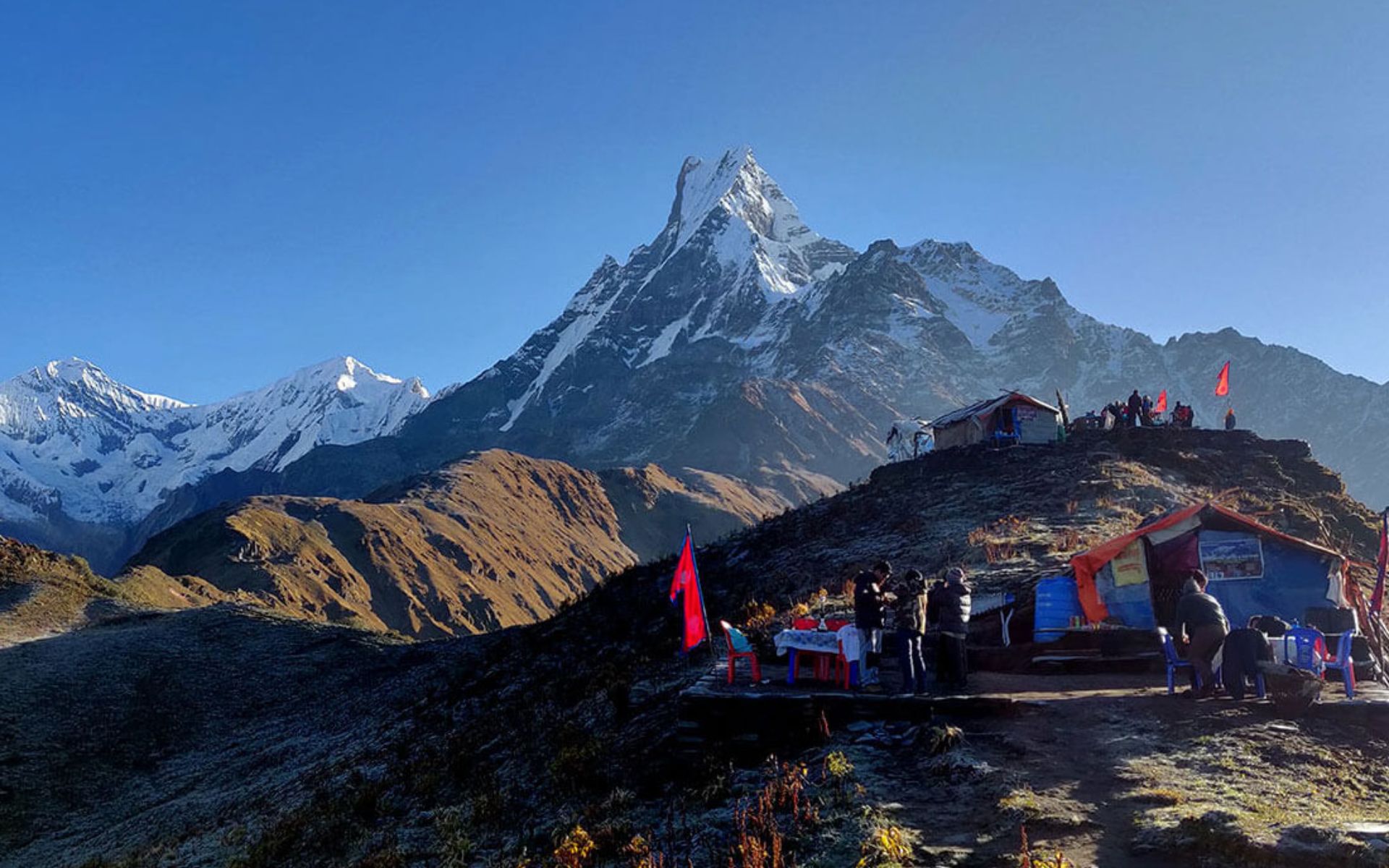
The highest point on the trek is Mardi Himal Base Camp at 4,500 m, but you don't normally sleep there.
Here’s the things:
Mardi Himal Base Camp: 4,500 m. This is the highest point you walk to.
Upper Viewpoint: 4,200 m. This is the high ridge viewpoint above High Camp.
High Camp: 3,580 m. This is the highest regular sleeping point.
This explains why altitude varies with online information.
One article quotes 4,500 m, another says 4,200 m, and another says 3,580 m. Each number belongs to a different stop, and each source is simply answering a slightly different question.
Mardi Himal Trek: Highest Point vs. Highest Sleeping Altitude
Before going further, it helps to know what each of these places means in practice.
Highest Point: Mardi Himal Base Camp – 4,500 m
Of course, Base Camp is the top of any trail, and it sits at the far end of the higher section of the route. Most trekkers reach it as a long day out from High Camp instead of a place to stay. You climb up, take in the surroundings, and walk back down to sleep lower.
Highest Viewpoint: Upper Viewpoint – 4,200 m
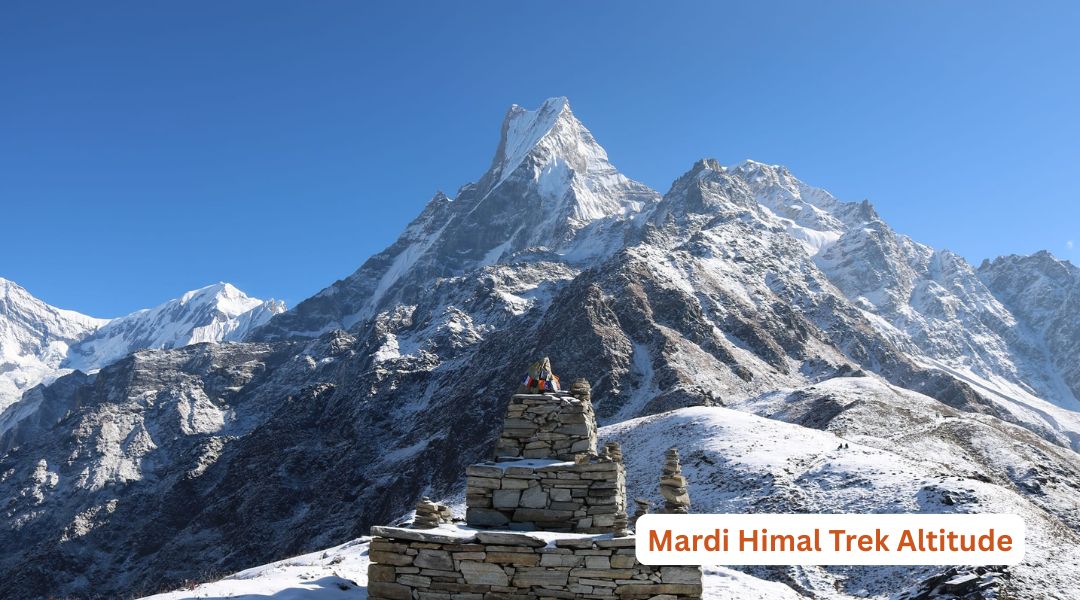
The Upper Viewpoint is where many itineraries turn around. It sits on the ridge above High Camp, and from here Mardi Himal and the Annapurna range feel close to your eye level. Trekkers who skip the final push to Base Camp usually finish their day here and get back from here.
Highest Sleeping Point: High Camp – 3,580 m
Note everyone is the same nor their body. Some feel uneasiness right after crossing 3000m due to altitude sickness. If this is your type, spending a short time at this point will be best for your health without compromising the view of Mardi and Annapurna range.
One more figure is worth clearing up now. The Mardi Himal summit is 5,587 m, but climbing it is a technical mountaineering objective and not part of the standard trek.
Mardi Himal Trek Elevation Profile
Here's how the route climbs, stop by stop:
Location | Elevation (m) | Elevation (ft) |
Kande | 1,770 m | 5,807 ft |
Forest Camp | 2,550 m | 8,366 ft |
Low Camp | 2,985 m | 9,793 ft |
Badal Danda | 3,210 m | 10,532 ft |
High Camp | 3,580 m | 11,745 ft |
Upper Viewpoint | 4,200 m | 13,780 ft |
Mardi Himal Base Camp | 4,500 m | 14,764 ft |
How Much Elevation Do You Gain on the Mardi Himal Trek?
From Kande, you’ll gain around 1,810 m in elevation by the time you reach High Camp. Continuing to Base Camp brings the total elevation gain to approximately 2,730 m. These figures are estimates, as the trail includes several short ups and downs along the way.
Where you start makes a difference. This guide measures elevation gain from Kande, so starting the trek from a lower point means more climbing. The Base Camp section also adds about 920 m of elevation gain above High Camp, making that final day particularly demanding.
A shorter itinerary doesn’t mean less climbing. It simply means covering much of the same elevation gain in fewer days, which can make each day more strenuous. Whether you complete the trek in four or five days, the overall climbing remains broadly similar, but you have less time to spread out the effort.
It’s also important to distinguish total elevation gain from maximum altitude. Total gain gives you a better idea of how much climbing your legs will have to handle, while maximum altitude tells you how high you’ll go and how much thinner the air becomes. A trek can involve a lot of climbing without reaching extreme altitudes, while another can reach a much higher elevation with relatively modest climbing on some days.
What Does the Altitude Feel Like on the Mardi Himal Trek?
Everyone responds to altitude differently, so use these ranges as a general guide rather than a prediction of how you’ll feel.
Around 3,000 m: You may still feel comfortable on flatter sections, but uphill walking usually becomes more demanding. Your breathing may become quicker, and you may need a little longer to recover after steeper climbs. Sleep can also feel lighter than usual.
Around 3,500 m: The change becomes more noticeable. Your natural pace may slow, and stone steps or steeper sections can take considerably more effort. Nights are colder, and some trekkers experience reduced appetite or feel more tired the following morning.
Around 4,200–4,500 m: Even fit trekkers may need frequent short breaks to catch their breath. Exposed sections can feel colder because of wind, while recovery between efforts takes longer. At this altitude, a slow and steady pace is generally more sustainable than trying to maintain your lower altitude speed.
Altitude Sickness on the Mardi Himal Trek
Altitude sickness becomes a real consideration once you're above roughly 2,500 m and gaining height quickly. On this route the climb from the forested lower trail to the open ridge happens fairly fast, which is why pacing matters as much as fitness.
Common early symptoms include:
Headache
Nausea or loss of appetite
Dizziness
Unusual tiredness
Poor sleep
Simple ways to lower your risk:
Walk at an easy, steady pace, even when you feel strong.
Drink water regularly through the day.
Rest properly at each stop.
Skip alcohol while you're gaining altitude.
Give your body enough days to adjust. Hiking up to a higher point and then sleeping lower is a helpful pattern.
If symptoms appear, stop climbing, rest, and tell your guide. Mild symptoms that ease with rest may settle. Symptoms that get worse should never be ignored. Confusion, loss of balance, breathlessness at rest, or a persistent cough are warning signs, and going down is the safest response.
You may also hear about Diamox (acetazolamide) for altitude. That's general information, not a recommendation. Whether it's suitable depends on your own health, so please speak to a doctor before your trek.
Mardi Himal Altitude Compared With Other Popular Treks
Trek | Highest Point | Highest Sleeping Altitude | Typical Duration | General Altitude Profile |
Mardi Himal | 4,500 m | 3,580 m | 5–7 days | Steady climb to a high ridge, with the top reached as a day trip |
Annapurna Base Camp | 4,130 m | 4,130 m | 7–10 days | Longer build-up, sleeping at the highest point |
Poon Hill | 3,210 m | 2,860 m | 3–5 days | Low-altitude trek with a short sunrise climb |
Mardi Himal reaches a higher point than Annapurna Base Camp, but you sleep far lower. Poon Hill sits well below both, which suits anyone who wants minimal altitude exposure.
What Is the Best Itinerary Length for Managing Mardi Himal Altitude?
A 5–7 day Mardi Himal itinerary generally gives you a more comfortable pace than a rushed schedule. The main challenge comes between Low Camp and High Camp, where sleeping altitude rises significantly in one day.
If you have time, adding an extra night around Low Camp or Badal Danda can help you adjust before going higher. You can use it for a short hike and return to the lodge before continuing to High Camp.
It does not eliminate altitude sickness risk, but a slower ascent gives your body more time to adapt and makes the trek less rushed.
Plan Your Mardi Himal Trek Around the Altitude
Choosing an itinerary shouldn't come down to picking the fewest days. The better question is how the route's elevation fits your pace, your experience, and the time you have.
At Walk Through Nepal, we help trekkers plan around daily elevation gain, trekking pace, and overnight altitude so the schedule feels manageable. To see how that works in practice, have a look at our Mardi Himal Trek itineraries and choose a length that suits your group.
Frequently Asked Questions
What is the highest point on the Mardi Himal Trek?
The highest point is Mardi Himal Base Camp at 4,500 m. Most trekkers reach it as a long day hike from High Camp. The 5,587 m summit is a separate technical climb.
How high is Mardi Himal High Camp?
High Camp is at 3,580 m. It is the highest regular overnight stop on the trek and the base for exploring the upper ridge.
Do you sleep at Mardi Himal Base Camp?
Usually not. Base Camp is normally visited as a day trip, and trekkers return to High Camp to sleep. That keeps the overnight altitude well below the highest point reached.
Is altitude sickness common on the Mardi Himal Trek?
It can affect some trekkers, mainly because the height gain is fairly quick. Mild symptoms such as headache or tiredness are the most common. A steady pace, enough days, and good hydration all lower the risk.
How much elevation do you gain on the Mardi Himal Trek?
From Kande to High Camp, the gain is about 1,810 m. Continuing to Base Camp brings it to about 2,730 m. The exact total varies with your starting point and itinerary.
Is Mardi Himal Base Camp higher than Annapurna Base Camp?
Yes. Mardi Himal Base Camp (4,500 m) is higher than Annapurna Base Camp (4,130 m). The difference is that you sleep at Annapurna Base Camp but not at Mardi Himal Base Camp, so overnight altitude is lower on Mardi Himal.