Swipe to explore
BEST SELLER
Annapurna Circuit Trek Packages – Cost, Itinerary & 12, 14 or 16 Day Options
12, 14, & 16 Days
Duration
Breakfast, Lunch & Dinner during the trek
Meals
MODERATE
Difficulty
1–14+ (Private & Group Departures Available)
Group Size
↑
Thorong La Pass – 5,416 m / 17,769 ft
Max Altitude
March–May (Spring) & September–November (Autumn)
Best Season
3-Star Hotels (Kathmandu & Pokhara) + Teahouses (on trail)
Accommodation
Tourist Bus / Private Vehicle / Local Jeep
Transportation
Annapurna Circuit Trek Overview
The Annapurna Circuit Trek is one of Nepal's most iconic Himalayan adventures, renowned for its breathtaking mountain scenery, diverse landscapes, and rich cultural heritage. Circling the magnificent Annapurna Massif, the trail passes through traditional Gurung and Manangi villages, lush forests, terraced farmlands, alpine valleys, and the rugged landscapes of the Mustang region. The journey reaches its highest point at Thorong La Pass (5,416 m / 17,769 ft) before descending to the sacred pilgrimage site of Muktinath and the dramatic Kali Gandaki Gorge.
Along the way, trekkers are rewarded with spectacular views of Annapurna II, Annapurna III, Annapurna IV, Gangapurna, Dhaulagiri, Manaslu, and other Himalayan giants. At Walk Through Nepal, we offer 12-day, 14-day, and 16-day Annapurna Circuit Trek itineraries, allowing you to choose the perfect adventure based on your schedule, trekking experience, and travel style, all while enjoying expert local guidance, safe trekking practices, and an unforgettable Himalayan experience.
Trip Highlights
Cross Thorong La Pass (5,416 m / 17,769 ft), one of the world's highest and most spectacular trekking passes.
Experience the diverse landscapes of the Annapurna Circuit, from lush forests and terraced fields to alpine valleys and the rugged high-altitude terrain of Lower Mustang.
Trek through traditional Gurung, Manangi, and Thakali villages, gaining insight into the region's rich culture and Himalayan lifestyle.
Acclimatize in Manang with an optional hike to Ice Lake (Kicho Tal) at 4,620 m (15,157 ft) for breathtaking mountain views and better altitude adaptation.
Visit the sacred temple of Muktinath, an important pilgrimage site revered by both Hindus and Buddhists.
Explore the ancient village of Kagbeni and Jomsom on the 14-day and 16-day itineraries, discovering the unique culture of the Mustang region.
Discover the charming village of Marpha and unwind at Tatopani's natural hot springs on the 16-day itinerary.
Enjoy panoramic views of Annapurna II, Annapurna III, Annapurna IV, Gangapurna, Dhaulagiri, Manaslu, Tilicho Peak, and Chulu Peaks throughout the trek.
Choose from 12-day, 14-day, or 16-day Annapurna Circuit Trek itineraries, each designed to suit different schedules, trekking styles, and adventure goals.
Trek with experienced local guides from Walk Through Nepal, ensuring a safe, well-organized, and unforgettable Himalayan adventure.
Which Annapurna Circuit Trek Should You Choose?
Choosing the right Annapurna Circuit Trek itinerary depends on your available time, preferred trekking pace, and the type of Himalayan experience you're looking for.
Choose the 12-Day Annapurna Circuit Trek if:
You have limited time but still want to complete the legendary Annapurna Circuit Trek and cross Thorong La Pass (5,416 m / 17,769 ft). This itinerary is ideal for experienced or physically fit trekkers who are comfortable with a faster-paced schedule while still enjoying the trek's major highlights.
Choose the 14-Day Annapurna Circuit Trek if:
You want the most balanced Annapurna Circuit experience. This is our most popular itinerary, offering a comfortable trekking pace, proper acclimatization in Manang, and additional time to explore Kagbeni, Jomsom, and Kathmandu before your departure. It's the best choice for most first-time trekkers.
Choose the 16-Day Annapurna Circuit Trek if:
You prefer a slower, more immersive journey with extra time to experience the culture and landscapes of the Annapurna and Lower Mustang regions. This itinerary includes visits to Marpha, famous for its apple orchards, and Tatopani, where you can relax in natural hot springs after completing the trek.
Note: All three Annapurna Circuit Trek itineraries follow the classic route and cross Thorong La Pass (5,416 m / 17,769 ft). The main differences are the overall trip duration, trekking pace, departure style, and additional destinations such as Kagbeni, Jomsom, Marpha, and Tatopani, allowing you to choose the Annapurna Circuit Trek itinerary that best matches your schedule, fitness level, budget, and preferred travel style.
Pricing Note: The prices shown are per person for private trek bookings. Solo travelers are welcome and will receive the applicable private-trip rate.
The 12-Day Express, 14-Day Classic, and 16-Day Extended itineraries are available as both private treks and fixed group departures, with separate pricing for fixed departures.
12-DAY Express
$ 1,899
- Pace: Fast-Paced Adventure
- Trail Duration: 8 Days
- Acclimatization: 1 Day
- Accommodation: 3-Star Hotel + Teahouses
- Transportation: Tourist Bus + Airport Transfers Included
- Includes: ACAP Permit, Shared Guide & 1 Porter per 2 Trekkers
- Perfect For: Travelers with limited time
Best Value
14-DAY CLASSIC
$ 2,399
- Pace: Balanced & Comfortable
- Trail Duration: 10 Days
- Acclimatization: 1 Day
- Accommodation: 3-Star Hotel + Teahouses
- Transportation: Tourist Bus + Airport Transfers Included
- Includes: ACAP Permit, Shared Guide & 1 Porter per 2 Trekkers
- Highlight: Kathmandu Sightseeing & Farewell Dinner
- Perfect For: Most trekkers seeking the classic Annapurna Circuit experience
16-DAY EXTENDED
$2,999
- Pace: Relaxed & Leisurely
- Trail Duration: 11 Days
- Acclimatization: 1 Day
- Accommodation: 3-Star Hotel + Teahouses
- Transportation: Tourist Bus + Airport Transfers Included
- Includes: ACAP Permit, Shared Guide & 1 Porter per 2 Trekkers
- Highlight: Kathmandu & Pokhara Guided Sightseeing Days
- Highlight: Extra Scenic Stop: Tatopani Hot Springs
- Perfect For: Trekkers wanting a slower pace with richer cultural experiences
Book this Trip
Tell us your preferences and we'll craft the perfect private tour for your group.
Itinerary
30–45 minutes 3-Star HotelDinner
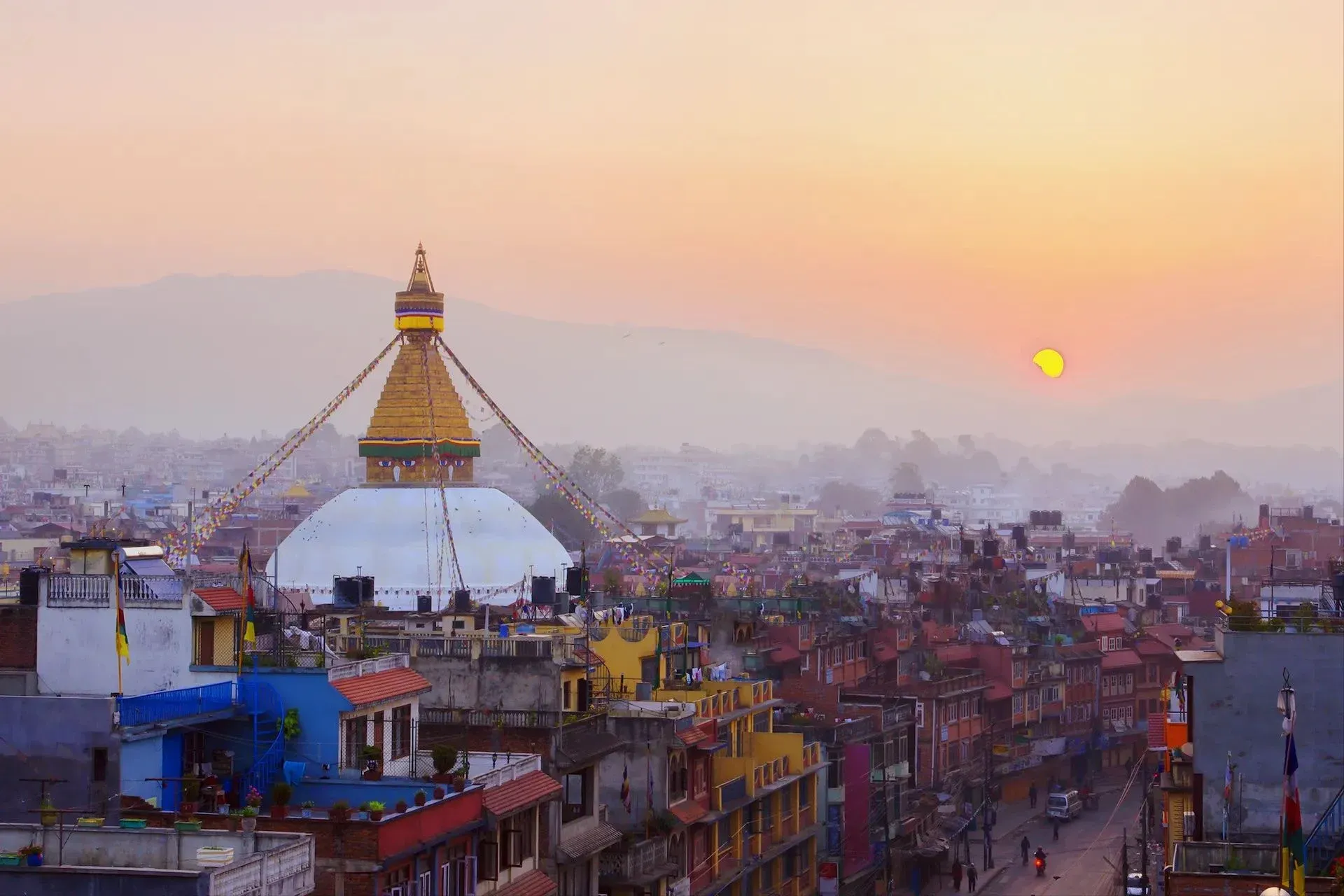
Welcome to Nepal! Upon your arrival at Tribhuvan International Airport (TIA), a representative from Walk Through Nepal will greet you and transfer you to your hotel in the heart of Kathmandu. After checking in, you'll have time to rest after your journey or explore the lively streets of Thamel, Kathmandu's popular tourist district known for its trekking shops, cafés, and cultural atmosphere.
In the evening, you'll meet your trekking guide for a comprehensive pre-trek briefing. During this session, your guide will explain the Annapurna Circuit Trek itinerary, review the trail conditions, discuss altitude safety, check your trekking equipment, and answer any questions before the adventure begins. The day concludes with a traditional Nepali welcome dinner, giving you the opportunity to experience local cuisine while getting to know your guide and fellow trekkers.
Although no trekking takes place today, it's the perfect opportunity to prepare for the exciting journey ahead. A good night's rest will help you get ready for tomorrow's scenic drive toward the Annapurna region.
Today's Highlights
Airport pickup by the Walk Through Nepal team
Comfortable transfer to your hotel in Kathmandu
Free time to explore the vibrant streets of Thamel
Detailed trek briefing and equipment check
Traditional Nepali welcome dinner
Overnight stay in Kathmandu
460 m / 1,509 ft Approx. 225 km (140 mi) 9–10 hours TeahouseBreakfastLunchDinner
After an early breakfast, you'll leave Kathmandu and begin a scenic drive toward the Annapurna region. Following the Prithvi Highway alongside the Trishuli River, the journey offers beautiful views of terraced hillsides, traditional villages, lush forests, and snow-capped Himalayan peaks in the distance. Passing through bustling towns such as Mugling and Besisahar, you'll gradually leave the busy city behind as the landscape becomes increasingly mountainous.
From Besisahar, the road follows the Marsyangdi River Valley, where the scenery changes dramatically. Winding mountain roads lead through waterfalls, suspension bridges, dense forests, and remote villages before reaching Dharapani, the official gateway to the upper Annapurna Circuit. As you gain elevation, you'll notice the transition from subtropical vegetation to cooler alpine surroundings, offering a glimpse of the remarkable diversity that makes the Annapurna Circuit one of Nepal's most celebrated trekking routes.
After arriving in Dharapani, settle into your teahouse, enjoy a freshly prepared dinner, and rest for your first day of trekking, which begins tomorrow. The peaceful mountain atmosphere provides the perfect introduction to life on the trail.
Today's Highlights
Scenic drive along the Prithvi Highway and Trishuli River
Pass through Besisahar, the gateway to the Annapurna region
Follow the picturesque Marsyangdi River Valley
Enjoy views of waterfalls, terraced fields, and traditional hillside villages
Arrive in Dharapani, the starting point of the Annapurna Circuit Trek
Overnight stay in a traditional mountain teahouse
790 m / 2,592 ft Approx. 100 m / 328 ft Approx. 15 km (9.3 mi) 5–6 hours TeahouseBreakfastLunchDinner
After breakfast, your Annapurna Circuit Trek officially begins as you leave Dharapani and follow the well-established trail deeper into the Annapurna Conservation Area. The route winds through dense pine and fir forests, crossing several suspension bridges over the rushing Marsyangdi River while passing traditional mountain villages that showcase the region's unique blend of Gurung, Manangi, and Tibetan-influenced culture.
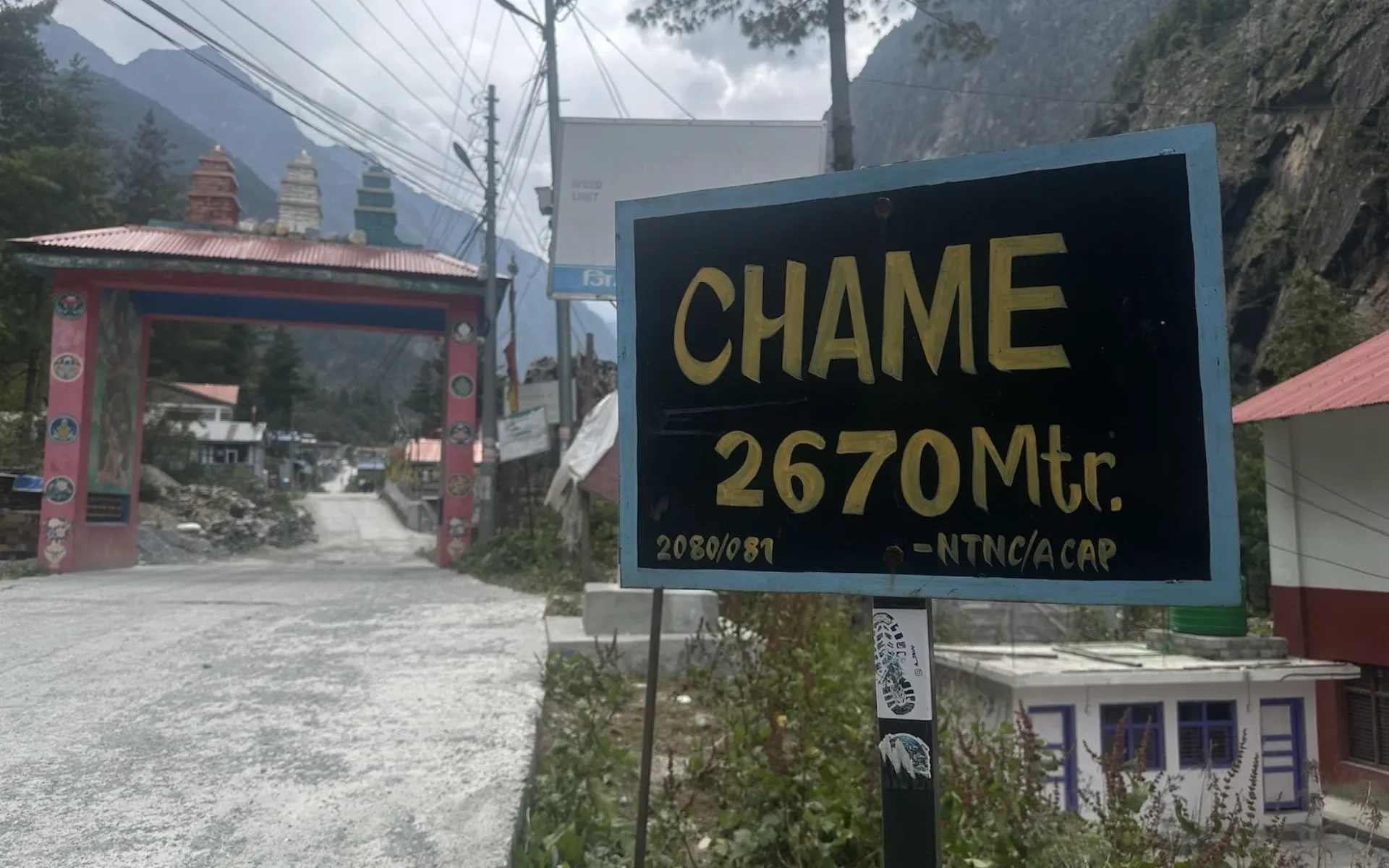
As you continue, you'll pass through the picturesque settlements of Bagarchhap, Danaque, Timang, and Koto. Timang is a popular viewpoint where, on a clear day, you'll enjoy your first spectacular panoramic views of Manaslu (8,163 m) and surrounding Himalayan peaks. The trail gradually climbs through peaceful forests and narrow valleys before reaching Chame, the administrative headquarters of the Manang District.
Nestled beneath towering cliffs and surrounded by snow-covered peaks, Chame is a charming mountain town known for its natural hot springs, traditional stone houses, and stunning views of Lamjung Himal, Annapurna II, and Annapurna IV. After checking into your teahouse, you can relax or explore the village before enjoying a hearty dinner and preparing for another rewarding day on the trail.
Today's Highlights
Begin trekking on the world-famous Annapurna Circuit
Walk through beautiful pine, fir, and rhododendron forests
Cross suspension bridges over the Marsyangdi River
Pass the traditional villages of Bagarchhap, Danaque, Timang, and Koto
Enjoy breathtaking views of Manaslu, Lamjung Himal, Annapurna II, and Annapurna IV
Overnight stay in the mountain town of Chame
650 m / 2,133 ft Approx. 100 m / 328 ft Approx. 14 km (8.7 mi) 5–6 hours TeahouseBreakfastLunchDinner
Today's trek takes you into the higher reaches of the Annapurna Circuit, where the landscape begins to change dramatically. Leaving Chame behind, you'll follow the trail through fragrant pine forests and narrow valleys, with the Marsyangdi River flowing below. As the elevation increases, the vegetation gradually becomes sparser, revealing expansive mountain views and rugged alpine scenery.
One of the day's highlights is crossing a suspension bridge before reaching the famous Pisang rock face, a massive cliff rising nearly 1,500 meters above the valley floor. The trail offers unforgettable views of Annapurna II (7,937 m), whose towering north face dominates the skyline and is considered one of the most impressive mountain vistas along the entire trek.
Arriving in Upper Pisang, you'll notice the distinct Tibetan influence in the architecture, culture, and lifestyle. Compared to Lower Pisang, the upper village sits higher on the hillside and rewards trekkers with wider panoramic views of the Annapurna range. Spend the evening exploring the traditional stone-built village, visiting the nearby monastery, or simply enjoying the peaceful Himalayan atmosphere before tomorrow's scenic trek to Manang via Ghyaru and Ngawal.
Today's Highlights
Trek through alpine forests and dramatic mountain valleys
Cross scenic suspension bridges over the Marsyangdi River
Witness the iconic Pisang rock face
Enjoy close-up views of Annapurna II and surrounding Himalayan peaks
Experience the traditional Tibetan-influenced culture of Upper Pisang
Overnight stay in a traditional Himalayan teahouse with spectacular mountain views
650 m / 2,133 ft 430 m / 1,411 ft Approx. 16 km (10 mi) 6–7 hours TeahouseBreakfastLunchDinner
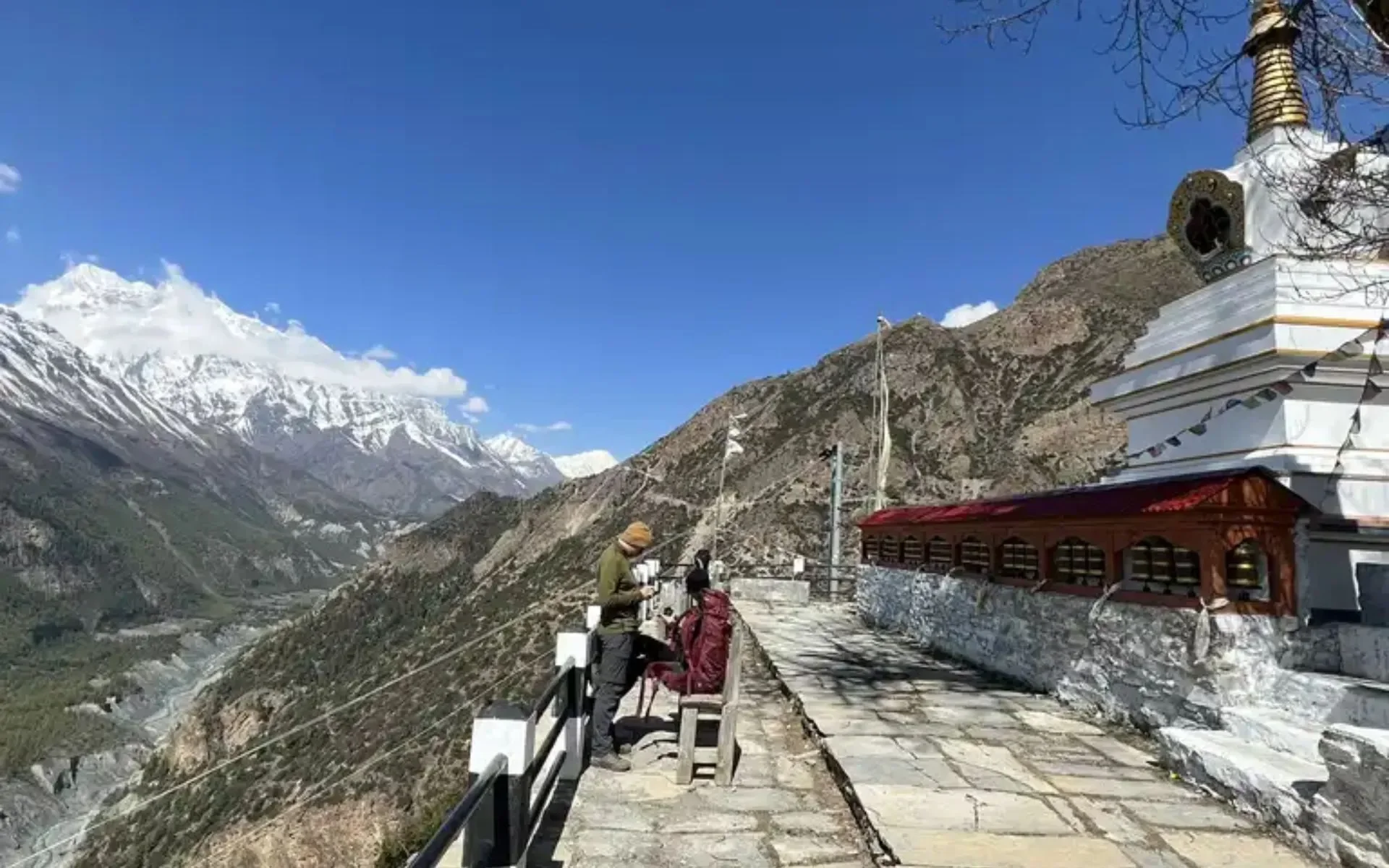
Today's trek is one of the most scenic and rewarding sections of the Annapurna Circuit Trek, following the spectacular upper trail via Ghyaru and Ngawal instead of the lower valley route. Although this route involves a steeper climb, it provides better acclimatization and rewards you with breathtaking views of the Annapurna range throughout the day.
After crossing the Marsyangdi River, a series of stone staircases leads to the traditional village of Ghyaru (3,670 m). The effort is well worth it, as you'll be greeted by panoramic views of Annapurna II, Annapurna III, Annapurna IV, Gangapurna, Pisang Peak, and the surrounding snow-covered mountains. Continuing along the ancient trading route, you'll reach the peaceful village of Ngawal, where Tibetan Buddhist culture, centuries-old monasteries, prayer flags, and traditional stone houses create an unforgettable Himalayan atmosphere.
From Ngawal, the trail gradually descends through juniper forests and alpine meadows before joining the main Annapurna Circuit route near Braga. A short walk brings you to Manang, the largest village on the circuit and an important acclimatization stop before ascending toward Thorong La Pass (5,416 m / 17,769 ft). Surrounded by dramatic Himalayan peaks, Manang offers a unique blend of mountain culture, comfortable teahouses, bakeries, and trekking facilities, making it an ideal place to rest and prepare for higher elevations.
Today's Highlights
Follow the scenic high route via Ghyaru and Ngawal
Enjoy spectacular panoramic views of the Annapurna Massif
Experience authentic Tibetan-influenced villages and Buddhist culture
Pass ancient monasteries, prayer wheels, and colorful prayer flags
Arrive in Manang, the key acclimatization stop on the Annapurna Circuit
Overnight stay in a traditional Himalayan teahouse
1,100 m / 3,609 ft 1,100 m / 3,609 ft Approx. 10–12 km (6–7.5 mi) round trip 5–6 hours TeahouseBreakfastLunchDinner
Today's acclimatization day is one of the most important parts of your Annapurna Circuit Trek. Rather than resting completely, you'll follow the well-known mountaineering principle of "climb high, sleep low," helping your body gradually adjust to the increasing altitude before continuing toward Thorong La Pass. Proper acclimatization significantly reduces the risk of altitude sickness and improves your chances of completing the trek safely.
After breakfast, you'll hike to the stunning Ice Lake (Kicho Tal) at 4,620 m (15,157 ft), one of the highest alpine lakes in the Annapurna region. The trail climbs steadily above Manang through yak pastures, alpine grasslands, and rocky mountain terrain. As you gain elevation, the views become increasingly spectacular, revealing a breathtaking panorama of Annapurna II, Annapurna III, Gangapurna, Tilicho Peak, Chulu East, Chulu West, and countless snow-covered Himalayan summits.
After spending time at Ice Lake and taking in the remarkable scenery, you'll descend back to Manang for another overnight stay. The remainder of the afternoon is perfect for relaxing at your teahouse, exploring the village, visiting the Himalayan Rescue Association Information Centre, or enjoying a cup of coffee at one of Manang's famous mountain bakeries before the higher-altitude trekking days begin.
Today's Highlights
Essential acclimatization day for safe high-altitude trekking
Hike to the spectacular Ice Lake (4,620 m)
Enjoy panoramic views of Annapurna, Gangapurna, Tilicho Peak, and the Chulu Himal range
Learn about altitude safety at the Himalayan Rescue Association Centre
Explore the vibrant mountain village of Manang
Prepare for the ascent toward Yak Kharka and Thorong La Pass
500 m / 1,640 ft 50 m / 164 ft Approx. 10 km (6.2 mi) 4–5 hours TeahouseBreakfastLunchDinner
After a successful acclimatization day in Manang, today's trek takes you above the tree line into the remote alpine wilderness of the upper Annapurna region. Leaving the village behind, you'll gradually ascend through dry mountain slopes, juniper bushes, and scattered yak pastures, where the landscape becomes noticeably more rugged and barren. The dramatic change in scenery reflects the transition into the rain-shadow region of the Himalayas, influenced by the nearby Mustang region.
The trail climbs steadily toward Tenki Manang, passing ancient stone walls, prayer flags, and traditional grazing areas used by local herders. Along the way, you'll enjoy magnificent views of Gangapurna (7,455 m), Annapurna III (7,555 m), Tilicho Peak (7,134 m), and the towering ridges surrounding the Marsyangdi Valley. With fewer trees and wider mountain vistas, every step brings you closer to the high Himalayas.
By early afternoon, you'll arrive at Yak Kharka, a small seasonal settlement whose name literally means "yak pasture." Traditionally used by local herders during the summer months, the village now serves as an important overnight stop for trekkers preparing to cross Thorong La Pass. The higher altitude means it's important to stay hydrated, walk at a comfortable pace, and get plenty of rest as your body continues to acclimatize.
Today's Highlights
Leave the lush valleys behind and enter the alpine landscapes of the upper Annapurna region
Walk through traditional yak grazing pastures and remote Himalayan terrain
Enjoy panoramic views of Gangapurna, Annapurna III, Tilicho Peak, and surrounding mountains
Experience the peaceful atmosphere of Yak Kharka
Continue gradual acclimatization before crossing Thorong La Pass
Overnight stay at a traditional mountain teahouse
505 m / 1,657 ft Approx. 7 km (4.3 mi) 4–5 hours TeahouseBreakfastLunch & Dinner
Today's trek is relatively short but extremely important, as it prepares you for the most challenging and rewarding day of the Annapurna Circuit Trek. After breakfast, you'll leave Yak Kharka and continue along a rugged mountain trail that gradually climbs toward Thorong Phedi, the final overnight stop before crossing Thorong La Pass.
The trail traverses rocky hillsides and alpine terrain, crossing a suspension bridge before reaching Ledar, where many trekkers take a short break to rest and enjoy the spectacular mountain scenery. From here, the path becomes steeper as it winds beneath towering cliffs and across landslide-prone sections that require careful footing. Despite the challenging terrain, the breathtaking views of the surrounding Himalayan peaks make every step worthwhile.
Arriving at Thorong Phedi, meaning "the foot of Thorong Hill," you'll settle into a mountain teahouse and spend the remainder of the day resting, hydrating, and preparing for tomorrow's early morning ascent. Some trekkers choose to hike to High Camp (4,880 m / 16,010 ft) for additional acclimatization before returning to Thorong Phedi or staying overnight there, depending on weather conditions, guide recommendations, and individual fitness levels.
A good night's sleep and proper preparation are essential, as tomorrow's journey over Thorong La Pass will be the highest and most memorable point of your Himalayan adventure.
Today's Highlights
Trek through dramatic high-altitude landscapes above the tree line
Cross a suspension bridge and pass the settlement of Ledar
Reach Thorong Phedi, the final stop before Thorong La Pass
Enjoy breathtaking views of the surrounding Himalayan peaks
Prepare for the iconic Thorong La Pass crossing
Overnight stay at a traditional mountain teahouse
891 m / 2,923 ft 1,616 m / 5,302 ft Approx. 15 km (9.3 mi) 8–10 hours TeahouseBreakfastLunch & Dinner
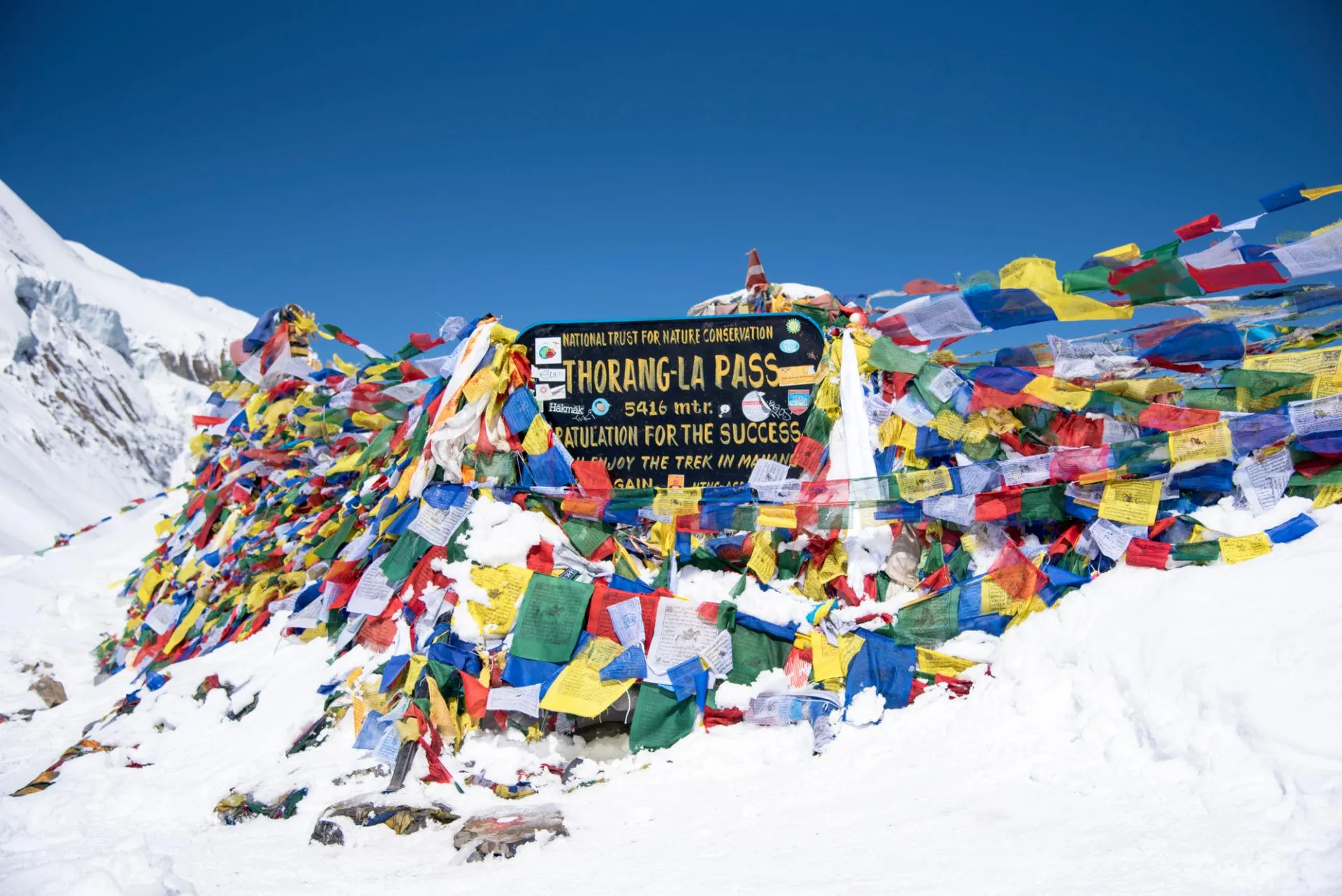
Today is the highlight of your Annapurna Circuit Trek as you cross the legendary Thorong La Pass (5,416 m / 17,769 ft), one of the highest trekking passes in the world. To take advantage of stable morning weather and minimize the effects of strong afternoon winds, you'll begin your trek before sunrise. With your headlamp lighting the trail, you'll make a steady ascent through the crisp mountain air, gradually climbing toward the highest point of the journey.
The climb from Thorong Phedi is physically demanding but incredibly rewarding. As the sun rises over the Himalayas, breathtaking views unfold across the Annapurna and Dhaulagiri mountain ranges, creating one of the most memorable moments of the trek. Upon reaching the summit, colorful prayer flags flutter in the mountain breeze, marking your successful crossing of Thorong La Pass. Standing at 5,416 meters, you'll have time to celebrate, capture photographs, and appreciate the incredible achievement before beginning the long descent.
From the pass, the trail descends steeply through rocky alpine terrain into the rain-shadow region of Lower Mustang. As you lose elevation, the landscape changes dramatically from snow-covered mountain slopes to dry, windswept valleys with unmistakable Tibetan influences. Continuing downhill, you'll arrive at Muktinath, one of Nepal's most sacred pilgrimage destinations. Revered by both Hindus and Buddhists, Muktinath is home to the famous temple complex, 108 sacred water spouts, and an eternal natural flame, attracting pilgrims from around the world throughout the year.
After checking into your teahouse, you can spend the evening exploring the spiritual atmosphere of Muktinath and reflecting on one of the greatest achievements of your Himalayan adventure.
Today's Highlights
Cross the iconic Thorong La Pass, one of the world's highest trekking passes
Witness a spectacular Himalayan sunrise over the Annapurna and Dhaulagiri ranges
Celebrate your successful crossing beneath the colorful prayer flags at the summit
Descend into the unique landscapes of the Lower Mustang region
Visit the sacred pilgrimage site of Muktinath Temple
Experience the distinct Tibetan-influenced culture and landscapes of Mustang
Overnight stay in Muktinath
1,080 m / 3,543 ft Approx. 16 km (10 mi) 5–6 hours TeahouseBreakfastLunchDinner
After breakfast, you'll have the opportunity to visit the sacred Muktinath Temple, one of Nepal's most revered pilgrimage sites for both Hindus and Buddhists. The temple complex is famous for its 108 sacred water spouts, eternal natural flame, and peaceful spiritual atmosphere, making it a meaningful stop before continuing your journey.
Leaving Muktinath, the trail gradually descends into the windswept landscapes of Lower Mustang, offering spectacular views of the Dhaulagiri, Nilgiri, and Tukuche mountain ranges. You'll soon arrive at the ancient village of Kagbeni (2,810 m / 9,219 ft), a beautifully preserved settlement of narrow stone alleys, whitewashed houses, prayer wheels, and centuries-old monasteries. Often called the gateway to Upper Mustang, Kagbeni is one of the cultural highlights of the Annapurna Circuit and offers a fascinating glimpse into the region's Tibetan Buddhist heritage.
After exploring Kagbeni, the trail follows the broad Kali Gandaki River Valley toward Jomsom, the administrative center of the Mustang District. The route passes dramatic desert-like landscapes shaped by strong Himalayan winds before reaching the bustling mountain town of Jomsom, where you'll spend the night.
Today's Highlights
Visit the sacred Muktinath Temple
Explore the medieval village of Kagbeni
Walk through the spectacular Kali Gandaki Valley
Experience the unique Tibetan-influenced culture of Lower Mustang
Enjoy panoramic views of Dhaulagiri, Nilgiri, and Tukuche Peak
Overnight stay in Jomsom
1,898 m / 6,227 ft Approx. 155 km (96 mi) 7–8 hours HotelBreakfastLunch
Today's scenic drive follows the famous Kali Gandaki Gorge, one of the deepest river gorges in the world. Leaving Jomsom behind, you'll travel through the picturesque villages of Marpha, Tukuche, Larjung, and Ghasa, watching the rugged mountain landscapes gradually transform into lush forests and fertile valleys as you descend.
Along the way, you'll enjoy spectacular views of Dhaulagiri, Nilgiri, and Annapurna South, while passing waterfalls, suspension bridges, and traditional Thakali villages renowned for their hospitality and distinctive culture.
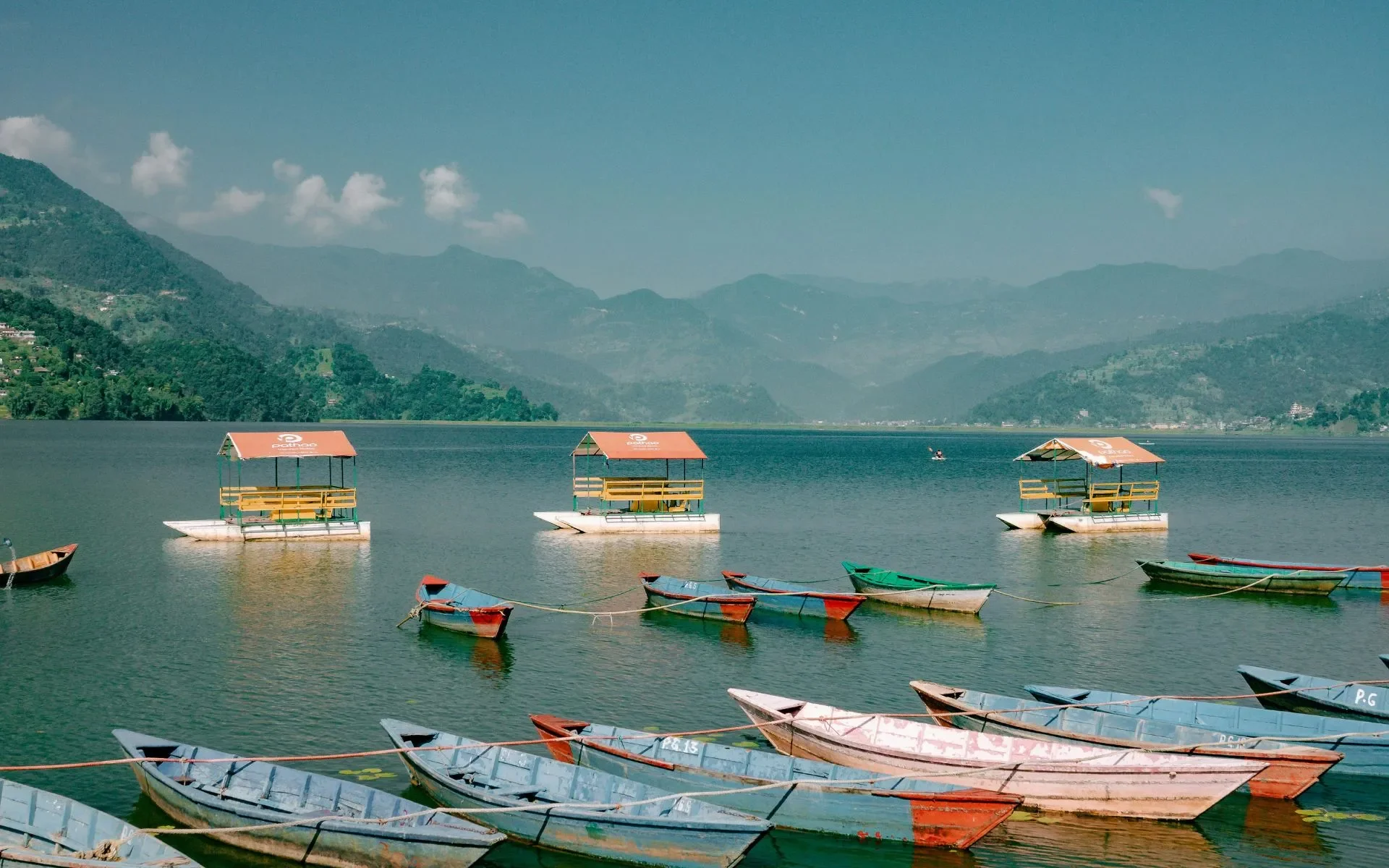
By late afternoon, you'll arrive in the beautiful lakeside city of Pokhara, where you can relax after completing the trekking portion of your Annapurna Circuit adventure. Spend the evening exploring Lakeside, enjoying local cuisine, or taking a peaceful walk along Phewa Lake.
Today's Highlights
Scenic drive through the Kali Gandaki Gorge
Pass traditional Thakali villages and apple-growing regions
Mountain views of Dhaulagiri, Nilgiri, and Annapurna South
Arrive in the beautiful city of Pokhara
Relax by Phewa Lake
Overnight stay in Pokhara
578 m / 1,896 ft Approx. 200 km (124 mi) 7–8 hours HotelBreakfast
After breakfast, you'll begin the scenic drive back to Kathmandu along the Prithvi Highway, following the Trishuli River through picturesque hills, traditional villages, and terraced farmland. The journey offers one final opportunity to appreciate Nepal's diverse landscapes before returning to the capital.
Upon arrival in Kathmandu, check into your hotel and enjoy the remainder of the day at your leisure. You may wish to explore the vibrant streets of Thamel, shop for handmade souvenirs, or simply relax after completing one of Nepal's most iconic trekking adventures.
Today's Highlights
Scenic drive through central Nepal
Beautiful views of rivers, hills, and rural villages
Free time to explore Kathmandu
Overnight stay in Kathmandu
5–6 hours HotelBreakfastFarewell Dinner
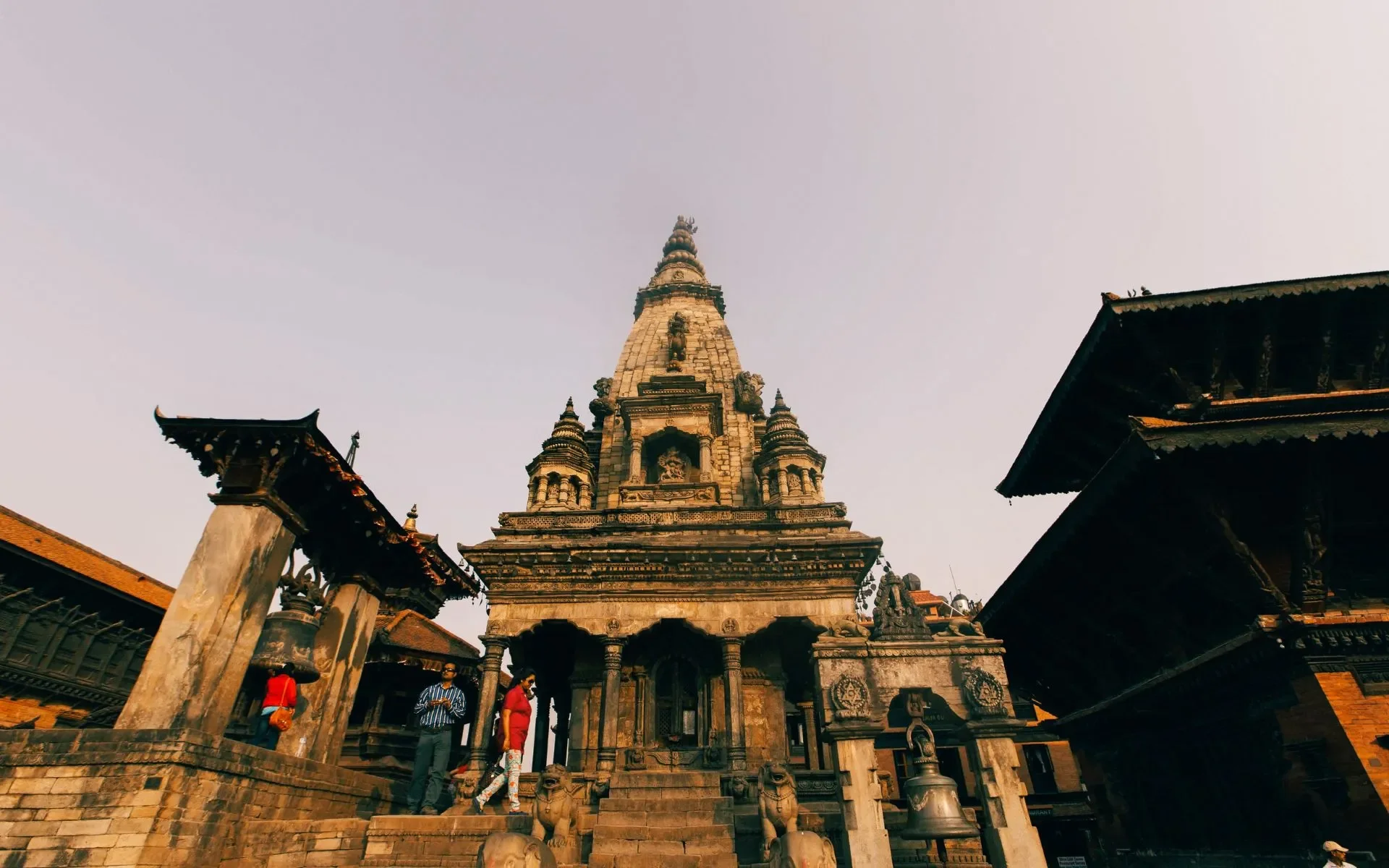
Today is dedicated to discovering the rich cultural heritage of Kathmandu Valley, home to several UNESCO World Heritage Sites. Accompanied by an experienced local guide, you'll explore some of Nepal's most iconic landmarks, including Swayambhunath (Monkey Temple), Pashupatinath Temple, Boudhanath Stupa, or Kathmandu Durbar Square, depending on your sightseeing program.
The guided tour offers valuable insight into Nepal's history, architecture, and religious traditions, providing the perfect cultural complement to your Himalayan trekking adventure.
In the evening, celebrate the successful completion of your Annapurna Circuit Trek with a traditional Nepali farewell dinner featuring authentic cuisine and cultural performances. It's a wonderful opportunity to reflect on your journey and celebrate with your guide and fellow trekkers.
Today's Highlights
Guided sightseeing of Kathmandu's UNESCO World Heritage Sites
Discover Nepal's rich culture and history
Explore ancient temples, stupas, and royal squares
Traditional Nepali farewell dinner with cultural performances
Overnight stay in Kathmandu
Your unforgettable 14-Day Annapurna Circuit Trek with Walk Through Nepal comes to an end today. After breakfast, our team will transfer you to Tribhuvan International Airport according to your flight schedule.
As you depart Nepal, you'll take with you unforgettable memories of crossing Thorong La Pass, visiting Muktinath, exploring the villages of Kagbeni and Jomsom, and experiencing the remarkable landscapes and cultures that make the Annapurna Circuit Trek one of the world's greatest trekking adventures.
We look forward to welcoming you back to Nepal for your next Himalayan journey.
Today's Highlights
Airport transfer to Tribhuvan International Airport
Assistance with departure arrangements
End of your Annapurna Circuit Trek with Walk Through Nepal
Annapurna Circuit Trek Cost Breakdown
The Annapurna Circuit Trek cost depends on your chosen itinerary, trekking pace, accommodation, transportation, and the overall experience you want in the Himalayas. At Walk Through Nepal, our packages are designed to provide excellent value with experienced local guides, quality accommodation, all required permits, reliable transportation, and transparent pricing with no hidden costs.
Whether you choose the 12-Day Express, 14-Day Classic, or 16-Day Extended itinerary, you'll enjoy professional support, carefully planned acclimatization, and a safe, memorable trekking experience around one of Nepal's most iconic trekking routes.
Feature | 12-Day Express | 14-Day Classic (Recommended) | 16-Day Extended |
Price per Person | USD 1,899 | USD 2,399 | USD 2,999 |
Trip Duration | 12 Days | 14 Days | 16 Days |
Trail Days (excluding acclimatization) | 8 Days | 9 Days | 9 Days |
Acclimatization Days | 1 | 1 | 1 |
Pace | Fast-paced | Balanced | Relaxed |
Kathmandu Stay | 2 Nights | 3 Nights | 4 Nights |
Pokhara Stay | 1 Night | 1 Night | 2 Night |
Guide & Porter | Guide + 1 Porter per 2 Trekkers | Guide + 1 Porter per 2 Trekkers | Guide + 1 Porter per 2 Trekkers |
Meals During Trek | Breakfast, Lunch & Dinner | Breakfast, Lunch & Dinner | Breakfast, Lunch & Dinner |
3-Star Hotel | Kathmandu & Pokhara | Kathmandu & Pokhara | Kathmandu & Pokhara |
Tourist Bus Transportation | Included | Included | Included |
Permit (ACAP) | Included | Included | Included |
Airport Transfers | Included | Included | Included |
Best For | Travelers with limited time | Most trekkers seeking the classic experience | Trekkers wanting a slower pace and richer cultural experience |
Note: Prices are quoted per person for private or group departures. Solo trekkers are welcome, and fixed group departures or customized itineraries are also available upon request. Contact Walk Through Nepal for the latest pricing, group discounts, and tailor-made Annapurna Circuit Trek packages.
Why Is Our Annapurna Circuit Trek Pricing Different?
Our pricing reflects the quality, safety, and service you'll receive throughout your Annapurna Circuit Trek. Instead of offering unrealistically low prices with hidden costs, we include experienced government-licensed guides, porter support, comfortable accommodation, all required permits, and reliable transportation from start to finish.
Every itinerary is carefully planned to provide a safe trekking pace while allowing you to fully experience the diverse landscapes, traditional mountain villages, and breathtaking Himalayan scenery that make the Annapurna Circuit one of the world's greatest trekking adventures. With Walk Through Nepal, you receive transparent pricing, personalized service, and local expertise to ensure a rewarding and hassle-free journey from arrival in Nepal to your final departure.
What's Included
Private airport pickup and drop-off at Tribhuvan International Airport for your international arrival and departure
Tourist bus transportation from Kathmandu to Dharapani at the start of the trek and from Pokhara to Kathmandu after completing the trek
Private jeep transportation from Muktinath to Pokhara (12-Day itinerary) or Jomsom/Marpha to Pokhara (14-Day and 16-Day itineraries), depending on your selected package
All required trekking permits, including the Annapurna Conservation Area Permit (ACAP)
A government-licensed, first-aid trained, English-speaking trekking guide (an additional guide is provided for larger groups)
Strong, experienced porters to carry your luggage (1 porter shared between every 2 trekkers, with a maximum combined weight of 20 kg)
Full wages, meals, accommodation, and transportation for all guides and porters
Twin-sharing 3-star hotel accommodation with breakfast in Kathmandu and Pokhara (private room upgrades available upon request at an additional cost)
Twin-sharing teahouse accommodation throughout the trekking route
Three meals a day (breakfast, lunch, and dinner) during the trek, selected from local teahouse menus
Complimentary 1-hour post-trek massage in Pokhara or Kathmandu, designed to help you relax and recover after your trek
Safe drinking water using water purification tablets or a group water filtration system during the trek
Comprehensive group first-aid kit carried by your trekking guide
Kathmandu and Pokhara city sightseeing tours included in the 14-Day and 16-Day itineraries, covering the major cultural and heritage attractions in both cities.
Daily health monitoring and basic altitude assessments by your guide throughout the trek
Government taxes, local tourism fees, and company service charges
Note: The inclusions listed above apply to all Annapurna Circuit Trek itineraries. Transportation details may vary slightly depending on whether you choose the 12-day, 14-day, or 16-day package, but all required permits, licensed guides, porter services, accommodation, and meals during the trek are included unless otherwise stated.
What's Excluded
Nepal entry visa fee, payable upon arrival at Tribhuvan International Airport
Domestic flights (Kathmandu–Pokhara or Pokhara–Kathmandu) if preferred instead of the included tourist bus transportation (available upon request at an additional cost)
Comprehensive travel insurance covering high-altitude trekking, emergency medical treatment, and helicopter evacuation up to 6,000 m (mandatory)
Personal trekking equipment such as sleeping bags, down jackets, trekking poles, hiking boots, and other personal gear (rental equipment is available in Kathmandu and Pokhara)
Lunch and dinner in Kathmandu and Pokhara (hotel breakfast is included)
Hot showers, Wi-Fi, battery charging, laundry services, and other personal services at teahouses
Bottled water, soft drinks, alcoholic beverages, snacks, desserts, and other personal refreshments
Tips for your trekking guide and porter (customary but entirely at your discretion)
Personal expenses such as shopping, phone calls, souvenirs, and additional accommodation caused by flight delays, road closures, weather conditions, illness, or itinerary changes beyond our control
Any services or expenses not specifically mentioned in the "What's Included" section
Annapurna Circuit Trek Route Overview
The Annapurna Circuit Trek is one of Nepal's most iconic trekking routes, circling the magnificent Annapurna Massif through diverse landscapes, traditional mountain villages, and high Himalayan terrain. The journey begins with a scenic drive from Kathmandu to Dharapani, following the Marsyangdi River before entering the Annapurna Conservation Area.
The trail gradually ascends through the villages of Chame, Upper Pisang, and Manang, where trekkers spend an acclimatization day before continuing toward Yak Kharka and Thorong Phedi. The highlight of the trek is crossing Thorong La Pass, one of the highest trekking passes in the world, before descending into the unique landscapes of Lower Mustang and the sacred pilgrimage site of Muktinath.
Depending on your chosen itinerary, the adventure continues through cultural villages such as Kagbeni, Jomsom, Marpha, and Tatopani before ending in the beautiful lakeside city of Pokhara. Throughout the trek, you'll experience dramatic changes in scenery, from lush forests and terraced farmland to alpine meadows, high mountain deserts, and panoramic Himalayan views.
Annapurna Circuit Trek Distance, Duration & Altitude Chart
The Annapurna Circuit Trek covers approximately 160–180 km (100–112 miles), depending on the itinerary and transportation used. The classic trekking route is completed over 12 to 16 days, allowing sufficient time for gradual altitude gain and safe acclimatization before crossing Thorong La Pass (5,416 m / 17,769 ft).
The table below outlines the main trekking stages, including elevation, approximate distance, and average walking time.
Note: Daily trekking distances vary depending on the itinerary you choose. Our routes are carefully designed with gradual altitude gain and an acclimatization day in Manang to help reduce the risk of altitude sickness before crossing Thorong La Pass.
Stop | Elevation | Distance | Walking Time |
Dharapani → Chame | 1,860 m → 2,650 m | 15 km | 5–6 hrs |
Chame → Upper Pisang | 2,650 m → 3,300 m | 14 km | 5–6 hrs |
Upper Pisang → Manang (via Ghyaru & Ngawal) | 3,300 m → 3,519 m | 16 km | 6–7 hrs |
Manang (Acclimatization – Ice Lake Hike) | 3,519 m → 4,620 m | 10–12 km | 5–6 hrs |
Manang → Yak Kharka | 3,519 m → 4,020 m | 10 km | 4–5 hrs |
Yak Kharka → Thorong Phedi | 4,020 m → 4,525 m | 7 km | 4–5 hrs |
Thorong Phedi → Thorong La Pass → Muktinath | 4,525 m → 5,416 m → 3,800 m | 15 km | 8–10 hrs |
Muktinath → Kagbeni (16-Day) | 3,800 m → 2,810 m | 11 km | 3–4 hrs |
Kagbeni → Marpha (via Jomsom) | 2,810 m → 2,670 m | 19 km | 5–6 hrs |
Major Stops Along the Trail
Dharapani – The official starting point of the Annapurna Circuit Trek, where the trail enters the Annapurna Conservation Area and follows the Marsyangdi River.
Chame – The administrative headquarters of Manang District, surrounded by pine forests and spectacular views of Lamjung Himal and Annapurna II.
Upper Pisang – A traditional Himalayan village known for its Tibetan-influenced culture, ancient monastery, and panoramic mountain scenery.
Manang – The largest village on the Annapurna Circuit and the main acclimatization stop before higher elevations. A popular base for hikes to Ice Lake and Gangapurna Lake.
Yak Kharka – A peaceful alpine settlement surrounded by grazing yaks and open mountain landscapes, serving as an important stop before Thorong Phedi.
Thorong Phedi – The final overnight stop before crossing Thorong La Pass, allowing trekkers to prepare for the most challenging day of the journey.
Thorong La Pass (5,416 m) – The highest point of the Annapurna Circuit Trek, offering spectacular panoramic views of the Annapurna and Dhaulagiri mountain ranges.
Muktinath – One of Nepal's most sacred pilgrimage destinations, revered by both Hindus and Buddhists and famous for its temple complex and 108 sacred water spouts.
Kagbeni (14 & 16-Day Itineraries) – A beautifully preserved medieval village that serves as the gateway to the restricted Upper Mustang region.
Jomsom (14 & 16-Day Itineraries) – The administrative center of Mustang, known for its strong Himalayan winds, apple orchards, and dramatic mountain scenery.
Marpha (16-Day Itinerary) – A charming Thakali village renowned for its apple orchards, locally produced apple brandy, whitewashed houses, and traditional stone-paved streets.
Tatopani (16-Day Itinerary) – Famous for its natural hot springs, offering trekkers a relaxing opportunity to soothe tired muscles before continuing to Pokhara.
Classic Route vs. Alternative Annapurna Circuit Routes
The classic Annapurna Circuit Trek follows the traditional route from Dharapani to Muktinath, crossing Thorong La Pass before continuing toward Pokhara. This is the most popular option and is available in 12-day, 14-day, and 16-day itineraries with varying trekking pace and cultural experiences.
Other popular alternatives include:
Tilicho Lake Extension (12–16 Days): Adds a side trip to Tilicho Lake, one of the world's highest alpine lakes, before rejoining the main Annapurna Circuit route.
Nar Phu Valley Extension (17–20 Days): Combines the Annapurna Circuit with the remote Nar and Phu Valleys, offering a more off-the-beaten-path trekking experience rich in Tibetan culture.
Annapurna Circuit with Poon Hill (16–18 Days): Continues beyond Tatopani to Ghorepani and Poon Hill (3,210 m) for one of Nepal's most famous Himalayan sunrise viewpoints before finishing near Pokhara.
Short Annapurna Circuit Trek (10–12 Days): A faster itinerary that uses road transportation to shorten the trek while still including Thorong La Pass and Muktinath, making it ideal for travelers with limited time.
Altitude Profile
Packing List
Packing the right gear for the Annapurna Circuit Trek is essential for a safe and comfortable journey. The trail passes through a wide range of climates, from warm river valleys to the high-altitude environment of Thorong La Pass, where temperatures can drop well below freezing, especially in the early morning.
Pack light but efficiently. Your main duffel bag will be carried by a porter (where included), while you should carry a daypack with your daily essentials. Dressing in layers is the best way to stay comfortable as temperatures and weather conditions change throughout the trek.
Clothing
Base Layers (2–3 sets): Moisture-wicking thermal tops and bottoms made from merino wool or synthetic fabrics.
Mid Layer (1–2): Fleece jacket or lightweight insulated jacket for added warmth.
Down Jacket (1): Warm hooded down jacket suitable for temperatures below -10°C.
Outer Shell (1): Waterproof and windproof jacket with a breathable membrane.
Trekking Pants (2 pairs): Lightweight, quick-drying hiking trousers.
Thermal Pants (1 pair): Recommended for colder nights and high-altitude mornings.
Headwear: Sun hat or cap, warm beanie, and neck gaiter or buff.
Gloves: Lightweight inner gloves and insulated waterproof outer gloves.
Footwear
Waterproof trekking boots with good ankle support (well broken-in before the trek)
Comfortable camp shoes or sandals for evenings
4–5 pairs of moisture-wicking trekking socks
Lightweight gaiters (recommended during winter or snowy conditions)
Backpack & Luggage
Bring a 30–35L daypack for carrying water, snacks, extra clothing, rain gear, camera, and personal items.
Your larger duffel bag will be carried by your porter during the trek, allowing you to hike comfortably with only your daily essentials.
Sleeping Gear
A 4-season sleeping bag rated to -15°C or lower is highly recommended, particularly during spring, autumn, and winter departures when teahouse rooms can become very cold at higher elevations.
Electronics
Headlamp with spare batteries
Power bank (20,000mAh or higher)
Mobile phone and charging cable
Camera with spare batteries (optional)
Universal travel adapter
Smartwatch or GPS device (optional)
Essential Documents
Passport (valid for at least six months)
Nepal visa
Travel insurance covering trekking up to 6,000 m and emergency helicopter evacuation
Flight tickets (if applicable)
Passport-sized photographs
Emergency contact information
Copies of important travel documents
Personal Items
SPF 50+ sunscreen
Lip balm with UV protection
UV-protection sunglasses
Reusable water bottles or hydration bladder (2–3 liters recommended)
Water purification tablets or portable water filter
Toiletries and biodegradable soap
Quick-dry towel
Wet wipes and hand sanitizer
Trekking snacks or energy bars
Medical Kit
Personal prescription medications
Diamox (only if recommended by your doctor)
Ibuprofen or paracetamol
Rehydration salts
Blister treatment (Compeed or moleskin)
Bandages and adhesive tape
Antiseptic wipes
Basic first-aid supplies
Note: Your trekking guide carries a comprehensive group first-aid kit, but it's always recommended to bring your own personal medications.
What Can You Rent in Kathmandu or Pokhara?
If you don't want to purchase expensive trekking equipment, quality rental gear is widely available before your trek.
Down jackets
Sleeping bags (-15°C or lower)
Trekking poles
Waterproof duffel bags
Gaiters (winter season)
Microspikes (when trail conditions require them)
Seasonal Packing Advice
Spring (March–May): Pack lightweight layers for warm daytime temperatures and insulated clothing for cold mornings and nights. Sunglasses and sunscreen are essential due to stronger UV exposure at higher elevations.
Autumn (September–November): Expect stable weather with cool mornings, comfortable daytime temperatures, and chilly evenings. Layered clothing and a warm sleeping bag are recommended.
Winter (December–February): Bring extra thermal clothing, insulated gloves, thicker socks, and a high-quality down jacket. Snow and sub-zero temperatures are common around Thorong La Pass.
Monsoon (June–August): Waterproof clothing, backpack rain covers, gaiters, and quick-drying clothing become especially important. Trails can be muddy and slippery at lower elevations, while rain is frequent during this season.
Pro Packing Tip
Pack only what you truly need. A lighter backpack makes trekking more enjoyable, especially during long ascents and when crossing Thorong La Pass (5,416 m). If you're unsure about any gear, the team at Walk Through Nepal can provide a detailed packing guide and help arrange high-quality rental equipment before your trek.
Useful Info
The best time for the Annapurna Circuit Trek is during spring (March to May) and autumn (September to November). These seasons offer stable weather, comfortable temperatures, excellent visibility, and the safest conditions for crossing Thorong La Pass.
That said, the Annapurna Circuit can be trekked year-round, with each season offering a unique experience. Your ideal trekking season depends on your preferences for weather, scenery, and trail conditions.
Best Season Comparison
Season | Weather | Mountain Views | Crowd Level | Recommendation |
Spring (Mar–May) | Excellent | Excellent | High | ⭐⭐⭐⭐⭐ |
Autumn (Sep–Nov) | Excellent | Outstanding | High | ⭐⭐⭐⭐⭐ |
Winter (Dec–Feb) | Cold | Good–Excellent | Low | ⭐⭐⭐☆ |
Monsoon (Jun–Aug) | Wet | Fair–Good | Very Low | ⭐⭐⭐ |
Spring (March to May) – Best for Rhododendrons & Clear Mountain Views
Spring is one of the most popular times to trek the Annapurna Circuit. The lower hills burst into color with blooming rhododendron forests, while longer daylight hours and mild temperatures make trekking comfora table.
Highlights:
Stable weather and excellent visibility
Colorful rhododendron forests in bloom
Pleasant daytime temperatures
Ideal conditions for photography
One of the busiest trekking seasons
Autumn (September to November) – Best Overall Season
Autumn is widely considered the best season for the Annapurna Circuit Trek. After the monsoon, the skies are exceptionally clear, offering spectacular views of the Annapurna and Dhaulagiri ranges. Dry trails and moderate temperatures create ideal trekking conditions.
Highlights:
Crystal-clear mountain views
Dry and stable weather
Comfortable trekking temperatures
Excellent visibility throughout the trek
Peak trekking season with lively teahouses
Winter (December to February) – Quiet Trails & Snowy Landscapes
Winter offers a peaceful trekking experience with fewer crowds and beautiful snow-covered scenery. However, temperatures at higher elevations can fall well below freezing, and heavy snowfall may occasionally affect the crossing of Thorong La Pass.
Best for:
Experienced trekkers
Quiet trails
Snow-covered mountain landscapes
Travelers seeking a less crowded experience
Monsoon (June to August) – Green Landscapes & Fewer Crowds
The monsoon transforms the lower valleys into lush green landscapes, but frequent rainfall can make trails muddy and slippery. The Mustang side of the circuit receives significantly less rainfall due to its rain-shadow location, making parts of the trek more accessible than many other regions in Nepal.
Best for:
Experienced trekkers
Travelers who prefer fewer crowds
Lush scenery and vibrant landscapes
Flexible itineraries with weather contingencies
Our Recommendation: For the best combination of weather, trail conditions, and mountain views, we recommend trekking during March to May or September to November.
To trek the Annapurna Circuit, you'll need a valid Annapurna Conservation Area Permit (ACAP) before entering the conservation area. The permit fee helps protect the region's unique biodiversity, maintain trekking trails, and support local communities living within Nepal's largest protected area.
When you book your trek with Walk Through Nepal, we arrange all required trekking permits on your behalf, so you can simply focus on enjoying your Himalayan adventure.
Annapurna Circuit Trek Permit Cost
Permit | Foreign Nationals | SAARC Nationals | Required? |
Annapurna Conservation Area Permit (ACAP) | NPR 3,000 (≈ USD 23) | NPR 1,000 (≈ USD 8) | Yes |
Trekkers' Information Management System (TIMS) | Currently Not Required | Currently Not Required | No |
Important: The TIMS Card is currently not enforced on the standard Annapurna Circuit Trek. Although many older websites still list TIMS as mandatory, current checkpoint practices require only the ACAP permit for the Annapurna Circuit. Permit regulations may change, so our team always follows the latest government and conservation authority requirements when arranging your trek.
Annapurna Conservation Area Permit (ACAP)
The Annapurna Conservation Area Permit (ACAP) is mandatory for all trekkers entering the Annapurna Conservation Area. Revenue collected from this permit helps fund conservation projects, wildlife protection, trail maintenance, waste management, and community development throughout the region.
Your permit may be checked several times during the trek, so it's important to carry it in your daypack at all times.
Documents Required
To obtain your ACAP permit, you'll generally need:
Original passport (valid for at least six months)
Valid Nepal tourist visa
Digital or passport-sized photograph
Basic travel itinerary
If you're trekking with Walk Through Nepal, simply send us a copy of your passport after booking, and we'll handle the permit application before your trek begins.
Permit Checkpoints
Your ACAP permit may be inspected at several locations along the Annapurna Circuit, including:
Dharapani
Chame
Manang
Muktinath
Jomsom
Good to Know
All Walk Through Nepal Annapurna Circuit Trek packages include the required Annapurna Conservation Area Permit (ACAP) in the package price, so there are no additional permit fees to pay after booking.
The Annapurna Circuit Trek is generally rated as a moderate to challenging trek. While the route doesn't require technical climbing or mountaineering experience, it demands good physical fitness, stamina, and the ability to hike for several consecutive days at high altitude.
The biggest challenge isn't the distance itself—it's the combination of long trekking days, continuous elevation gain, and crossing Thorong La Pass (5,416 m / 17,769 ft), one of the highest trekking passes in the world. As you ascend above 3,500 meters, the thinner air makes even gentle climbs feel more demanding, making proper acclimatization essential.
At Walk Through Nepal, our itineraries are carefully designed with gradual altitude gain and a dedicated acclimatization day in Manang, helping reduce the risk of altitude sickness while maximizing your chances of successfully completing the trek.
What Makes the Annapurna Circuit Trek Challenging?
Crossing Thorong La Pass (5,416 m / 17,769 ft), where oxygen levels are significantly lower than at sea level.
Trekking 5–8 hours per day over varied terrain, including stone staircases, forest trails, suspension bridges, and rocky mountain paths.
Rapid changes in climate, from warm river valleys to freezing temperatures at higher elevations.
Long ascents and descents that require good endurance and proper pacing.
Is the Annapurna Circuit Trek Suitable for Beginners?
Yes. The Annapurna Circuit Trek is suitable for beginners with a reasonable level of fitness and adequate preparation. Previous trekking experience is helpful but not essential.
If you regularly participate in activities such as hiking, jogging, cycling, or gym workouts, you should be well prepared after a few weeks of focused training. Our experienced guides monitor your pace throughout the trek and provide support to ensure safe acclimatization.
Annapurna Circuit Trek Difficulty at a Glance
Factor | Rating |
Physical Difficulty | Moderate to Challenging |
Technical Difficulty | Easy (No climbing required) |
Maximum Altitude | 5,416 m (Thorong La Pass) |
Average Walking Time | 5–8 Hours per Day |
Trek Duration | 12–16 Days |
Suitable for Beginners | Yes, with preparation |
Acclimatization Required | Yes |
Although the Annapurna Circuit Trek is achievable for most healthy trekkers, preparing your body before arriving in Nepal will make the journey significantly more enjoyable. Building endurance, leg strength, and cardiovascular fitness helps reduce fatigue and allows you to better cope with the physical demands of trekking at high altitude.
We recommend starting your training at least 6–8 weeks before your trek, gradually increasing both the duration and intensity of your workouts.
Recommended Training Plan
Focus on activities that improve both endurance and strength, including:
Hiking on uneven trails or hills
Stair climbing with a light backpack
Jogging, running, or brisk walking
Cycling or swimming
Leg-strength exercises such as squats and lunges
Core strengthening and stretching for better stability
Aim for 30–60 minutes of exercise, four to five times per week, and include at least one longer hike on weekends to simulate trekking conditions.
Can I Complete the Trek Without Previous Trekking Experience?
Yes. Many first-time trekkers successfully complete the Annapurna Circuit each year. The key is maintaining a steady pace, staying well hydrated, eating nutritious meals, and allowing your body enough time to acclimatize.
Our guides encourage the popular Himalayan trekking principle of "walk slowly, climb steadily", which helps conserve energy and reduces the risk of altitude-related illness.
Tips to Prepare Before Your Trek
Break in your trekking boots well before departure.
Train while carrying a small backpack to simulate trail conditions.
Stay consistently active in the weeks leading up to your trek.
Practice walking on stairs or hilly terrain whenever possible.
Get adequate rest before your arrival in Nepal.
Consult your doctor if you have any underlying medical conditions.
Expert Tip: Fitness alone doesn't guarantee success at high altitude. A gradual ascent, proper acclimatization, adequate hydration, and listening to your guide are just as important as physical preparation for completing the Annapurna Circuit Trek safely.
The Annapurna Circuit Trek is suitable for a wide range of trekkers, from active beginners to experienced hikers. With a well-planned itinerary, proper acclimatization, and guidance from experienced professionals, most people with a reasonable level of fitness can successfully complete the trek.
Whether you're traveling solo, as a couple, with friends, or as part of a family or private group, the Annapurna Circuit offers a rewarding Himalayan adventure through diverse landscapes, rich mountain culture, and breathtaking scenery.
This Trek Is Ideal For
First-time trekkers looking for a classic Himalayan adventure
Experienced hikers seeking one of Nepal's most iconic long-distance treks
Solo travelers wanting to join a group or book a private departure
Couples, families, and private groups looking for a personalized trekking experience
Adventure travelers interested in experiencing traditional Gurung, Manangi, and Thakali culture
Photographers and nature lovers seeking spectacular Himalayan landscapes
Is There an Age Limit?
There is no strict age limit for the Annapurna Circuit Trek. We've welcomed trekkers ranging from teenagers to active seniors who prepared well before their trip.
More important than age is your overall fitness, health, and determination. If you have any pre-existing medical conditions, we recommend consulting your doctor before booking a high-altitude trek.
Can Solo Travelers Join?
Absolutely. Solo trekkers are welcome on all of our Annapurna Circuit Trek packages.
The 12-Day Express and 16-Day Extended itineraries are offered as private treks, allowing you to enjoy the journey at your own pace.
The 14-Day Classic operates on scheduled group departures, making it a great option for travelers who enjoy trekking with others. Private departures are also available upon request.
No matter which itinerary you choose, our experienced guides ensure a safe, enjoyable, and well-organized trekking experience.
Altitude sickness, also known as Acute Mountain Sickness (AMS), is one of the most important factors to consider during the Annapurna Circuit Trek. As the trail climbs above 3,500 meters, the air becomes thinner and contains less oxygen, making it more difficult for your body to adapt.
While anyone can experience altitude sickness regardless of age or fitness level, following a gradual itinerary with proper acclimatization greatly reduces the risk. That's why all of our Annapurna Circuit Trek itineraries include a dedicated acclimatization day in Manang (3,519 m) before crossing Thorong La Pass (5,416 m).
Common Symptoms of Altitude Sickness
Early recognition is essential. Common symptoms include:
Headache
Fatigue or unusual tiredness
Loss of appetite
Nausea or vomiting
Dizziness
Difficulty sleeping
Shortness of breath during rest or light activity
If symptoms become severe, immediate descent is the safest and most effective treatment.
How to Prevent Altitude Sickness
Following a few simple precautions can significantly reduce your risk of developing AMS:
Follow a gradual ascent with proper acclimatization.
Drink 3–4 liters of water each day.
Eat regular, high-energy meals during the trek.
Avoid alcohol and smoking at higher elevations.
Walk at a slow, steady pace without rushing.
Inform your guide immediately if you experience any symptoms.
How Walk Through Nepal Helps Keep You Safe
Your safety is our highest priority. Every Annapurna Circuit Trek is led by experienced, government-licensed guides who are trained to recognize the early signs of altitude sickness.
Our safety measures include:
Carefully planned itineraries with gradual altitude gain.
Dedicated acclimatization day in Manang.
Daily health monitoring and regular wellness checks.
Comprehensive first-aid kit carried by your guide.
Emergency evacuation coordination if required.
Expert Tip: There's no prize for reaching the top first. Walking slowly, staying hydrated, and listening to your guide are the best ways to enjoy a safe and successful Annapurna Circuit Trek.
Accommodation on the Annapurna Circuit is primarily in traditional teahouses, family-run mountain lodges providing a warm bed, home-cooked meals, and authentic local hospitality. While facilities become simpler as you climb higher, they offer everything needed for a comfortable trek. As part of our packages, you'll also enjoy comfortable hotel stays in Kathmandu and Pokhara to kick off and wrap up your journey.
Accommodation in Kathmandu & Pokhara
Before and after the trek, you'll stay in carefully selected 3-star hotels (twin-sharing with breakfast).
Included amenities:
Comfortable twin/private rooms
Attached bathrooms with hot showers
Free Wi-Fi and daily breakfast
Easy access to local restaurants, shops, and attractions (Private room upgrades are available upon request for an additional fee.)
Teahouse Accommodation During the Trek
Throughout the trail, you'll stay in locally owned teahouses that reflect the warm hospitality of Himalayan communities.
Standard amenities include:
Twin-sharing rooms with beds, pillows, and blankets
Shared dining areas heated with a central stove
Shared bathrooms (attached bathrooms available in select lower villages)
Freshly prepared meals
Wi-Fi and device charging (available for a small fee in most villages)
Room Facilities at Higher Altitudes
At higher elevations (such as Yak Kharka and Thorong Phedi), remote conditions mean facilities become more basic. Expect:
Simple twin beds with basic bedding
Shared toilets and limited electricity
No ambient room heating and cold overnight temperatures
Tip: We strongly recommend a four-season sleeping bag for extra warmth, especially during spring, autumn, and winter.
What to Expect
The Annapurna Circuit is about rich Himalayan views and culture rather than luxury. While high-altitude amenities are simple, the welcoming atmosphere, warm meals, and stunning surroundings make it unforgettable.
Walk Through Nepal Tip: We pre-book accommodation whenever possible during peak seasons to ensure a smooth, hassle-free trek.
One of the advantages of the Annapurna Circuit Trek is its well-established teahouse network, where you'll enjoy freshly prepared meals throughout the journey. The menus become simpler at higher elevations, but they provide the energy needed for long days of trekking while introducing you to authentic Nepalese mountain cuisine.
Our Annapurna Circuit Trek package includes breakfast, lunch, and dinner every day on the trail. In Kathmandu and Pokhara, breakfast is included at your hotel, while lunch and dinner can be enjoyed at your preferred local restaurants, giving you the freedom to explore Nepal's diverse culinary scene.
Typical Meals on the Trail
Teahouses offer a surprisingly varied menu, with both local and international dishes available in most villages.
Breakfast Options
Tibetan bread with jam or honey
Pancakes
Eggs (fried, boiled, or omelet)
Porridge or muesli
Toast with butter
Tea, coffee, or hot chocolate
Lunch & Dinner Options
Dal Bhat (rice, lentil soup, vegetables, and curry)
Fried rice
Noodles and chow mein
Momos (Nepali dumplings)
Pasta and macaroni
Soups
Fried potatoes
Seasonal vegetables
Dal Bhat is the most popular meal among trekkers because it's nutritious, filling, and often comes with free refills at many teahouses.
Vegetarian & Special Dietary Requirements
Vegetarian meals are widely available throughout the Annapurna Circuit, and many teahouses also offer vegan-friendly options. If you have dietary restrictions or food allergies, simply let our team know before your trek so we can inform your guide and make the necessary arrangements whenever possible.
Drinking Water on the Trek
Staying hydrated is essential for both performance and acclimatization. We recommend drinking 3–4 liters of water per day, especially above 3,000 meters.
Safe drinking water options include:
Filtered drinking water
Water purified with purification tablets
Boiled water (available at most teahouses for an additional fee)
Refillable water bottles with portable filters
To help reduce plastic waste in the Himalayas, we encourage trekkers to carry a reusable water bottle instead of purchasing bottled water.
The Annapurna Circuit Trek combines scenic road journeys with unforgettable trekking through the Annapurna Conservation Area. Depending on your chosen itinerary, transportation is provided by comfortable tourist buses, private vehicles, or local jeeps to ensure a smooth and efficient travel experience.
All of our Annapurna Circuit Trek packages include the necessary ground transportation listed in the itinerary.
Kathmandu to Dharapani
Your adventure begins with a scenic drive from Kathmandu to Dharapani, the traditional starting point of the trek. The journey follows winding mountain highways, passing picturesque villages, terraced farmland, rivers, and dramatic Himalayan landscapes before reaching the Marsyangdi Valley.
Depending on road conditions and group size, transportation is arranged by tourist bus, shared jeep, or private vehicle.
Return Journey from Muktinath, Jomsom & Marpha
After successfully crossing Thorong La Pass, the return journey varies depending on the itinerary you choose.
12-Day Annapurna Circuit Trek: Drive from Muktinath to Pokhara, followed by a tourist bus or private vehicle to Kathmandu.
14-Day Annapurna Circuit Trek: Trek to Jomsom, then drive to Pokhara before returning to Kathmandu.
16-Day Annapurna Circuit Trek: Continue through Kagbeni, Marpha, and Tatopani before driving to Pokhara and Kathmandu.
Each itinerary offers a different balance of trekking, cultural exploration, and scenic travel.
Optional Domestic Flights
For trekkers with limited time or those looking for a more comfortable return journey, domestic flights between Pokhara and Jomsom may be available depending on weather conditions and airline schedules.
These flights are not included in the standard package price but can be arranged upon request for an additional cost.
Private Transportation Options
If you prefer greater comfort or flexibility, private transportation can be arranged for most road transfers. This is a popular option for couples, families, and private groups seeking a more personalized trekking experience.
Walk Through Nepal Tip: Road conditions in the Annapurna region can vary depending on the season. We carefully plan all transportation to ensure a safe, reliable, and hassle-free journey from your arrival in Nepal until your departure.
Most international travelers can obtain a Nepal Tourist Visa on Arrival at Tribhuvan International Airport (Kathmandu), making it quick and convenient to begin your Annapurna Circuit Trek. The process is straightforward, and our team will provide guidance before your arrival if needed.
Note: Citizens of a few countries are not eligible for a visa on arrival and must obtain a visa in advance. We recommend checking the latest requirements before traveling.
Nepal Tourist Visa Fees
Visa Duration | Fee |
15 Days | USD 30 |
30 Days | USD 50 |
90 Days | USD 125 |
Documents Required
To obtain your visa on arrival, you'll generally need:
A passport valid for at least six months
A completed arrival/visa application form
One recent passport-sized photograph (recommended)
Visa fee (USD cash is recommended, although other major currencies and card payments may be accepted)
Visa on Arrival Process
Getting your Nepal visa is simple:
Complete the online or airport visa application form.
Pay the applicable visa fee.
Submit your passport and application at the immigration counter.
Receive your visa and enter Nepal.
The entire process usually takes 15–45 minutes, depending on airport traffic and the tourist season.
Walk Through Nepal Tip: If your itinerary is 14 days or longer, or you plan to spend extra time exploring Nepal before or after your trek, we recommend obtaining a 30-day visa to allow for greater flexibility.
Comprehensive travel insurance is mandatory for the Annapurna Circuit Trek. Although the trail is well established, trekking above 5,000 meters carries inherent risks, including altitude sickness, injury, and unpredictable mountain weather. Having the right insurance ensures you are financially protected in the event of an emergency.
At Walk Through Nepal, we require all trekkers to have valid insurance before the trek begins for their safety and peace of mind.
Your Insurance Policy Should Cover
Before traveling to Nepal, make sure your policy includes:
Trekking up to 6,000 meters
Emergency helicopter evacuation
Medical treatment and hospitalization
Accidental injury coverage
Trip cancellation or interruption
Lost or delayed baggage (recommended)
Why Is Helicopter Evacuation Coverage Important?
While most trekkers complete the Annapurna Circuit without any issues, emergencies can occur due to altitude sickness, illness, or injury. In remote sections of the trail, a helicopter evacuation may be the fastest and safest way to reach advanced medical care.
Without adequate insurance, emergency evacuation costs can range from USD 3,000–7,000 or more, depending on the location and weather conditions.
Before Your Trek
To ensure a smooth check-in process, please send us:
A copy of your travel insurance policy
Your emergency contact details
Your policy number and insurer's emergency assistance contact
Our team will keep these details on file so we can assist quickly in the unlikely event of an emergency.
Recommended Insurance Tips
Read your policy carefully before purchasing.
Confirm that high-altitude trekking is specifically covered.
Check that helicopter rescue is included, not offered as an optional add-on.
Carry a digital and printed copy of your insurance policy during your trek.
Walk Through Nepal Tip: We strongly recommend purchasing your travel insurance before arriving in Nepal, as it is often more comprehensive and cost-effective than arranging coverage after you arrive.
Trekking with an experienced local guide not only makes your journey more enjoyable but also significantly improves your safety in the Himalayas. At Walk Through Nepal, every Annapurna Circuit Trek is led by government-licensed, English-speaking trekking guides who have extensive knowledge of the Annapurna region, local culture, and high-altitude trekking.
Our guides take care of the logistics so you can focus on enjoying the incredible landscapes, villages, and mountain views throughout your adventure.
Government-Licensed Trekking Guides
All of our trekking guides are:
Government-licensed and professionally trained
Fluent in English and experienced in leading international trekkers
Certified in basic first aid and altitude awareness
Familiar with the Annapurna Circuit's trails, weather, and local communities
Committed to providing a safe, informative, and enjoyable trekking experience
From your arrival in Kathmandu until your departure, your guide will assist with accommodation, meals, permits, transportation, and daily trekking plans.
Experienced Porters
Our experienced porters help make your trek more comfortable by carrying your main luggage, allowing you to hike with only a lightweight daypack.
Our porter policy includes:
One porter for every two trekkers
Maximum luggage allowance of 20 kg per porter (10 kg per trekker)
Fair wages and ethical working conditions
Insurance coverage for all porters
Proper clothing and equipment for mountain conditions
We believe responsible tourism begins with treating our mountain team with the respect they deserve.
Why Trek with a Guide?
While the Annapurna Circuit has become more accessible in recent years, trekking with a professional guide offers many advantages:
Assistance with navigation and logistics
Better acclimatization guidance
Immediate support in case of illness or injury
Cultural insights into Gurung, Manangi, and Thakali communities
Easier communication with local teahouses and residents
Greater peace of mind throughout your journey
Whether you're traveling solo or with friends, having a knowledgeable guide allows you to enjoy the trek with confidence.
Walk Through Nepal Promise: We never compromise on safety or porter welfare. Our guides and porters are valued members of our team, and their experience plays a vital role in delivering a memorable trekking experience.
The Annapurna Circuit Trek can be enjoyed in different styles depending on your budget, comfort preferences, and travel expectations. At Walk Through Nepal, we offer a classic teahouse trekking experience while also providing customizable luxury upgrades for travelers seeking additional comfort.
Both options follow the same spectacular trekking route and cross Thorong La Pass (5,416 m / 17,769 ft). The difference lies in the level of accommodation, transportation, dining, and personalized services.
Which Option Should You Choose?
Feature | Classic Trek | Luxury Trek |
Kathmandu & Pokhara Hotels | 3-Star Hotels | 4–5 Star Hotels |
Trek Accommodation | Standard Teahouses | Best Available Lodges |
Transportation | Tourist Bus/Shared Jeep | Private Vehicle & Optional Flights |
Guide & Porter | Shared or Private (Depending on Package) | Private Guide & Porter |
Best For | Most Trekkers | Comfort-Focused Travelers |
Please note that luxury accommodation is limited at higher elevations due to the remote nature of the Annapurna region. Above Manang, most trekkers stay in standard mountain teahouses regardless of package type.
Our Recommendation: The Classic Annapurna Circuit Trek offers the best value for most trekkers, combining authentic mountain experiences with professional guides, comfortable accommodation, and excellent safety standards. If you prefer greater comfort and personalized service, we can customize a Luxury Annapurna Circuit Trek to match your travel style and preferences.
The Annapurna Circuit Trek is one of Nepal's most flexible trekking adventures, offering several itinerary options to suit different fitness levels, travel schedules, and interests. Whether you're looking for a shorter trek, a more relaxed pace, or an extended Himalayan adventure, there's an itinerary to match your goals.
At Walk Through Nepal, we offer 12-day, 14-day, and 16-day Annapurna Circuit Trek packages, each carefully designed to provide a safe, enjoyable, and unforgettable experience.
Our Annapurna Circuit Trek Options
Itinerary | Best For | Highlights |
12 Days | Limited vacation time | Fast-paced itinerary covering the classic Annapurna Circuit and Thorong La Pass. |
14 Days | Most trekkers | Our recommended itinerary with balanced trekking days, proper acclimatization, and visits to Kagbeni and Jomsom. |
16 Days | Relaxed travelers | A slower journey with additional time to explore Kagbeni, Marpha, Tatopani, and Lower Mustang. |
Popular Annapurna Region Trek Alternatives
If you're looking to explore more of the Annapurna region, we also offer several trekking adventures that can be enjoyed as standalone trips or combined with the Annapurna Circuit Trek.
Trek | Duration | Maximum Altitude | Best For |
7–12 Days | 4,130 m (13,549 ft) | First-time trekkers, shorter holidays, close-up mountain views | |
Annapurna Circuit + Tilicho Lake | 14–18 Days | 5,416 m (Thorong La) 4,919 m (Tilicho Lake) | Adventure seekers, experienced trekkers, alpine lake enthusiasts |
Nar Phu Valley Trek | 14–18 Days | 5,320 m (Kang La Pass) | Remote trekking, Tibetan culture, off-the-beaten-path adventures |
Annapurna Circuit + Nar Phu Valley | 18–21 Days | 5,416 m (Thorong La) | Experienced trekkers seeking a complete Himalayan adventure |
Annapurna Circuit + Tilicho Lake + Nar Phu | 20–24 Days | 5,416 m (Thorong La) | Ultimate Annapurna trekking experience with diverse landscapes and culture |
Not sure which trek is right for you? Contact Walk Through Nepal, and our local trekking experts will help you choose the itinerary that best matches your fitness level, travel schedule, and adventure goals.
Your safety is our highest priority. At Walk Through Nepal, every Annapurna Circuit Trek is carefully planned to minimize risks while providing an enjoyable and memorable Himalayan adventure. From experienced guides and well-designed itineraries to ethical porter practices and environmentally responsible tourism, we believe responsible trekking benefits both our guests and the local communities we visit.
Our Safety Commitment
We follow proven safety practices throughout every trek, including:
Government-licensed, experienced trekking guides
Carefully planned itineraries with gradual altitude gain
Dedicated acclimatization day in Manang
Comprehensive first-aid kits carried by our guides
Continuous monitoring for signs of altitude sickness
Emergency evacuation coordination when necessary
24/7 support from our local operations team
Our guides are trained to make informed decisions based on weather conditions, trail safety, and each trekker's health, ensuring your well-being remains the top priority.
Responsible Porter Welfare
We believe exceptional trekking experiences begin with treating our mountain team fairly and respectfully.
Our commitment includes:
Fair wages that exceed industry standards
Insurance coverage for guides and porters
Proper clothing and trekking equipment
Reasonable weight limits (maximum 20 kg per porter)
Safe and ethical working conditions
By supporting responsible employment practices, you're also contributing to sustainable tourism in Nepal.
Respect Local Culture
The Annapurna Circuit passes through traditional Gurung, Manangi, and Thakali communities with rich cultural and religious traditions.
We encourage trekkers to:
Dress respectfully when visiting villages and monasteries.
Ask permission before photographing local people.
Respect local customs, traditions, and religious sites.
Support locally owned teahouses and small businesses whenever possible.
Responsible travel helps preserve the unique culture that makes the Annapurna Circuit so special.
Leave No Trace
Protecting the Himalayan environment is a shared responsibility. During your trek, we encourage everyone to follow the Leave No Trace principles:
Carry a reusable water bottle instead of buying single-use plastic bottles.
Dispose of waste responsibly.
Stay on designated trails to minimize environmental impact.
Avoid disturbing wildlife and natural habitats.
Leave the mountains exactly as you found them for future generations.
Walk Through Nepal Promise: We are committed to providing safe, ethical, and sustainable trekking experiences that benefit both our guests and the local communities of the Annapurna region. By trekking with us, you're supporting responsible tourism while creating lifelong memories in the Himalayas.
Planning ahead will help make your Annapurna Circuit Trek smoother and more enjoyable. Below are answers to some of the most common practical questions trekkers have before arriving in Nepal.
Electricity & Charging
Electricity is available in most villages along the Annapurna Circuit. Charging mobile phones, cameras, power banks, and other electronic devices is usually possible at teahouses for a small additional fee, especially at higher elevations.
We recommend bringing:
A power bank (20,000mAh or larger)
Spare charging cables
A universal travel adapter (Type C, D, or M)
Drinking Water
Safe drinking water is available throughout the trek. To reduce plastic waste, we recommend carrying a reusable water bottle and using:
Filtered drinking water
Water purification tablets
Portable water filters
Boiled water available at teahouses (additional cost)
Staying hydrated is essential for successful acclimatization, so aim to drink 3–4 liters of water per day.
Hot Showers
Hot showers are available at most teahouses for an additional fee. In lower villages, gas or electric showers are common, while higher-altitude lodges may use solar-heated water depending on weather conditions.
As you gain elevation, shower facilities become more limited and expensive.
Wi-Fi & Internet
Many teahouses provide Wi-Fi for a small fee, although connection speeds become slower and less reliable at higher elevations.
If staying connected is important, purchasing a local NTC or Ncell SIM card in Kathmandu is recommended before beginning the trek.
Mobile Network
Both Nepal Telecom (NTC) and Ncell offer mobile coverage along much of the Annapurna Circuit.
Generally:
NTC provides better coverage at higher elevations.
Ncell works well in many lower villages.
Network availability may vary depending on terrain and weather conditions.
ATM Availability
ATMs are available in Kathmandu, Pokhara, Besisahar, Chame, Jomsom, and a few larger settlements. However, they become increasingly scarce and less reliable as you gain altitude.
We strongly recommend withdrawing enough Nepalese Rupees before starting the trek to cover personal expenses such as drinks, snacks, charging fees, Wi-Fi, and tips.
Tipping Guide
Tipping is appreciated in Nepal and is an important way to recognize the hard work of your guide and porter.
While tipping is entirely voluntary, many trekkers choose to tip based on the level of service they receive. Your guide can also advise on local tipping customs at the end of the trek.
Solo Travelers
Solo trekkers are warmly welcomed at Walk Through Nepal. You may join one of our scheduled group departures or book a private trek on your preferred dates.
Traveling with a licensed guide not only enhances your safety but also provides valuable local knowledge and cultural insights throughout the journey.
Group Size
We keep our group sizes small (up to 14+) to ensure a more personalized trekking experience and better guide-to-trekker support.
Private departures are available for:
Solo trekkers
Couples
Families
Friends
Corporate or charity groups
Need assistance planning your trek? Contact Walk Through Nepal today, and our local experts will help you choose the perfect Annapurna Circuit itinerary while answering all your questions before you arrive in Nepal.
Local Annapurna Experts: Our experienced guides know the Annapurna Circuit inside and out, from the best acclimatization strategies in Manang to the safest timing for crossing Thorong La Pass. Their local knowledge ensures a safer, smoother, and more rewarding trekking experience.
Personalized Service from Start to Finish: From your airport arrival in Kathmandu to your final departure, you'll have a dedicated travel expert to assist with trip planning, logistics, and on-the-ground support—without being passed between departments.
Small Groups & Flexible Private Treks: We keep our group sizes small to provide personalized attention, a comfortable trekking pace, and better safety. Prefer a private adventure? We also offer fully customized departures for individuals, couples, families, and groups.
Transparent, All-Inclusive Pricing: No hidden fees or last-minute surprises. Our packages clearly outline what's included, covering permits, experienced guides, accommodation, transportation, and other essential trekking services.
Government-Licensed & Trusted Local Operator: Walk Through Nepal is a fully licensed and registered Nepalese trekking company, affiliated with the Nepal Tourism Board (NTB) and Trekking Agencies' Association of Nepal (TAAN), ensuring professional service and reliable operations.
Reliable Local Support: With our team based in Nepal, you'll receive prompt assistance before, during, and after your trek. Our local office remains available throughout your journey, giving you peace of mind whenever you need support.
Couldn't find what you're after?
Reach out to our travel experts.
$2,399/pp$2,999
Group booking discount
| No. of people | Price per person |
|---|---|
| 2-3 Pax | $2,15910% Off |
| 4-7 Pax | $2,03915% Off |
More than 7 people? Inquire us!
Need Help Planning?
Our travel experts are here to help you plan your perfect trip.
+977-9866266688
info@walkthroughnepal.com
Frequently Asked Questions
General
The Annapurna Circuit Trek is one of Nepal's most famous trekking adventures, taking you around the spectacular Annapurna Massif through traditional villages, lush forests, alpine meadows, and the arid landscapes of Lower Mustang. The trek's biggest highlight is crossing Thorong La Pass (5,416 m / 17,769 ft), one of the world's highest trekking passes. Along the way, you'll enjoy breathtaking views of Annapurna, Dhaulagiri, Manaslu, Gangapurna, and several other Himalayan peaks while experiencing the rich culture of the Gurung, Manangi, and Thakali communities.
The Annapurna Circuit Trek typically takes 12 to 16 days, depending on the itinerary you choose. At Walk Through Nepal, we offer 12-day, 14-day, and 16-day packages to suit different travel schedules and trekking preferences. The trek covers approximately 160–180 km (100–112 miles) and includes daily walks of around 5 to 8 hours, with proper acclimatization before crossing Thorong La Pass.
The best itinerary depends on your available time and trekking style. Our 12-Day Express Trek is ideal for experienced trekkers or those with limited time. The 14-Day Classic Trek is our most popular option, offering a balanced pace, proper acclimatization, and additional cultural experiences. If you prefer a slower and more immersive adventure, the 16-Day Extended Trek includes visits to Kagbeni, Marpha, and Tatopani, allowing you to explore more of the Annapurna and Lower Mustang regions.
Yes. Beginners with a good level of fitness can successfully complete the Annapurna Circuit Trek. Although the trek is physically demanding, no technical climbing or mountaineering experience is required. We recommend the 14-Day Classic itinerary, which includes a dedicated acclimatization day in Manang and a comfortable trekking pace, making it the best choice for most first-time trekkers.
The best time to trek the Annapurna Circuit is during spring (March to May) and autumn (September to November). These seasons offer stable weather, clear mountain views, comfortable temperatures, and the best trail conditions. Spring brings blooming rhododendron forests, while autumn offers crisp skies and excellent visibility after the monsoon. Winter is also possible for experienced trekkers, although snow can affect Thorong La Pass.
The highest point of the Annapurna Circuit Trek is Thorong La Pass, located at 5,416 meters (17,769 feet) above sea level. Crossing the pass is one of the trek's greatest achievements, rewarding trekkers with spectacular panoramic views of the Annapurna and Dhaulagiri mountain ranges before descending to the sacred pilgrimage site of Muktinath.
Absolutely. The Annapurna Circuit Trek is widely regarded as one of the world's greatest trekking routes because of its incredible diversity. In a single journey, you'll experience subtropical forests, traditional Himalayan villages, high mountain passes, Tibetan-influenced culture, and breathtaking views of some of Nepal's highest peaks. Whether you're trekking for adventure, photography, or cultural exploration, the Annapurna Circuit offers an unforgettable Himalayan experience.
Cost & Booking
The cost of the Annapurna Circuit Trek depends on the itinerary, group size, and level of service. At Walk Through Nepal, our packages are USD 1,899 per person for the 12-Day Express Trek, USD 2,399 for the 14-Day Classic Trek, and USD 2,999 for the 16-Day Extended Trek. All packages include permits, accommodation, transportation, a licensed guide, porter support, and meals during the trek. Please contact us for private departures or customized itineraries.
Our packages include airport transfers, accommodation in Kathmandu and Pokhara with breakfast, teahouse accommodation during the trek, three daily meals on the trail, all required trekking permits, a government-licensed trekking guide, porter service, ground transportation, and all government taxes. Please refer to the What's Included section for the complete list of services.
The package does not include international airfare, Nepal visa fees, travel insurance, lunch and dinner in Kathmandu and Pokhara, personal trekking equipment, beverages, hot showers, Wi-Fi, charging fees, personal expenses, tips for guides and porters, or optional domestic flights between Pokhara and Kathmandu, which can be arranged at an additional cost.
Yes. The 12-Day Express, 14-Day Classic, and 16-Day Extended Annapurna Circuit Trek itineraries are available as both fixed group departures and private treks, with separate pricing for fixed departures. Group departures allow solo travelers and small groups to trek with other participants on scheduled dates.
If you prefer more flexibility, privacy, or a customized pace, you can choose a private departure on your preferred dates. Contact us for the available fixed departure dates and current group pricing for your chosen itinerary.
Absolutely. All of our itineraries can be arranged as private treks for solo travelers, couples, families, or groups of friends. Private departures offer greater flexibility, personalized pacing, and the freedom to choose your own travel dates.
Booking is easy. Simply contact Walk Through Nepal with your preferred travel dates and itinerary. Once your booking is confirmed with a deposit, we'll arrange your permits, accommodation, transportation, guide, and all trekking logistics. You'll also receive a detailed pre-departure guide to help you prepare for your adventure.
Difficulty & Safety
The Annapurna Circuit Trek is considered moderate in difficulty, with long trekking days and high-altitude sections making preparation important. You'll walk approximately 5–8 hours each day and cross Thorong La Pass at 5,416 meters. With proper preparation, gradual acclimatization, and guidance from experienced trekking guides, the trek is achievable for most physically fit travelers.
Altitude sickness can affect anyone above 2,500 meters, regardless of age or fitness level. Since the Annapurna Circuit reaches 5,416 meters, proper acclimatization is essential. Our itineraries include a dedicated acclimatization day in Manang, and our guides monitor trekkers closely throughout the journey.
The best ways to reduce the risk of altitude sickness are to ascend gradually, stay well hydrated, eat nutritious meals, avoid alcohol, and listen to your guide. Our carefully designed itineraries allow sufficient time for acclimatization before crossing Thorong La Pass, helping your body adjust safely to the higher elevations.
No previous trekking experience is required. However, a good level of physical fitness and some regular hiking or endurance training before your trip will make the trek much more enjoyable. Beginners are encouraged to choose our 14-Day Classic itinerary, which offers the most balanced pace.
Yes. We strongly recommend comprehensive travel insurance that covers high-altitude trekking up to 6,000 meters, emergency medical treatment, and helicopter evacuation. Having suitable insurance provides peace of mind in the event of illness, injury, or unforeseen travel disruptions.
Yes. The Annapurna Circuit is one of Nepal's safest trekking routes and is popular among solo travelers. Trekking with a licensed guide provides additional safety, local knowledge, and assistance throughout the journey, making it an excellent choice for those traveling alone.
Planning & Preparation
Pack layered clothing suitable for changing temperatures, waterproof outerwear, sturdy trekking boots, warm gloves, a hat, sunglasses, sunscreen, a reusable water bottle, personal toiletries, and a comfortable daypack. We also recommend carrying a power bank, headlamp, and a warm sleeping bag for added comfort at higher elevations.
You should be comfortable walking for 5–8 hours per day over uneven terrain while carrying a light daypack. Regular hiking, cardio exercises, stair climbing, and leg-strengthening workouts for several weeks before your trek will help you prepare physically.
Yes. Kathmandu and Pokhara have many trekking shops where you can rent high-quality gear, including down jackets, sleeping bags, trekking poles, duffel bags, and crampons (when required). Renting equipment is an affordable option for travelers who don't wish to purchase their own gear.
The Annapurna Circuit Trek requires the Annapurna Conservation Area Permit (ACAP). At present, a TIMS card is generally not required for trekkers booking through a registered trekking company. All required permits are included in our trekking packages.
Yes. Most foreign nationals can obtain a Nepal Visa on Arrival at Tribhuvan International Airport in Kathmandu. You'll need a valid passport, a completed arrival form, a passport-sized photo (recommended), and the applicable visa fee, which can be paid in major currencies or by card at the airport.
Yes. Under Nepal's current trekking regulations, foreign trekkers are required to be accompanied by a licensed guide in the Annapurna region. Trekking with a professional guide also enhances your safety and allows you to gain deeper insights into the local culture, history, and environment.
Accommodation & Logistics
During the trek, you'll stay in comfortable mountain teahouses on a twin-sharing basis. In Kathmandu and Pokhara, our packages include accommodation in carefully selected 3-star hotels with breakfast, providing a comfortable start and finish to your Himalayan adventure.
Three meals a day—breakfast, lunch, and dinner—are included throughout the trekking portion of the trip. Teahouses offer a variety of Nepali, Tibetan, and international dishes, including Dal Bhat, noodles, soups, rice dishes, pasta, eggs, pancakes, and more.
Wi-Fi is available in many teahouses for an additional fee, although connection quality becomes less reliable at higher elevations. Both Nepal Telecom (NTC) and Ncell provide mobile coverage in many villages along the Annapurna Circuit, with NTC generally offering better coverage in remote areas.
Yes. Most teahouses provide hot showers and charging facilities for an additional fee. Costs generally increase with altitude, and solar-powered showers may depend on weather conditions. Carrying a power bank is recommended for charging your devices during the trek.
The trek begins with a scenic drive from Kathmandu to Dharapani and ends with a drive from Muktinath or Jomsom to Pokhara, depending on your itinerary. You'll then return to Kathmandu by tourist bus or private vehicle. Domestic flights between Pokhara and Kathmandu can also be arranged at an additional cost upon request.
Yes. We specialize in customized trekking experiences. Whether you'd like to add Tilicho Lake, Nar Phu Valley, extra acclimatization days, private transportation, upgraded hotels, or additional sightseeing in Kathmandu or Pokhara, our team can tailor the itinerary to suit your interests, schedule, and fitness level.
From
$2,399$2,999/pp