Swipe to explore
BEST SELLER
Annapurna Base Camp Trek Packages – Cost, Itinerary & 9 or 12 Day Options
9 & 12 Days
Duration
Breakfast, Lunch & Dinner
Meals
MODERATE
Difficulty
1–14+ (Private & Group Departures Available)
Group Size
↑
4,130 m / 13,550 ft
Max Altitude
March–May (Spring) and September–November (Autumn)
Best Season
Teahouses/Lodges, Hotel
Accommodation
Private Vehicle, Tourist Bus, or Domestic Flight
Transportation
Annapurna Base Camp Trek Overview
The Annapurna Base Camp (ABC) Trek in Nepal is a dynamic, highly rewarding route that leads trekkers through subtropical rice terraces, traditional Gurung and Magar villages like Ghandruk, and dense rhododendron forests before opening into the Annapurna Sanctuary at 4,130 meters.
This natural glacial amphitheater positions you directly inside a 360-degree ring of towering 7,000m and 8,000m peaks, including Annapurna I and the sacred Machhapuchhre (Fishtail).
Typically completed via flexible 9, or 12-day itineraries that end with a relaxing soak in the natural hot springs at Jhinu Danda, the trek requires 5 to 7 hours of daily walking across demanding stone staircases.
While it demands a solid baseline of hiking fitness, ABC sits significantly lower than Everest Base Camp, allowing for natural acclimatization that makes its high-alpine terrain highly accessible to first-time trekkers, solo travelers, and families without requiring flights into remote mountain airstrips such as Lukla.
Trip Highlights
Pokhara Gateway & Phewa Lake: Relax in the beautiful lakeside town of Pokhara before and after your trek, enjoying the peaceful lake views beneath the shadow of the mountains.
Scenic Drive from Kathmandu to Pokhara: Enjoy a beautiful overland drive from Kathmandu to Pokhara, passing rushing rivers, green hills, terraced farms, and traditional roadside villages.
Ghorepani Poon Hill Sunrise Viewpoint (3,210 m / 10,531 ft): Witness an unforgettable dawn panorama as the first golden rays of sun illuminate the massive Annapurna and Dhaulagiri ranges.
Vibrant Forests & Changing Landscapes: Walk through spectacular forests of bamboo, oak, and giant rhododendrons, which burst into a brilliant display of red and pink blooms during the spring.
Chhomrong Village & Stone Steps: Navigate the dramatic stone staircases of Chhomrong, a culturally rich Gurung village built directly into the steep mountain slopes.
Suspension Bridges & River Gorges: Feel the thrill of crossing high, swinging suspension bridges spanning the turquoise, rushing waters of the Modi Khola.
Machhapuchhre Base Camp (3,700 m / 12,139 ft): Rest directly beneath the striking, sacred, and unclimbed peak of Machhapuchhre (Fishtail).
Annapurna Base Camp (4,130 m / 13,550 ft): Stand in the heart of the majestic Annapurna Sanctuary, surrounded by an incredible 360-degree wall of towering glaciers and high-altitude peaks.
Authentic Gurung & Magar Culture: Stay in welcoming teahouses and experience the rich traditions, unique stone architecture, and warm hospitality of local mountain communities.
Jhinu Natural Hot Springs (1,780 m / 5,840 ft): Soothe your tired muscles in natural, warm thermal pools sitting right alongside the rushing glacial river.
Choose Your Annapurna Base Camp Itinerary
All our Annapurna Base Camp (ABC) Trek options lead to the same jaw-dropping destination beneath the 360-degree snow-capped peaks of the Annapurna sanctuary. The core differences lie in your trekking pace, route highlights, and acclimatization time. Compare the paths below to select the adventure that perfectly fits your schedule, fitness level, and travel style.
Itinerary | Duration | Best For | Route Style |
9-Day Annapurna Base Camp Trek | 9 Days | First-time Himalayan trekkers seeking a balanced pace with limited time who want a direct, high-efficiency path to base camp. | Direct Trail Shortcut: Flies or Drive to Pokhara and drives straight to the Siwai trail end. Bypasses the longer introductory loops to place you at the foot of the iconic Chhomrong steps by Day 2. |
12-Day Annapurna Base Camp Trek | 12 Days | Travelers seeking a classic, immersive experience, scenic panoramic viewpoints, and a more gradual ascent. | Ghorepani Poon Hill + Full Experience: Features a Kathmandu cultural sightseeing day and an entry loop via Ghorepani for a pre-dawn sunrise over Dhaulagiri from Poon Hill, plus a full buffer day in Pokhara. |
Note: Both itineraries are also available as fixed group departures with separate dates and pricing. Please contact us for fixed-departure availability and rates.
Best Value
9-Day Classic
$ 1,599
- Pace: Fast-Paced & Direct
- Route Highlights: Optimized trail shortcut via Siwai
- Total Trail Days: 5 Days on the trail
- Rest & Buffer: No dedicated contingency day
12-Day Extended
$ 2,199
- Pace: Comfortable & Balanced
- Route Highlights: Includes Ghorepani Poon Hill sunrise route
- Total Trail Days: 7 Days on the trail
- Rest & Buffer: 1 Full Rest/Contingency Day in Pokhara
- Bonus: Full Kathmandu cultural sightseeing tour included
Book this Trip
Tell us your preferences and we'll craft the perfect private tour for your group.
Itinerary
3-Star HotelWelcome Dinner
Activity: Airport pickup, hotel transfer, and evening pre-trek briefing
Your Himalayan journey begins the moment you touch down at Tribhuvan International Airport (TIA) in Kathmandu. Our representative will greet you outside the terminal and arrange a smooth private transfer to your hotel. After checking in and refreshing, you will join your licensed trekking guide for an essential evening briefing.
Here, we double-check your gear, review the trail maps, distribute your Annapurna Conservation Area Project (ACAP) permits, and discuss high-altitude safety protocols. We wrap up the evening with a traditional welcome dinner introducing you to authentic Nepalese cuisine.
6 – 8 hours 3-Star HotelBreakfast
Early in the morning, we board a comfortable tourist bus for a scenic overland drive to Pokhara. The journey takes you along winding highways carved into lush river valleys, offering beautiful glimpses of cascading waterfalls, terraced farms, and traditional roadside villages.
Flight Upgrade Option: Available exclusively on private trips, if you prefer to maximize your time, you can choose to upgrade to a quick, incredibly scenic 25-minute flight from Kathmandu to Pokhara, showcasing spectacular aerial views of the Langtang and Annapurna ranges (available at an extra charge).
Upon arriving in the beautiful lakeside city of Pokhara, the rest of your afternoon is free. You can stroll along the peaceful shores of Phewa Lake, rent a colorful wooden boat, pick up any last-minute trekking gear in the local shops, and enjoy a relaxed dinner at a lakeside restaurant under the shadow of the Annapurna range.
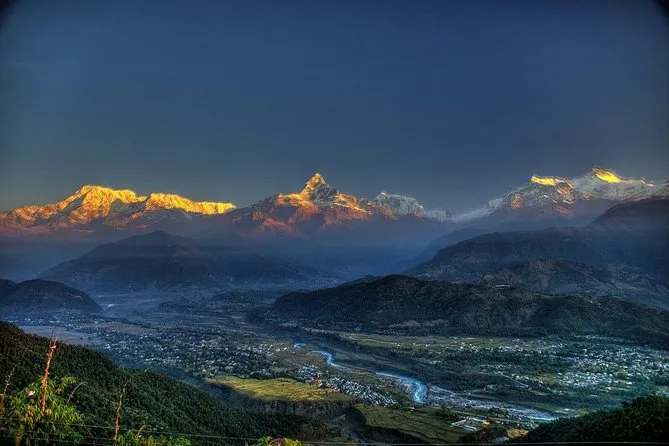
+580 m ~8.5 km / 5.2 miles 5–6 hours TeahouseBreakfastLunchDinner
We begin with an energetic, scenic morning drive from Pokhara to Jhinu Danda (1,780 m / 5,840 ft) via a private 4WD Jeep, following the road through Siwai, the traditional trailhead for this route. The road now continues beyond Siwai to Jhinu Danda, allowing us to drive closer to the walking section of the trek.
From Jhinu Danda, we leave the vehicle behind and begin the trek with a descent down a massive stone staircase to the suspension bridge. After crossing the bridge, we make a steady uphill climb through the beautiful terraced farmlands and settlements around Chhomrong, stopping for lunch before making the final ascent toward the forested trail leading to Sinuwa.
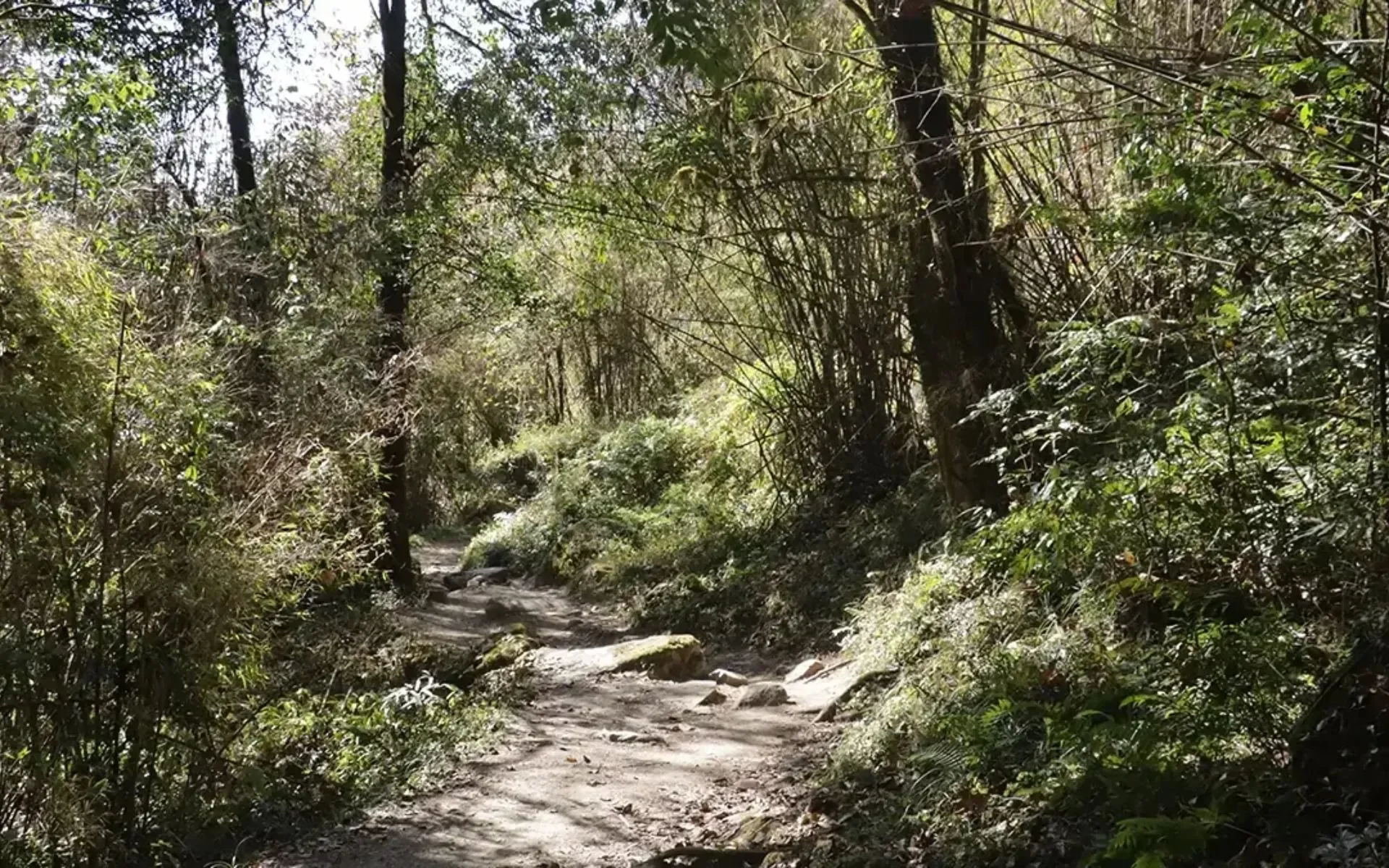
+870 m (2,919 ft) 11 km (6.8 miles) 6–7 hours TeahouseBreakfastLunchDinner
The trail plunges into dense, moss-draped bamboo (2,310 m / 7,579 ft), oak, and rhododendron forests. We descend briefly to the hamlet of Bamboo and climb steeply past Dovan (2,505 m / 8,215 ft).
As we approach Himalaya Hotel (2,920 m / 9,580 ft), the forest canopy begins to clear, revealing steep, sheer canyon walls and cascading waterfalls on either side of the Modi Khola. We reach Deurali by mid-afternoon, where the temperature begins to drop noticeably.
+900 m / 2,954 ft ~9 km / 5.5 miles 5–6 hours TeahouseBreakfastLunchDinner
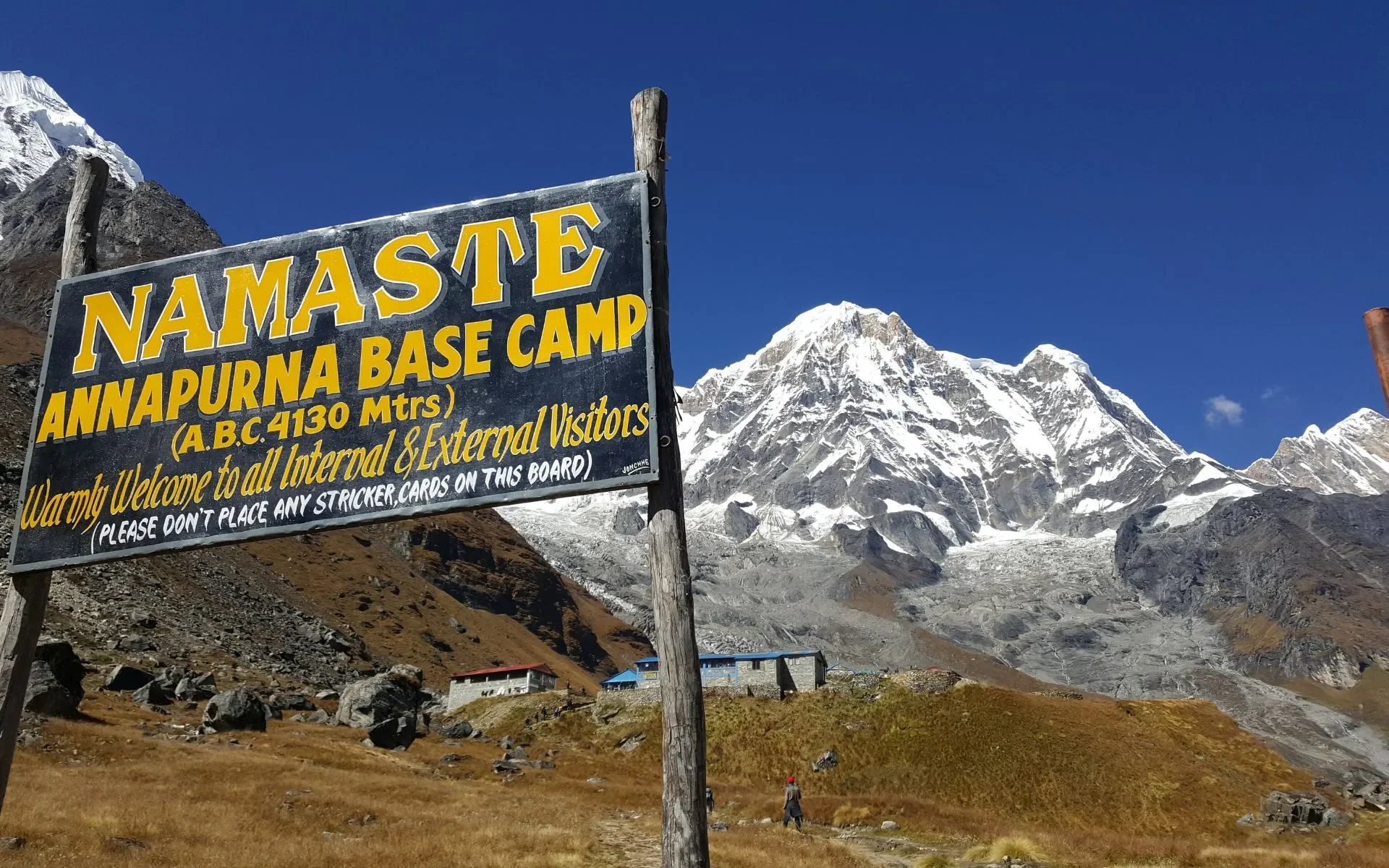
Today is the crown jewel of your trek. Leaving Deurali, you will follow a path that hugs the Modi Khola riverbed before climbing steeply through a dynamic, raw river canyon. The landscape opens up spectacularly as you reach the high alpine meadows of Machhapuchhre Base Camp (MBC). We stop here for a warm, energizing lunch surrounded by the towering walls of Fishtail, Gangapurna, and Annapurna South.
After lunch, the final push to ABC is a gentle, jaw-dropping glacial walk. Because of the high altitude, we maintain a slow, steady, and deliberate pace. As you hike along the lateral moraine, the trail unfolds into the legendary Annapurna Base Camp (ABC). Standing at 4,130 meters, you are placed squarely in the center of a monumental 360-degree mountain amphitheater, completely encircled by vertical faces of rock, ice, and snow.
-1,820 m / 5,971 ft ~14.5 km / 9 miles 6–7 hours TeahouseBreakfastLunchDinner
Your guide will wake you early to step out into the crisp, freezing morning air. Watching the very first golden rays of sunlight strike the 8,091-meter peak of Annapurna I is a spiritual, unforgettable Himalayan moment. After capturing photos and enjoying a hearty breakfast, it is time to turn around.
Because you are heading downhill into oxygen-rich air, your descent is remarkably fast and energizing. You will retrace your steps back through the wide glacial bowl of MBC, drop down the rugged canyon past Deurali, and wind your way back through Himalaya and Dovan. By late afternoon, you will drop nearly two vertical kilometers, arriving back in the lush greenery and warmer climate of Bamboo for a well-deserved rest.
~7 km / 4.3 miles 4–5 hours 3-star HotelBreakfastLunch
Drive Duration: 2.5–3 hours
The trail leaves Bamboo, climbing out of the valley forest and heading back up the stone steps to Sinuwa. From here, you make a final descent down to the river and climb back toward the ridges, branching off to the village of Jhinu Danda.
Once at Jhinu, you can take a short 20-minute side trail down to the edge of the Modi Khola river to soak in the natural, riverside thermal hot springs. It is the ultimate way to soothe your tired leg muscles after days of trekking. After your soak, you will cross the breathtakingly long Jhinu suspension bridge to meet our private 4WD jeep, wrapping up the day with a scenic drive back to Pokhara.
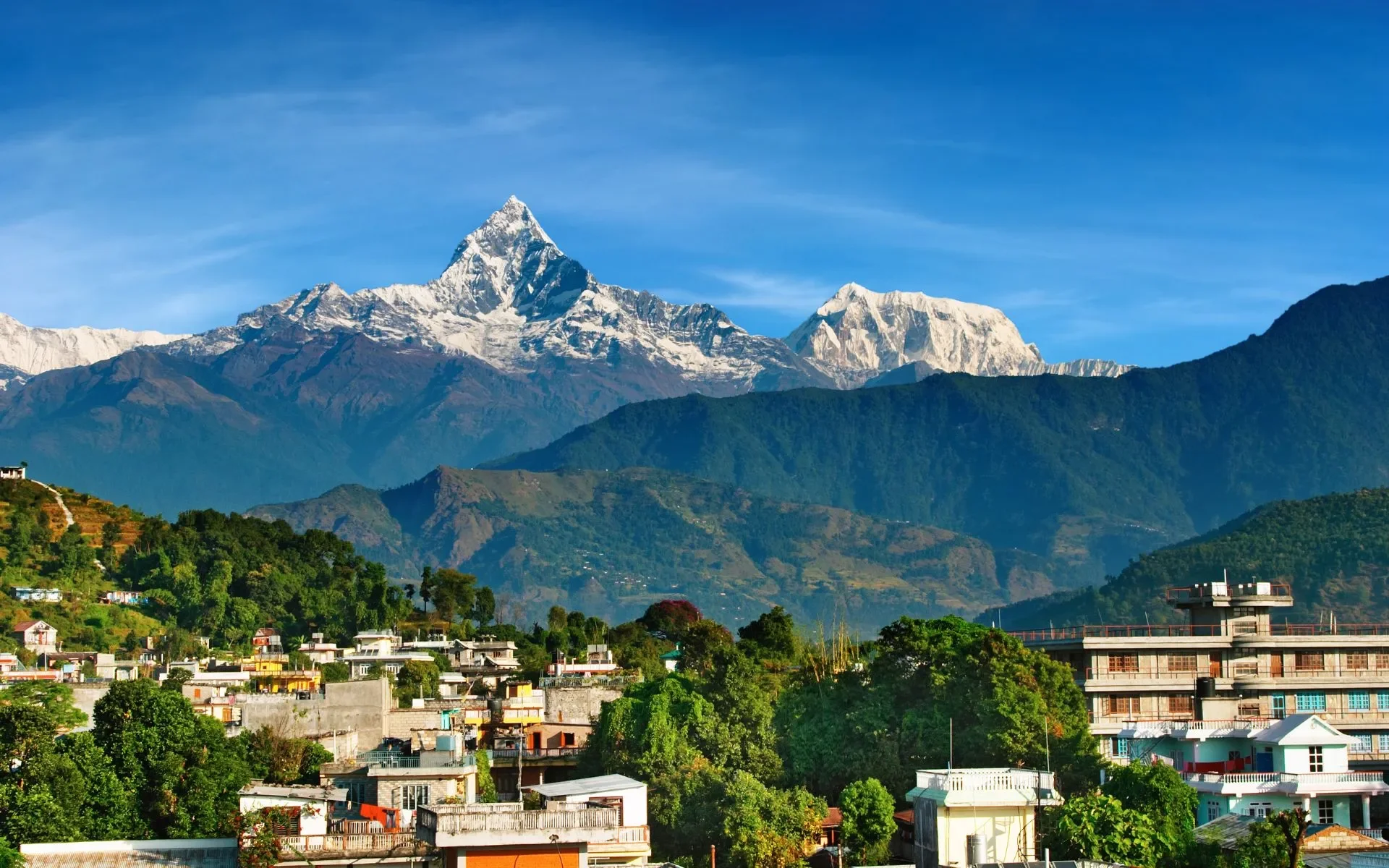
6–8 hours 3-star HotelBreakfast
We return to Kathmandu via the same overland route along the Prithvi Highway. As we reach the bustling capital, you'll transfer to your hotel and have the final evening to pick up souvenirs in Thamel, enjoy one last wood-fired pizza or craft beer, and celebrate your successful journey to the foot of the world's 10th-highest peak.
Breakfast
Activity: Airport drop-off via private vehicle
Enjoy a relaxed final breakfast at your hotel. Depending on your international flight departure time, you can complete any last-minute packing or city walks. Our driver will pick you up from the hotel lobby in a private vehicle and transfer you smoothly to Tribhuvan International Airport, ensuring you arrive three hours before your flight home.
Annapurna Base Camp Cost & Package Comparison
Our Annapurna Base Camp (ABC) Trek packages are designed to offer the perfect balance of affordability, comfort, and professional support. Whether you choose the 9-Day Classic itinerary for a quicker adventure or the 12-Day Extended itinerary with the iconic Poon Hill sunrise, you'll enjoy experienced local guides, reliable porter support, comfortable teahouse accommodations, and carefully planned logistics throughout your journey.
We believe in transparent pricing, so there are no hidden charges. Your package includes trekking permits, licensed guides, porter services, accommodation during the trek, private ground transportation where specified, and full-board meals while trekking. Kathmandu–Pokhara flights are optional and can be arranged upon request for an additional cost, allowing you to choose between a scenic overland drive or a quicker domestic flight based on your budget and schedule.
Note: Prices are per person based on fixed group departures. Optional upgrades such as private trips, helicopter returns, hotel upgrades, or domestic flights are available at an additional cost.
Feature | 9-Day Classic (Recommended) | 12-Day Extended |
Price per Person | USD 1,599 | USD 2,199 |
Trip Duration | 9 Days | 12 Days |
Trail Days | 5 Days | 7 Days |
Pace | Fast-Paced & Direct | Relaxed & Scenic |
Kathmandu Stay | 2 Nights | 3 Nights |
Guide & Porter | Licensed Guide + 1 Porter per 2 Trekkers | Licensed Guide + 1 Porter per 2 Trekkers |
Meals & Accommodation on Trek | Included | Included |
Ground Transportation | Included | Included |
Domestic Flights | Optional (Additional Cost) | Optional (Additional Cost) |
Permits (ACAP) | Included | Included |
Airport Transfers | Included | Included |
Why Is Our Annapurna Base Camp Trek Pricing Different?
We focus on transparent pricing rather than artificially low bait-and-switch costs. Paying proper, ethical wages to our guides and porters, insuring our field staff, reserving safe teahouse accommodation, and maintaining a high standard of mountain safety are essential parts of organizing a responsible, unforgettable Himalayan experience.
What's Included
Private Airport Transfers: Hassle-free private pickup and drop-off at Tribhuvan International Airport for international arrivals, departures, and all domestic flight connections.
Trailhead Transportation: Private 4WD vehicle transfers to and from the trekking trailheads, including Siwai, Jhinu Danda, Nayapul, or Kimche (as per your selected itinerary).
Kathmandu–Pokhara Transportation: Comfortable overland transportation between Kathmandu and Pokhara by tourist bus or private vehicle, depending on your package selection.
Annapurna Conservation Area Permit (ACAP): All required ACAP entry permit fees are included.
Professional Trekking Guide: Experienced, government-licensed, first-aid trained, and English-speaking trekking guide for safe and smooth navigation throughout the trek.
Additional Guide Support: Extra guides provided for larger groups to ensure proper care and service.
Experienced Porters: Strong and reliable porters provided to carry your main trekking luggage (1 porter shared between 2 trekkers, carrying up to 20-25 kg / 44 lbs total).
Ethical Staff Support: Includes guide and porter salaries, insurance, meals, accommodation, and required high-altitude equipment to ensure fair and responsible treatment.
Kathmandu & Pokhara Accommodation: Twin-sharing 3-star hotel accommodation with breakfast included. Private rooms are available upon request at an additional cost.
Trekking Accommodation: Clean and comfortable twin-sharing teahouse/lodge accommodation throughout the trekking route.
Full Board Meals During Trek: Three nutritious meals daily (breakfast, lunch, and dinner) selected from local teahouse menus during the trek.
Complimentary Post-Trek Massage: Enjoy a complimentary 1-hour trekker massage in Pokhara or Kathmandu after completing your trek, helping you relax and recover from the journey.
Trail Beverages: Tea or coffee included with breakfast, lunch, and dinner while trekking.
Farewell Dinner: Traditional farewell dinner in Kathmandu on your final evening in Nepal.
Comprehensive First-Aid Kit: A complete group medical kit carried by the lead guide for basic treatment and altitude-related safety needs.
Government Fees & Taxes: All applicable government taxes, VAT, local tourism fees, and official service charges are included.
What's Excluded
Nepal Entry Visa: Payable in cash upon arrival at Tribhuvan International Airport (TIA).
International Airfare: Flights to and from Kathmandu's international terminal.
Domestic Flights: Optional round-trip flights between Kathmandu and Pokhara (Kathmandu → Pokhara and Pokhara → Kathmandu) can be arranged at an additional cost.
Travel Insurance: A comprehensive policy that explicitly covers high-altitude trekking up to 4,500 meters and emergency helicopter medical evacuation (mandatory for all participants).
City Meals: Lunches and dinners while staying in Kathmandu and Pokhara (giving you the freedom to explore the vibrant local culinary scene).
Trekking Gear & Equipment: Personal clothing and gear (such as down jackets, sleeping bags, trekking poles, and technical layers).
Personal Expenses on the Trail: Teahouse extras such as hot showers, Wi-Fi access, electronic device charging fees, and bottled or boiled water (paid directly to local lodge owners).
Tips & Gratuities: Tips for your trekking guide and porters at the end of the journey (customary in Himalayan trekking to reward exceptional service).
Emergency & Contingency Expenses: Any additional costs arising from unexpected itinerary changes caused by adverse weather, domestic flight delays, trail blockages, personal health issues, or other circumstances beyond our control.
Annapurna Base Camp Trek Route Map
The Annapurna Base Camp (ABC) Trek follows one of Nepal's most iconic trekking routes through the heart of the Annapurna Conservation Area. Starting with a scenic drive from Kathmandu to Pokhara, the journey continues by road to the trailhead before gradually ascending through charming mountain villages, lush rhododendron forests, deep river valleys, and high alpine landscapes.
The classic route passes through Jhinu Danda, Sinuwa, Deurali, and Machhapuchhre Base Camp (MBC) before reaching Annapurna Base Camp (4,130 m / 13,550 ft), where trekkers are rewarded with breathtaking 360-degree views of Annapurna I, Annapurna South, Hiunchuli, Gangapurna, and the sacred Machhapuchhre (Fishtail). After spending the night at base camp, the trail retraces the same route back to Pokhara, with a relaxing stop at the natural hot springs of Jhinu Danda.
ABC Trek Distance, Duration & Altitude Chart
The Annapurna Base Camp (ABC) Trek covers approximately 65–70 km (40–43 miles) round trip on the classic route, while the 12-Day Extended Trek via Ghorepani Poon Hill covers around 80–85 km (50–53 miles) due to the additional scenic loop. The trail passes through traditional Gurung villages, dense rhododendron forests, river valleys, and alpine landscapes before reaching Annapurna Base Camp (4,130 m / 13,550 ft).
Note: Although the highest point is lower than Everest Base Camp, the trail features numerous steep ascents and descents. Daily elevation gain is planned carefully to allow gradual acclimatization and ensure a comfortable trekking experience.
Stop | Elevation | Distance | Walking Time |
Pokhara → Jhinu Danda | 822 m → 1,780 m | Drive + Short Walk | 2.5–3 hr drive + 1 hr |
Jhinu Danda → Chhomrong → Sinuwa | 1,780 m → 2,170 m → 2,360 m | 10–11 km | 5–6 hrs |
Sinuwa → Bamboo → Dovan → Deurali | 2,360 m → 2,310 m → 2,505 m → 3,230 m | 11 km | 6–7 hrs |
Deurali → Machhapuchhre Base Camp → Annapurna Base Camp | 3,230 m → 3,700 m → 4,130 m | 9 km | 5–6 hrs |
Annapurna Base Camp → Bamboo | 4,130 m → 2,310 m | 14–15 km | 6–7 hrs |
Bamboo → Jhinu Danda | 2,310 m → 1,780 m | 7 km | 4 hrs |
Jhinu Danda → Pokhara | 1,780 m → 822 m | Drive | 2.5–3 hrs |
Additional Stages on the 12-Day Extended Trek (via Ghorepani Poon Hill)
Stop | Elevation | Distance | Walking Time |
Nayapul/Hile → Tikhedhunga → Ulleri → Ghorepani | 1,070/1,430 m → 1,570 m → 2,050 m → 2,874 m | 11–13 km | 6–7 hrs |
Ghorepani → Poon Hill → Tadapani | 2,874 m → 3,210 m → 2,630 m | 11 km | 6–7 hrs |
Tadapani → Gurjung → Chhomrong → Sinuwa | 2,630 m → 1,950 m → 2,170 m → 2,360 m | 13 km | 6–7 hrs |
Major Stops Along the Trail
Pokhara – The gateway to the Annapurna region at 822 m (2,697 ft), known for its lakeside setting and mountain views.
Chhomrong – The largest Gurung village on the Annapurna Base Camp route at 2,170 m (7,119 ft), offering stunning views of Annapurna South and Machhapuchhre.
Sinuwa – A peaceful ridge-top settlement at 2,360 m (7,743 ft), marking the entrance to the Annapurna Sanctuary.
Deurali – Located at 3,230 m (10,595 ft), this is where trekkers leave the dense forest behind and enter the alpine environment.
Machhapuchhre Base Camp (MBC) – Situated at 3,700 m (12,139 ft) beneath the sacred Fishtail Mountain, MBC offers spectacular close-up Himalayan scenery.
Annapurna Base Camp (ABC) – The highest point of the trek at 4,130 m (13,550 ft), surrounded by a breathtaking 360-degree amphitheater of Annapurna I, Annapurna South, Hiunchuli, Gangapurna, and Machhapuchhre.
Additional highlights on the 12-Day Extended Trek:
Ulleri – Famous for its challenging stone staircase of over 3,000 steps.
Ghorepani – A charming mountain village and popular overnight stop surrounded by rhododendron forests.
Poon Hill (3,210 m / 10,531 ft) – One of Nepal's most famous sunrise viewpoints, offering panoramic views of the Annapurna and Dhaulagiri ranges.
Tadapani – A peaceful forest village with excellent views of Machhapuchhre and the Annapurna massif.
Classic Route vs Alternative Routes
There are several ways to reach Annapurna Base Camp, each offering a different experience depending on your available time and trekking preferences.
Route | Duration | Best For | Highlights |
9-Day Classic ABC | 9 Days | Experienced trekkers with limited time | Direct route, efficient itinerary, all major ABC highlights |
12-Day Extended ABC via Ghorepani Poon Hill | 12 Days | First-time trekkers and photographers | Poon Hill sunrise, rhododendron forests, gradual ascent, extra acclimatization |
ABC with Mardi Himal Extension | 13–15 Days | Adventure seekers | Combines two spectacular trekking routes with closer views of Machhapuchhre |
ABC Helicopter Return | 8–10 Days | Luxury and time-conscious travelers | Trek to ABC and return to Pokhara by helicopter, avoiding the long descent |
Whether you choose the 9-Day Classic or the 12-Day Extended itinerary, both routes deliver an unforgettable journey through the Annapurna Sanctuary. The classic trek is ideal for travelers seeking the shortest route to Annapurna Base Camp, while the extended itinerary offers a slower pace, better acclimatization, and additional highlights such as the world-famous Ghorepani Poon Hill sunrise. Together, they provide two excellent options for experiencing one of Nepal's most rewarding Himalayan adventures.
Altitude Profile
Packing List
Because this trek spans everything from subtropical valleys at 822 m to a glacial basin above 4,000 m, layering is the single most important principle. What keeps you comfortable in Pokhara will do almost nothing for you at Machhapuchhre Base Camp.
Our Safety Guarantee: We review a detailed, itemized packing checklist with you during our pre-trek briefing in Kathmandu. Before we head to Pokhara, your guide will personally check your layering system to guarantee you are fully prepared, safe, and comfortable for Base Camp.
Clothing
Base Layers (2–3 sets): Moisture-wicking merino wool or synthetic thermal tops and bottoms to manage sweat during warm, lower-altitude trekking days.
Mid Layer (1–2): Breathable fleece or softshell jacket for cool mornings and evenings in villages like Chhomrong and Sinuwa.
Down Jacket (1): High-quality hooded down jacket rated to at least -10°C (essential for the final push above 3,000 m).
Outer Shell (1): Waterproof, windproof, and breathable jacket (Gore-Tex or similar) to protect against unexpected weather.
Trekking Pants (2 pairs): Lightweight, quick-drying hiking pants, plus a pair of shorts for the warmer lower valleys.
Headwear: A wide-brimmed sun hat for daytime UV protection and a warm thermal beanie for freezing nights.
Gloves: Lightweight inner gloves for daytime hiking and insulated waterproof outer gloves for freezing mornings at Base Camp.
Footwear
Trekking Boots: Waterproof, high-cut trekking boots with solid ankle support (must be well broken in before the trek to avoid blisters on the steep stone staircases).
Camp Shoes: Lightweight camp shoes, sneakers, or sandals to let your feet breathe at the teahouses in the evenings.
Socks: 4–5 pairs of cushioned merino wool hiking socks for daily wear, and a dedicated pair of heavy thermal socks reserved strictly for cold nights.
Gear & Equipment
Bags: A 30-to-40-liter daypack for what you carry yourself, plus a durable duffel bag for the gear your porter will carry.
Sleeping Bag: A four-season sleeping bag rated to at least -10°C. (Note: These can easily be rented in Kathmandu or Pokhara if you prefer not to fly with one).
Trekking Poles: Highly recommended to save your knees on the steep ascents and endless downhill stone steps.
Hydration: A reusable water bottle or bladder, paired with water purification tablets or a filter.
Electronics
Headlamp: A reliable LED headlamp with spare batteries for pre-dawn starts and navigating teahouses at night.
Power Bank: A high-capacity power bank (20,000 mAh or larger), as device charging at high-altitude teahouses requires a small fee and wall outlets are limited.
Cables & Adapter: Personal charging cables and a universal travel adapter.
Camera (Optional): Camera with spare batteries (battery life drains rapidly in freezing temperatures).
Documents
Passport: Must be valid for at least six months from your travel dates.
Nepal Visa: Obtained upon arrival at the airport or pre-arranged.
Travel Insurance: A comprehensive policy copy explicitly covering high-altitude trekking up to 4,500 m and emergency helicopter evacuation.
Flight Tickets: Printouts of your domestic and international flight details.
Photos: 4–6 passport-sized photos for local registrations and permits.
Emergency Contacts: A physical list of emergency contact numbers.
Personal Items
Sun Protection: SPF 50+ sunscreen, UV-blocking lip balm, and high-quality polarized sunglasses (UV exposure increases drastically above 3,000 m).
Hydration: Reusable water bottles or a hydration bladder (minimum 2-liter capacity).
Water Purification: Water purification tablets, drops, or a squeeze filter.
Toiletries: Basic toiletries, biodegradable wet wipes (essential for "dry showers"), and a quick-dry microfiber travel towel.
Sanitation: Pocket hand sanitizer and personal toilet paper.
Medical Items
A personal first-aid kit is crucial, as fully stocked pharmacies do not exist past Pokhara.
Blister Treatment: Moleskin, Compeed, or heavy-duty blister tape.
Pain Relief: Ibuprofen or paracetamol for joint pain and mild headaches.
Rehydration: Electrolyte replacement powder and rehydration salts.
Personal Meds: Any personal prescription medications.
Altitude Support: Diamox (acetazolamide)—only if prescribed by your doctor.
Wound Care: Bandages, sterile gauze, and antiseptic wipes.
What Can You Rent in Kathmandu or Pokhara?
If you do not want to purchase expensive high-altitude trekking equipment for a single adventure, you can easily rent gear locally.
Available Gear: Down jackets, 4-season sleeping bags, and adjustable trekking poles are readily available.
Rental Cost: Prices typically range from $1 to $3 USD per item, per day, making this an extremely cost-effective option for many trekkers.
Seasonal Packing Advice
Tailor your packing setup to the specific time of year you choose to trek.
Spring (March–May): Layered clothing is crucial. Prepare for warm, humid trekking days on the lower trails and freezing nights at Base Camp.
Autumn (September–November): Similar to spring, with exceptionally crisp, clear mornings and rapidly cooling evening temperatures.
Winter (December–February): Extra heavy thermal base layers, a thicker down jacket, heavyweight insulated gloves, and warmer sleeping gear are absolute essentials.
Monsoon (June–August): Reliable waterproof rain jackets, rain ponchos, dry bags to line your pack, and strong insect repellent (for trail leeches) become top priorities.
Useful Info
Licensed, Experienced Guides: Every trek is led by a government-licensed guide with years of specific experience on Annapurna trails, not a generalist rotated in from another region. They know which lodges handle bad weather well, where the trail floods after heavy rain, and how to adjust the day's plan without derailing the itinerary.
Genuinely Small Groups: We keep group sizes small enough (upto 14 persons) that pacing can flex around the slowest comfortable walker in the group, rather than forcing everyone into a fixed schedule built for the fittest trekker.
Transparent, All-In Pricing: Our quotes show exactly what's covered, permits, guide and porter wages, accommodation, and meals, with no vague "trekking fees" hidden in the fine print. If something isn't included, we say so upfront.
Deep Local Expertise: Our guides and staff are from the hill communities the trek passes through. That means real relationships with tea house owners, accurate real-time knowledge of trail conditions, and an ability to answer cultural questions with more than a rehearsed script.
Medical Preparedness: Guides carry a wilderness first-aid kit and a pulse oximeter, and are trained to recognize early signs of altitude sickness. We maintain direct contact with rescue and evacuation services in Pokhara for the rare case that's needed.
Fair Porter Welfare: Our porters carry weight limits in line with international trekking welfare guidelines, receive appropriate clothing and gear for altitude, and are insured, not an afterthought bolted onto the guide's contract.
Custom Itineraries on Request: This 12-day version suits most trekkers, but we regularly adjust pacing, add rest days, or shorten transfers for groups with specific fitness levels, time constraints, or interests like photography or village homestays.
24/7 Support: A dedicated contact in our agency office is reachable throughout your trip, not just during office hours, useful for flight delays, permit questions, or last-minute itinerary changes.
Choosing the right season is crucial for a safe and memorable journey to the Annapurna Sanctuary. While the trail is technically open year-round, the weather, visibility, and overall trail conditions vary dramatically between seasons.
Seasonal Quick-Reference
Season | Months | Daytime Temp (Lower Trails) | Night Temp (At ABC) | Visibility & Trail Conditions |
Spring | March–May | 15∘C to 22∘C | 0∘C to −5∘C | Excellent visibility; blooming forests; moderate crowds. |
Autumn | Sept–Nov | 12∘C to 18∘C | −2∘C to −10∘C | Perfect clarity; most stable weather; highest crowds. |
Winter | Dec–Feb | 7∘C to 12∘C | −10∘C to −15∘C | Sharp views; intense cold; potential snow blocks; empty trails. |
Monsoon | June–Aug | 20∘C to 26∘C | 3∘C to 8∘C | Poor (Hazy); high rain volume; muddy trails with leeches. |
Autumn (September–November) • Peak Mountain Visibility
Once the monsoon rains sweep away the dust, they leave behind the crispest, most pristine skies of the year. This is the absolute gold-standard window for the Annapurna Base Camp Trek, offering exceptionally stable weather, pleasant trekking temperatures, and breathtaking, razor-sharp panoramic views of the entire massif. Because trail conditions are perfect, this is the most popular time to trek, creating a vibrant, social atmosphere at the teahouses along the route.
Spring (March–May) • Peak Blooming Season
As the winter snows melt, the Annapurna foothills transform into a vibrant, colorful wonderland. The mid-elevation trails are legendary during these months, as giant rhododendron and orchid forests explode into full, spectacular bloom. You will enjoy warm, comfortable walking temperatures, longer daylight hours, and beautifully clear mornings, making it a dream season for nature lovers and photographers alike.
Winter (December–February) • The Quiet, Crisp Window
If you do not mind cold temperatures, winter is a highly rewarding time to escape the crowds. While overnight temperatures at Base Camp plunge well below freezing, the daytime skies are intensely blue, clear, and free from high-altitude haze. You will enjoy pristine, snow-covered landscapes and have the iconic viewpoint trails entirely to yourself, though you must pack heavy winter gear and prepare for occasional snow delays.
Monsoon / Summer (June–August) • The Lush Wilderness
The summer monsoon brings heavy rains, high humidity, and thick cloud cover that frequently hides the peaks. While the weather makes classic trekking difficult due to wet trails, road washouts, and active leeches, it transforms the valleys into a lush, emerald-green paradise overflowing with spectacular, thunderous waterfalls. This season is strictly recommended for experienced, self-sufficient travelers who prioritize raw nature and total solitude.
All foreign trekkers entering the Annapurna region must obtain the correct official permits. These documents are verified at key checkpoints along the trail, including Birethanti and Chhomrong.
As part of your all-inclusive package, our team handles all permit paperwork, registrations, and official fees on your behalf. Simply provide us with a digital copy of your valid passport and passport-sized photographs, and we will have everything ready before your trek begins.
Annapurna Base Camp Trek Permit Fees
Permit | Required For | Foreign Nationals | SAARC Nationals | Issued By |
Annapurna Conservation Area Permit (ACAP) | All trekkers | NPR 3,000 | NPR 1,000 | National Trust for Nature Conservation (NTNC) |
The TIMS Card Requirement Explained: Is It Still Needed?
There is widespread confusion online regarding the Trekkers' Information Management System (TIMS) card. Many outdated travel blogs, third-party sites, and even official notices state that a TIMS card is strictly mandatory for the Annapurna region.
To save you unnecessary time, administrative hassle, and extra costs, here is the current reality on the ground:
1. TIMS is Not Enforced on the Annapurna Trail
While TIMS regulations officially exist on paper, checkpoints on the Annapurna Base Camp (ABC) and Annapurna Circuit routes do not enforce or check for TIMS cards. Officers at the trail gates will only request and verify your ACAP permit.
2. Why Does the Misinformation Persist?
Most trekking websites do not update their permit guides for years, repeatedly copying outdated rules from when the TIMS card was widely used. Today, TIMS is primarily used and enforced in other regions like Langtang and Manaslu, whereas the Annapurna and Everest regions have transitioned away from utilizing it at their trail checkpoints.
3. Legal and Worry-Free Trekking
You can legally and safely complete your Annapurna Base Camp Trek without purchasing or carrying a TIMS card. We ensure your trip is 100% compliant with local laws, and our guides will safely navigate all regional checkpoints using your fully authorized ACAP permit.
Important Safety & Guiding Regulations
While the TIMS card is no longer enforced on this route, Nepal's safety and guiding regulations are strictly maintained:
Mandatory Licensed Guides: Under Nepalese tourism rules, all foreign nationals are required to be accompanied by a licensed trekking guide through a registered agency to trek within national parks and conservation areas. Solo, unguided trekking is restricted.
Our Commitment: We provide fully certified, first-aid trained, and English-speaking guides for every trek, ensuring total compliance with local laws and the highest standard of safety on your journey.
The Annapurna Base Camp (ABC) Trek is a spectacular, moderate-grade journey into the heart of the Himalayas. You do not need technical climbing skills, ropes, or ice axes to reach the sanctuary, but a solid understanding of the trail's physical demands will ensure a safe, successful, and highly enjoyable adventure.
How Difficult Is the Annapurna Base Camp Trek?
The ABC trek is classified as moderate. Compared to other high-altitude routes like the Everest Base Camp Trek, it is shorter, reaches a lower maximum altitude of 4,130 m (13,550 ft), and features more gradual sleeping elevation profiles.
However, "moderate" in the Himalayas still means walking uphill and downhill for 5 to 7 hours a day while carrying a light daypack. The terrain transitions from lush, subtropical river valleys to rugged alpine moraines, requiring steady footwork and stamina.
Main Challenges of the Annapurna Base Camp Trek
The Infinite Stone Steps: The trails of the Annapurna Sanctuary are famous for their stone staircases. Climbing the steep steps up to Ulleri or navigating the thousands of jarring stairs down and up the Chhomrong gorge is a serious test of quad strength and knee endurance.
Rapid Altitude Transitions: Although the sleeping altitudes are manageable, the route climbs relatively quickly once you pass the gateway of Deurali (3,230 m). Proper pacing is essential to help your body adapt to the thinner air.
Unpredictable Mountain Weather: Temperatures can vary wildly. You might trek in a t-shirt at lower elevations (20°C) and require heavy down jackets at Base Camp, where night temperatures regularly plunge below freezing.
Can Beginners Do the Annapurna Base Camp Trek?
Yes, absolutely! Because the trail is well-established and completely non-technical, determined beginners with a decent baseline of health and a positive mindset can comfortably complete this trek.
Since you do not spend multiple consecutive days sleeping at extreme altitudes, your body has a much easier time recovering each night compared to higher-altitude treks in Nepal. Trekking with a registered agency also means you will have a professional, licensed guide monitoring your safety and pacing every step of the way.
Fitness Requirements
To enjoy your time on the trail rather than just surviving it, you should aim to meet these physical baselines before arriving in Nepal:
Cardiovascular Health: The ability to maintain a steady walking pace uphill without immediately becoming breathless.
Leg Strength & Joint Endurance: Strong leg muscles to support your knees during long, continuous downhill descents on stone steps.
Core Stability: A stable core to help you comfortably carry a 5-kg to 8-kg (11-lb to 17-lb) daypack containing your water, extra layers, and camera gear.
The Annapurna Base Camp (ABC) route is a classic teahouse trek. Instead of camping, you will stay in cozy, family-run mountain lodges (teahouses). While lower-altitude villages offer modern comforts, facilities become simpler the higher you climb.
What to Expect from Classic Mountain Teahouses
The Dining Hall: The social hub of every teahouse. Heated by a central stove in the evening, this is where trekkers gather to eat, dry gear, and socialize.
The Rooms: Standard rooms are simple, unheated, and twin-sharing. They contain two wooden beds with foam mattresses and basic pillows.
Expert Trail Tip: Temperatures drop below freezing at high altitudes. Always pack a 4-season sleeping bag (rated down to -10°C) to stay warm overnight.
Private Rooms vs. Dormitories
Below 3,000 meters: Private twin-share rooms are standard. Premium packages can secure rooms with attached bathrooms in lower villages like Ghandruk and Sinuwa.
Above 3,000 meters (The Sanctuary): To protect the environment, local committees strictly limit the number of lodges. In peak seasons, private rooms at Deurali, MBC, and ABC are extremely scarce. You may share a twin room or stay in clean 4- to 8-bed dorms.
Hygiene, Bathrooms, and Showers
Toilets: Lower teahouses feature Western-style flushing toilets. High-altitude facilities transition to shared squat toilets. Because pipes freeze overnight, water is bucket-flushed. Always pack your own toilet paper, as it is not provided.
Showers: Gas-heated showers are available at lower elevations for a small fee (1.50 to 3.00 USD). At higher elevations, freezing conditions limit gas geysers, and teahouses offer bucket baths of hot water instead.
Trekking 5 to 7 hours a day requires nutrient-dense fuel. All teahouses cook from a standardized menu regulated by the Annapurna Conservation Area Project (ACAP), ensuring strict hygiene and fair pricing across the trail.
Teahouse Menus & Mountain Fuel
Dal Bhat: The national staple consisting of rice, lentil soup, vegetable curry, and pickles. It is highly nutritious, organic, and comes with free refills, the ultimate fuel for hikers!
Western Options: Menus feature high-carbohydrate dishes like pasta, noodles, potatoes, pancakes, porridge, and eggs.
Vegetarian Preference: We strongly recommend a vegetarian diet past Sinuwa. Because meat must be carried up the mountains by porters without refrigeration, going vegetarian heavily reduces your risk of foodborne illness.
Dietary Restrictions
Vegetarian & Vegan: Highly accommodated. Traditional Dal Bhat, vegetable noodles, and potato dishes are naturally plant-based.
Gluten-Free: Rice, corn, and potato-based meals are widely available. Always inform your guide of any severe allergies so they can brief the teahouse kitchens directly.
Safe Drinking Water Protocols
Single-use plastic water bottles are strictly banned past a certain point in the Annapurna Conservation Area to protect the fragile alpine ecosystem. You must bring reusable bottles or a hydration bladder and treat your water:
UV/Squeeze Filters: Devices like a SteriPEN or Sawyer Squeeze are highly efficient and eco-friendly.
Purification Tablets: Chlorine dioxide tablets are lightweight and highly effective.
Boiled Water: Safe, boiled water can be purchased directly from teahouses for a small fee (1.00 to 3.00 USD per liter).
Trail Amenities & Estimated Costs
Amenity | Cost (NPR) | Cost (USD) | Availability Notes |
Hot Shower | 200 – 500 NPR | 1.50 – 4.00 USD | Available up to Deurali; generally unavailable at ABC |
Device Charging | 150 – 400 NPR | 1.20 – 3.00 USD | Charged per device or power bank |
Wi-Fi Access | 200 – 500 NPR | 1.50 – 4.00 USD | Connection speeds drop past Sinuwa |
1L Boiled Water | 100 – 300 NPR | 0.80 – 2.30 USD | Price increases with altitude |
Most travelers can obtain a tourist visa upon landing at Tribhuvan International Airport (TIA) in Kathmandu.
Quick Requirements
Passport: Must be valid for at least 6 months beyond your arrival date.
Pre-Arrival Form: Complete the online form on the Nepali Port Portal within 15 days of arrival. Print the receipt with the barcode to bypass the airport kiosk queues.
Payment: Bring crisp, undamaged USD cash. While card readers are sometimes available at TIA, they are notoriously unreliable.
Cost & Duration (2026)
Every standard tourist visa is multiple-entry by default.
Duration | Fee (USD) | Best For |
15 Days | $30 USD | Quick city tours or short weekend treks (e.g., Mardi Himal) |
30 Days | $50 USD | Standard choice. Covers the ABC trek and buffers for delays |
90 Days | $125 USD | Extended multi-region travel or back-to-back treks |
Children under 10 receive a free (gratis) visa, though the registration process still applies.
Choosing between a Classic and a Luxury Annapurna Base Camp (ABC) trek depends entirely on your budget, time, and comfort preferences.
Here is a straightforward, side-by-side comparison to help you choose the package that fits you best.
Quick Comparison Table
Feature | Classic ABC Trek | Luxury ABC Trek |
Average Cost | $1599 – $1,899 USD | $1,899 – $2,500 USD |
Accommodation | Standard teahouses (shared bathrooms at high altitudes) | Best available premium/boutique lodges (private rooms) |
Transportation | Public/tourist bus or standard domestic flights | Private Jeep transfers & optional helicopter return |
Pace & Duration | 9 – 12 days (brisk pace, 5–7 hours daily walk) | 12 – 14 days (relaxed pace) OR 8 days (with Heli return) |
Porter Ratio | 1 porter shared between 2 trekkers | Private dedicated porter or lighter load carrying |
Key Differences Explained
1. Accommodation & Daily Comfort
Classic: You stay in standard trail teahouses. While cozy, rooms are basic with twin beds and shared squat toilets. Hot showers and device charging cost extra (2 – 4 USD per use).
Luxury: You stay in premium, hand-picked boutique lodges (like Temple Tree in Pokhara or the best luxury lodges in Ghandruk and Chomrong). You get electric blankets, heated rooms where available, and private attached bathrooms. Wi-Fi, hot showers, and charging are typically included.
2. Transport & The "Heli-Out" Option
Classic: You travel via tourist bus or shared local Jeeps to the trailhead. After reaching ABC (4,130m), you have to hike all the way back down the same knee-jarring trail (taking about 3–4 days to return).
Luxury: You travel in comfortable, private 4x4 Jeeps. Most luxury packages feature a helicopter return flight directly from Annapurna Base Camp back to Pokhara. This saves you 3 days of downhill hiking and treats you to incredible aerial views.
3. Food & Dining Experience
Classic: Meals are chosen directly from the standard teahouse menu (mostly Dal Bhat, noodles, and potatoes).
Luxury: Many premium agencies pre-arrange upgraded multi-course meals, featuring fresh organic ingredients, seasonal fruits, and better culinary variety handled by top-tier lodge kitchens.
A Note on High Altitudes: Even on a luxury trek, facilities above 3,000 meters (Deurali, MBC, and ABC) become structurally basic for everyone due to strict environmental zoning. However, a luxury package ensures you get the absolute best private rooms available in these tight spots.
The Annapurna Base Camp (ABC) trek tops out at 4,130 meters (13,550 feet). While it is highly achievable, the thinner air past 3,000 meters (around Himalaya Hotel and MBC) poses a real risk of Acute Mountain Sickness (AMS).
Staying safe on the trail requires knowing what to look for, how to prevent it, and exactly what to do if you start feeling off.
Mild vs. Severe Symptoms: What to Watch For
The golden rule of high-altitude trekking is simple: Any sickness at altitude is altitude sickness until proven otherwise.
Symptom Severity | Typical Signs | Immediate Action Required |
Mild AMS (Like a hangover) |
| Stop ascending. Rest at your current altitude. Drink water, take ibuprofen for the headache, and reassess in 12–24 hours. |
Severe AMS (HAPE/HACE) |
| Emergency. Descend immediately by at least 300 to 500 meters, regardless of the time of day. Seek professional medical help and call for evacuation if necessary. |
Key Prevention Strategies
Walk slow (Bistari, Bistari): Pacing is your absolute best defense. Never race or try to keep up with faster hikers. Save your energy and walk at a pace where you can comfortably hold a full conversation.
Cap your altitude gains: Once you pass 3,000 meters (roughly after Sinuwa), limit your sleeping elevation gain to 300 to 500 meters per day.
Hydrate vigorously: The dry, cold mountain air dehydrates you rapidly, mimicking and worsening AMS symptoms. Drink 3 to 4 liters of clean water daily. Your urine should remain pale or clear.
Avoid alcohol and sedatives: Alcohol and sleeping pills suppress your breathing rate, lowering your oxygen intake when your body needs it most.
Eat high-carb meals: Even if you lose your appetite, fuel your body with carbohydrates (like garlic soup, which is a local favorite for aiding oxygen circulation).
The Role of Diamox (Acetazolamide)
Diamox is a prescription medication that forces your kidneys to excrete bicarbonate, which acidifies your blood, stimulates deeper breathing, and accelerates natural acclimatization.
As a preventative: A standard dose is 125mg twice a day, starting 24 hours before you cross the 2,500-meter mark.
Side effects: Expect frequent urination and a harmless tingling sensation (paresthesia) in your fingers, toes, and face. Carbonated drinks may also taste flat.
Crucial Note: Diamox is not a magic shield. It does not make it safe to run up the mountain, nor does it mask severe symptoms if you are actively deteriorating. If symptoms worsen, the only cure is descent.
Warning: Diamox is a sulfonamide-based drug. Do not take it if you have a known allergy to sulfa medications. Always consult a travel doctor before your trip.
Staying connected on the Annapurna Base Camp (ABC) trail is highly manageable, but coverage changes drastically the higher you climb. Here is the short, realistic breakdown.
Local SIM Cards: NTC vs. Ncell
Getting a local prepaid tourist SIM in Kathmandu or Pokhara before heading into the mountains is the most reliable and affordable option.
NTC (Nepal Telecom): The winner for the ABC trek. It has the most consistent coverage in remote valleys and at higher elevations, holding a signal in places like Sinuwa, Bamboo, Deurali, and occasionally at Base Camp itself.
Ncell: Excellent, fast 4G in Pokhara and lower trail sections (like Ghandruk or Ghorepani). However, the signal drops off sharply once you climb past Chhomrong.
Pro Tip: Many trekkers use a dual-SIM phone, running Ncell for speed in the lower villages and switching to NTC as they ascend.
Teahouse Wi-Fi
Most lodges along the route offer Wi-Fi, but there are a few caveats:
The Cost: While lower villages might offer it for free, mid-to-high altitude teahouses usually charge a small fee of $1 to $3 USD (approx. 100 – 300 NPR) per device or per 24 hours.
The Speed: In lower areas, it is decent enough for messaging and photo sharing. Past Chhomrong, the connection relies on shared bandwidth or solar-powered satellite systems, making it slow, patchy, and highly dependent on clear weather.
Power Constraints: High-altitude teahouses rely heavily on solar power. If it has been cloudy or rainy for a couple of days, the host might turn off the Wi-Fi router entirely to save power.
Essential Prep Tips
Download Offline Maps: Grab offline map data (such as Google Maps or Maps.me) while in Pokhara.
Carry a Power Bank: Teahouses charge fees to power your devices at higher altitudes. Bring a high-capacity power bank (10,000–20,000 mAh) to stay self-sufficient.
One of the best things about the Annapurna Base Camp (ABC) trek is its incredible flexibility. Whether you are a busy traveler looking for a quick mountain fix or an adventurer wanting to combine multiple trails into one grand expedition, there is a perfect itinerary for you.
Here is a breakdown of the most popular durations and routes to help you choose the right itinerary.
Comparison of ABC Route Options
Route Option | Average Duration | Ideal For | Highlights |
ABC Express Trek | 8 Days | Fit hikers short on time | Direct, fast ascent to 4,130 m with zero backtracking detours. |
Classic ABC Trek | 9 – 12 Days | First-time trekkers | Scenic hike through Ghandruk and Chhomrong, with steady acclimatization. |
ABC via Ghorepani Poon Hill | 12 – 14 Days | Landscape & photography lovers | A stellar combined route featuring a Ghorepani Poon Hill sunrise and the deep Sanctuary. |
Close-by Alternative Treks in the Annapurna Region
If you love the Annapurna region but want to avoid the stone staircases or crowds of the main ABC trail, consider these excellent alternatives:
Mardi Himal Trek ( 7 Days): A quieter, ridge-line trek that runs parallel to the ABC route. It offers incredibly close views of Machhapuchhre (Fishtail) and far fewer crowds.
Khopra Danda Trek (7 to 9 Days): An off-the-beaten-path alternative to Poon Hill that takes you to a high ridge overlooking the world's deepest gorge (Kali Gandaki) and the sacred Khayer Lake.
Ghorepani Poon Hill Trek (8 Days): Perfect for families or beginners who want a taste of Himalayan trekking and magnificent views without climbing past 3,210 meters.
Choosing between the Annapurna Base Camp (ABC) Trek and the Annapurna Circuit Trek (ACT) is one of the biggest decisions you will make when planning a trip to Nepal. Both routes are world-class, but they offer completely different styles of adventure, physical demands, and scenery.
The quick breakdown below helps you choose the perfect trail for your schedule and hiking style.
Comparison at a Glance
Feature | Annapurna Base Camp (ABC) | Annapurna Circuit Trek (ACT) |
The Vibe | Deep dive into a mountain sanctuary. | A grand, diverse loop around a massive range. |
Duration | 7 to 12 days (highly flexible) | 12 to 18 days (requires more time) |
Total Distance | Approx. 85 – 115 km (53 – 71 miles) | Approx. 160 – 230 km (100 – 142 miles) |
Max Elevation | 4,130 m (13,550 ft) at Base Camp | 5,416 m (17,769 ft) at Thorong La Pass |
Difficulty | Moderate (steep stone steps, direct route) | Challenging (high altitude, long endurance) |
Landscape | Green rhododendron forests leading to a glacial amphitheater. | Rainforests, pine forests, and high-altitude Tibetan-style deserts. |
How to Choose the Right Path
Go for Annapurna Base Camp (ABC) if:
You are short on time: You can easily complete the trek in a single week off from work.
You want massive peaks right in your face: The "Sanctuary" is a sheer rock-and-ice bowl. Standing at Base Camp feels like being inside a high-altitude stadium surrounded by 7,000m and 8,000m giant peaks.
You want lower altitude risks: While AMS is still a factor past 3,000m, sleeping at 4,130m is far less physically punishing than crossing a 5,416m pass.
Go for the Annapurna Circuit (ACT) if:
You want maximum diversity: You start in tropical, lush green valleys and end up in dry, arid, windswept terrain that looks identical to Tibet.
You love a massive physical milestone: Crossing Thorong La Pass (5,416 m) is a true badge of honor that requires excellent mental grit and physical stamina.
You want deep cultural variety: You transition from Hindu-dominated lower foothills to Tibetan-Buddhist culture in Upper Manang and the holy pilgrimage site of Muktinath.
Both the Annapurna Base Camp (ABC) Trek and the Everest Base Camp (EBC) Trek are world-class Himalayan adventures, but they offer completely different experiences. Whether you want to trek through deep green valleys or walk among the highest icy giants on Earth, here is how these two iconic trails compare head-to-head.
At a Glance Comparison
Feature | Annapurna Base Camp (ABC) | Everest Base Camp (EBC) |
Maximum Elevation | 4,130 m | 5,364 m (Base Camp) / 5,545 m (Kala Patthar) |
Typical Duration | 7 to 11 days | 12 to 16 days |
Trek Distance | ~110 km (68 miles) (from Birethanti to ABC and back to Siwai) | ~130 km (81 miles) |
Difficulty Level | Moderate | Challenging |
Starting Point | Drive from Pokhara | Flight to Lukla (usually) |
Scenery Style | Lush forests, terraced fields, and a mountain amphitheater | High-alpine, dry, rocky glaciers and towering peaks |
The Key Differences
1. Altitude and Physical Challenge
Everest (EBC): A serious high-altitude challenge. Reaching 5,545 m at Kala Patthar, you spend several days walking in thin air where oxygen levels are low, requiring slow, mandatory acclimatization days.
Annapurna (ABC): Peaks at a much lower 4,130 m. While the risk of altitude sickness is significantly lower, the daily challenge comes from the relentless, steep stone staircases.
2. Landscapes and Views
Everest (EBC): A stark, high-alpine, rock-and-ice environment. You walk alongside massive active glaciers and directly under iconic giants like Ama Dablam, Lhotse, and Mount Everest.
Annapurna (ABC): Incredibly diverse landscapes. You start in lush bamboo and rhododendron forests, hike past terraced farmlands, and finish inside the "Annapurna Sanctuary", a massive 360-degree ring of towering peaks.
3. Culture and Vibe
Everest (EBC): Deeply Buddhist and Sherpa-centric. The trail is lined with active monasteries (like Tengboche), prayer flags, and mani stones.
Annapurna (ABC): A multi-ethnic experience. You pass through vibrant Gurung, Magar, and Thakali farming villages, experiencing a blend of Hindu and Buddhist cultures.
4. Travel Logistics and Budget
Everest (EBC): Logistically complex. Most trekkers must fly into the weather-dependent mountain airstrip at Lukla. Food and accommodation costs rise sharply the higher you climb.
Annapurna (ABC): Highly accessible and budget-friendly. You simply take a private Jeep or bus from Pokhara straight to the trailheads, completely avoiding flight delays.
The Verdict: Which should you choose?
Choose ABC if: You are short on time (7 to 10 days), prefer lush forests and diverse scenery, want simpler road logistics, and prefer a lower-altitude trek.
Choose EBC if: You have at least 2 weeks to spare, want to stand at the foot of the world's tallest peak, love rugged alpine glacial landscapes, and are ready for a challenging high-altitude endurance test.
The Annapurna Base Camp (ABC) trek is widely recognized as one of the safest, most welcoming, and most empowering routes in the world for solo female travelers. Because the trail is highly popular and supported by an established, tight-knit teahouse network, you are rarely truly isolated.
Here is a short, realistic guide to navigating the trail safely, comfortably, and respectfully.
The Reality: Is it Safe?
Personal Security: Violent crime on the trail is virtually unheard of. Local communities rely heavily on tourism and treat travelers with immense hospitality and respect.
The Real Risks: Your biggest safety hazards are altitude sickness (AMS) and rapidly changing mountain weather, not personal security.
Essential Safety Guidelines
Hire a Licensed Guide: While independent trekking is sometimes possible, having a local, licensed guide, whether male or female, provides unmatched safety, simplifies teahouse logistics, and acts as an immediate advocate if you fall ill.
Start Your Days Early: Aim to hit the trail by 7:00 AM. Morning weather is consistently more stable, you will share the path with plenty of other hikers, and you'll reach your next teahouse well before the afternoon chill and fog roll in.
Stick to the Main Path: Never take shortcuts or wander off on unmarked sidetracks. If you want to explore, let your guide or teahouse host know where you are going.
Cultural Etiquette & Lodging Habits
Dress Conservatively: To respect local mountain culture, keep your shoulders and knees covered. Standard trekking pants and t-shirts are perfect; avoid crop tops or short shorts when walking through villages.
Teahouse Safety: While teahouse rooms are safe, the simple plywood doors occasionally have basic latches. Carry a lightweight door wedge or a small padlock for added peace of mind when sleeping.
Natural Hot Springs (Jhinu Danda): When soaking in the natural hot springs along the route, it is culturally respectful to wear a quick-dry t-shirt and shorts over your swimsuit rather than a standard bikini.
A successful trek to Annapurna Base Camp relies on two things: looking after your safety and respecting the mountains and local communities.
1. Mountain Safety: Weather and Terrain
Beat the Afternoon Weather: In the Himalayas, clouds, fog, and rain or snow typically roll in after midday. Start hiking by 7:00 AM to reach your next teahouse safely before visibility and temperatures drop.
Avalanche Awareness: The trail section between Himalaya and Deurali is a known avalanche zone. In late winter or early spring, check local conditions and walk through these marked stretches without stopping.
Protect Your Knees: The ABC trail features thousands of steep, uneven stone steps. Use a pair of trekking poles to absorb the joint impact on long descents.
2. Environmental Responsibility: Leave No Trace
Zero Plastic Bottles: Single-use plastic bottles are banned past Sinuwa to protect the ecosystem. Carry a reusable bottle or hydration bladder and use a water filter, purification tablets, or buy boiled water from teahouses.
Pack Out Your Trash: Pack any personal waste (like snack wrappers or battery cells) back down to Pokhara. High-altitude teahouses have no municipal trash systems, and waste is otherwise burned or buried.
Save Energy: Heating water and rooms is highly energy-intensive. Limit your hot showers at high altitudes to help reduce local deforestation.
3. Cultural Respect in the Valleys
Respect the Sacred Sanctuary: The local Gurung people hold the Annapurna Sanctuary as a sacred valley. Past Sinuwa, bringing or consuming meat is traditionally forbidden to avoid angering the mountain deities. Respect this living tradition by enjoying the nutritious vegetarian dishes served at high-altitude lodges.
Mind Local Shrines: You will encounter sacred Mani walls (stones carved with Buddhist mantras), chortens, and prayer flags along the trail. Always walk to the left of these structures so that they remain on your right side, following the ancient Buddhist tradition of clockwise circumambulation.
Ask Before Taking Photos: While mountain communities are warm and welcoming, always ask "Namaste, photo?" before taking a portrait of local villagers, children, or monks. It honors their privacy and builds a genuine, friendly connection.
Booking your trek with Walk Through Nepal is designed to be simple, even if you're planning from overseas with limited familiarity with Nepal's permit system.
Step 1: Choose your itinerary. Decide between the 9-day, and 12-day route based on the time you have available and your comfort with a faster or more gradual ascent. If none of the two fit perfectly, we regularly build custom pacing around specific fitness levels, added rest days, or personal interests like photography stops or village homestays.
Step 2: Secure your dates with a deposit. A deposit of 20% confirms your trek dates and allows us to begin processing your permits and assigning your guide in advance. The remaining balance is paid in cash in Kathmandu before you depart for Pokhara.
Step 3: Send your documents. We'll need a scanned copy of your passport and a passport-sized photo to begin your ACAP. The earlier you send these, the smoother your Kathmandu arrival will be, permit processing can take longer during the busiest weeks of spring and autumn.
Step 4: Confirm your flight details. Share your international arrival and departure times so we can arrange airport pickup and make sure your itinerary lines up cleanly with your travel dates.
If you're booking for spring (March–May) or autumn (September–November), we recommend reserving your spot at least two to three months ahead. Teahouse capacity along the Ghandruk–Chhomrong corridor fills quickly during these peak windows, and last-minute bookings sometimes mean less comfortable lodging on the busiest nights.
Couldn't find what you're after?
Reach out to our travel experts.
$1,599/pp$2,199
Group booking discount
| No. of people | Price per person |
|---|---|
| 2-3 Pax | $1,43910% Off |
| 4-7 Pax | $1,35915% Off |
More than 7 people? Inquire us!
Need Help Planning?
Our travel experts are here to help you plan your perfect trip.
+977-9866266688
info@walkthroughnepal.com
Frequently Asked Questions
General Info
Yes. To protect trekkers, manage mountain logistics, and support local communities, every foreign trekker in the Annapurna Conservation Area must be accompanied by a licensed guide booked through a registered Nepalese trekking agency. Independent solo trekking without a guide is strictly prohibited.
Unlike other deep wilderness treks where you only view the peaks from afar, the ABC trek allows you to sleep directly inside the Annapurna Sanctuary at 4,130 meters. You are treated to a spectacular, 360-degree amphitheater of giant peaks (including Annapurna I and Machhapuchhre) right outside your teahouse window.
Yes. You can book a private, customized solo departure. However, government safety regulations still require you to have an individual, licensed guide accompanying you throughout the trail.
Yes, completely. The trekking trails and local teahouses have been fully rebuilt and structurally cleared. The local infrastructure is highly developed, welcoming, and safe for international travelers.
Cost & Booking
You require only one mandatory permits:
Annapurna Conservation Area Permit (ACAP): NPR 3,000 (~$23 USD) per person.
Note: Walk Through Nepal handles all digital registration and secures these permits seamlessly on your behalf.
Yes. Children under the age of 10 are completely exempt from the ACAP permit fee. Citizens of SAARC nations receive a discounted permit rate of NPR 1,000 for the ACAP.
Even with a pre-paid package, you should budget roughly NPR 2,000 to 3,000 ($15–$25 USD) per day in cash. This covers personal expenses like Wi-Fi, hot showers, device charging fees, snacks, and tips for your crew. There are no ATMs past Chhomrong.
No hidden fees from our side. Your package covers permits, transport, lodging, meals, and staff. Your only extra expenses are personal items (alcohol, specialty coffees, hot showers, snacks) and the customary tips for your guides and porters.
When you confirm your booking deposit, you must submit a clear copy of your passport along with your arrival flight details. This allows us to secure your trail permits and domestic flight bookings well in advance.
Difficulty & Safety
Generally, no. ABC is much more accessible. The maximum altitude at Annapurna Base Camp is 4,130m, compared to EBC's 5,364m. The ABC trail is shorter, has a gentler ascent profile, and the risk of Acute Mountain Sickness (AMS) is statistically lower.
No technical climbing or mountaineering skills are required. The trail consists of well-maintained dirt paths, suspension bridges, and stone-paved stairs (particularly the legendary steps up to Chhomrong).
Our guides are certified in wilderness medicine. If you display symptoms of mild AMS, we pause your ascent or descend to a lower village. In extreme emergencies, we coordinate an immediate helicopter evacuation through your travel insurance.
Yes. You must secure comprehensive travel insurance before arriving in Nepal. Your policy must explicitly cover trekking up to an altitude of 4,500 meters and include emergency helicopter evacuation and medical repatriation.
Yes. Several sections of the upper Annapurna Sanctuary can be exposed to avalanche risk, particularly around Hinku Cave–Deurali and Deurali–Machhapuchhre Base Camp (MBC). The level of risk depends on snowfall, weather, season, and current trail conditions. Your guide will monitor local conditions and determine the safest route and timing for crossing exposed sections. Follow your guide's instructions and avoid unnecessary stops in areas where avalanche risk is present.
Preparation & Gear
October and November offer the most pristine mountain views, clear skies, and stable weather. March and April are also spectacular, featuring blooming rhododendron forests across the lower hills.
It is not recommended. The region receives heavy rainfall, leading to muddy trails, cloud-obscured views, landslide risks, and an abundance of leeches.
During peak seasons, daytime temperatures at Base Camp range from 5°C to 15°C. After sunset, temperatures regularly plummet to -5°C to -10°C. A professional four-season sleeping bag and an insulated down jacket are essential.
Focus on cardiovascular endurance and leg strength. Spend 8–12 weeks before your trek doing regular jogging, cycling, swimming, or running on a stairmaster. If possible, go on day hikes carrying a loaded backpack to break in your boots.
Absolutely. You don't need to purchase expensive high-altitude gear. High-quality down jackets, trekking poles, and -10°C sleeping bags can be rented affordably in Kathmandu or Pokhara for just $2 to $3 USD a day.
Because our porters carry your main duffel bag (up to 15 kg), your daypack only needs to weigh about 4 to 6 kg. This should contain daily essentials: your camera, rain gear, water bottles, sunblock, and a fleece jacket.
Travel & Logistics
On average, expect to walk for 5 to 7 hours per day, covering a distance of 8 to 15 km depending on the elevation profile of the day.
No. Walk Through Nepal provides professional porters. A porter carries a combined duffel bag for two trekkers (up to 20–25 kg per person). You only need to carry a light 30–40L daypack.
Yes. You can purchase an Ncell or Nepal Telecom (NTC) SIM card in Pokhara or Kathmandu. NTC generally has the superior network coverage in the deeper valleys of the Annapurna region, though data drops as you enter the high-altitude Sanctuary.
Tipping is legally voluntary but deeply embedded in Nepalese trekking culture. It represents a vital bonus for the hard-working crew. A standard guideline is to pool roughly 10% to 15% of your total trek cost to distribute among your guide and porter team.
A representative from our agency will meet you directly outside the arrivals terminal at Tribhuvan International Airport (TIA) in Kathmandu. They will be holding a clear signboard with our company name to guide you to your hotel transfer.
Food & Accommodation
Teahouses are rustic, family-run mountain lodges. Rooms are simple, featuring two twin beds with foam mattresses, pillows, and a shared communal bathroom. Private attached bathrooms are only available in a few lower villages like Ghandruk.
Most teahouses provide satellite Wi-Fi and device charging stations for a small daily fee (approx. NPR 200–500). Connectivity and power become progressively less reliable the higher you climb past Sinuwa.
The options are surprisingly diverse! You can order pancakes, eggs, pasta, and soups. However, the ultimate trekking food is Dal Bhat (Nepali rice, lentil soup, and curried veggies), it is freshly made, nutritious, and comes with free refills!
Yes, but you should never drink raw tap or stream water. You can purchase boiled, filtered water at teahouses, or bring your own reusable bottle and use water purification tablets or a portable UV filter (like a Grayl or Lifestraw).
Yes. Hot showers (heated by gas or solar power) are available at most lower teahouses for a small fee (NPR 200–400). At Machhapuchhre or Annapurna Base Camp, running hot water is rare due to freezing conditions, and bucket showers are used instead.
It is common to lose 2% to 5% of your body weight due to continuous daily exercise and high-altitude metabolic changes. To prevent excessive weight loss, we encourage you to eat carbohydrate-rich meals and stay hydrated.
From
$1,599$2,199/pp