Contents
Picking the right month for the Annapurna Base Camp trek changes everything about your experience, from whether Machhapuchhre (Fishtail) glows pink at dawn to whether you slog through leech-covered mud. The short answer: the best time for the Annapurna Base Camp Trek is generally spring (March–May) and autumn (September–November), when trekking conditions are most favorable. But the truly "best" month depends on whether you prioritize clear mountain views, fewer crowds, warmer temperatures, or the chance to walk into a snow-filled sanctuary.
Our team of Pokhara-based coordinators and licensed guides has watched thousands of trekkers complete this route in every conceivable condition. Below, we break down each season honestly so you can match the trail to your goals.
What Is the Best Time for Annapurna Base Camp Trek?
The best time for the Annapurna Base Camp Trek is October to November for stable weather and sharp Himalayan visibility, followed closely by March to May for warmer days and blooming rhododendron forests. Winter and monsoon are both possible but demand more preparation and flexibility from trekkers.
Here is how the four seasons stack up at a glance for the ABC route, which tops out at 4,130 meters at base camp itself.
Season | Months | Views | Crowds | Verdict |
Spring | March–May | Good to excellent | High | Blooms and warmth |
Monsoon | June–August | Poor | Very low | Wet, leeches, risky |
Autumn | Sept–Nov | Excellent | Very high | Best overall window |
Winter | Dec–Feb | Very good | Low | Cold, snowy, quiet |
Annapurna Base Camp Trek in Spring
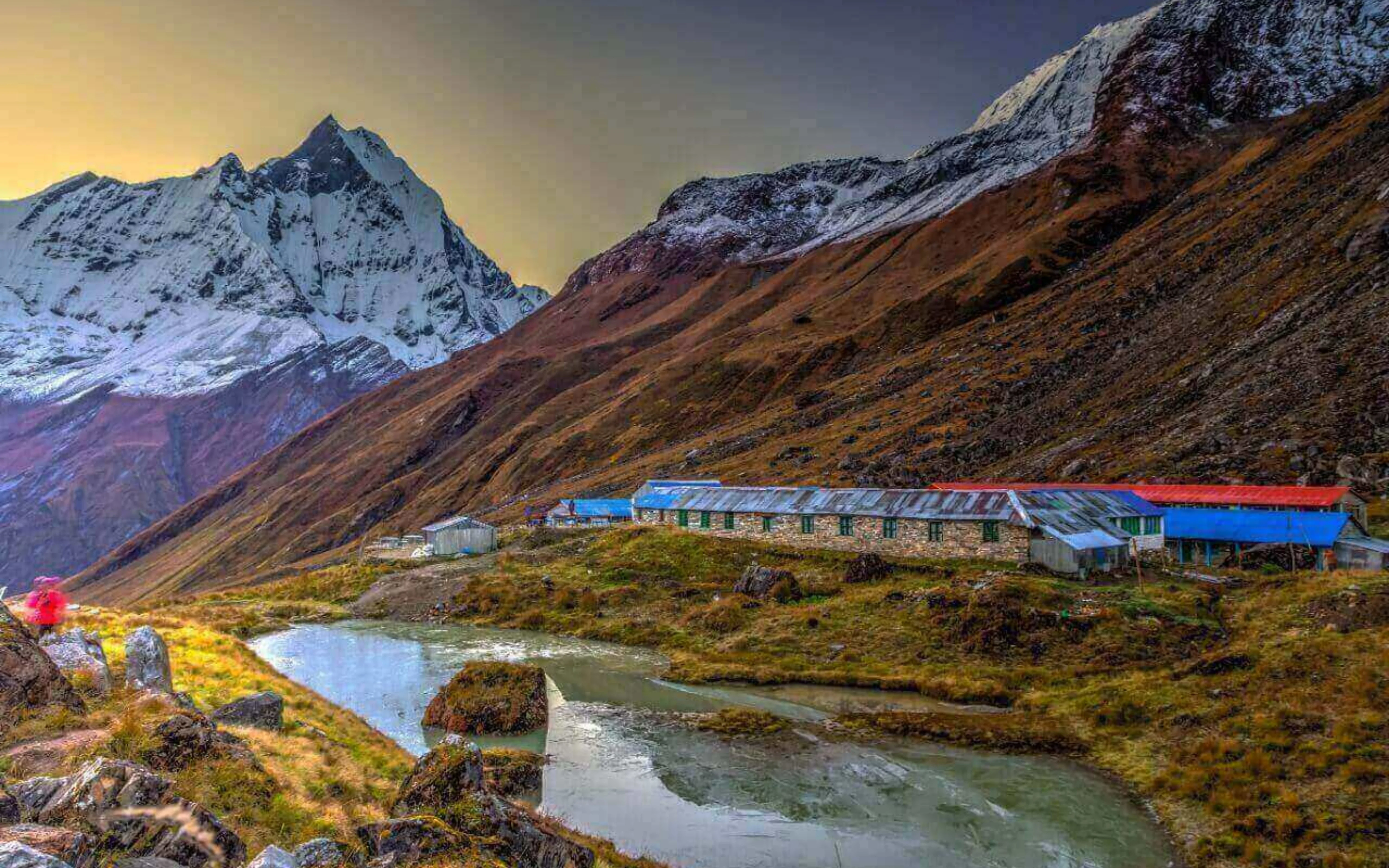
Spring runs from March through May and is the second most popular trekking season on the Annapurna Base Camp route. Expect warming temperatures, lush hillsides waking up after winter, and the famous rhododendron forests in full bloom between roughly Ghandruk and Chhomrong. Mountain views are generally good, though afternoon haze can build as the season progresses.
March
Early spring still carries a winter chill at higher elevations, with lingering snow possible above Deurali and Machhapuchhre Base Camp. Lower forests begin turning red and pink with rhododendrons, and trails are quieter than April. Nights at ABC can still drop well below freezing, so pack a proper down layer.
April
April is arguably the sweet spot of spring. Rhododendron blooms peak across the mid-elevations, days are pleasant, and mornings usually deliver clean views of Annapurna I, Hiunchuli, and Fishtail before the haze settles in. This is also one of the busier windows, so book lodges and crew early.
May
Late spring is warm and green but increasingly hazy, with occasional pre-monsoon afternoon thunderstorms. Views are best captured at sunrise. The upside is thinning crowds as May moves toward the monsoon. Carry a light rain shell even on clear-looking mornings.
Annapurna Base Camp Trek in Autumn
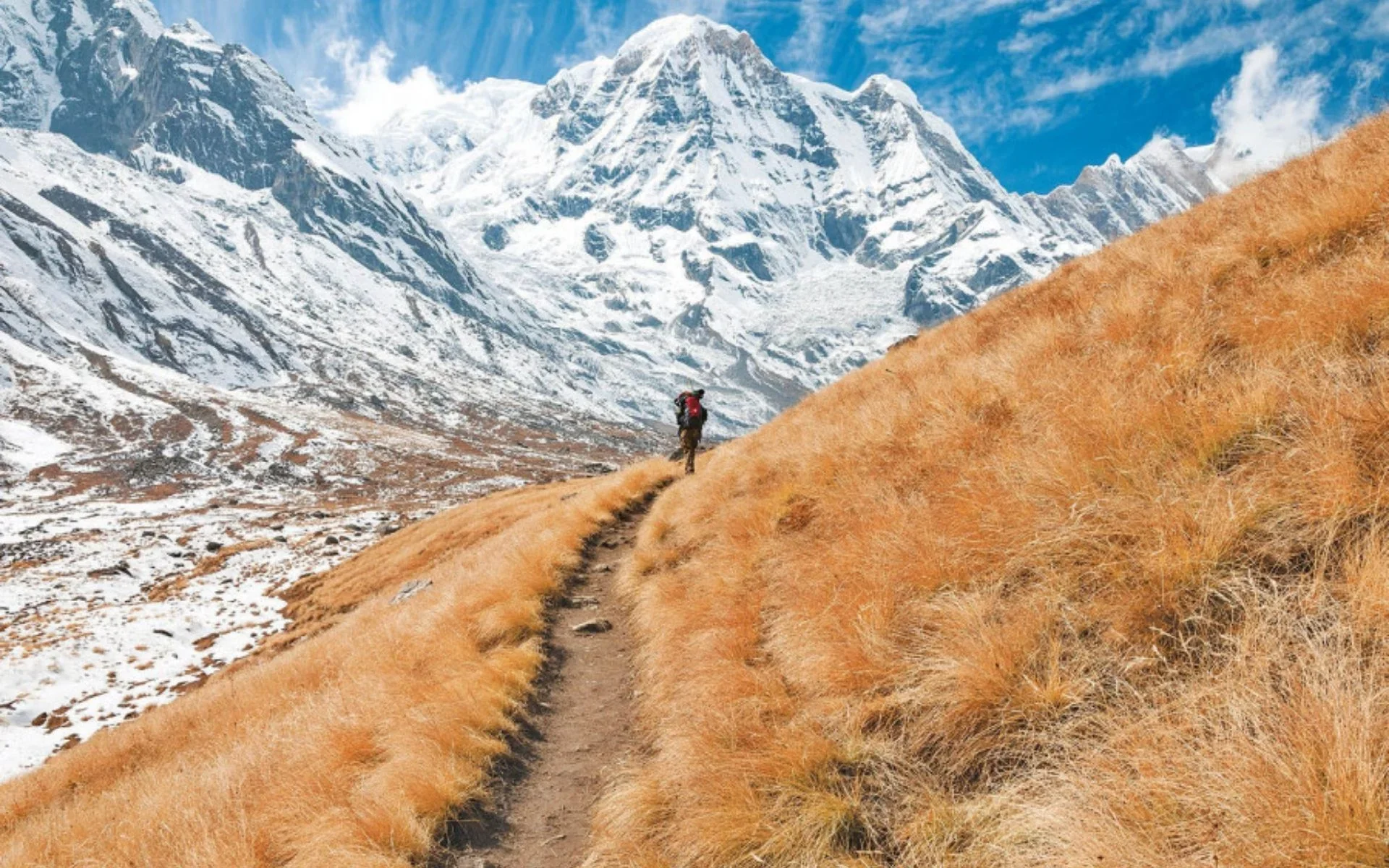
Autumn spans September through November and is the single most reliable trekking season in Nepal. The monsoon has washed the atmosphere clean, leaving crisp, stable skies and the sharpest mountain visibility of the entire year. Temperatures are comfortable, and the trail through the Modi Khola valley is at its most photogenic.
September
Early September still sees tail-end monsoon showers, but by mid-to-late month the rains retreat and the valleys turn brilliant green. Fewer trekkers are on the trail early in the month, giving you a head start before the October rush.
October
October is the gold standard: dry, stable, and blessed with the clearest skies of the year. This is peak season, coinciding with the Dashain and Tihar festivals. Expect full teahouses, so advance booking of both accommodation and your guide-porter crew is essential.
November
November keeps October's clarity while temperatures begin to cool, especially at night around Machhapuchhre and Annapurna Base Camp. Crowds thin slightly as the month ends. The combination of clear views and slightly quieter trails makes late November a favorite among returning trekkers.
Annapurna Base Camp Trek in Winter
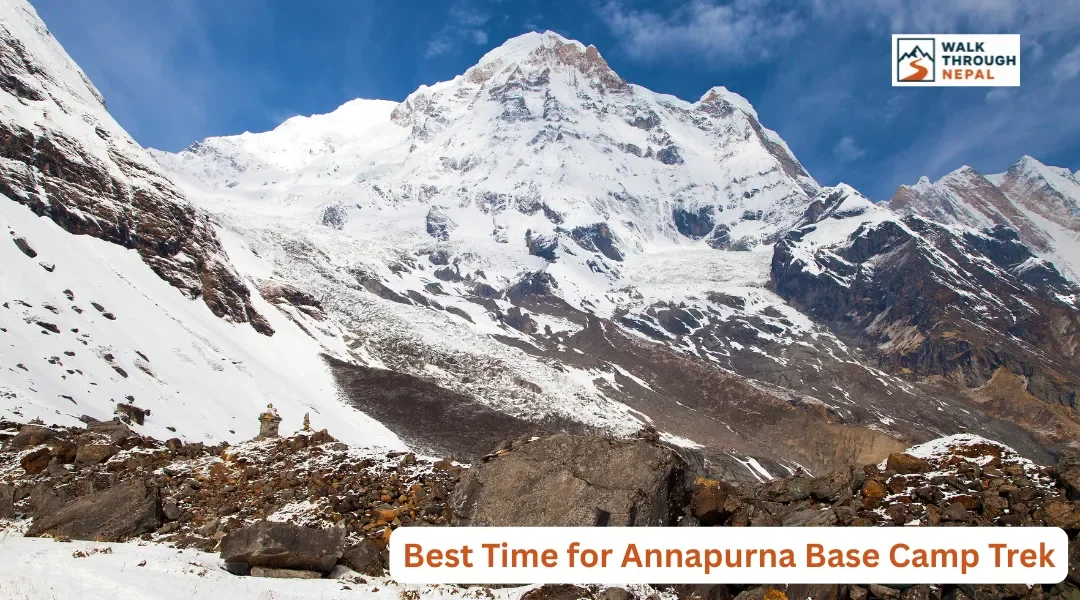
Winter runs from December through February and offers genuinely rewarding trekking for well-prepared, warm-blooded walkers. Skies are often stunningly clear, the trails are peaceful, and the sanctuary framed by snow-dusted peaks is unforgettable. The trade-off is cold, snow at altitude, and a real avalanche risk on the upper section into base camp.
December
Early winter still has manageable conditions, with cold but stable weather and good visibility. Nighttime temperatures at ABC can plunge well below -10°C, so a four-season sleeping bag and quality down jacket are non-negotiable.
January
January is the coldest, snowiest month. Heavy snowfall can close the final approach from Deurali to ABC, and avalanche danger rises after fresh storms. Some higher lodges shut for the season. Trek with an experienced local guide who reads snow conditions and can reroute if needed.
February
Late winter gradually eases, with lengthening days and slowly warming temperatures. Snow can still be deep in the upper valley, but the classic winter clarity remains. Trekkers who don't mind the cold get quiet trails and dramatic snowscapes.
Annapurna Base Camp Trek During Monsoon
Monsoon covers June through August and is the season most guides gently steer clients away from on the ABC route. Heavy, frequent rain soaks the trail, clouds routinely swallow the mountains, and the forested lower sections crawl with leeches. Slick stone staircases and landslide-prone slopes raise the safety stakes considerably.
That said, a small number of trekkers still choose summer for lush, empty trails and cool green valleys. Views are unpredictable, and you should build in flexible days for rain delays and possible route disruptions between Nayapul and Chhomrong.
One important regional note: while the ABC trek sits squarely in the rain, Upper Mustang lie in the Himalayan rain shadow. These arid, high-desert regions stay dry and become premier trekking destinations during the summer monsoon months, making them the smarter summer alternative if your calendar only allows a rainy-season trip.
Which Month Is Best for Annapurna Base Camp Trek?
There is no single "best" month, only the best month for you. October and November win for reliable views and settled weather, while April is unbeatable for rhododendron color. Use the priority table below rather than defaulting to the crowd.
If you want... | Consider |
Clearest mountain views | October–November |
Rhododendron blooms | March–April |
Warmer spring conditions | April–May |
Snowy landscapes | December–February |
Fewer crowds | Early September, late Nov, winter |
Most predictable weather | Spring and autumn |
Best Time for ABC Trek Based on Your Priorities
Different trekkers value different things. Here is how we match the season to your specific goal.
Best time for mountain views
Nothing beats October and November, when post-monsoon air delivers razor-sharp panoramas of Annapurna South, Hiunchuli, Gangapurna, and Machhapuchhre from base camp. Winter mornings run a close second for clarity, minus the haze.
Best time for photography
Autumn offers the cleanest light and deepest blue skies. Spring adds foreground color from rhododendrons, ideal if you want mountains framed by flowers. In both seasons, shoot at sunrise from ABC before valley haze or clouds build.
Best time for fewer crowds
Target the shoulder edges: early September, the last week of November, and December. You trade peak stability for quieter teahouses and a more personal experience in the sanctuary.
Best time for beginners
First-time trekkers do best in April, October, or November, when weather is predictable, days are comfortable, and trails are in good condition. Stable conditions make the daily 5 to 7 hour walking stages far less stressful.
Best time for snow
If a white sanctuary is your dream, aim for January or February, but only with a licensed guide who monitors avalanche risk on the Deurali-to-ABC section.
Permits, Safety, and Practical Realities
Regardless of month, every ABC trekker needs the ACAP permit, which costs NPR 3,000 (about USD 23) for foreigners, NPR 1,000 for SAARC nationals, and NPR 100 for Nepali citizens. You will also need a TIMS card, and Nepal now strongly enforces licensed guide requirements across major trekking regions, so plan to trek with a registered guide and verify current rules before you go.
Because the route climbs above 3,000 meters, follow safe acclimatization: keep sleep-elevation gains to roughly 300–500 meters per day in the upper valley. Carry travel insurance that specifically covers high-altitude helicopter evacuation up to 6,000 meters and AMS, HAPE, and HACE treatment; standard policies rarely include this.
ATMs disappear past Pokhara and the lower trail, so carry enough Nepalese Rupees (NPR) in cash. Budget extra for common upcharges: charging a power bank, gas-heated hot showers, and Wi-Fi typically cost an additional 200 to 700 NPR each per use. For connectivity, Ncell provides the strongest coverage throughout the Annapurna Sanctuary.
On the drive and lower trail toward Ghandruk, jeep roads now reach further into the valley. Ask your guide about the walking-only NATT trails to sidestep dust and vehicle traffic where possible.
Food, Water, and Culture on the Trail
Prioritize vegetarian meals at altitude. The traditional Dal Bhat (lentil soup, rice, and vegetable curry) is clean, high-energy fuel and usually comes with free refills, keeping you strong on long ascent days. Skip buying single-use plastic water bottles; instead carry a reusable bottle with a UV purifier, Sawyer filter, or chlorine dioxide drops to protect the fragile sanctuary environment.
The valley is home to Gurung and Magar communities with strong Buddhist and Hindu traditions. Always walk clockwise around mani walls, chortens, and stupas, keeping them on your right. Remove shoes and hats before entering any temple or monastery, and never photograph inside prayer halls without a resident monk's explicit permission.
At the end of your trek, tipping your guide and porters is culturally expected as a vital supplement to their income. A standard range is 10% to 15% of the total trek cost, distributed among the crew.
When Should You Book Your Annapurna Base Camp Trek?
In peak months, October, November, and April, demand for lodges, licensed guides, and porters far outstrips supply. Book early. Popular teahouses in Chhomrong, Deurali, and at Machhapuchhre and Annapurna Base Camp fill fast during festival season, and the best guides are reserved weeks or months ahead.
Early planning also secures group departures, better transport arrangements between Pokhara and the trailhead, and preferred accommodation before and after the trek. Speaking of which, sorting out a comfortable base in the lakeside city helps you recover on both ends, so browse our roundup of the best hotels in Pokhara. For a full cost picture, see our detailed Annapurna Base Camp Trek cost breakdown. And if you're new to Nepal's mountains, our explainer on where Mount Everest is located puts the Himalaya into geographic context.
Need help planning your trek? Walk Through Nepal can assist with permits, guides, transportation, and itinerary planning, making your Annapurna Base Camp adventure smoother from start to finish.
Frequently Asked Questions
What is the best month for the Annapurna Base Camp Trek?
October and November deliver the clearest views and most stable weather, making them the top choice. April is the best spring month for rhododendron blooms and warmth.
Can I trek to ABC in the monsoon?
Yes, but June to August brings heavy rain, clouds, leeches, slippery trails, and landslide risk. Build in buffer days and expect limited mountain visibility.
How cold does Annapurna Base Camp get in winter?
Nighttime temperatures at ABC regularly fall below -10°C in December and January. A four-season sleeping bag and a quality down jacket are essential.
Do I need a guide for the ABC trek in 2026?
Nepal now strongly enforces licensed guide requirements across major trekking regions. Trek with a registered guide and confirm the latest rules before departure.
What permits do I need for Annapurna Base Camp?
You need the ACAP permit (NPR 3,000 for foreigners) and a TIMS card. Carry printed copies and your passport for checkpoints.
Are there ATMs on the ABC trail?
No. ATMs stop at Pokhara and the lowest villages. Carry enough NPR cash for the entire trek plus upcharges for charging, showers, and Wi-Fi.
Which SIM card works best on the Annapurna Sanctuary route?
Ncell generally offers the strongest coverage along the ABC trail, though signal fades near base camp.
Is altitude sickness a concern on ABC?
Yes. Base camp sits at 4,130 meters. Ascend slowly, keep sleep-elevation gains to 300–500 meters daily, and carry insurance covering helicopter evacuation.
Can I see rhododendrons on the ABC trek?
Yes, primarily in March and April, when the forests between Ghandruk and Chhomrong bloom in red, pink, and white.
Is winter trekking to ABC dangerous?
Snow raises avalanche risk on the final approach from Deurali. Trek with an experienced local guide who monitors conditions and can reroute if needed.