Contents
The Mardi Himal Trek sits comfortably in the moderate difficulty category, which is exactly why we recommend it to trekkers who want dramatic Himalayan scenery without the long, punishing itineraries of higher routes. If you can walk for 5 to 7 hours a day on uneven trails and handle a few steep climbs, you are already most of the way there.
What keeps it manageable is the short duration, the well-marked trail, and the complete absence of technical climbing. What adds challenge is the combination of steep forested ascents, thinning air above 3,000 meters, several consecutive walking days, and mountain weather that shifts quickly. Previous high-altitude experience is genuinely not required. Below, we break down every factor that shapes the real difficulty of this trek so you know exactly what to expect.
How Difficult Is the Mardi Himal Trek?
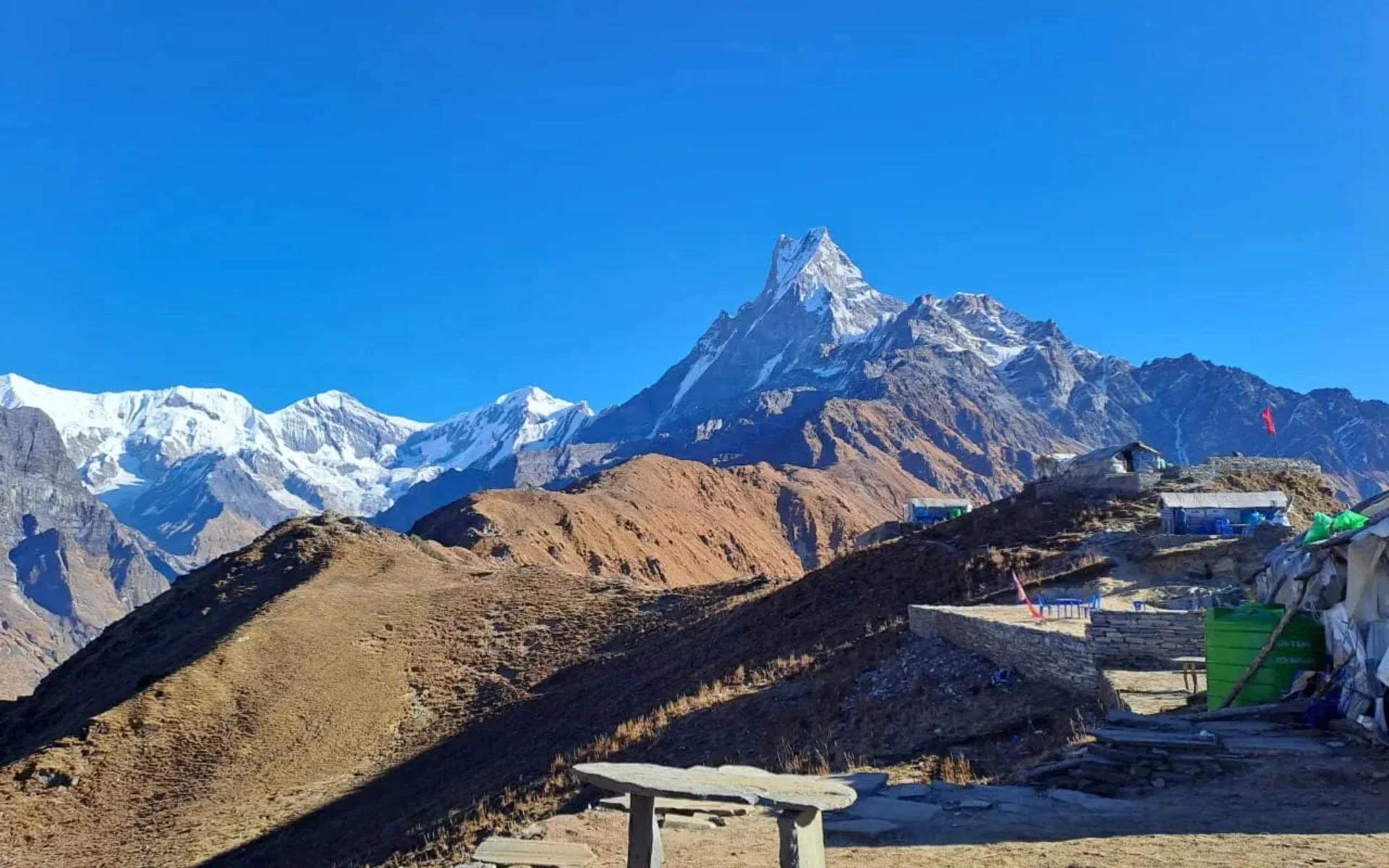
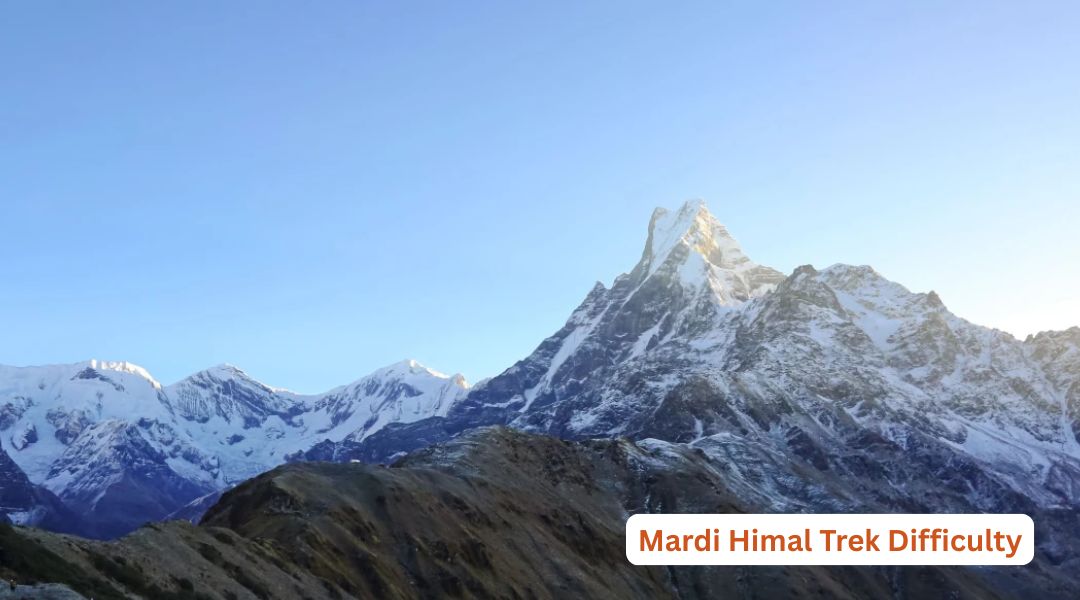
The Mardi Himal Trek is rated moderate. It involves roughly 5 to 7 hours of walking per day, gains elevation steadily to a high point around 4,500 meters at Mardi Himal Base Camp, and follows a mix of forest trails and rocky ridge paths. No technical climbing, ropes, or mountaineering skills are needed at any point.
The difficulty comes less from any single obstacle and more from the accumulation of steady climbing, altitude, and back-to-back walking days. There are no ladders, glaciers, or exposed scrambles. What you do face is a trail that climbs relentlessly out of the rhododendron forest onto an open ridge, where the air gets noticeably thinner and the wind picks up.
This is why we always tell trekkers that fitness matters far more than experience. A reasonably active person with no previous Himalayan trips will handle Mardi Himal well, while an unfit person who assumes altitude is trivial will struggle regardless of past adventures.
Factor | What to Expect |
Difficulty | Moderate |
Daily Walking | Approximately 5 to 7 hours |
Highest Point | Mardi Himal Base Camp, around 4,500 meters |
Terrain | Forest trails, stone steps, rocky ridge sections |
Technical Climbing | Not required |
Experience | Helpful but not essential |
What Makes the Mardi Himal Trek Difficult?
The Mardi Himal Trek is challenging primarily because of steep sustained ascents and descents, increasing altitude on the upper ridge, several consecutive walking days that build fatigue, uneven rocky terrain, and unpredictable mountain weather. None of these are extreme individually, but together they make the trek a genuine physical effort rather than a casual stroll.
Steep Ascents and Descents
From the very first day, you climb. The trail out of Kande gains height quickly through the forest, and the stretch from Forest Camp up to High Camp is a long, steady uphill grind. On the way down, the descent to Siding is where knees and quads take a beating, with long stone staircases that punish tired legs.
Increasing Altitude
Even though the trail is never technical, the upper sections feel harder simply because there is less oxygen. Above 3,000 meters your body works noticeably harder for the same pace, and the final push to Base Camp at roughly 4,500 meters leaves most people breathing heavily and moving slowly.
Long Consecutive Walking Days
The real physical test is not one hard climb, it is walking for several days in a row. Muscles that feel fine on day one begin to protest by day three, and cumulative fatigue is the most common reason trekkers underestimate the route.
Uneven and Rocky Terrain
The lower forest is rooted and occasionally muddy, the mid-section has plenty of stone steps, and the upper ridge is rocky and exposed. After rain, sections can become slippery, so trekking poles and solid footwear make a meaningful difference to how difficult the trail feels underfoot.
Weather Conditions
Mountain weather changes fast on this ridge. Cold mornings, afternoon cloud, rain, and even snow at higher elevations can all appear within the same trip. Poor visibility and slick trails make the same route feel considerably harder than it would on a clear, dry day.
Mardi Himal Trek Difficulty by Day
Difficulty on the Mardi Himal Trek varies significantly day to day. The early days are demanding due to steep forest climbing at lower altitude, the middle day to Base Camp is the hardest because of altitude and distance combined, and the descent day taxes the legs and knees. Understanding this rhythm helps you pace yourself sensibly.
Day 1 – Kande to Forest Camp
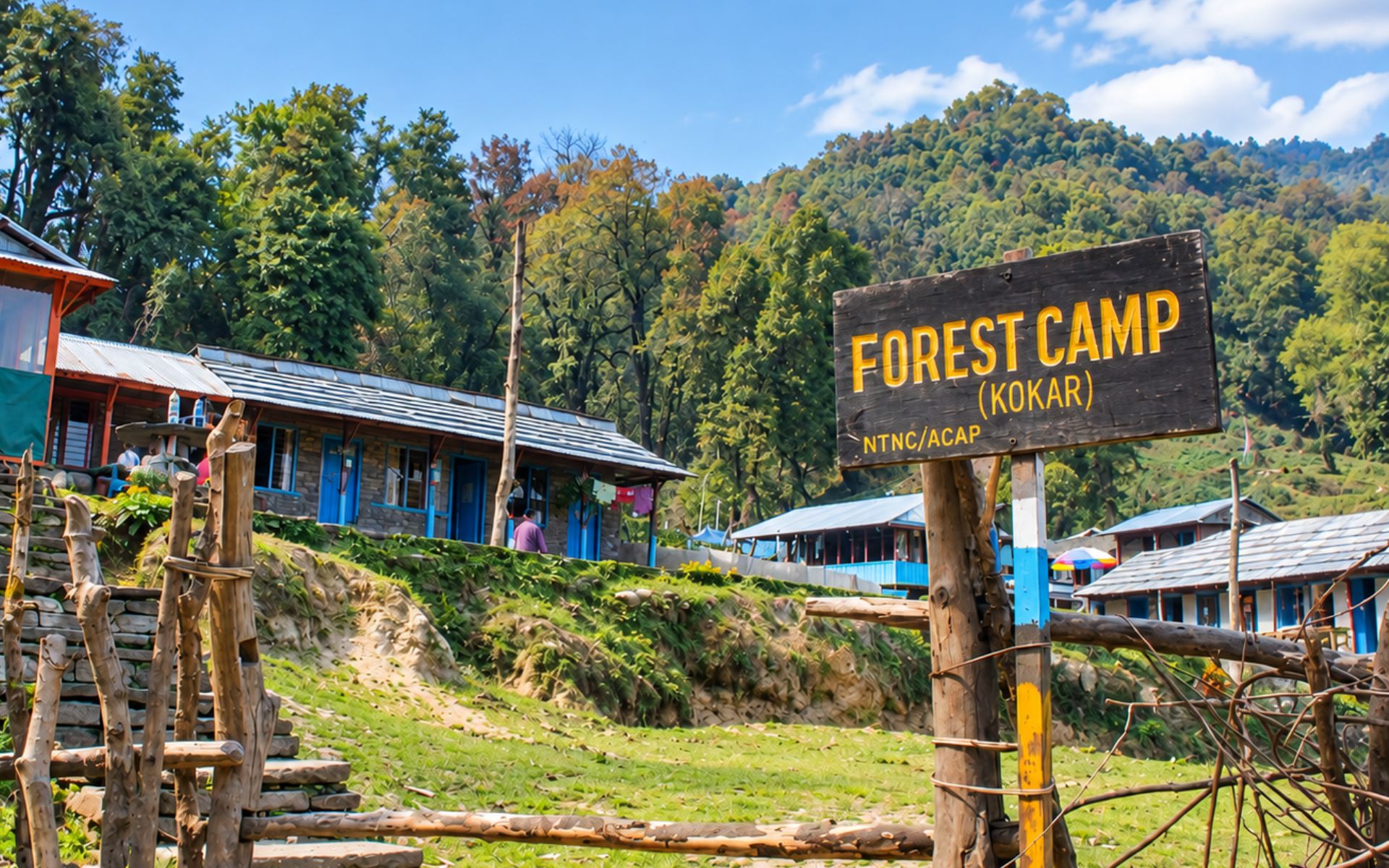
After a short drive from Pokhara to Kande (around 1,770 meters), you begin climbing almost immediately. Expect roughly 4 to 5 hours of uphill through dense forest to Forest Camp near 2,550 meters. It surprises people how tiring this feels despite the modest altitude, mostly because the ascent is relentless and the humidity in the forest can be high.
Day 2 – Forest Camp to High Camp
This is a longer and steeper day of about 5 to 6 hours, climbing through thinning rhododendron to Low Camp and onward to High Camp at approximately 3,580 meters. The vegetation opens up, the views expand dramatically toward Machhapuchhre, and you feel the altitude beginning to bite for the first time.
Day 3 – High Camp to Mardi Himal Base Camp and Back
This is the hardest section of the trek. You start early, often before sunrise, and climb the exposed ridge to Mardi Himal Base Camp at around 4,500 meters. The combination of altitude, cold, wind, and a long round trip of 6 to 8 hours makes this the day that defines the trek's difficulty. Pacing slowly and staying hydrated is essential.
Day 4 – High Camp to Siding
A long descent day of roughly 5 to 6 hours drops you steeply through the forest to Siding village at around 1,750 meters. The uphill is over, but the sustained downhill on uneven stone steps is hard on the knees, which is exactly where trekking poles earn their keep.
Day 5 – Siding to Pokhara
The final day is mostly transport. A jeep ride connects Siding back to Pokhara, ending the trek. If your itinerary differs in length or route, follow your operator's exact plan rather than a generic template, as some versions add or combine days.
Mardi Himal Trek Altitude and Difficulty
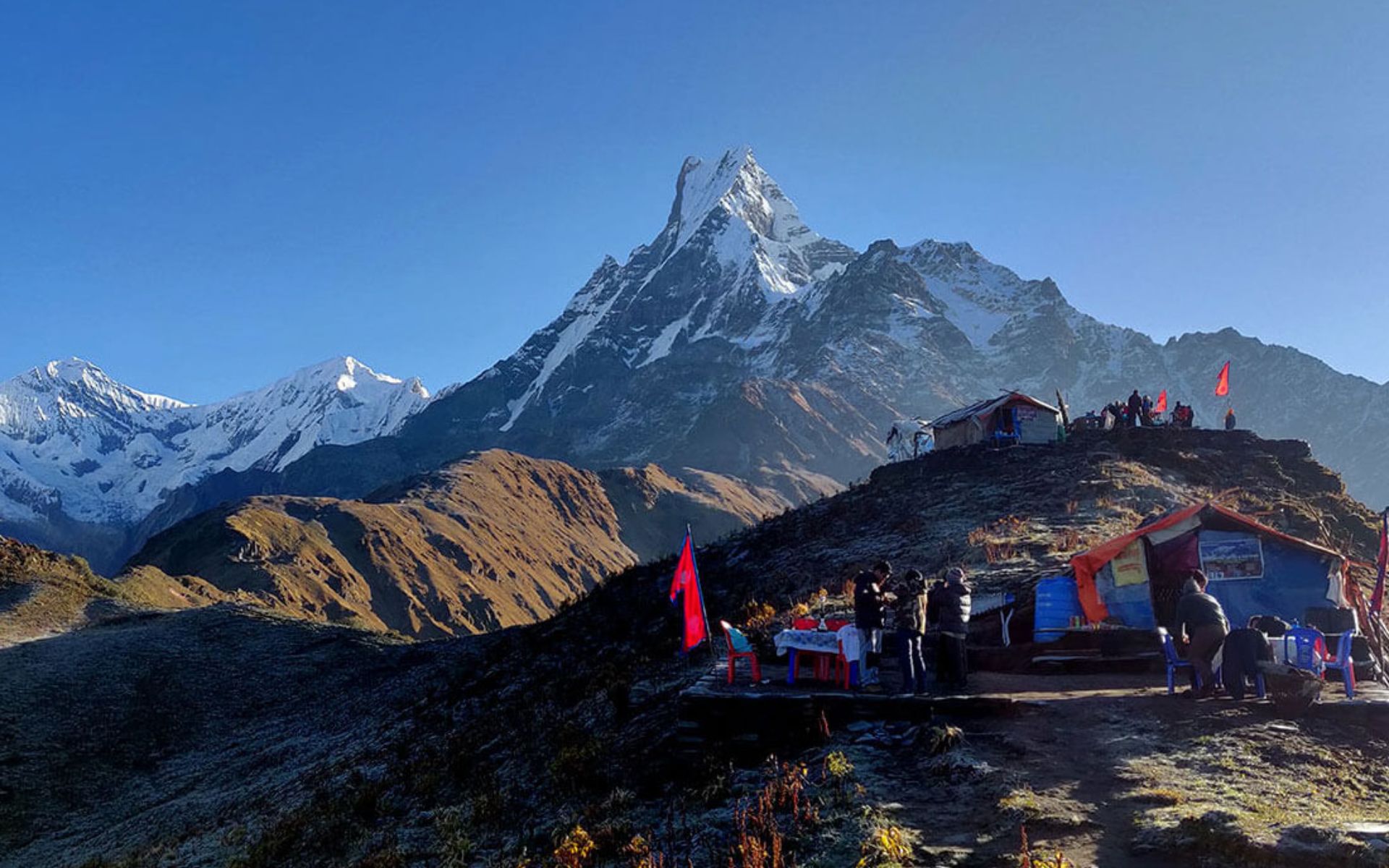
Altitude is one of the biggest reasons the Mardi Himal Trek earns a moderate rating. The trail rises from Kande at 1,770 meters to High Camp at 3,580 meters and peaks at Mardi Himal Base Camp near 4,500 meters. Above 3,000 meters, reduced oxygen makes identical physical effort feel noticeably harder.
The elevation gain is steady rather than extreme, but the jump from High Camp to Base Camp in a single morning is where most people feel the thin air. Gradual ascent, deliberate slow pacing, and constant hydration are the most effective tools you have. Drinking plenty of water and never rushing the climb keeps the altitude manageable for the vast majority of trekkers.
Does Altitude Sickness Affect the Mardi Himal Trek?
Yes, mild altitude symptoms are possible near Base Camp. Acute Mountain Sickness (AMS) can cause headaches, nausea, dizziness, and fatigue. Take any symptoms seriously and always inform your guide. If symptoms worsen, do not continue climbing higher, descending even slightly usually brings quick relief. Because Mardi Himal's high point is reached and left on the same day, serious cases are uncommon, but never dismissed.
Is Mardi Himal Trek Difficult for Beginners?
Mardi Himal is one of the more accessible Himalayan treks for beginners, but only if they arrive physically prepared. It is a genuinely realistic choice for first-time trekkers, provided they respect the altitude and put in some training beforehand. In fact, it is frequently on our shortlist of the best treks in Nepal for beginners who want more than a casual walk.
Who Can Consider the Trek?
Regular walkers, people comfortable spending several hours on their feet, beginners who have trained in advance, and travellers with reasonable cardiovascular fitness will all handle this trek well. You do not need to be an athlete, just consistently active.
Who May Find It More Challenging?
People who rarely exercise, those uncomfortable with steep terrain, anyone underestimating altitude, and trekkers attempting an overly compressed itinerary will find Mardi Himal harder than expected. Rushing the schedule is the single most common cause of a miserable trek.
Here is the key distinction we want every reader to understand: beginner does not mean unprepared. Someone with zero trekking history but a few weeks of focused fitness training will often outperform an experienced trekker who showed up out of shape.
How Fit Do You Need to Be for Mardi Himal Trek?
You need a reasonable level of aerobic fitness and leg strength for the Mardi Himal Trek, but not elite conditioning. The goal is to walk comfortably for 5 to 7 hours on consecutive days over uneven, steep ground. Practical, walking-focused preparation matters far more than gym strength or running speed.
Cardiovascular Fitness
Build your engine with regular walking, hiking, stair climbing, and any sustained cardio. This is what lets you keep moving uphill in thin air without exhaustion.
Leg Strength
Your quads, calves, and glutes carry you through the long ascents and the punishing descents. Squats, lunges, and hill repeats pay off directly on the trail.
Endurance
Being able to walk for many hours across several days matters far more than short bursts of speed. Long, steady efforts are what train your body for real trekking.
Getting Used to Uphill Walking
Nothing prepares you for climbing like climbing. Add progressively longer and steeper walks in the weeks before you fly to Nepal.
Before Your Trek checklist:
Regular walking, several times per week
Weekend hikes on hilly terrain
Stair or incline training
Practice carrying a loaded daypack
Broken-in, proper trekking shoes
Gradually increased walking duration
Mardi Himal Trek Difficulty in Different Seasons
Difficulty on the Mardi Himal Trek is not fixed year-round, it shifts significantly with the seasons. Spring and autumn offer the most favourable and manageable conditions, while winter and monsoon each add their own specific challenges through snow, mud, and reduced visibility.
Spring (March to May)
Generally favourable conditions with blooming rhododendron forests and stable trekking weather. This is one of the two prime windows and keeps the difficulty at its baseline moderate level.
Autumn (September to November)
Stable, clear conditions and excellent mountain visibility make autumn our top pick. Crisp air and firm trails mean the trek feels as easy as it ever will.
Winter (December to February)
Cold temperatures and possible snow or ice at higher elevations. The upper trail near High Camp and Base Camp can become slippery and demanding, raising the difficulty for the final push.
Monsoon (June to August)
Rain, mud, slippery trails, cloud-obscured mountains, and leeches on the lower forest sections. This is the hardest and least rewarding time for Mardi Himal. If you are set on trekking in summer, our guide on which Nepal treks are safe during monsoon points you toward rain-shadow alternatives instead.
Mardi Himal Trek Difficulty Compared to Other Popular Treks
Mardi Himal sits between the easy Poon Hill trek and the more demanding base camp routes. It is harder than Ghorepani Poon Hill due to higher altitude and steeper climbs, but easier than Annapurna Base Camp, Everest Base Camp, or the Manaslu Circuit in terms of total duration and elevation exposure.
Trek | Main Difficulty Consideration |
Ghorepani Poon Hill | Shorter and lower-altitude trekking |
Mardi Himal | Steeper upper sections and moderate altitude |
Annapurna Base Camp | Longer walking days and sustained elevation |
Everest Base Camp | Greater altitude exposure and longer itinerary |
Manaslu Circuit | Higher altitude and more demanding overall route |
Difficulty is never determined by altitude alone. Duration, terrain, elevation gain, weather, and your individual fitness all combine to shape how hard a trek feels. For direct comparisons, see our detailed breakdowns of the Ghorepani Poon Hill trek difficulty and how difficult the Annapurna Base Camp trek is.
How to Prepare for the Mardi Himal Trek
Preparing for Mardi Himal is straightforward: build walking endurance and leg strength before you arrive, then manage your pace and hydration carefully on the trail. The right preparation turns a demanding trek into an enjoyable one.
Before the trek:
Build walking endurance over several weeks
Include uphill and incline walks
Train on uneven terrain when possible
Break in your trekking shoes thoroughly
Practice hiking with your loaded daypack
During the trek:
Maintain a slow, comfortable pace
Never race uphill, especially at altitude
Stay consistently hydrated
Eat regularly to fuel your effort
Rest when your body asks for it
Follow your guide's instructions closely
What Should You Pack for a Comfortable Mardi Himal Trek?
The right gear directly affects how difficult the trek feels. Proper trekking shoes and trekking poles reduce strain on the ascents and descents, while good layering keeps you comfortable through the wide temperature swings between forest and ridge.
Focus on solid, broken-in trekking shoes, trekking poles, layered clothing, reliable rain protection, warm layers for High Camp, a reusable water bottle with a purification method, sun protection, basic first-aid supplies, and a comfortable daypack. Skipping any of these makes the trail harder than it needs to be.
FAQs
Is Mardi Himal Trek difficult for beginners?
It is manageable for fit beginners. No technical skills are needed, but a few weeks of walking and hill training make the steep sections and altitude much easier to handle.
How many hours do you walk each day on Mardi Himal Trek?
Typically 5 to 7 hours per day, with the Base Camp day being the longest at up to 8 hours round trip.
What is the hardest day of the Mardi Himal Trek?
The climb from High Camp at 3,580 meters to Base Camp at 4,500 meters and back, due to the mix of altitude, distance, and early start.
Does Mardi Himal Trek require previous trekking experience?
No. General fitness and comfort walking on uneven terrain matter more than prior trekking experience.
How much training is needed for Mardi Himal Trek?
We suggest 4 to 6 weeks of regular walking, hill work, stair training, and daypack practice.
Is Mardi Himal Trek harder than Poon Hill?
Yes. Mardi Himal is higher and steeper, while Ghorepani Poon Hill stays lower and shorter.
Is Mardi Himal Trek harder than Annapurna Base Camp?
Generally no. Annapurna Base Camp involves longer walking days and more sustained elevation, though some Mardi climbs are equally steep.
Does altitude make Mardi Himal Trek difficult?
Yes. Above 3,000 meters the thinner air makes the same effort harder, particularly on the final push to Base Camp.