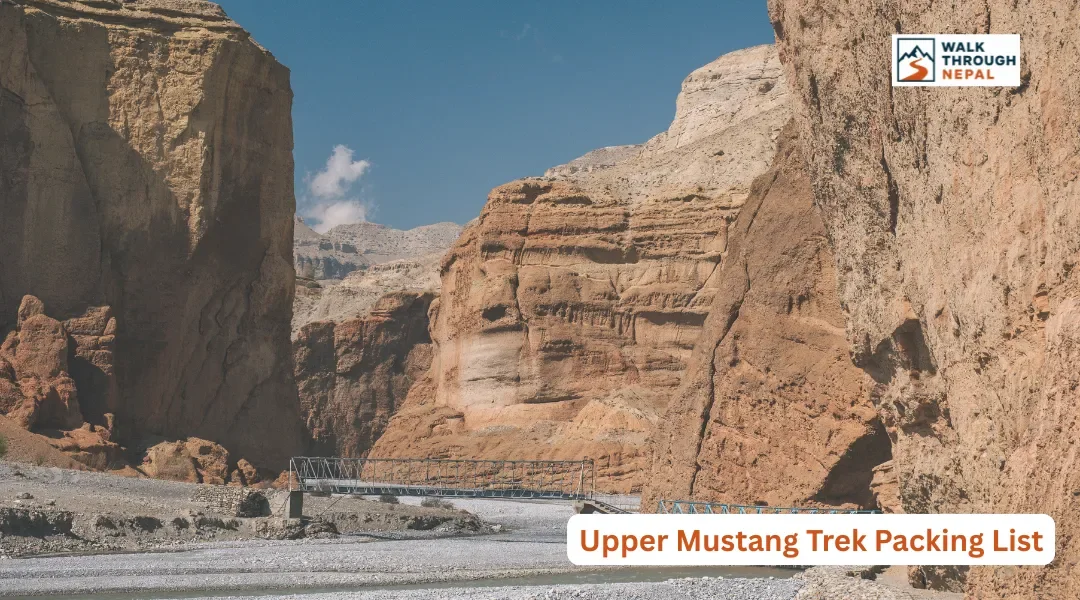
Upper Mustang Trek Packing List: What to Pack for the Trek
RRojan BasnetAugust 27, 2026
Local trekking experts, wherever you go
Trips planned around your pace, interests, and time.
Real People, Quick and Helpful Support
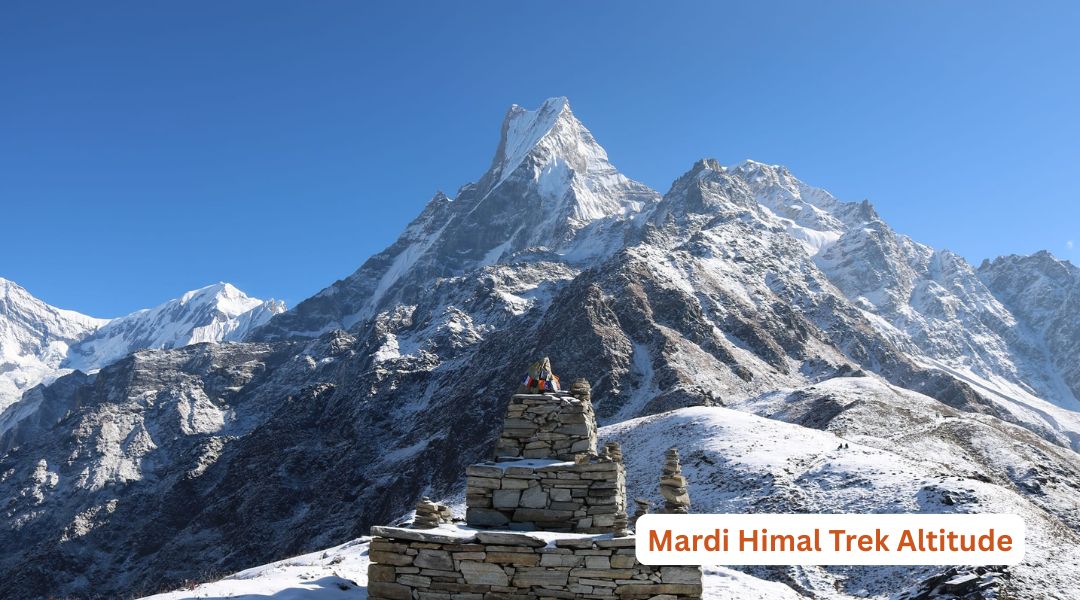
Learn about Mardi Himal Trek altitude, including the 4,500 m highest point, 3,580 m High Camp, elevation gain, altitude sickness and acclimatization.
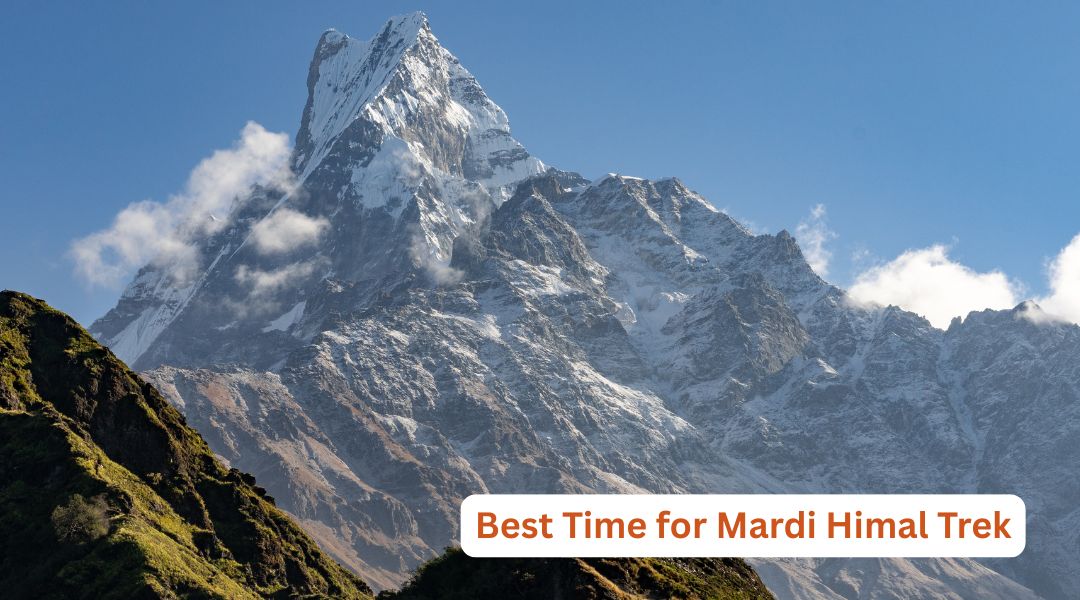
Find the best time for the Mardi Himal Trek with a month-by-month guide to weather, mountain views, crowds, trail conditions, and rhododendrons.
How difficult is the Mardi Himal Trek? A moderate walk with steep climbs and 3,500m+ altitude. Get fitness tips, daily breakdown & trail conditions here.
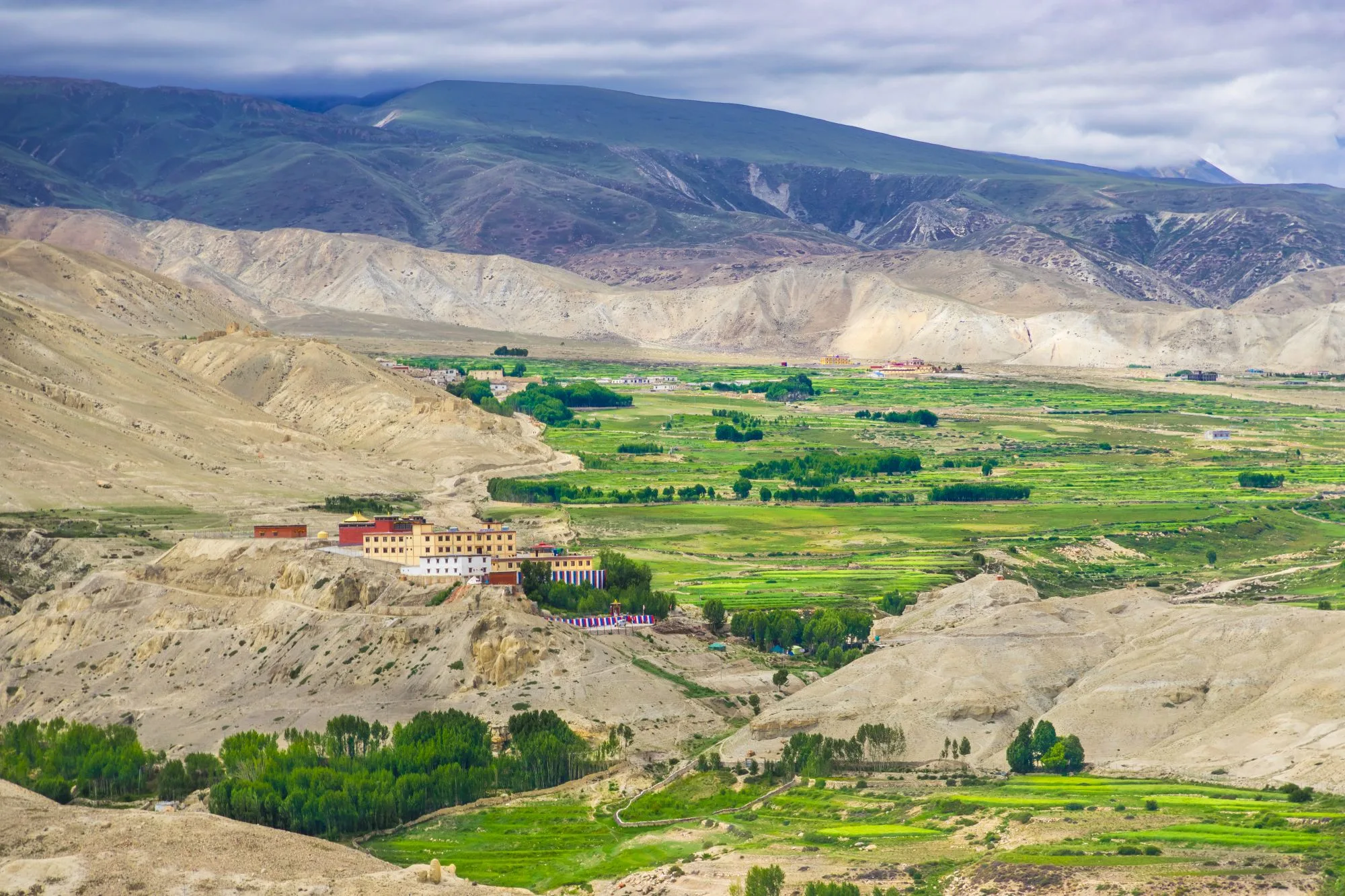
Upper Mustang is not a wet, green trek. It is high desert: ochre cliffs, wind-carved canyons, and the walled city of Lo Manthang sitting at 3,840 meters under a sky that stays a hard, dry blue for most of the year.
Packing for it means preparing for sun, wind, dust, and sharp temperature swings between blazing afternoons and freezing nights, not the rain-and-mud kit people bring for Annapurna or Everest.
The single most common mistake we see is travelers overpacking rain gear and underpacking wind and sun protection. This guide aims to fix that. Below is the exact packing list our teams recommend, along with the permit, cash, and connectivity realities you must plan around before you leave for a dry trek.
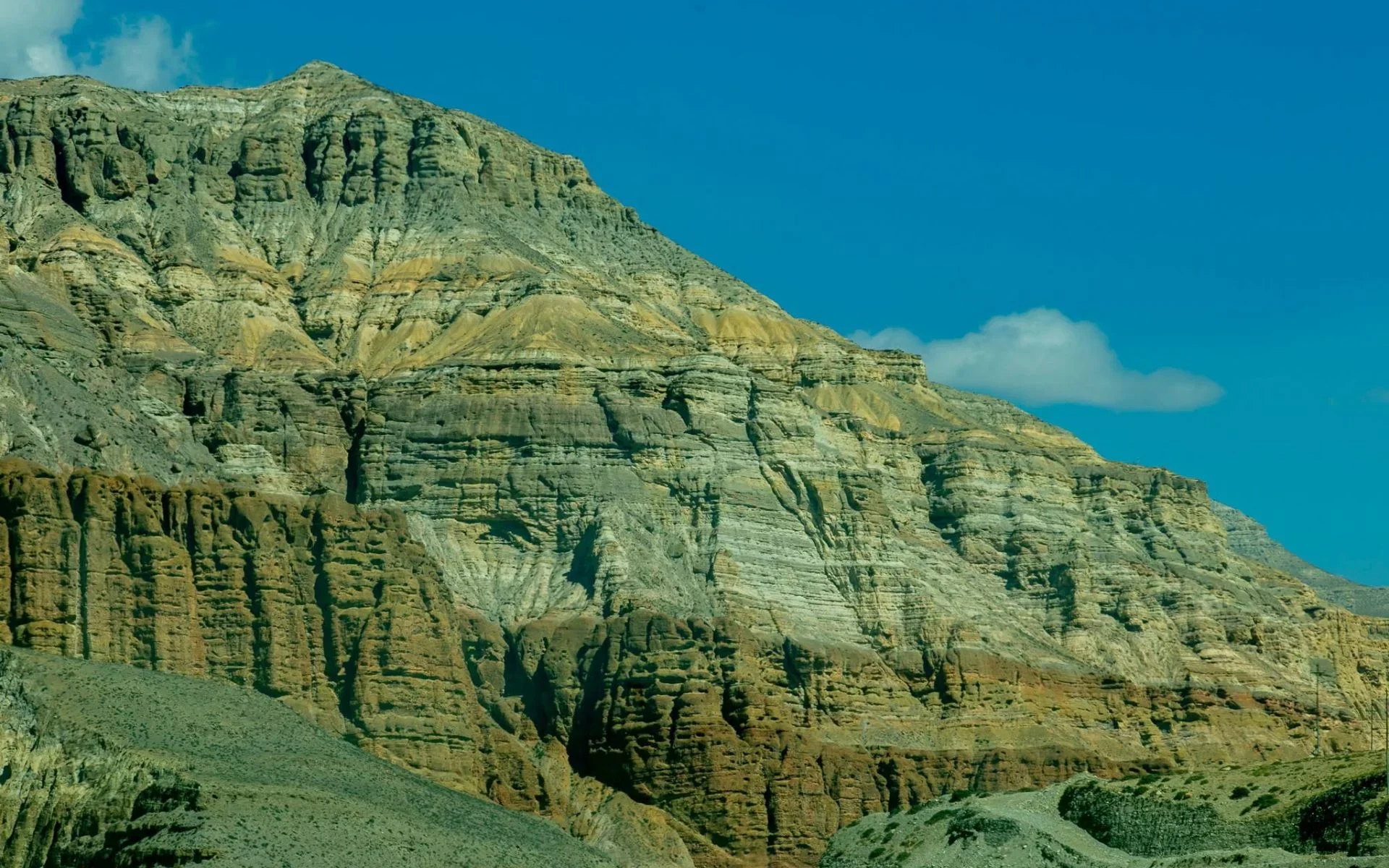
Upper Mustang lies in the Himalayan rain shadow behind the Annapurna and Dhaulagiri massifs. This makes it dry and dusty year-round, ideal for trekking even during the June to August monsoon when the rest of Nepal is soaked and leech-ridden. Days are sunny and warm; nights and high passes turn bitterly cold and windy.
This trek rarely climbs above 4,000 meters on the classic route, with the Lo La and other crossings sitting near 3,950 meters. Altitude is gentler than Everest or Manaslu, but the wind and intense high-desert sun are relentless. Your packing priority order should be: wind protection, sun protection, dust management, then cold.
Because this is a region you can trek in seasons others can't, many travelers pair it with a wider Nepal itinerary. Pack for a desert first and a mountain second.
The Upper Mustang packing list centers on a layered clothing system, aggressive sun and wind protection, sturdy broken-in footwear, water purification, and enough Nepalese Rupees in cash. Because this is a restricted area, you also carry permit copies and passport photos. Pack light — porters and mules carry loads, but weight limits apply.
Layering is everything here. You will strip down in a sunny valley at midday and pile on every layer at a windy pass an hour later. Build your kit around three functional layers rather than bulky single garments.
Layer | Item | Notes |
Base | 2-3 merino or synthetic tops | No cotton — it holds sweat and chills you |
Base | 2 pairs thermal bottoms | For cold nights and early starts |
Mid | 1 fleece + 1 light down jacket | Down is essential for cold nights |
Outer | Windproof shell jacket | Wind, not rain, is the real enemy here |
Outer | Light waterproof shell | Rare rain, but carry a packable one |
Legs | 2 trekking trousers + 1 shorts | Convertible zip-off pairs work well |
Extras | Warm hat, sun hat, buff, gloves | The buff doubles as dust protection |
Add 3-4 pairs of quality trekking socks, thermal liner socks for nights, and enough underwear for a wash-and-rotate system. A lightweight warm hat and a wide-brim sun hat are both non-negotiable.
Bring sturdy, waterproof, ankle-supporting trekking boots that you have already broken in over several weeks. The Mustang trail mixes rocky riverbeds, dusty jeep-track sections, and steep eroded gullies. New boots here mean blisters on day one.
Pack camp shoes or sandals for evenings in teahouses, plus gaiters — the fine, blowing dust gets into everything, and gaiters keep grit out of your boots on windy stretches.
The high-desert sun at altitude is brutal, and reflected glare off pale rock and any snow multiplies it. This is where most trekkers under-prepare.
Category 4 (glacier-rated) UV sunglasses with side coverage
SPF 50+ sunscreen and SPF lip balm — bring more than you think
Buff or face covering for the daily afternoon wind and dust
Long-sleeve sun shirt to reduce sunscreen reliance
Teahouse blankets are basic and nights get cold. A sleeping bag rated to at least -10°C is our standard recommendation, plus a silk or cotton liner for extra warmth and hygiene.
For water, we ban buying single-use plastic bottles on the trail but it’s not recommended as it damages this fragile environment. Carry two reusable bottles or a hydration bladder paired with an active purification system: a UV purifier, a Sawyer squeeze filter, or chlorine dioxide drops. The dry air dehydrates you fast than you expected, so aim for 3-4 liters daily.
Bring a personal first-aid kit with blister care, painkillers, rehydration salts, and any personal medication. Discuss altitude medication with your doctor before departure. Keep documents dry and duplicated.
Category | Essentials |
Documents | Passport, 4+ passport photos, insurance proof, permit copies, cash |
Electronics | Power bank (20,000mAh+), headlamp + spare batteries, universal adapter, charging cables |
Health | First-aid kit, personal meds, hand sanitizer, wet wipes, lip balm |
Comfort | Quick-dry towel, earplugs, snacks, dry bags for dust |
A high-capacity power bank matters here because charging costs extra and is unreliable in remote villages. Dry bags or ziplock bags protect electronics from the ever-present fine dust.
Upper Mustang is a restricted area, so you must carry the correct permits and a licensed guide. Under the March 2026 Department of Immigration update, a single traveler can now obtain the Restricted Area Permit, but you still cannot trek solo. A licensed guide is mandatory, with a maximum guide-to-trekker ratio of 1:7.
You need two permits, arranged through a registered agency:
Upper Mustang Restricted Area Permit (RAP): $500 USD per person for the first 10 days, then roughly $50 USD per extra day.
Annapurna Conservation Area Permit (ACAP): NPR 3,000 for foreigners, NPR 1,000 for SAARC nationals, and NPR 100 for Nepali citizens.
Pack at least four passport-sized photos and a physical copy of your insurance policy — remember, insurance covering high-altitude helicopter evacuation is legally required to issue the RAP. Keep printed permit copies in a dry bag; checkpoints at Kagbeni and beyond will ask for them.
Carry enough Nepalese Rupees in cash for your entire trek. Reliable ATMs stop at Jomsom, and there is nothing dependable deeper in Mustang. Budget realistically for meals, drinks, and the small paid extras that add up fast on any Nepal teahouse trek.
Expect to pay NPR 200 to 700 per service for charging your phone or power bank, gas-heated hot showers, and localized Wi-Fi access. These are almost never included in your room rate. Building a cash buffer for these upcharges saves a lot of stress.
Eat to fuel, not to indulge. We strongly advise prioritizing vegetarian meals on the trail. The classic Dal Bhat — lentil soup, rice, and vegetable curry — is your best friend: it is fresh, locally grown, high-energy, and usually comes with free refills.
Meat on high trails is carried up over days without refrigeration, so we recommend avoiding it. Stick to fresh carbohydrates, hot soups, and local produce to keep your stomach settled at altitude.
Although Upper Mustang is lower and gentler than many Annapurna treks, altitude rules still apply. Above 3,000 meters, keep your sleeping elevation gain to 300 to 500 meters per day and take rest days as your itinerary allows. Hydrate constantly, walk at a steady pace, and tell your guide immediately if you feel headache, nausea, or dizziness.
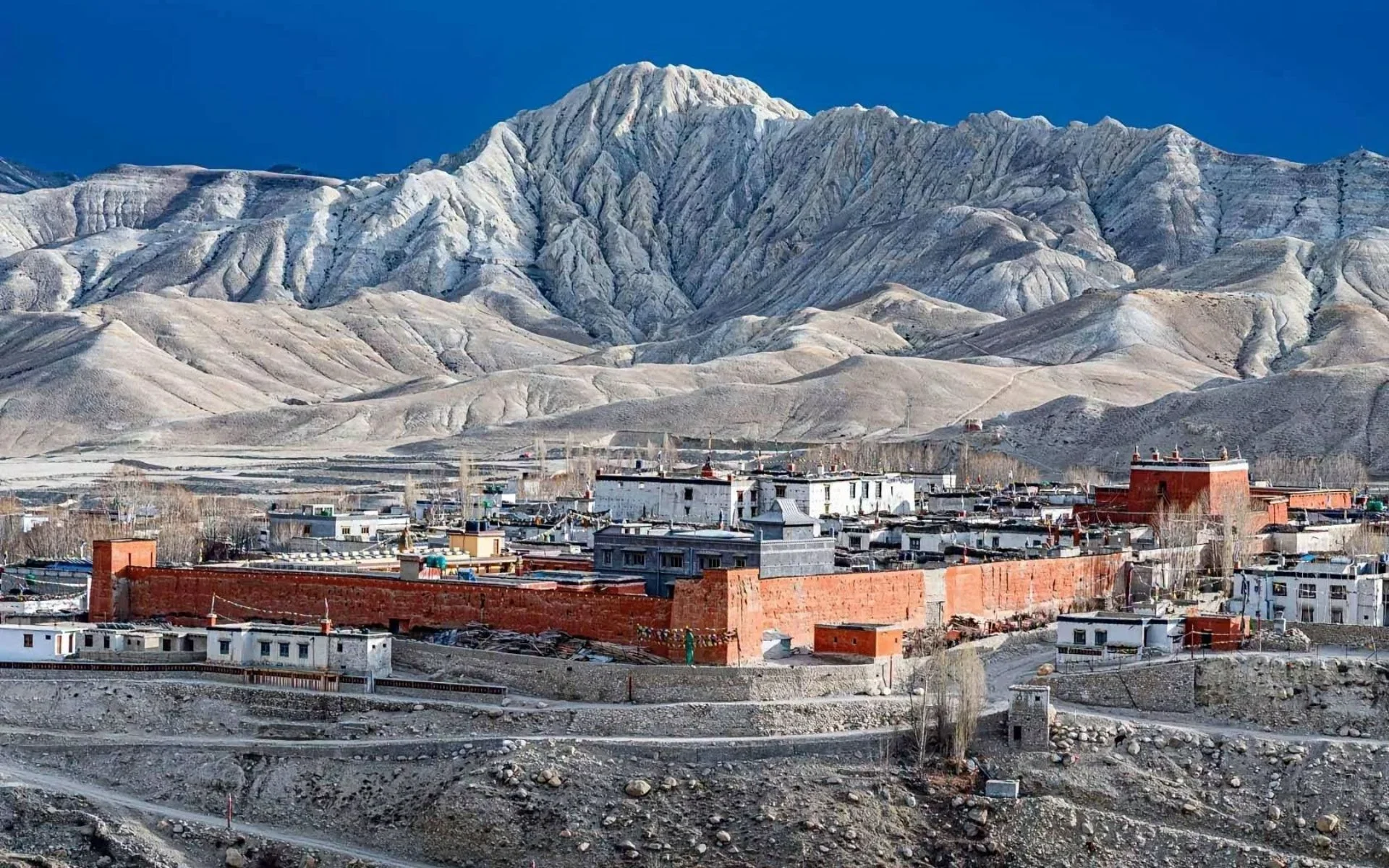
Upper Mustang is deeply Tibetan Buddhist, dense with monasteries, chortens, and mani walls. Always walk clockwise around mani walls, stupas, and chortens, keeping these sacred structures on your right side. This is a firm cultural rule, not a suggestion.
Remove your shoes and hat before entering any monastery or temple. Outdoor photography is fine, but taking photos inside prayer halls is strictly prohibited unless a resident monk gives you explicit clearance. Pack a modest layer to cover shoulders and knees for monastery visits in Lo Manthang.
Just as important as what goes in your bag is what stays home. Leave the heavy raincoat and umbrella — this is desert. Skip cotton clothing, jeans, and bulky single-piece garments that don't layer.
No single-use plastic water bottles — carry purification instead
No brand-new, unbroken boots
No expensive jewelry or non-essential valuables
No drone unless you have specific written clearance — restricted-area rules are strict
Tipping is culturally expected in Nepal and is a vital supplement to your crew's base income. At the end of the trek, plan to tip your guide and any porters collectively in the range of 10% to 15% of your total trek cost, distributed fairly among the team. Carry this amount separately in cash so you're not scrambling at the end.
Yes. As a restricted area, Upper Mustang requires a licensed guide. The 2026 rule lets a single traveler get the permit, but solo trekking is not allowed, with a maximum ratio of 1:7 trekkers per guide.
Days are warm and sunny, but nights and passes drop below freezing, especially with the wind. A sleeping bag rated to at least -10°C and a solid down jacket handle it well.
Yes. It sits in the Himalayan rain shadow and stays dry from June to August, making it one of Nepal's best summer treks while other regions flood.
The Restricted Area Permit is $500 USD for 10 days plus around $50 USD per extra day, and the ACAP is NPR 3,000 for foreigners.
No reliable ATMs exist past Jomsom. Carry all the Nepalese Rupees you'll need for the full trek in cash.
Yes, but expect to pay NPR 200 to 700 per charge in villages. Bring a large power bank to reduce your reliance on paid charging.
Yes. You must have insurance covering high-altitude helicopter evacuation up to 6,000 meters and AMS/HAPE/HACE treatment. It's legally required for the permit.
Please don't buy it — it harms this fragile environment. Bring reusable bottles with a UV purifier, Sawyer filter, or chlorine dioxide drops.
The trek is moderate and lower than many Himalayan routes, but daily walking on rocky, windy terrain demands good general fitness and broken-in boots.
Pack Upper Mustang like a desert expedition with cold nights: wind and sun protection first, a smart layering system, dust management, reliable water purification, and plenty of cash. Get those right and the walled kingdom of Lo rewards you with some of the most dramatic and culturally rich scenery in the entire Himalaya.
Ready to Trek Nepal?
Planning your Upper Mustang trek? Walk Through Nepal can help you choose the right itinerary, prepare for the terrain, and arrange the logistics for your trip.