Contents
Kathmandu is far more than a stopover before a Himalayan trek. Most travelers land here, sleep for a night, sort their permits, and rush out to the mountains, missing one of the most layered cities in South Asia. That is a mistake we see all the time from the ground.
Inside this valley you will find seven UNESCO World Heritage sites, temples where daily worship has continued for centuries, backstreets full of hidden shrines, and a food culture that rewards curiosity. From ancient Durbar Squares and stupas to Newari khaja sets, morning markets, hilltop viewpoints and easy day trips, there is a genuinely long list of things to do in Kathmandu.
We recommend planning 2 to 4 days for Kathmandu and the wider valley. This guide suits history lovers, food travelers, slow-paced culture seekers and trekkers wanting to acclimatize to the altitude, rhythm and etiquette of Nepal before heading out. One important note up front: several attractions below sit within the greater Kathmandu Valley rather than Kathmandu city proper, and we flag these clearly so you can plan travel time.
25 Best Things to Do in Kathmandu
We have grouped these 25 experiences into clusters instead of a random list, so you can build a route that flows logically rather than zig-zagging across heavy traffic. Read them as themes: heritage core, local culture, outdoors and viewpoints, day trips, and unique experiences.
Heritage & UNESCO Highlights
1. Explore Kathmandu Durbar Square
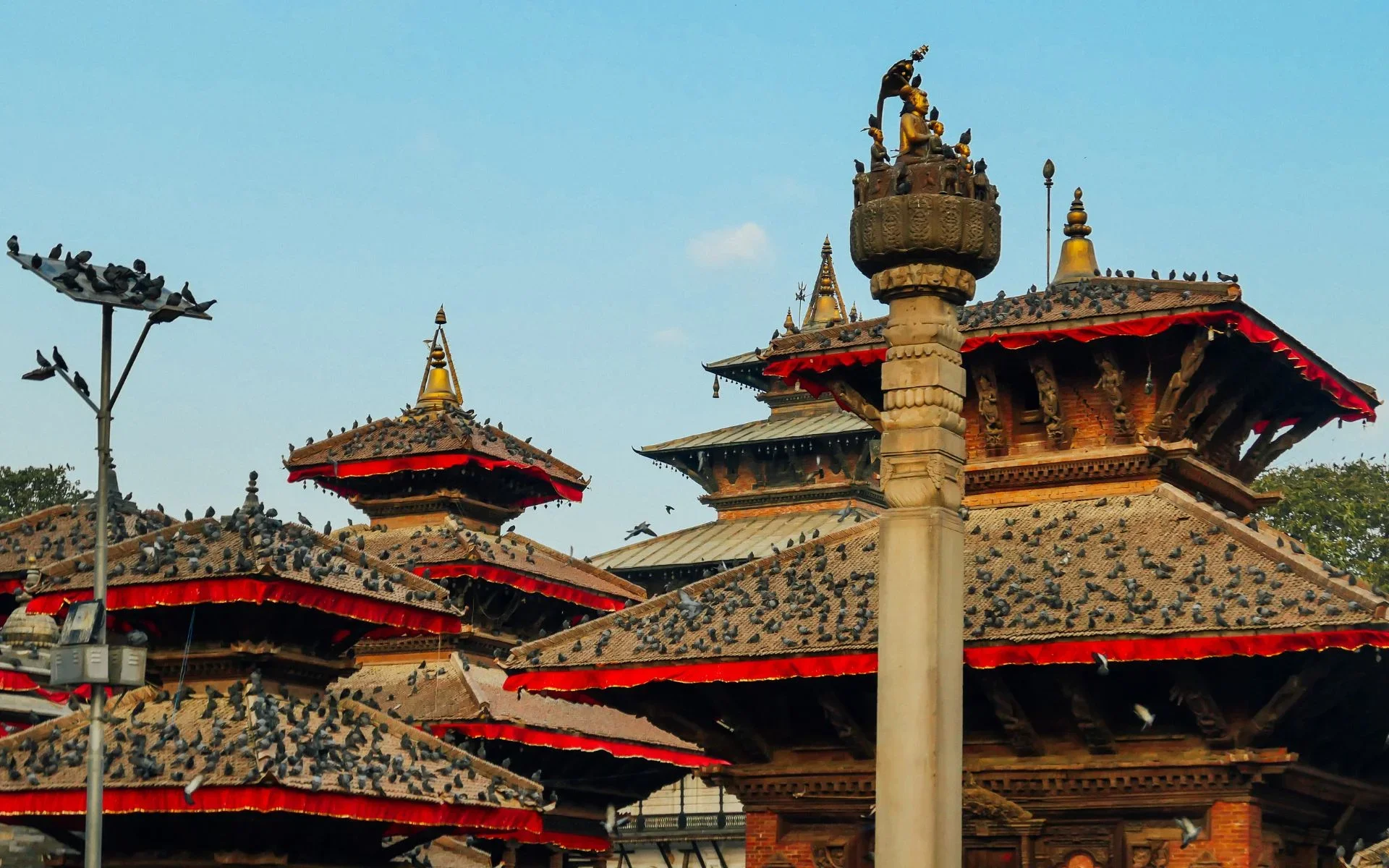
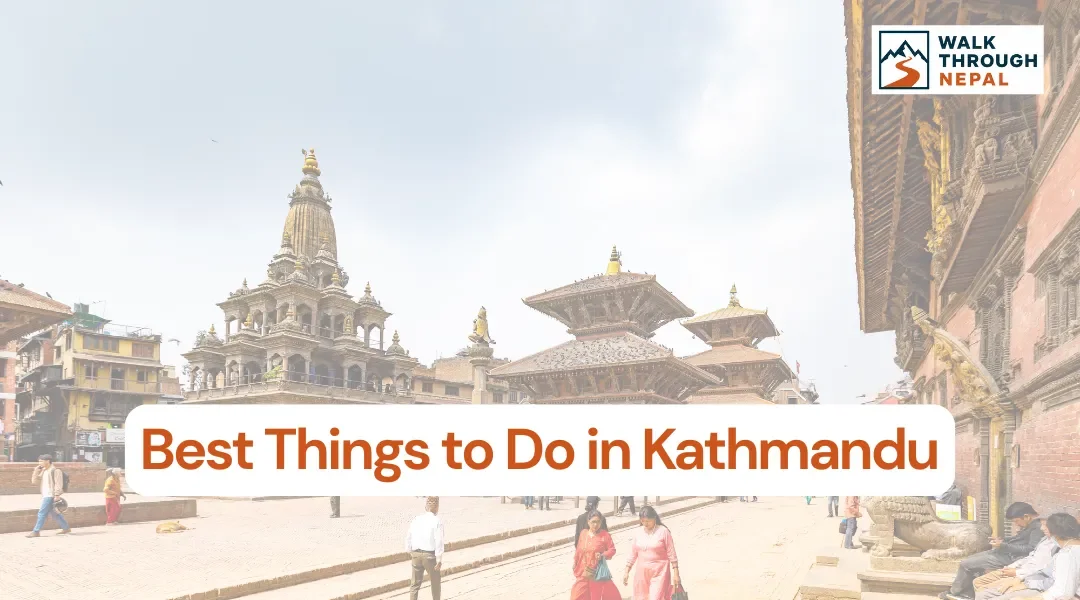
Kathmandu Durbar Square is the historic royal complex at the heart of the old city, filled with pagoda temples, palace courtyards and centuries of Newari craftsmanship. It is the essential starting point for understanding the city, and it carries a foreigner entry fee of roughly NPR 1,000. Verify the current rate at the ticket office.
The centerpiece is Hanuman Dhoka, the old royal palace where kings were once crowned. Walk slowly through the connected courtyards, look up at the carved wooden struts, and notice the ongoing earthquake restoration work still underway after 2015. The square rewards a full unhurried hour.
2. See the Living Goddess Kumari
The Kumari is a young girl worshipped as a living goddess in Nepal, and she lives inside the Kumari Ghar, a beautifully carved courtyard building beside Kathmandu Durbar Square. When she appears at an upper window, visitors gather quietly in the courtyard below to receive her brief blessing.
Entry to the courtyard is free. Photography of the courtyard is fine, but photographing the Kumari herself is strictly prohibited. Stand respectfully, keep noise down, and do not expect a scheduled appearance; she shows herself only for short moments through the day.
3. Climb to Swayambhunath (Monkey Temple)
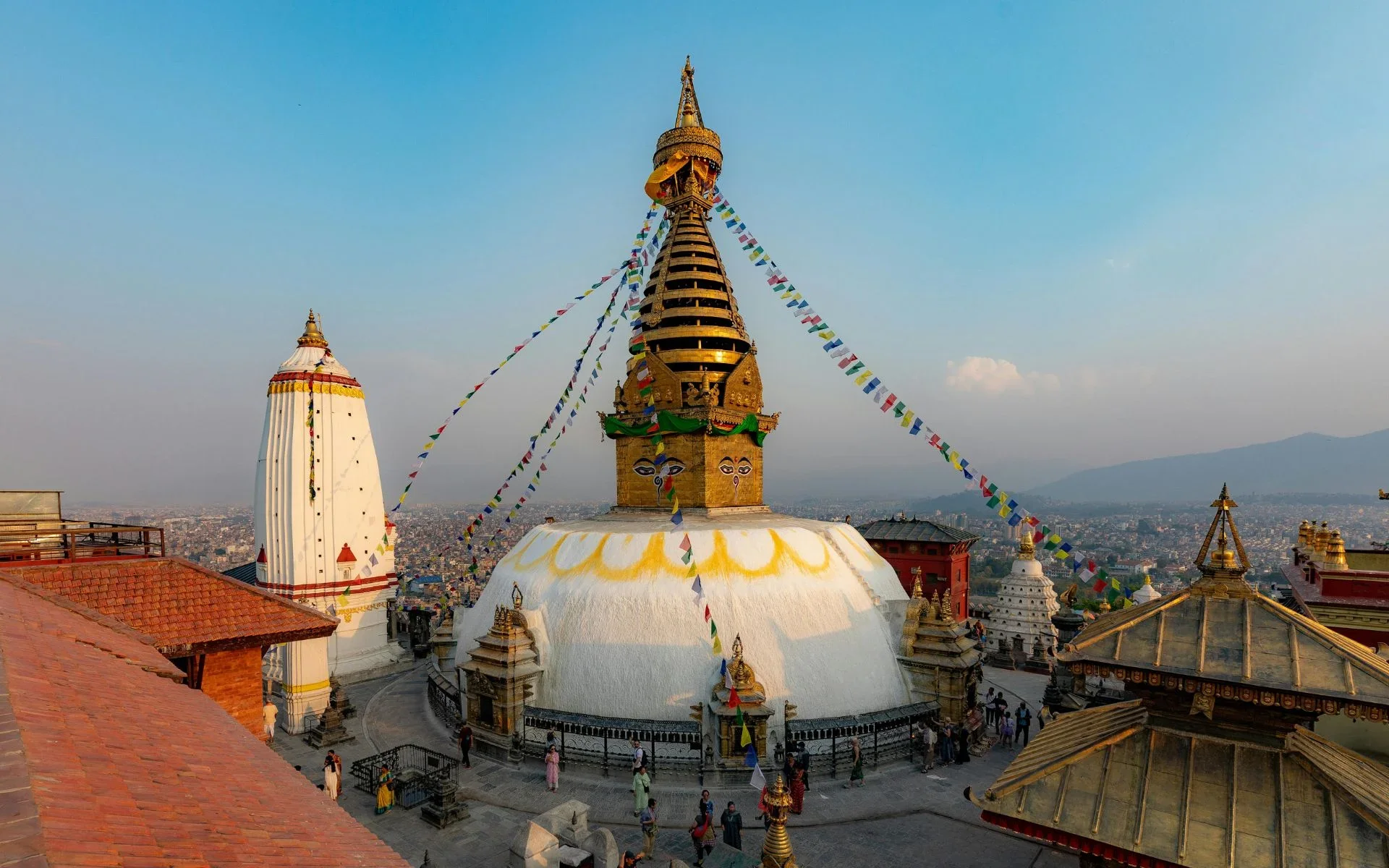
Swayambhunath is an ancient hilltop stupa sacred to both Buddhists and Hindus, reached by a steep flight of 365 stone steps on the eastern approach. From the top you get one of the best panoramic views over the Kathmandu Valley, especially at sunrise. Foreign entry costs around NPR 200.
The site is nicknamed the Monkey Temple for the resident rhesus monkeys, so keep food and loose items secured. Come early morning to catch prayer flags snapping in the wind, the low chant of pilgrims turning prayer wheels, and clear valley light before the haze builds.
4. Walk Around Boudhanath Stupa
Boudhanath is one of the largest Buddhist stupas in the world and the spiritual center of Kathmandu's Tibetan community. Pilgrims perform a clockwise kora around the base, spinning prayer wheels and murmuring mantras. Foreign entry is roughly NPR 400, and the atmosphere at dusk is unforgettable.
Always walk clockwise, keeping the stupa on your right. Ring the rooftop cafés around the plaza and order a masala tea as the lamps are lit and monks from the surrounding monasteries begin evening prayers. Sunrise and sunset are the two magic hours here.
5. Visit Pashupatinath Temple
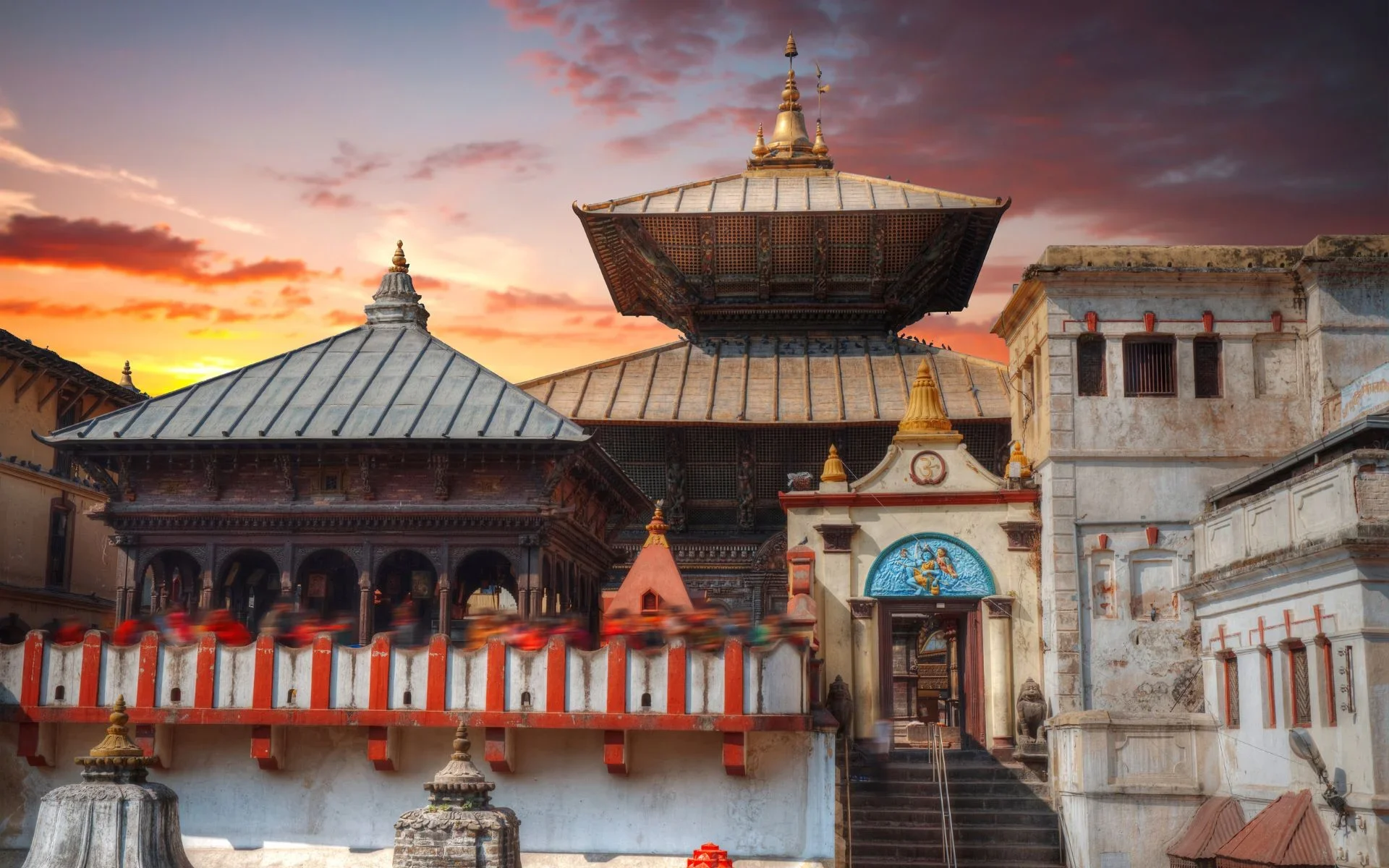
Pashupatinath is Nepal's holiest Hindu temple, dedicated to Shiva and set along the sacred Bagmati River. The main temple's inner sanctum is open only to Hindus, but non-Hindus can explore the wider riverside complex, the ghats and the surrounding shrines. Foreign entry is around NPR 1,000.
The riverside ghats are used for open cremation, a deeply sacred Hindu funeral rite. This is not a tourist spectacle; treat it with quiet respect, keep a distance from grieving families, and avoid photographing cremations. The evening aarti ceremony, with lamps, bells and singing, is a moving way to close a temple day.
6. Explore Patan Durbar Square
Patan Durbar Square sits in the city of Lalitpur, just across the Bagmati River, and is famed for its concentration of fine Newari temples and metalwork. The stone Krishna Mandir and the excellent Patan Museum are the highlights. Foreign entry is roughly NPR 1,000.
Note that this is technically outside Kathmandu city, though only a short taxi ride away within the valley. Patan is the traditional home of Nepal's finest metal and stone artisans, and its backstreets are still full of working craft workshops. Allow half a day here.
7. Wander Through Bhaktapur Durbar Square
Bhaktapur is the best-preserved medieval city in the Kathmandu Valley, roughly 13 kilometers east of central Kathmandu. Its highlights include the towering Nyatapola Temple, the ornate Golden Gate, the 55-Window Palace and the atmospheric Pottery Square. Foreign entry is around USD 15 or the equivalent in rupees.
Treat Bhaktapur as a Kathmandu Valley day trip rather than a city-center stop, as traffic can make the drive take an hour or more each way. Its car-restricted core, brick-paved lanes and living pottery tradition make it many travelers' favorite corner of the valley. Try the local juju dhau (king curd) while you are there.
8. Get Lost in Thamel
Thamel is Kathmandu's central tourist district, a dense grid of narrow lanes packed with trekking gear shops, bookstores, restaurants, cafés, bars and live music venues. It is where most travelers base themselves and where nearly every trek logistically begins.
Come here to buy or rent gear, book permits, sip good coffee and feel the buzz after dark. Prices are negotiable in most shops, so bargain politely. It is a completely different energy from the heritage squares, and worth an evening of aimless wandering.
9. Shop at Asan Bazaar
Asan is a historic, chaotic market square in the old city where locals have shopped for spices, textiles, grains and household goods for centuries. Unlike Thamel, this is everyday Kathmandu, loud and unpolished, with porters weaving through the crowds carrying impossible loads.
Wander the radiating lanes to see mounds of dried chilies, brass utensils, fresh vegetables and religious offerings. It is free to explore and one of the best places for honest street photography. Go in the morning when trading is at its busiest.
10. Relax at the Garden of Dreams
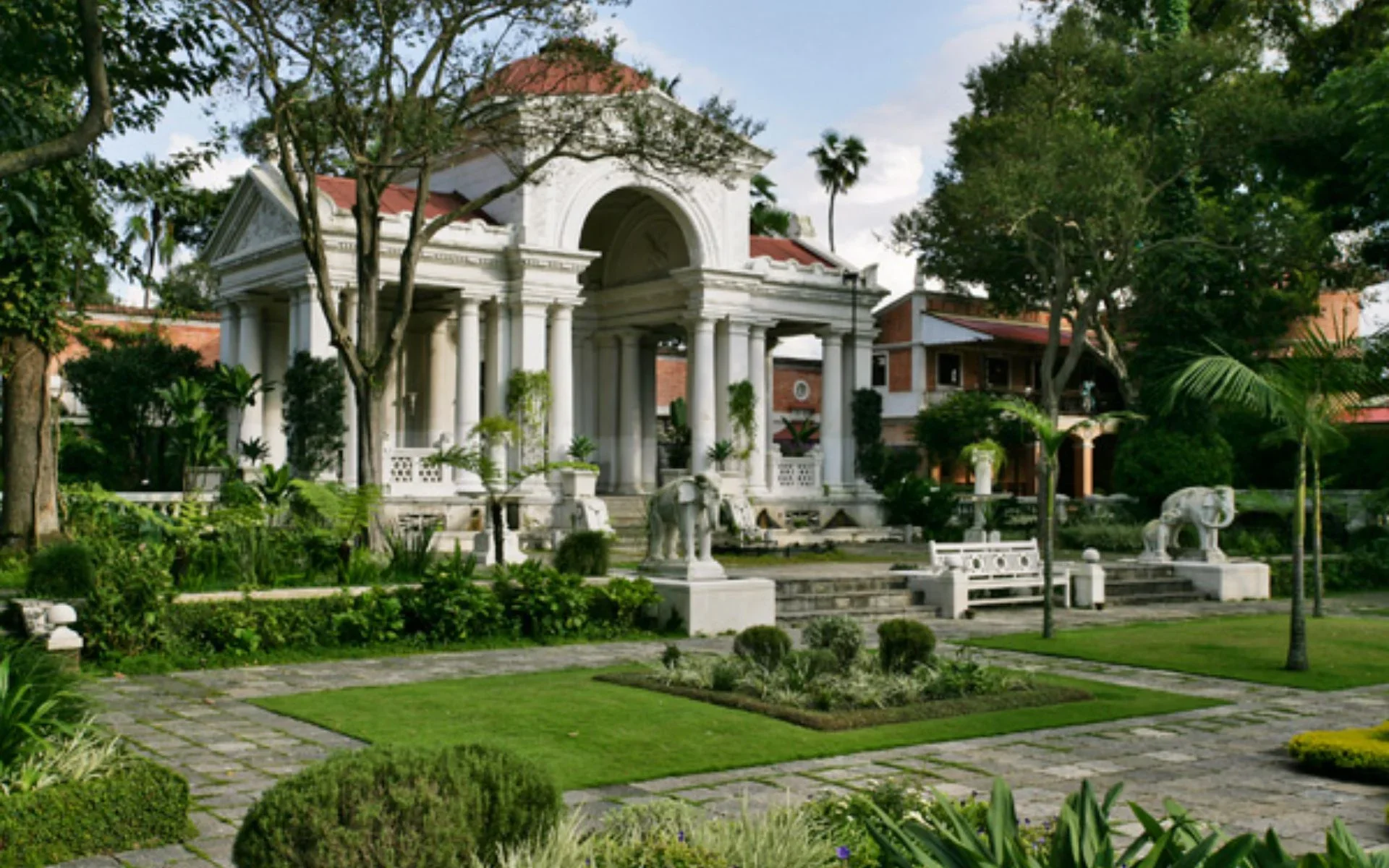
The Garden of Dreams is a restored early-20th-century neo-classical garden right on the edge of Thamel, offering a rare pocket of calm in the city noise. Manicured lawns, pavilions, fountains and a quiet café make it a favorite escape for couples, families and slow travelers. Entry is roughly NPR 400 for foreigners.
It is the perfect place to recover from a heavy sightseeing morning or to sit with a coffee and plan your next few days. The contrast between the walled garden's stillness and the honking chaos just outside the gate is striking.
Cultural & Local Experiences in Kathmandu
11. Try Traditional Newari Cuisine
Newari food is the indigenous cuisine of the Kathmandu Valley, bold, spiced and built around ritual feasting. Rather than just picking a restaurant, know what to order. The classic Newari khaja set is a mixed platter perfect for a first taste.
Look for these dishes: chatamari (a rice-flour crepe often called Newari pizza), choila (spiced grilled meat or its vegetarian version), bara (lentil patties), yomari (a sweet steamed dumpling), and aloo tama (potato and bamboo shoot curry). Pair it with local rice beer if you drink alcohol.
12. Take a Newari Cooking Class
A Newari cooking class typically includes a guided market visit, ingredient preparation, hands-on cooking and then sitting down to eat the meal you made. It is one of the most rewarding half-day cultural activities in Kathmandu, especially in and around Patan.
Beyond the food, a good class explains the role of feasting in Newari community life and the symbolism behind certain dishes. Expect a small group setting and a relaxed pace. Book a day or two ahead through your hotel or a local operator.
13. Explore Kirtipur's Old Town
Kirtipur is a hilltop Newari town on the southwestern edge of the valley, largely untouched by mass tourism. Its steep, narrow lanes, old brick houses, weaving workshops and quiet temples give you a sense of how the valley's towns felt generations ago.
Climb to the Bagh Bhairab and Uma Maheshwar temples for views back over Kathmandu. There is almost no tourist infrastructure here, which is precisely the appeal. Combine it easily with a Chandragiri or Pharping outing.
14. Visit Narayanhiti Palace Museum
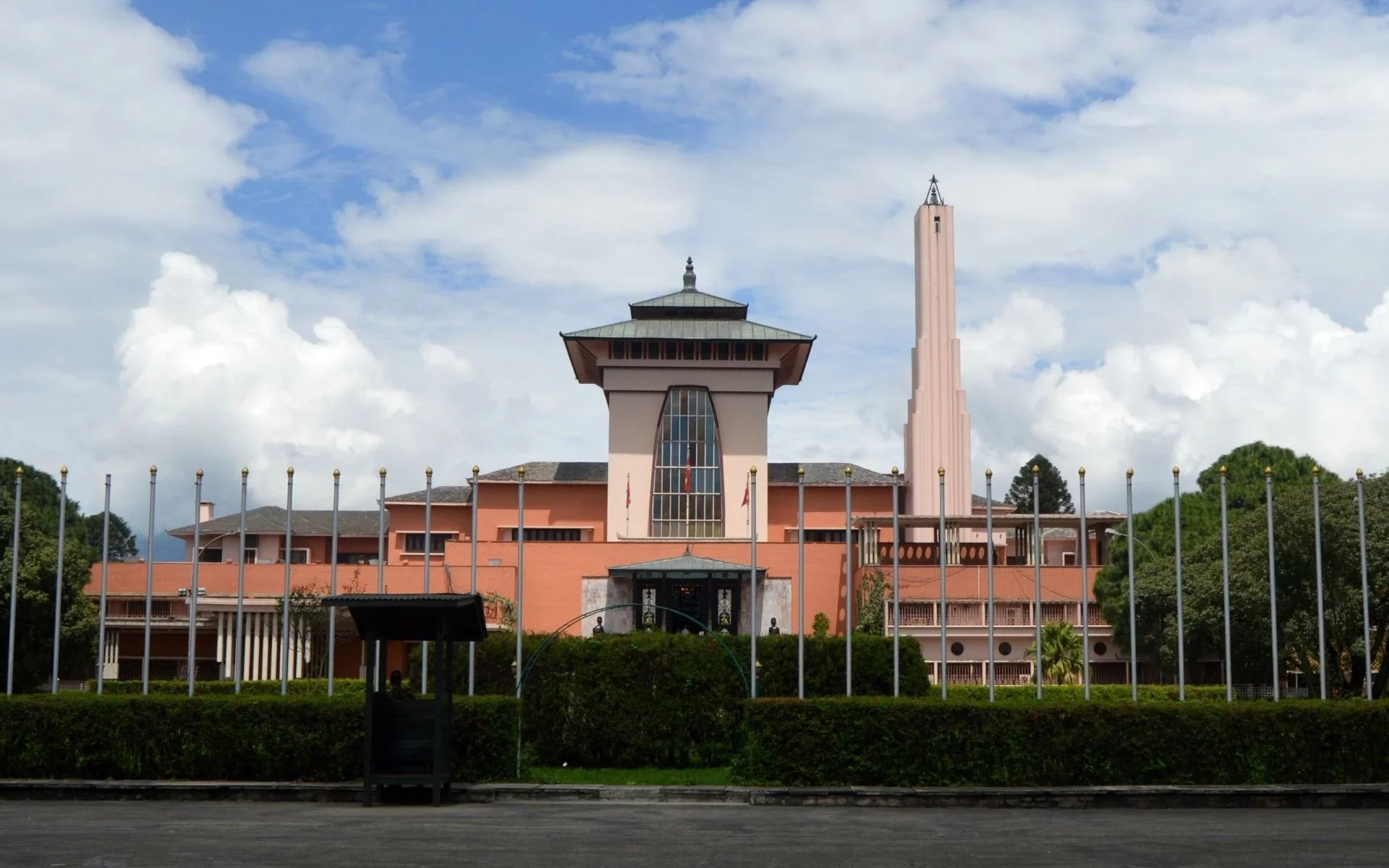
Narayanhiti was the residence of Nepal's monarchy until the abolition of the crown in 2008, and it is now a state museum. Walking through the preserved throne rooms, banquet halls and royal quarters gives you a window into Nepal's turbulent modern political history. Foreign entry is roughly NPR 500.
The site of the 2001 royal massacre is marked within the grounds. Photography inside is not permitted and bags must be checked at the gate. It is a welcome change of pace from the valley's medieval temples and closed on some weekdays, so check hours first.
15. Visit a Buddhist Monastery
The hills above Boudhanath, particularly around Kopan Monastery, host active Tibetan Buddhist communities where visitors can observe daily prayers and, in some cases, join meditation or short courses. This is a living monastic environment, not an attraction, so behave accordingly.
Remove your shoes and hat before entering prayer halls, keep silent during ceremonies, and do not photograph the interior of prayer halls unless a resident monk gives you explicit permission. Kopan runs organized meditation retreats if you want a deeper experience.
Outdoor & Viewpoint Experiences
16. Ride the Chandragiri Hills Cable Car
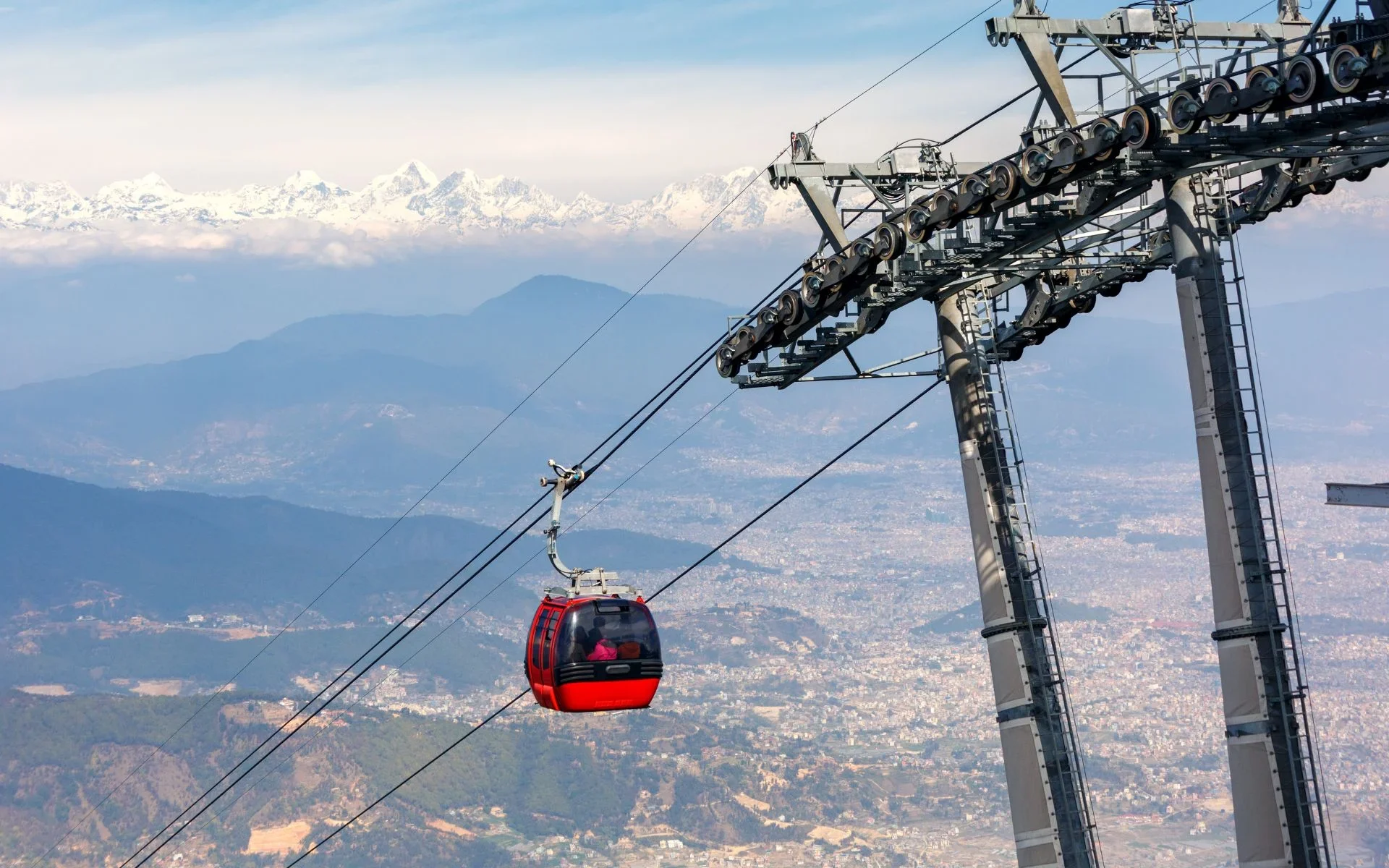
The Chandragiri cable car climbs to a hilltop at about 2,550 meters on the valley's southwestern rim, delivering wide views over Kathmandu and, on clear days, a Himalayan panorama including distant Everest and Annapurna. The ride and hilltop complex make an easy half-day escape from the city heat and dust.
At the top you will find a temple, gardens and viewing decks. Go on a clear morning in autumn or winter for the best mountain visibility, as haze thickens through the afternoon and during the monsoon.
17. Hike Around Shivapuri National Park
Shivapuri Nagarjun National Park lies on the northern edge of the valley and offers accessible day hikes through pine and rhododendron forest, with rich birdlife and quiet viewpoints. Popular routes climb toward Shivapuri Peak at around 2,732 meters or to the Nagi Gompa monastery.
A park entry fee of roughly NPR 1,000 applies for foreigners. This is the best option if you want a proper leg-stretch and forest air near the city, and it doubles as gentle acclimatization before a bigger trek.
18. Watch Sunrise or Sunset From a Kathmandu Viewpoint
The best in-city viewpoints for light and atmosphere are Swayambhunath for sunrise over the valley and Chandragiri for a mountain-facing sunset. For a true Himalayan sunrise, Nagarkot on the valley's eastern rim is the classic choice.
Keep in mind that Nagarkot is not Kathmandu city; it is a hill station roughly 32 kilometers away that works best as an overnight or dedicated day trip. Within the city, aim for clear, dry-season mornings for the sharpest views.
19. Take a Himalayan Mountain Flight
A Himalayan mountain flight is a short scenic aircraft tour, usually about 1 hour, that flies along the range for close aerial views of Everest and other giants. It is the ideal option for travelers who cannot trek due to time, fitness or health. You can learn more about the peak on our facts about Mount Everest page.
Flights leave early morning from Kathmandu and are entirely weather dependent, so book with a buffer day and understand that clear Everest views are not guaranteed on any given flight. Reputable operators offer a window seat to every passenger.
Nearby Day Trips From Kathmandu
20. Take a Day Trip to Nagarkot
Nagarkot, at around 2,175 meters, is the valley's most famous viewpoint for a Himalayan sunrise, with a sweeping panorama from Annapurna to the Everest range on the clearest days. Many travelers stay overnight to catch first light, then hike down through terraced villages toward Changu Narayan.
It is roughly a 1.5 to 2 hour drive from central Kathmandu depending on traffic. Combine it with Bhaktapur on the way for a full and rewarding day out of the city.
21. Visit Dakshinkali Temple
Dakshinkali is a Hindu temple dedicated to the goddess Kali, set in a wooded gorge about 22 kilometers south of Kathmandu. It is an important pilgrimage site, particularly on Tuesdays and Saturdays when devotees bring animal offerings.
Dress modestly, remove your shoes where required, and be aware that ritual sacrifice takes place here, which some visitors find confronting. Approach it as a cultural and religious site rather than sightseeing, and combine it easily with Pharping nearby.
22. Explore Pharping
Pharping is a hillside settlement southwest of the valley sacred to both Buddhists and Hindus, dotted with monasteries, meditation caves and shrines. The Asura Cave, linked to the great teacher Guru Rinpoche, and the self-arisen Tara image draw pilgrims from across the Himalayan Buddhist world.
Its rural, unhurried atmosphere makes a refreshing contrast to central Kathmandu. Pair it with Dakshinkali and Kirtipur for a full southern-valley day, and dress respectfully at the many active religious sites.
Unique Things to Do in Kathmandu
23. Walk Through the Old Streets of Kathmandu
The old city between Durbar Square and Asan hides a maze of courtyards, or bahals, tucked behind ordinary-looking doorways, many containing centuries-old shrines and stupas. Simply wandering these lanes, camera in hand, is one of the most rewarding free things to do in Kathmandu.
Look for carved wooden windows, small metalworking and mask-making shops, and quiet inner courtyards where daily life unfolds away from traffic. A local guide can unlock the stories behind doorways you would otherwise walk straight past.
24. Experience Kathmandu During a Festival
Kathmandu's festival calendar is extraordinary, and timing your visit to one transforms the trip. Major festivals include Indra Jatra (chariot processions and masked dances at Durbar Square), Dashain and Tihar (Nepal's biggest holidays), Holi (colors) and Buddha Jayanti at the stupas.
Most of these follow the lunar calendar, so exact dates shift each year. Check the specific festival dates for your travel year before booking, and expect some shops and offices to close during the peak days of Dashain and Tihar.
25. Prepare for a Himalayan Trek in Kathmandu
For most trekkers, Kathmandu is the launch pad: this is where you buy or rent gear in Thamel, arrange permits and TIMS documentation, meet your licensed guide, complete a trek briefing and rest before departure. Building in a day for this is genuinely useful, not wasted time.
Under current 2026 rules, most major trekking regions require a licensed guide, and restricted areas legally require both a guide and insurance covering high-altitude helicopter evacuation.
From here the classic routes fan out. If you are still deciding, our guide to the best trek in Nepal for beginners is a good starting point, and you can go deeper on specific routes like the Annapurna Base Camp trek, the Annapurna Circuit and its high Thorong La Pass, or the family-friendly Ghorepani Poon Hill trek.
How Many Days Do You Need in Kathmandu?
Plan on 2 to 4 days for Kathmandu and the wider valley. One day covers the four essential UNESCO sites at a rush, two days adds Patan and Thamel comfortably, and three days lets you include Bhaktapur and a viewpoint. Here is a practical breakdown.
Days | Suggested Focus |
1 Day | Swayambhunath, Kathmandu Durbar Square, Boudhanath, Pashupatinath |
2 Days | Add Thamel, Patan Durbar Square and the Garden of Dreams |
3 Days | Add Bhaktapur, Kirtipur and a Chandragiri or Nagarkot viewpoint |
4 Days | Add a day trip (Pharping/Dakshinkali or Shivapuri hike) plus trek prep |
Kathmandu in 1 Day
Start at Swayambhunath for sunrise, move to Kathmandu Durbar Square mid-morning, walk the kora at Boudhanath in the afternoon and end at Pashupatinath for evening aarti. It is packed but achievable if you hire a car and start early.
Kathmandu in 2 Days
Add Thamel for shopping and dinner, Patan Durbar Square for craftsmanship and the Patan Museum, and the Garden of Dreams for a mid-day rest. This is the sweet spot for most short-stay visitors.
Kathmandu in 3 Days
Add Bhaktapur for a full medieval-city morning, Kirtipur's old town, and a Chandragiri cable car or Nagarkot sunrise trip. Three days gives the valley the breathing room it deserves.
Best Time to Visit Kathmandu
The best time to visit Kathmandu is autumn (October–November) and spring (March–April), when skies are clearest, temperatures are mild and mountain views from valley viewpoints are sharpest. Winter is cool and crisp with fewer crowds, while the monsoon (June–August) brings rain, humidity and hazier air.
Autumn overlaps with the biggest festivals, Dashain and Tihar, adding color but also some closures. For a full month-by-month breakdown, see our detailed guide on the best time to visit Nepal.
Kathmandu Travel Tips
How to Get Around Kathmandu
Metered taxis, ride-hailing apps like Pathao and InDrive, and rented scooters are the practical options. Always confirm a fare or use an app; walking is best inside the old city where lanes are too narrow for cars.
What to Wear at Religious Sites
Cover your shoulders and knees, remove shoes and hats before entering temples and monastery prayer halls, and avoid tight or revealing clothing at sacred sites. Carry a light scarf for quick coverage.
What Cultural Etiquette Should You Follow?
Always walk clockwise around stupas, mani walls and chortens, keeping them on your right. Ask before photographing people, never photograph inside monastery prayer halls without permission, and treat the cremation ghats at Pashupatinath with quiet respect.
How Much Time Should You Allow for Traffic?
Kathmandu traffic is heavy and unpredictable. Allow generous buffers, especially for valley-edge sites like Bhaktapur or Nagarkot, where a short distance can take well over an hour each way during peak times.
Should You Hire a Local Guide?
For the heritage squares and hidden bahals, a licensed local guide adds enormous value, unlocking history, symbolism and shortcuts you would never find alone. It is optional in the city but strongly recommended for a first visit, and legally required for most treks beyond the valley.
Frequently Asked Questions
What are the best things to do in Kathmandu?
The standouts are Kathmandu Durbar Square, Swayambhunath, Boudhanath, Pashupatinath, Patan and Bhaktapur, along with tasting Newari cuisine, exploring Thamel and Asan, and taking a viewpoint trip to Chandragiri or Nagarkot.
How many days are enough for Kathmandu?
Two to four days is ideal. One day covers the core UNESCO sites, three days comfortably adds Bhaktapur, Kirtipur and a viewpoint.
Is Kathmandu worth visiting?
Absolutely. With seven UNESCO sites in the valley, living temples and rich food culture, it deserves far more than a single stopover night.
What is Kathmandu famous for?
Its Durbar Squares, the Boudhanath and Swayambhunath stupas, Pashupatinath Temple, the Living Goddess Kumari, Newari food, and its role as the gateway to the Himalayas.
What can I do in Kathmandu in one day?
Visit Swayambhunath, Kathmandu Durbar Square, Boudhanath and Pashupatinath in a single well-planned day with a hired car.
What are the best free things to do in Kathmandu?
Wandering the old streets and hidden courtyards, exploring Asan Bazaar, and soaking up the atmosphere of Thamel cost nothing.
What should I not miss in Kathmandu?
Boudhanath at sunset, the valley view from Swayambhunath, a Newari khaja set, and at least one Durbar Square. Bhaktapur if time allows.
Is Kathmandu safe for tourists?
Yes, generally. Watch for petty theft in crowds and be very careful with traffic; use registered taxis or ride-hailing apps at night.
What is the best time to visit Kathmandu?
Autumn and spring offer the clearest skies and best mountain views; the monsoon brings rain and haze.
What are the best day trips from Kathmandu?
Nagarkot, Bhaktapur, Chandragiri Hills, Pharping and Dakshinkali all make excellent day trips.
Conclusion
Kathmandu is not simply the place you pass through on the way to the mountains. It is a genuine destination in its own right, layering heritage, religion, food and everyday local life into one dense, endlessly photogenic valley, all before you ever set foot on a trail.
Give it a few days, walk slowly, eat well, respect the sacred spaces, and you will understand why so many travelers wish they had stayed longer. Then, when the mountains call, you will step onto the trail already tuned to the rhythm and etiquette of Nepal.
Ready to Explore Kathmandu?
When you are ready to turn this list into a real plan, connect with our verified local guides and browse tailored Kathmandu Valley and trekking itineraries directly on our platform. Our team on the ground can arrange permits, private transport, cultural walks and your onward Himalayan trek with the current 2026 regulations already handled.