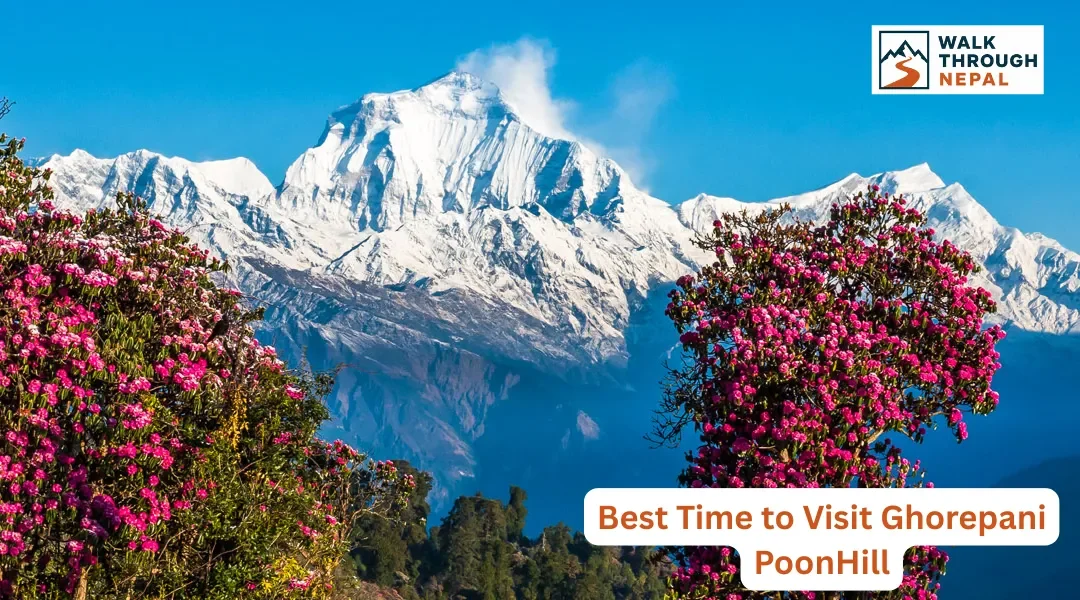
Best Time for Ghorepani Poon Hill Trek: Month-by-Month Guide
WWalk Through NepalAugust 14, 2026
Local trekking experts, wherever you go
Trips planned around your pace, interests, and time.
Real People, Quick and Helpful Support
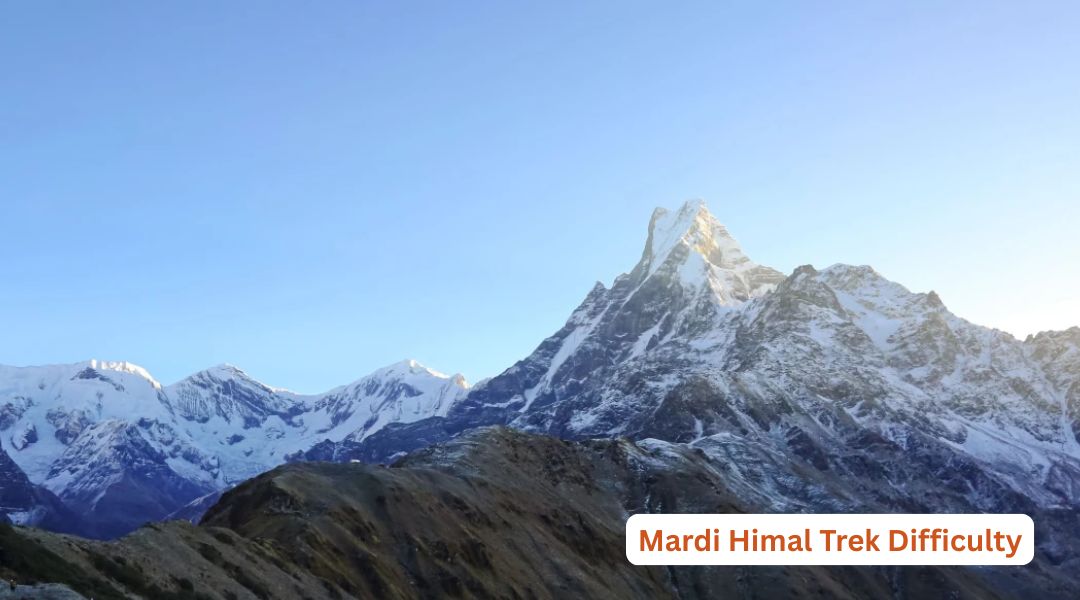
How difficult is the Mardi Himal Trek? A moderate walk with steep climbs and 3,500m+ altitude. Get fitness tips, daily breakdown & trail conditions here.
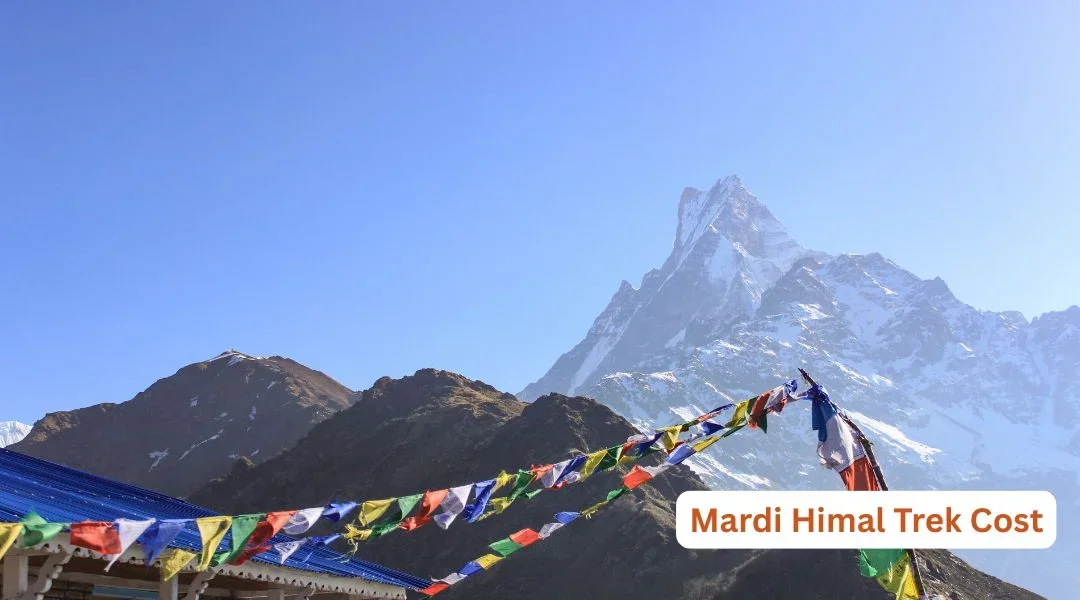
See the real Mardi Himal Trek cost in 2026: permits, guide, porter, food, transport, and hidden fees. Compare budget vs comfort trekking prices.
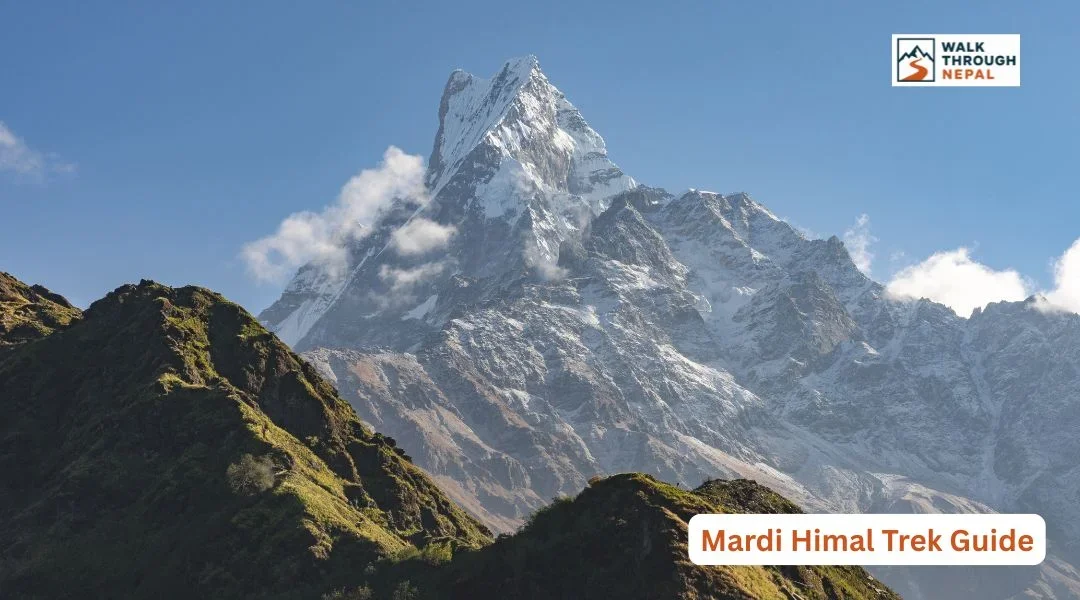
Complete Mardi Himal Trek guide: route, 7-day itinerary, cost, permits, difficulty, altitude and the best time to trek this quiet Annapurna gem from Pokhara.
Standing on Poon Hill as the first rays of sunlight strike Annapurna and Machhapuchhre is one of Nepal's most unforgettable trekking experiences. But the view you witness, the trails you walk, and the atmosphere you feel can change dramatically depending on when you visit.
In spring, rhododendron forests blanket the hillsides in red, pink, and white. Autumn delivers crystal-clear mountain panoramas and stable weather. Winter transforms the landscape with snow-covered trails and peaceful surroundings, while the monsoon season brings lush greenery, misty valleys, and a quieter trekking experience.
If you're planning the Ghorepani Poon Hill Trek, choosing the right season can make a significant difference to your journey. This month-by-month guide explains weather conditions, mountain visibility, trail conditions, crowd levels, and seasonal highlights so you can confidently decide when to embark on one of Nepal's most iconic short treks.
The best overall time for the Ghorepani Poon Hill Trek is March to May and September to November. October and November lead for mountain visibility and stable skies, while March and April are unbeatable for rhododendron blooms. Winter suits snow lovers, and monsoon rewards those who accept rain in exchange for empty trails.
Season | Months | Conditions | Best For |
Spring | March–May | Mild, colorful | Rhododendrons & scenery |
Monsoon | June–August | Wet, cloudy | Fewer crowds |
Autumn | September–November | Clearer, stable | Mountain views |
Winter | December–February | Cold, possible snow | Snow & quiet trails |
If your single priority is seeing Annapurna and Dhaulagiri glowing at sunrise, aim for October or November. If you want to walk through forests exploding with color, target March and April.
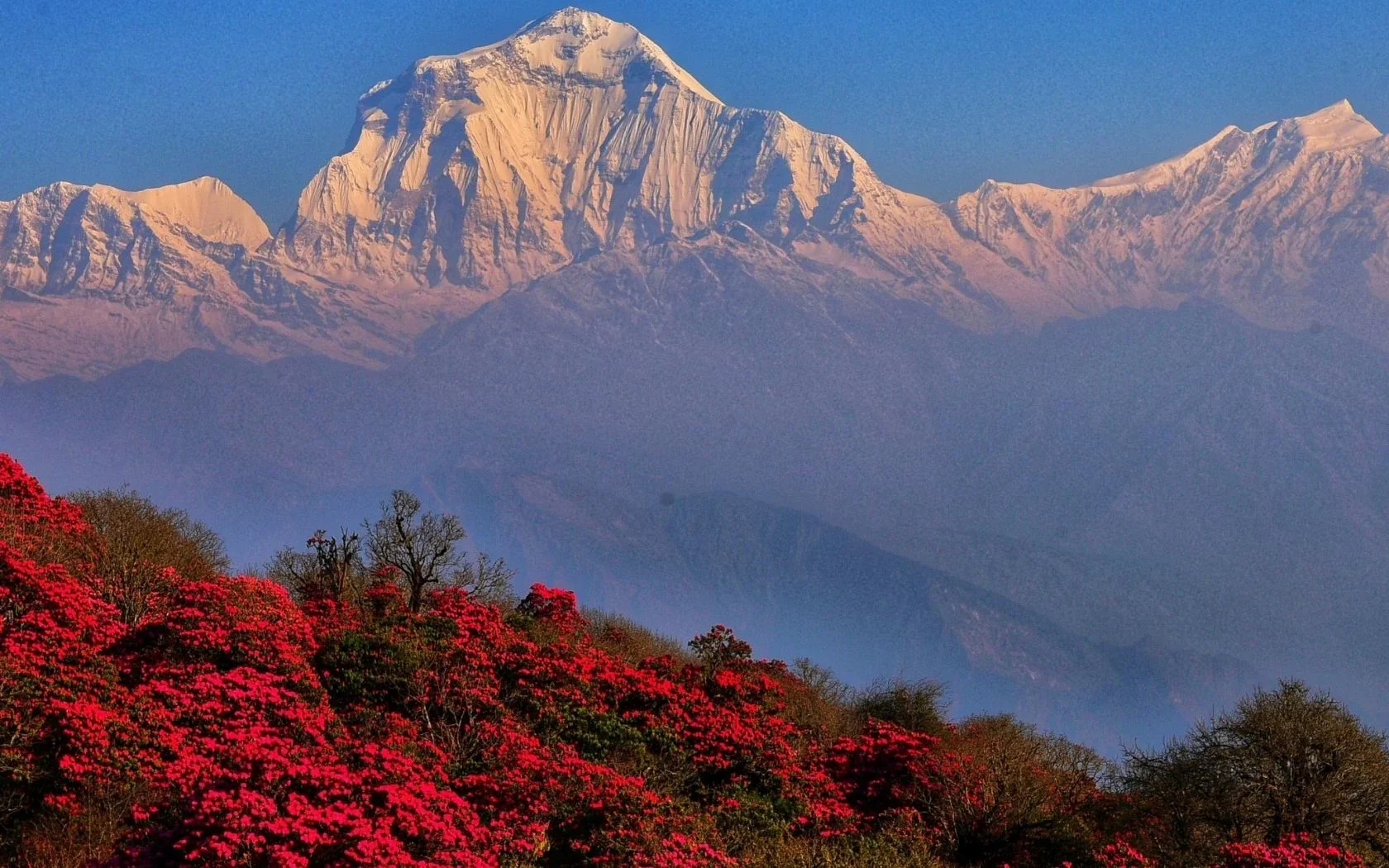
Spring is one of the two peak trekking seasons for Ghorepani. Temperatures are mild, days are long, and the region's famous rhododendron forests come alive. Mountain views are generally good, especially in the mornings, though afternoon cloud buildup becomes more common as the season warms toward May.
March opens the spring season with cool, comfortable daytime temperatures and chilly nights, especially in the Ghorepani area. Mountain visibility is good, and the national flower of Nepal— Rhododendrons begin flowering in the lower forests. Some higher areas around Poon Hill can still hold patches of snow early in the month, so packing a warm layer for the pre-dawn viewpoint climb.
April is arguably the most beautiful month on this trek. Rhododendron blooms peak across much of the route, the forests between Ulleri, Ghorepani, and Tadapani turn brilliant red and pink, and trekking temperatures are pleasant. This is a major beauty of this destination. During this time, lodges in Ghorepani fill fast on peak nights. Book ahead if you want a room with mountain views.
May brings warmer temperatures and the tail end of the rhododendron season. Lower elevations can feel hot during midday walking, and haze or afternoon clouds increasingly build up before the monsoon arrives. Mornings still offer good visibility, so start early. Overall, May remains a solid choice for landscapes and comfortable trekking if you don't mind a little heat.
The monsoon (June to August) brings rain, humidity, cloud cover, and slippery trails. Mountain views are often hidden, and leeches appear in the wetter forest sections. Trails are quiet and lush, however, making this window suitable for flexible trekkers who prioritize solitude and green scenery over guaranteed panoramas.
Early June marks the transition into monsoon. The first weeks can still deliver decent windows of clear weather, but rain becomes more frequent as the month progresses. Waterproof gear becomes essential, and you should plan for muddy, slippery stone staircases on the Ulleri and Tikhedhunga sections.
July is one of the wettest months. Expect regular rain, heavy cloud cover, reduced mountain visibility, and leeches in the forest zones. Trails are muddy and slippery, and river crossings can run high. Trekker numbers drop sharply, so you will often have the trail and lodges to yourself.
August continues the wet pattern, though conditions can vary and some afternoons clear enough for surprise mountain views. Greenery is at its most vivid, waterfalls are full, and terraced fields around Ghandruk look spectacular. It suits patient, well-prepared trekkers only.
Is Poon Hill possible during monsoon? Yes, but it demands tolerance for rain, wet trails, cloud, limited views, and leeches. We don't label monsoon simply "bad" because plenty of trekkers happily accept these trade-offs for peaceful, uncrowded trails. If you crave dry summer trekking instead, note that Upper Mustang lie in the Himalayan rain shadow and stay dry and trekkable while the rest of Nepal is soaked.
Autumn (September to November) is the premier season for clear mountain views. Post-monsoon air is washed clean, skies are stable, temperatures are comfortable, and sunrise visibility from Poon Hill is at its very best. It is also the busiest season, so expect company on the trail and full lodges during October.
Early September can still carry monsoon leftovers, with occasional rain and cloud. By late September the weather stabilizes, the landscape stays vividly green, and mountain views begin returning. It is an excellent shoulder period for trekkers who want autumn quality with slightly thinner crowds.
October is the flagship month. Skies clear, air quality is superb, temperatures are ideal for walking, and the sunrise panoramas of Annapurna South, Dhaulagiri, and Machhapuchhre (Fishtail) are spectacular. This is peak season, so book lodges and guides well in advance and expect a crowd at the Poon Hill viewpoint at dawn.
November keeps the stable, clear conditions of October while temperatures cool, especially in the mornings and at higher camps. Visibility remains excellent, and crowds ease a little compared to October. Toward the end of the month, nights grow noticeably colder, hinting at the coming winter.
Best for: mountain views, sunrise photography, and comfortable trekking conditions.
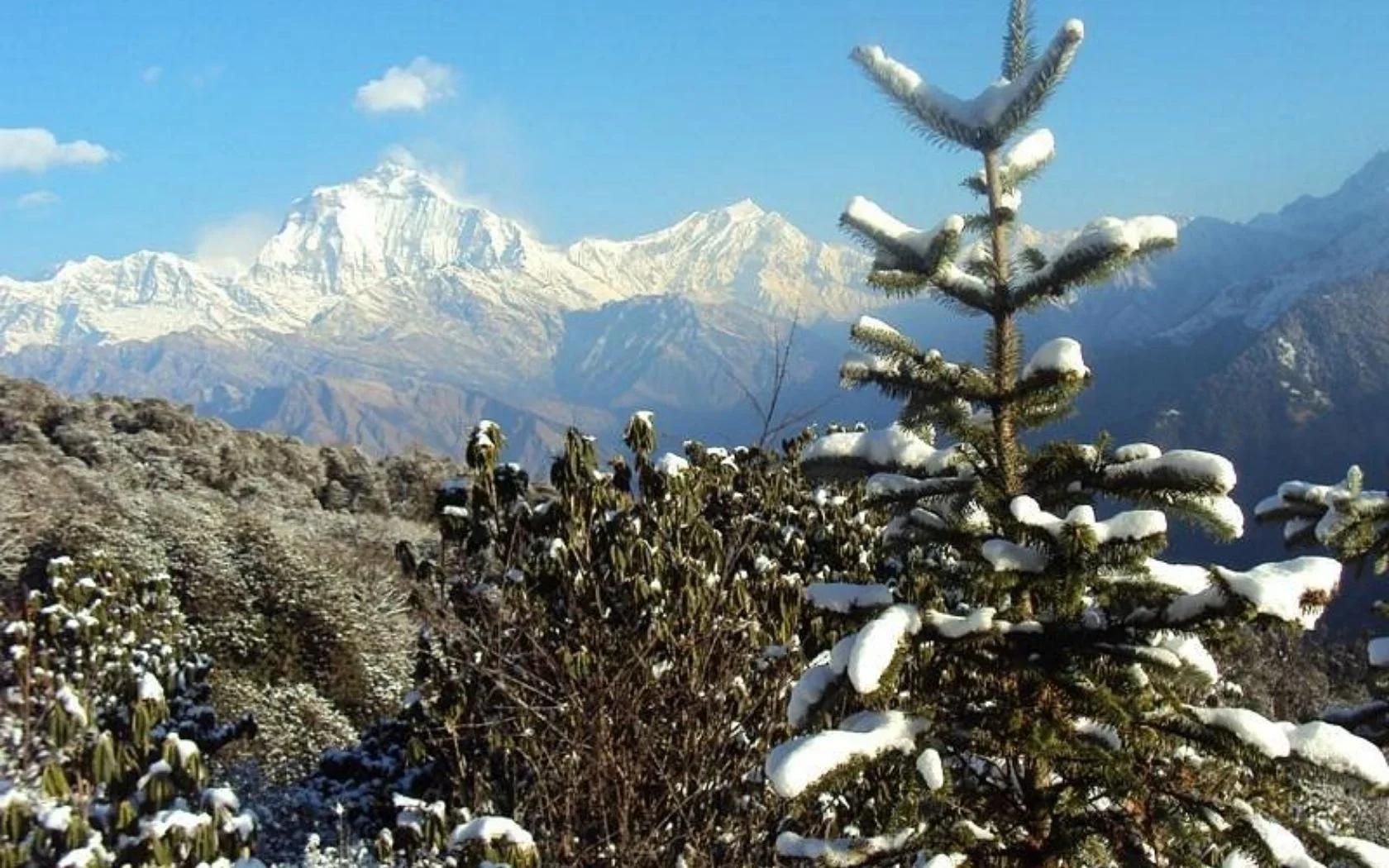
Winter (December to February) brings cold mornings, quiet trails, and often crystal-clear views on stable days. Snow is possible near Ghorepani and on the Poon Hill climb, and daylight hours are shorter. With proper cold-weather gear, winter delivers a peaceful, scenic trek that many trekkers overlook.
December offers cold mornings, the chance of snow at higher points, and beautifully quiet trails. On clear days the mountain views are sharp and rewarding. Nights at Ghorepani (2,874 meters) get very cold, so a warm sleeping bag and layers matter.
January is the coldest month. Expect freezing mornings, possible snow and ice on the trail, shorter daylight, and few other trekkers. The reward is solitude and, on good days, dazzling clarity. Insulated layers, a warm hat, gloves, and traction for icy steps are non-negotiable.
February begins a gradual warming, though winter conditions still linger, especially early in the month. Trails remain quiet, and the transition toward spring starts appearing in the lower forests. It is a good pick for cold-weather trekkers who want a head start on the season.
Can you trek Poon Hill in winter? Yes, but come prepared for cold and possible snow or icy trail sections, particularly on the higher approach to the viewpoint. For a detail sense of the terrain and physical demands, see our Ghorepani Poon Hill trek difficulty guide.
Here is a quick reference matrix covering weather, visibility, crowds, and our recommendation for each month of the year. Treat the labels as general guidance and always check a live forecast before departure.
Month | Weather | Visibility | Crowds | Recommended? |
January | Cold | Good on clear days | Low | Yes, with winter prep |
February | Cold | Variable–good | Low | Yes |
March | Mild/cool | Good | Moderate | Excellent |
April | Mild | Good | High | Excellent |
May | Warm | Variable | Moderate | Good |
June | Wet | Variable | Low | Possible |
July | Wet | Limited | Low | Less ideal |
August | Wet | Limited | Low | Less ideal |
September | Improving | Improving | Moderate | Good |
October | Stable | Excellent | High | Excellent |
November | Cool | Excellent | High/Moderate | Excellent |
December | Cold | Good on clear days | Low | Good with prep |
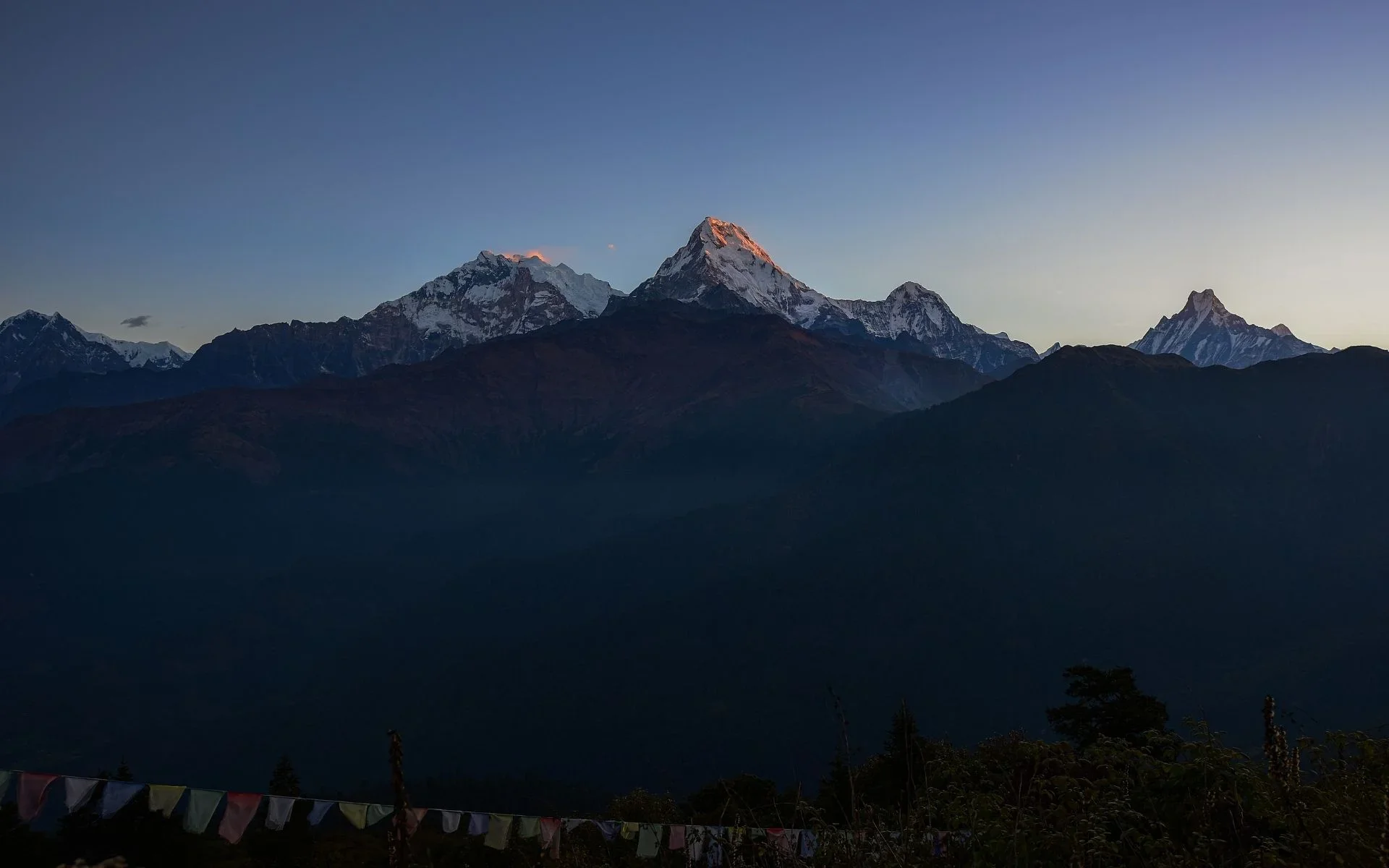
The best time for the Poon Hill sunrise is on clear, stable mornings during autumn and spring. Start the climb from Ghorepani around 4:30 to 5:00 AM to reach the Poon Hill viewpoint before dawn breaks over the peaks.
The sunrise is the single biggest reason most trekkers choose this route. As first light hits the summits, the Annapurna range, Dhaulagiri, and Machhapuchhre glow gold. Mornings are cold at the top, so bring a warm jacket, gloves, a hat, and a headlamp. Clear autumn and spring skies give the highest chance of an unobstructed show, though even winter delivers stunning clarity on the right day.
Rhododendrons on the Ghorepani route typically bloom from mid-March through April, with exact timing shifting by elevation each year. The lower forests flower first, and the higher slopes near Ghorepani follow, filling the trail with red, pink, and white blossoms.
Nepal's national flower, the rhododendron (Laligurans), forms dense forests along this trek, and spring is when they steal the show. April is the classic month, but a warm early spring can push peak bloom into late March. Because different elevations flower at different times, spring trekkers usually catch color somewhere along the route regardless of the exact date.
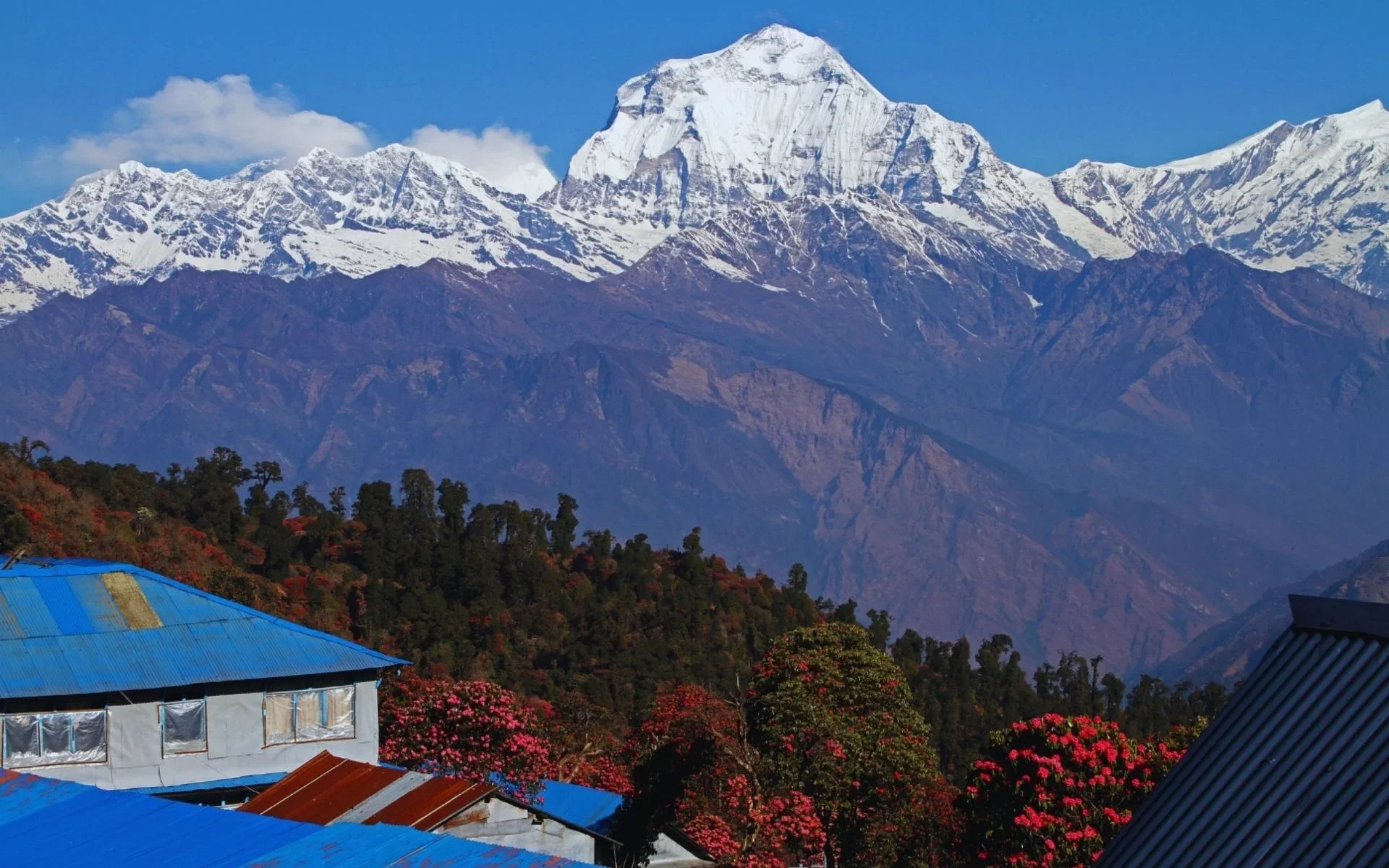
The clearest mountain views come in autumn (October and November) and on stable winter and spring mornings. Cloud cover, rain, and haze are the main enemies of visibility, and early mornings almost always offer the sharpest panoramas before afternoon clouds build.
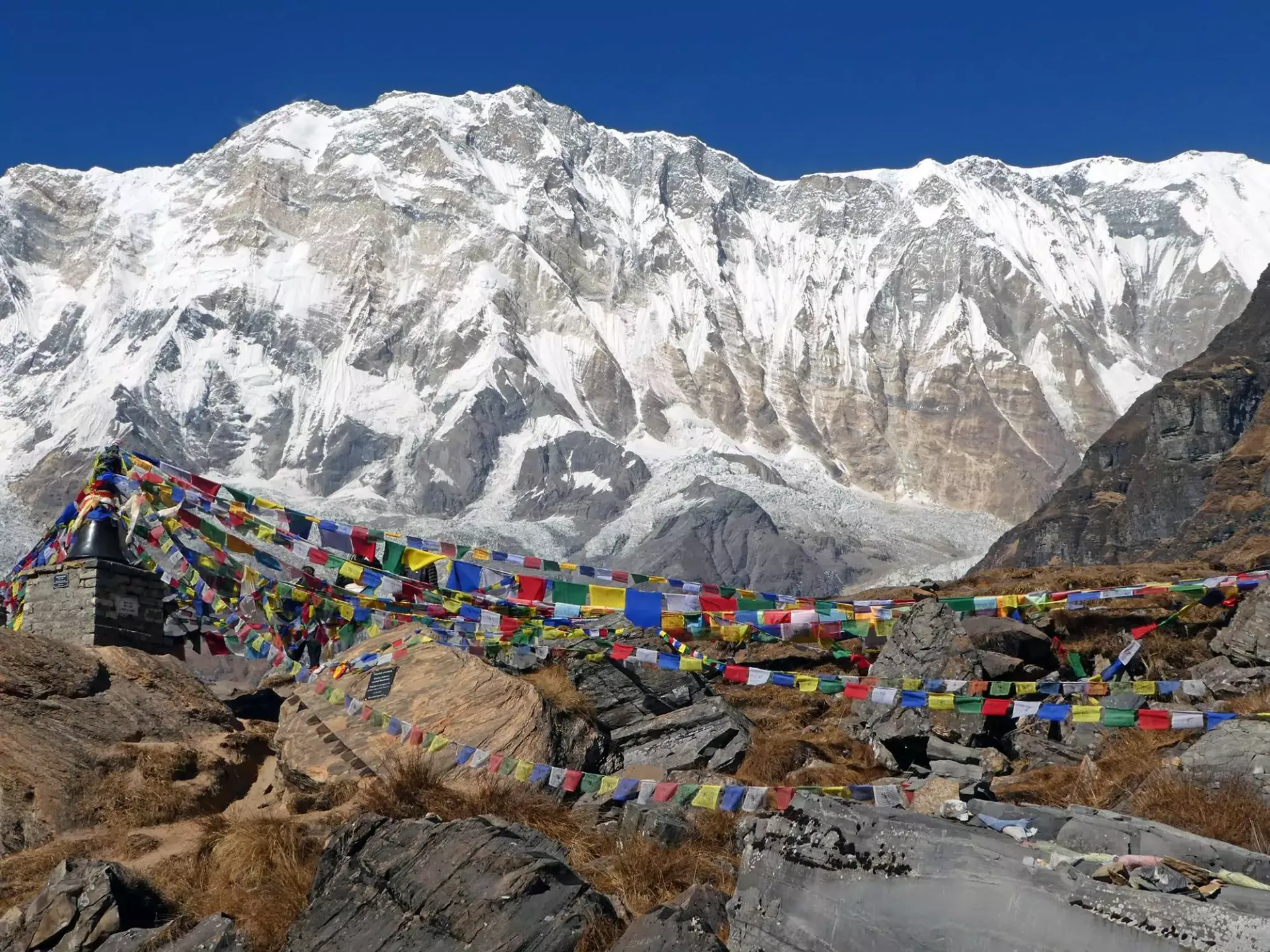
From Poon Hill and along the trail you can hope to see the Annapurna range, including Annapurna South, plus Dhaulagiri, the striking pyramid of Machhapuchhre (Fishtail), and several surrounding peaks. No season guarantees clear skies, but post-monsoon autumn gives you the best odds by far.
For fewer crowds, choose the monsoon months (June to August) or deep winter (January). You will share the trail and viewpoint with far fewer trekkers, but you trade away some combination of reliable weather, mountain visibility, and comfortable trail conditions.
Peak seasons, spring and autumn, deliver the best conditions but the busiest trails and fullest lodges. The quieter windows reward flexibility with solitude, easier lodge availability, and often lower prices.
Budget-focused trekkers usually get the best value in the shoulder and off-peak months, when lodge demand drops and packages soften in price. Peak October and April carry the highest demand for accommodation, guides, and transport, while winter and monsoon tend to be gentler on the wallet.
Remember that ATMs are limited once you leave the road towns like Nayapul and Pokhara, so carry enough Nepalese Rupees (NPR) cash. Common trail upcharges add up too: charging power banks or phones, gas-heated hot showers, and localized Wi-Fi typically cost an extra 200 to 700 NPR per service and are rarely included in your room. For a full breakdown of guide, permit, and daily expenses, read our detailed Ghorepani Poon Hill trek cost guide.
Rather than avoiding a single season, avoid specific conditions: heavy monsoon rain, prolonged poor visibility, dangerously slippery trails, deep cold snaps, and heavy snow or ice on the higher steps. Always check a reliable weather forecast in the days before departure and adjust your plans accordingly.
The trek is achievable year-round with the right preparation, but if guaranteed mountain views are your must-have, the heart of the monsoon (July and August) is the weakest window.
Matching the season to your travel style makes all the difference on this trek.
First-time trekkers: Spring or autumn, for stable weather and clear trails.
Photographers: Autumn (October–November) for clarity, plus early-morning sunrise conditions.
Rhododendron seekers: March and April.
Snow lovers: Winter, when conditions permit safe travel.
Crowd-averse trekkers: Monsoon or January.
Families: Spring and autumn, for comfortable, predictable conditions.
Your kit should shift with the season, but a layering system works year-round. Keep this quick, then dive into a full checklist before you go.
Spring: Light layers plus rain protection for occasional showers.
Monsoon: Waterproof jacket, pack rain cover, and quick-dry clothing.
Autumn: A layering system with light rain protection for the odd shower.
Winter: Warm insulated layers, gloves, a warm hat, and cold-weather footwear with traction.
Whatever season you pick, carry a reusable bottle with a UV purifier, Sawyer squeeze filter, or chlorine dioxide drops. Please skip plastic bottled water on the trail to protect the region's environment. Prioritize Dal Bhat (lentil soup, rice, and vegetable curry) for clean, high-energy fuel with free refills, and lean vegetarian where possible.
If you want a single clear answer: October and April are the two best months. October is ideal for travelers prioritizing clear mountain views and comfortable autumn trekking, while April is best for rhododendron blooms alongside pleasant conditions.
March: Great for early spring scenery and thinner crowds.
November: Excellent for clear views and cooler, crisp air.
December–February: Good for a cold-weather, snow, and solitude experience.
June–August: Possible but less predictable due to monsoon rain and cloud.
One quick safety note: while Poon Hill tops out modestly at 3,210 meters and altitude sickness is uncommon on this trek, it still helps to walk at a steady pace and stay hydrated. Many trekkers pair this route with higher journeys, so if you're extending toward the sanctuary, review our best time for the Annapurna Base Camp trek and the Annapurna Base Camp permit guide to plan permits and acclimatization properly.
Ready to take the next step? The mountains are waiting—plan your Poon Hill adventure and make it happen on your own terms.
Contact Walk Through Nepal today and start planning your perfect Poon Hill Trek.
October and April are the two standout months. October delivers the clearest, most stable mountain views of the year, while April offers spectacular rhododendron blooms alongside comfortable trekking conditions.
Yes, October is arguably the best month overall. The monsoon has cleared the air, skies are stable, temperatures are comfortable, and sunrise visibility of Annapurna and Dhaulagiri is exceptional. It is also the busiest month, so book lodges early.
Yes, April is one of the best months for the trek. Rhododendron forests are typically at their peak bloom, temperatures are comfortable for hiking, and mountain views are often excellent, making it a favorite month for photographers and nature lovers.
It is possible from June to August, but expect rain, cloud cover, muddy trails, leeches in forested sections, and limited mountain views. Trails are quiet and green, making it suitable for tolerant trekkers who prioritize solitude over panoramas.
December to February brings cold mornings, quiet trails, and often crisp clear views on favorable days. Expect possible snow and icy sections near the top, so pack warm layers, gloves, and traction for the pre-dawn Poon Hill climb.
Rhododendrons typically bloom from mid-March through April, with the exact timing shifting by elevation. Lower forests flower first, and the higher slopes near Ghorepani (2,874 meters) follow, painting the trail in red, pink, and white.
Autumn, especially October and November, offers the most reliable clear mountain views. Post-monsoon air is washed clean, giving sharp sunrise panoramas of the Annapurna range, Dhaulagiri, and Machhapuchhre.
The trek experiences four distinct seasons. Spring (March to May) brings mild temperatures and blooming rhododendrons, autumn (September to November) offers stable weather and clear skies, winter (December to February) can be cold with possible snow, and monsoon (June to August) is wet, humid, and often cloudy.
The monsoon months (June to August) and deep winter (January) are the quietest. You will share the trail and the Poon Hill viewpoint with far fewer trekkers, though weather is less predictable in both windows.
Clear, stable mornings in autumn (October and November) and spring (March and April) give the best chance of an unobstructed sunrise over Annapurna and Dhaulagiri. Start the climb around 4:30 to 5:00 AM to reach the viewpoint before dawn.