Contents
The good news first: the Ghorepani Poon Hill trek does not throw the brutal, bone-deep cold of the high Himalaya at you. Because the highest point, Poon Hill, tops out at 3,210 meters, you avoid the extreme sub-zero nights of routes like Everest Base Camp. But moderate elevation does not mean the weather is simple. Rain, cloud cover, morning temperature swings and trail grip change dramatically across the year, and these matter far more than the daily maximum on your phone.
Across our seasons of running this trek, the pattern is consistent: the clearest mountain views come in spring and autumn, monsoon brings wet and slippery trails, and winter delivers cold mornings and the real chance of snow. This guide breaks the weather down month by month so you know exactly what to expect and what to pack.
What Is the Weather Like on the Ghorepani Poon Hill Trek?
The Ghorepani Poon Hill trek has mild, temperate weather driven by its middle-hill elevation. Daytime trekking is comfortable most months, but mornings and evenings turn cold, and the pre-dawn Poon Hill sunrise is the coldest moment of the trip. The biggest weather variables are rain, cloud and trail conditions, not extreme temperature.
When we talk about weather on this trek, four separate things actually shape your day. Understanding them individually helps you plan far better than a single temperature number.
Temperature: There is a wide gap between comfortable daytime walking and cold early mornings or evenings, especially at higher stops like Ghorepani.
Rain: Rainfall shifts hugely through the year, from bone-dry autumn trails to daily monsoon downpours.
Cloud and visibility: The mountains can vanish behind cloud even when the trail itself feels perfectly pleasant. Comfortable weather does not equal good views.
Trail conditions: The same stone staircases can be dry and grippy, wet and slick, muddy, or dusted with snow.
This distinction matters. In monsoon, temperatures stay moderate and pleasant, yet the trek becomes noticeably harder because rain turns those famous Ulleri stone steps into a slippery obstacle course.
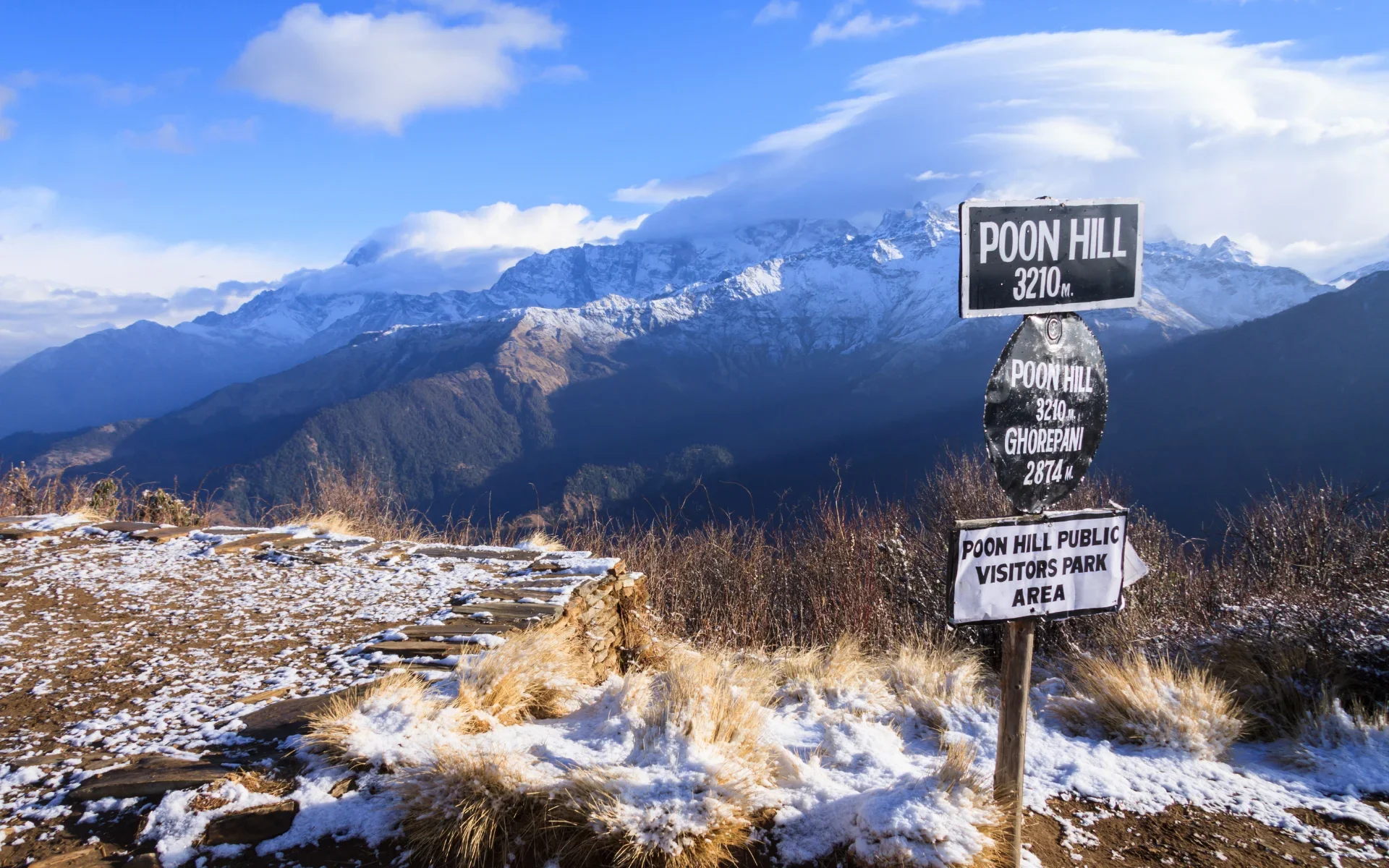
Ghorepani Poon Hill Weather by Season
Each season on the Ghorepani trek has its own personality. Spring and autumn are the reliable favourites, monsoon is wet but green, and winter is cold but often crystal clear. Here is the short version of what each season feels like on the trail.
Spring — March to May
Spring is one of the two prime windows. Temperatures climb steadily, morning visibility is usually strong, and the hillsides around Ghorepani explode with rhododendron blooms in red, pink and white. Daytime conditions across the season generally sit in a comfortable range, warming from March toward May.
Early March mornings are still cool, April is arguably the sweet spot, and by May pre-monsoon moisture builds, adding afternoon haze and the occasional shower. Views are still excellent in the early hours.
Weather tip: Carry layers. Even when the daytime feels warm on the climb, mornings at Poon Hill (3,210 meters) can be genuinely cold, and the sunrise wind cuts through thin clothing.
Summer/Monsoon — June to August
Monsoon is defined by rain, and the weather implications are practical rather than dangerous. Expect frequent showers, cloudy skies, muddy and slippery trails, reduced mountain visibility, humidity and leeches in the forested sections. Waterproof gear becomes non-negotiable, and occasional heavy rain can disrupt approach roads.
It is not all bad. The forests are lush, the crowds thin out, and early mornings sometimes deliver a surprise clear window before the clouds build. But you should trek monsoon with realistic expectations about views.
Weather tip: Start walking early while the sky is more likely to be clear, protect your backpack and electronics with dry bags, and always keep one complete dry set of clothes sealed away.
Autumn — September to November
Autumn is the most popular season for good reason. September still carries some tail-end monsoon rain, but conditions stabilise quickly through October, which typically brings clear, comfortable days and excellent visibility. November turns cooler and drier with reliably sharp sunrise views over the Annapurna and Dhaulagiri ranges.
The air is clean, the trails are dry, and the sunrise from Poon Hill is at its most dependable. This is when photographers love the route.
Weather tip: Do not underestimate the morning cold just because the afternoons feel mild. November sunrise sessions at the viewpoint are cold enough for a warm jacket and gloves.
Winter — December to February
Winter brings cold mornings and evenings, with temperatures at Ghorepani and Poon Hill often dropping below 0°C before sunrise. Snow is possible, and lingering snow in shaded forest sections can create icy, slippery patches. On clear days, though, winter offers some of the cleanest skies and sharpest mountain views of the year.
Many trekkers avoid winter unnecessarily. With the right gear it is a beautiful, quiet season, and the crowds are gone.
Weather tip: Warm gloves, a hat, a proper layering system and traction-aware footwear matter far more in winter. A pair of lightweight microspikes is worth carrying if snow is forecast.
Ghorepani Poon Hill Weather Month by Month
Here is the practical, month-by-month breakdown. We use consistent qualitative descriptions rather than precise temperature figures, because conditions vary year to year and by exact elevation along the route. Use this as a planning reference for what to expect and what to carry.
Month | Weather | Mountain Visibility | Trail Conditions | What to Carry |
January | Cold, dry | Often good on clear days | Possible snow/ice | Warm layers, gloves |
February | Cold, gradually warming | Good to variable | Possible snow | Warm layers |
March | Mild/cool | Generally favorable | Mostly dry | Layers + light rain protection |
April | Mild, pleasant | Generally favorable | Good, dry | Layers |
May | Warm, rising humidity | Good mornings, hazier later | Mostly good, occasional rain | Light layers + rain jacket |
June | Wet | Often cloudy | Wet/slippery | Waterproof gear |
July | Wettest conditions | Limited | Muddy/slippery | Rain gear + dry bags |
August | Wet | Often cloudy | Wet | Waterproof gear |
September | Transitional | Improving | Can remain wet early | Rain jacket |
October | Stable, dry | Excellent | Generally dry | Layers + sun protection |
November | Cool, dry | Excellent | Good | Warm morning layers |
December | Cold | Often clear | Possible snow | Winter layers |
If your dates are flexible, October, November, March and April consistently give the strongest mix of clear skies and comfortable walking.
Ghorepani Poon Hill Temperature by Altitude
Temperature on this trek is not a single number. It changes with every hundred meters you climb. A comfortable afternoon in Pokhara does not tell you how cold the Poon Hill sunrise will be, so plan for the range, not the average.
Here is roughly how conditions shift along the classic route as you gain elevation:
Pokhara / Nayapul (around 820–1,070 meters): Warm and low, the mildest part of the trek.
Ulleri / Tikhedhunga (around 1,540–1,960 meters): Warm daytime climbing on the famous stone staircase; you will likely sweat here.
Ghorepani (2,860 meters): Noticeably cooler, with cold mornings and evenings, especially in winter.
Poon Hill viewpoint (3,210 meters): The coldest point, and you experience it at the worst possible time for warmth, right before sunrise.
The takeaway is simple: your daily maximum temperature is rarely the problem. The early morning temperature at the viewpoint is what catches trekkers off guard. Pack for that cold sunrise, not the warm midday climb.
What Is the Weather Like at Poon Hill Sunrise?
Poon Hill sunrise is the coldest, most exposed moment of the entire trek. You leave Ghorepani in the dark, climb roughly 45 minutes to an hour by headlamp, then stand still in wind at 3,210 meters waiting for the light. Standing still in cold wind feels far colder than active trekking, so daytime clothing is never enough.
This is a completely different experience from the rest of the itinerary. You are not walking and generating heat; you are waiting, exposed, for the sun to hit Dhaulagiri and Annapurna South. That combination of altitude, stillness and wind is exactly why so many first-timers underdress.
Practical sunrise tips from our guides:
Carry a warm outer layer specifically for the viewpoint, even in spring and autumn.
Use gloves in the colder months; cold fingers make handling a camera miserable.
Keep a headlamp easily accessible for the pre-dawn climb.
Protect your phone and camera battery from the cold, as batteries drain fast in low temperatures.
Do not assume your daytime trekking clothes will keep you comfortable while standing still.
How Rain Affects the Ghorepani Poon Hill Trek
Rain changes far more than whether you get wet. It alters trail grip, walking pace, visibility and gear management, and it wakes up the leeches in monsoon forest sections. The stone staircases around Ulleri and Nangethanti become genuinely slippery when wet, which is the single biggest practical impact of rain on this route.
Here is what rain actually affects on the trail:
Trail grip: Wet stone steps and muddy paths demand slower, more careful footing.
Visibility: Rain and humidity hide the mountains and reduce sunrise reliability.
Walking pace: You move slower and more cautiously, adding time to each stage.
Gear: Wet clothing, damp boots and soggy socks compound over consecutive days.
Leeches: Common in the lower forest during monsoon, especially July.
A quick rain checklist: waterproof jacket, backpack rain cover, dry bags for electronics and spare clothes, waterproof or quick-drying footwear, several spare pairs of socks, and leech protection such as gaiters or salt.
How Cloud Cover Affects Mountain Views
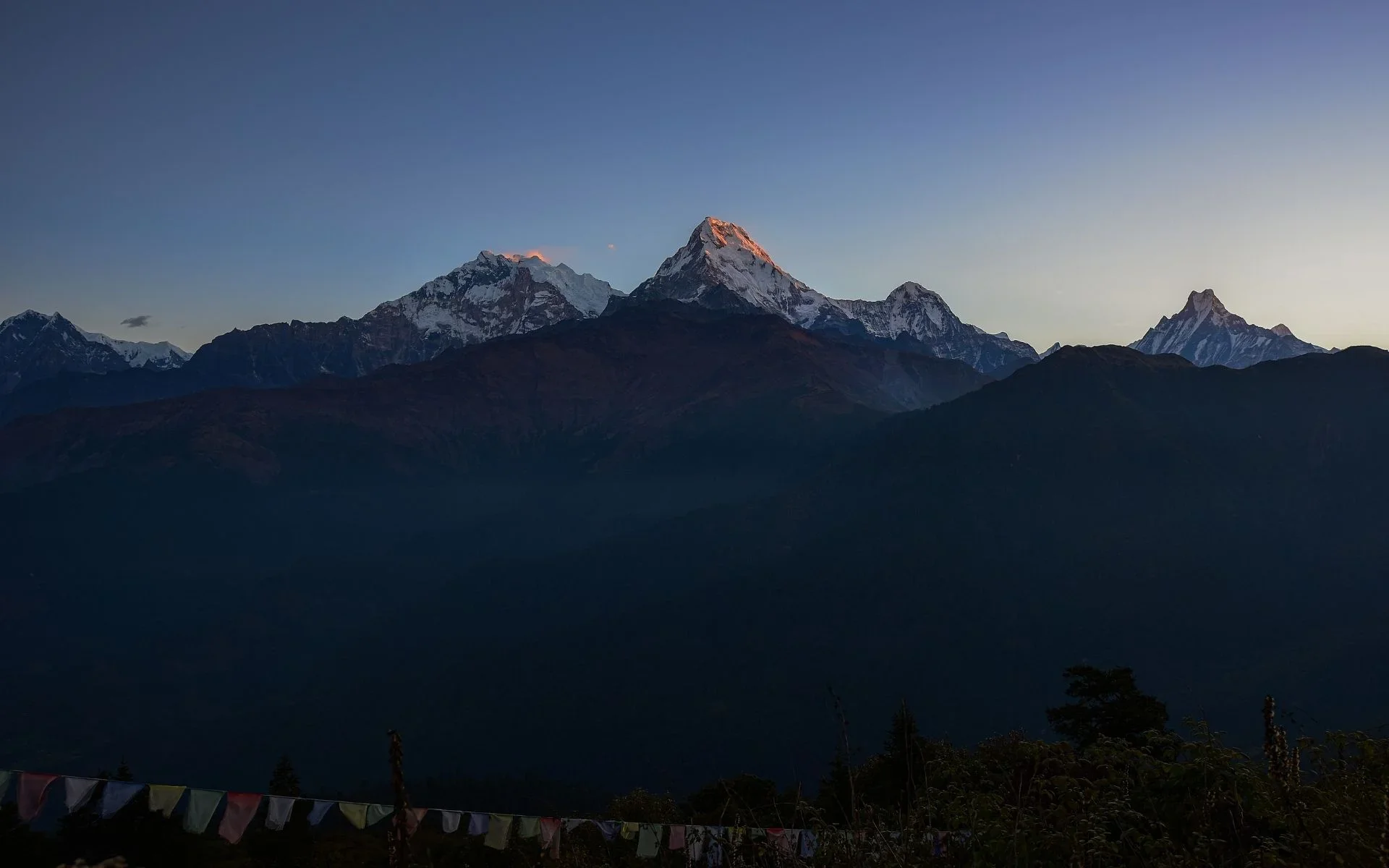
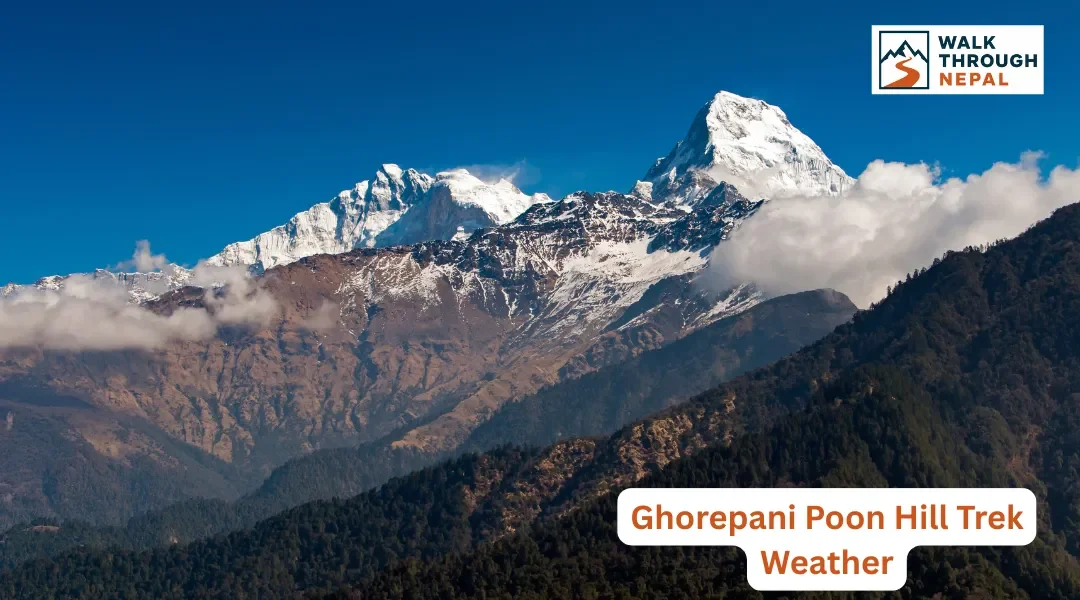
Cloud cover, not temperature, determines whether you actually see the mountains. A perfectly comfortable trekking day can still be a disappointment if you came for the Annapurna and Dhaulagiri panorama and the peaks stay hidden behind cloud. This is the most common gap between expectation and reality on the trek.
The general pattern works like this:
Clear sky: Sharp, full mountain visibility, best in autumn and early spring mornings.
Cloud cover: Peaks may partially or fully disappear, even in comfortable weather.
Rain and humidity: Heavily reduced visibility, common through May and monsoon.
One reliable rule across seasons: early morning usually offers the best viewing window before daytime heating builds clouds. This is doubly true in May and monsoon, when a dawn start might reward you with a clear break before the afternoon cloud rolls in. It is also the main reason the sunrise start exists.
How Weather Changes the Difficulty of the Poon Hill Trek
The same trail can feel like two completely different treks depending on the weather. The route and elevation never change, but grip, pace and comfort do. Weather is one of the biggest variables in how hard this trek feels day to day, alongside the relentless stone staircases.
Here is how conditions shift the difficulty:
Dry conditions: Best grip and steady pacing; the staircases are tiring but straightforward.
Rain: Slippery steps, wet gear and reduced visibility slow you down and demand concentration.
Snow and ice: Slower, more careful movement, especially on shaded winter descents.
Heat: The lower-elevation climbs around Ulleri feel harder in warm, humid conditions.
Further read: Ghorepani Poon Hill trek difficulty guide
What to Pack for Ghorepani Poon Hill Weather
Pack for the season and for the cold sunrise, not just the daytime average. A flexible layering system covers most conditions, with season-specific additions for monsoon wet and winter cold. Below is a weather-focused essentials list to guide your choices.
For spring and autumn:
A layering system (base, mid, warm jacket)
A light insulated jacket for mornings
A packable rain shell
Sun protection: hat, sunglasses, sunscreen
For monsoon:
A quality waterproof jacket
A backpack rain cover
Dry bags for electronics and clothes
Waterproof or quick-drying footwear
Extra socks
Leech protection
For winter:
A warm insulated jacket
Warm gloves and a hat
Thermal base layers
Extra insulation for cold sunrise mornings
For the complete gear list including footwear, sleeping bag ratings and documents, see our full Ghorepani Poon Hill packing checklist.
Practical Weather Tips for the Ghorepani Poon Hill Trek
These are the habits that keep trekkers comfortable and safe regardless of season. Mountain weather is unpredictable, so preparation beats optimism every time.
Check the forecast, but do not blindly trust it. Mountain weather changes fast; be prepared for rain even on a sunny forecast.
Dress in layers. Layering lets you adjust as you climb from warm valleys to cold ridges.
Start early. Especially in warmer and wetter months, morning offers the clearest skies and driest trails.
Keep electronics dry. Use dry bags during monsoon and protect batteries from cold in winter.
Protect your feet. Wet socks over consecutive days cause blisters and misery, so carry spares.
Carry rain protection year-round. A shower can arrive in any season on this route.
Prepare separately for sunrise. Your daytime clothing will not keep you warm standing still at the viewpoint.
Ask your guide and lodge about current conditions. Local, real-time information beats any app during heavy rain or snow.
What to Do if the Weather Changes During the Trek
Weather can shift within an hour in these hills. Knowing how to respond keeps a bad afternoon from becoming a real problem. Here is a simple decision guide for common situations.
Heavy rain starts: Slow down, cover your pack, and reassess your pace and route with your guide rather than pushing hard on slick steps.
Visibility suddenly drops: Stay with your group and guide, and do not wander off the marked trail to look for views.
Snow or ice appears: Slow your descent, shorten your stride, and use traction devices on the icy shaded sections.
A thunderstorm approaches: Get off exposed ridges and viewpoints, and seek shelter in a lodge or tree line.
A trail section becomes damaged: Follow your guide's or local advice on rerouting rather than assuming the usual path is still safe.
Trekking with a licensed guide is the single best safeguard here, and Nepal's current regulations strongly favour guided trekking. A guide reads the weather locally and adjusts the plan before problems arise.
Weather Mistakes to Avoid on Poon Hill
Most weather trouble on this trek comes from a handful of avoidable mistakes. Sidestep these and your trip runs far smoother.
Packing only for daytime temperatures and freezing at sunrise
Underestimating the cold at the Poon Hill viewpoint
Assuming peak season means flawless weather every single day
Heading into monsoon without proper waterproof protection
Wearing worn-out or non-grippy shoes on wet stone steps
Relying entirely on a weather app instead of local knowledge
Forgetting spare dry socks
Failing to protect electronics from rain and cold
Underestimating strong sun exposure on clear high days
Conclusion
The Ghorepani Poon Hill trek rewards trekkers who understand its weather rather than just its temperature. Spring and autumn deliver the clearest skies and blooming rhododendrons, winter trades cold mornings for crisp, empty trails, and monsoon offers green solitude at the cost of reliable views. Whatever month you choose, plan for the cold Poon Hill sunrise, carry rain protection year-round, and let your layering system do the work.
Match your season to your priorities, pack accordingly, and this short but stunning trek will hand you one of the finest sunrise panoramas in the Annapurna region. When your dates are set, check the current permit details and realistic trek cost breakdown to finish your planning.
FAQs
What is the weather like on the Ghorepani Poon Hill Trek?
The Ghorepani Poon Hill trek has mild to cool weather because of its moderate elevation. Daytime trekking is comfortable most of the year, but early mornings and evenings are cold, especially at Poon Hill (3,210 meters). Weather varies most in rain, cloud cover and trail grip rather than extreme cold.
Does it snow on the Poon Hill Trek?
Yes, snow is possible around Ghorepani (2,860 meters) and Poon Hill (3,210 meters) from December to February, and occasionally in late November or early March. Snow rarely blocks the trail but can make stone steps icy and slippery.
Does it rain on the Poon Hill Trek?
Rain is heaviest during the monsoon from June to August, with frequent afternoon showers, muddy trails and leeches. Light pre-monsoon rain appears in May, and September can still be wet.
Is Poon Hill cold in winter?
Yes. From December to February, mornings and evenings at Ghorepani and Poon Hill can fall below 0°C. The pre-dawn sunrise climb is particularly cold and requires warm layers, gloves and a hat.
What is the weather like at Poon Hill in the morning?
Poon Hill mornings are the coldest part of the trek. The pre-sunrise climb and waiting at the viewpoint can feel significantly colder than daytime trekking, making a warm outer layer and gloves essential.
Is monsoon a good time for Poon Hill?
Monsoon (June to August) is the least ideal time because of rain, cloud cover, slippery trails, leeches and reduced mountain visibility. Early mornings can occasionally clear, but views are less reliable than in spring and autumn.
Which month has the best weather for Poon Hill?
October and November generally offer the most stable weather, dry trails and excellent mountain visibility. March and April are also excellent, particularly for rhododendron blooms.
Are mountain views affected by cloud cover?
Yes. Cloud cover, haze and monsoon humidity can hide the Annapurna and Dhaulagiri peaks even when trekking conditions are comfortable. Early morning usually provides the clearest visibility.
How should I dress for Poon Hill weather?
Wear adjustable layers consisting of a base layer, insulating mid-layer and waterproof shell. Bring a warm jacket, gloves and hat for sunrise mornings, plus rain and sun protection. Heavier insulation is recommended in winter and better waterproofing during monsoon.
Can weather conditions affect the Poon Hill Trek route?
Yes. Heavy monsoon rain can create muddy or damaged trail sections and occasional landslides on approach roads, while winter snow can make steep steps icy. The core route rarely closes, but guides may adjust the pace or timing according to conditions.