Contents
Nepal holds a place no other country can claim. Within its borders sit eight of the world's fourteen mountains that rise above 8,000 meters, the elite tier of Himalayan giants that draws mountaineers and trekkers from every corner of the planet. These peaks are not clustered in one valley either. They stretch from the far eastern hills near Sikkim all the way to the dry western ranges bordering the Tibetan plateau.
Below we walk through all eight, ranked from highest to lowest, with the exact elevations, world rankings, Himalayan ranges and regions where they stand. We also explain which ones you can realistically trek to and how they differ from full summit expeditions.
Highlight of Highest Mountains of Nepal
Nepal's eight 8,000-meter peaks are Everest, Kanchenjunga, Lhotse, Makalu, Cho Oyu, Dhaulagiri I, Manaslu and Annapurna I. They span the Mahalangur, Kanchenjunga, Dhaulagiri, Manaslu and Annapurna Himalayan ranges, covering eastern, central and western Nepal.
Rank in Nepal | Mountain | Elevation | World Rank | Himalayan Range | Region |
1 | Mount Everest | 8,848.86 m | 1 | Mahalangur | Khumbu |
2 | Kanchenjunga | 8,586 m | 3 | Kanchenjunga | Eastern Nepal |
3 | Lhotse | 8,516 m | 4 | Mahalangur | Khumbu |
4 | Makalu | 8,463 m | 5 | Mahalangur | Eastern Nepal |
5 | Cho Oyu | 8,201 m | 6 | Mahalangur | Khumbu |
6 | Dhaulagiri I | 8,167 m | 7 | Dhaulagiri | Western Nepal |
7 | Manaslu | 8,163 m | 8 | Manaslu | Gorkha |
8 | Annapurna I | 8,091 m | 10 | Annapurna | Central Nepal |
We have followed the Nepal Tourism Board elevation figures throughout this guide, which use 8,848.86 m for Everest, 8,463 m for Makalu and 8,201 m for Cho Oyu. Other survey sources cite slightly different numbers, so always check the reference before quoting a figure.
1. Mount Everest
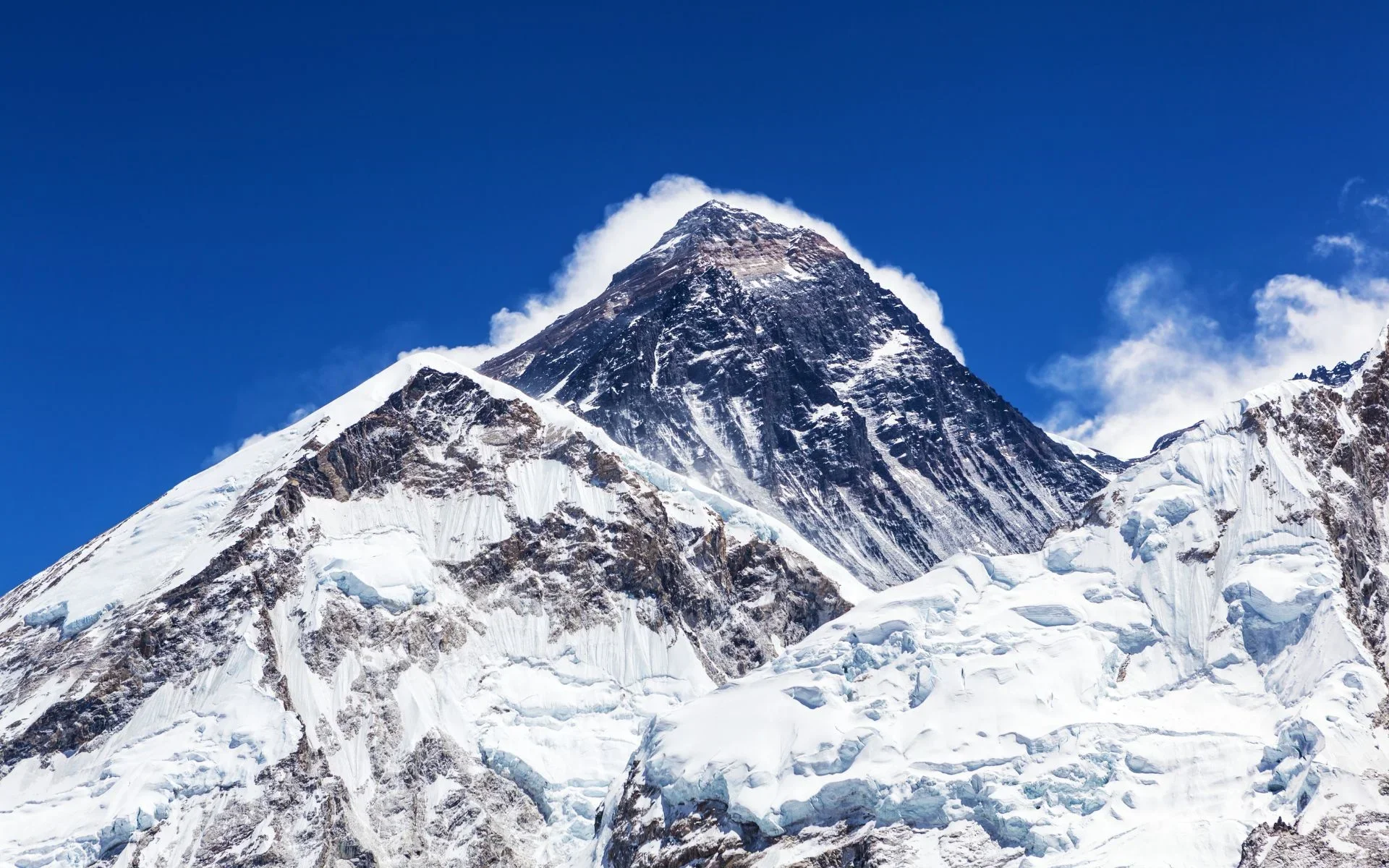
Mount Everest is the highest mountain in Nepal and on Earth, standing at 8,848.86 meters. It ranks number one globally, sits in the Mahalangur range, and rises above the Khumbu region. The standard trekking gateway is Everest Base Camp on the Nepal side.
Mount Everest at a glance
Elevation: 8,848.86 m
World ranking: 1st
Range: Mahalangur Himal
Region: Khumbu, Solukhumbu district
Common access: Flight to Lukla, then trek via Namche Bazaar
Why Mount Everest is famous
Everest is the roof of the world, known to Nepalis as Sagarmatha and to Tibetans as Chomolungma, "Goddess Mother of the World." It carries a mountaineering history stretching back over a century, from early British reconnaissance to the first confirmed summit by Tenzing Norgay and Edmund Hillary in 1953.
The mountain sits at the heart of Sherpa culture and Sagarmatha National Park, a UNESCO World Heritage site. If you want the geographical picture, see our detailed piece on where Mount Everest is located.
Can you trek to Mount Everest?
Yes. You cannot climb the summit as a trekker, but you can walk right up to its foot on the classic Everest Base Camp trek, reaching Base Camp at 5,364 meters and the viewpoint of Kala Patthar at 5,545 meters. The route uses the local Khumbu Pasang Lhamu Municipality fee of NPR 3,000 plus the Sagarmatha National Park permit of NPR 3,000, not the standard e-TIMS card.
Can you climb Mount Everest?
Climbing the summit is a completely different undertaking. A full Everest expedition takes roughly two months, requires ropes, fixed lines through the Khumbu Icefall, oxygen above the South Col and a large support team. For the season windows, read our note on the Everest climbing season.
2. Kanchenjunga
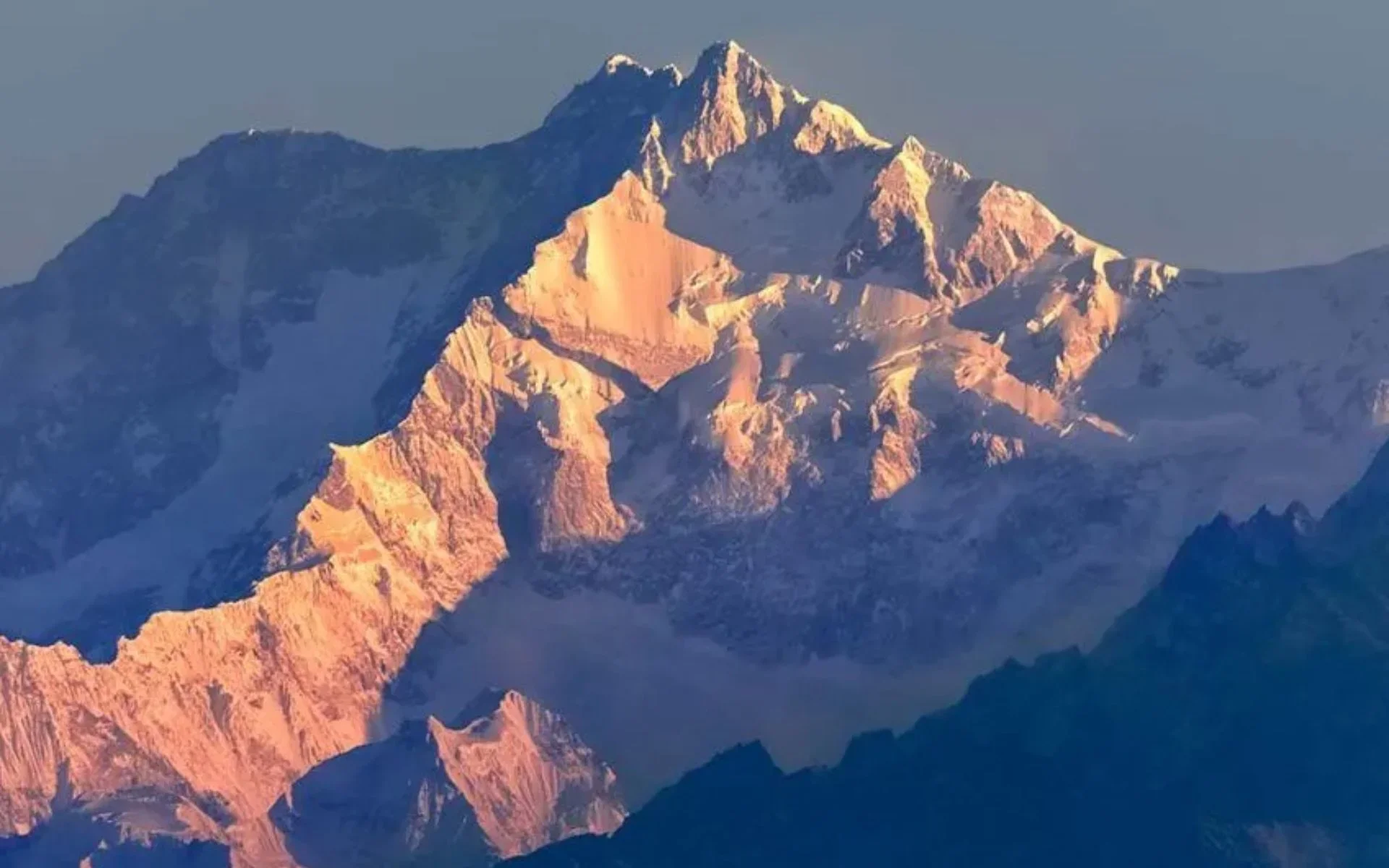
Kanchenjunga is Nepal's second-highest mountain at 8,586 meters and the third-highest in the world. It stands in far eastern Nepal on the border with India's Sikkim state, forming its own Kanchenjunga Himalayan range with five prominent summits.
Kanchenjunga at a glance
Elevation: 8,586 m
World rank: 3rd
Range: Kanchenjunga Himal
Region: Taplejung district, eastern Nepal
Access point: Flight to Bhadrapur, then a long drive to Taplejung
What makes Kanchenjunga unique?
The name means "Five Treasures of Snow," a reference to its five high peaks that locals hold as the sacred storehouses of gold, silver, gems, grain and holy scriptures. It is one of Nepal's most remote and least-visited high regions, with dramatic glaciers and dense rhododendron forest lower down.
Kanchenjunga Trek
The Kanchenjunga region trek is a Restricted Area, so plan carefully. Under the March 2026 Department of Immigration update, a single trekker can now obtain a Restricted Area Permit, but you must still hire a licensed guide, and the guide-to-trekker ratio is capped at 1:7. This is a demanding two-to-three-week journey suited to seasoned trekkers.
3. Lhotse – The Fourth-Highest Mountain in the World
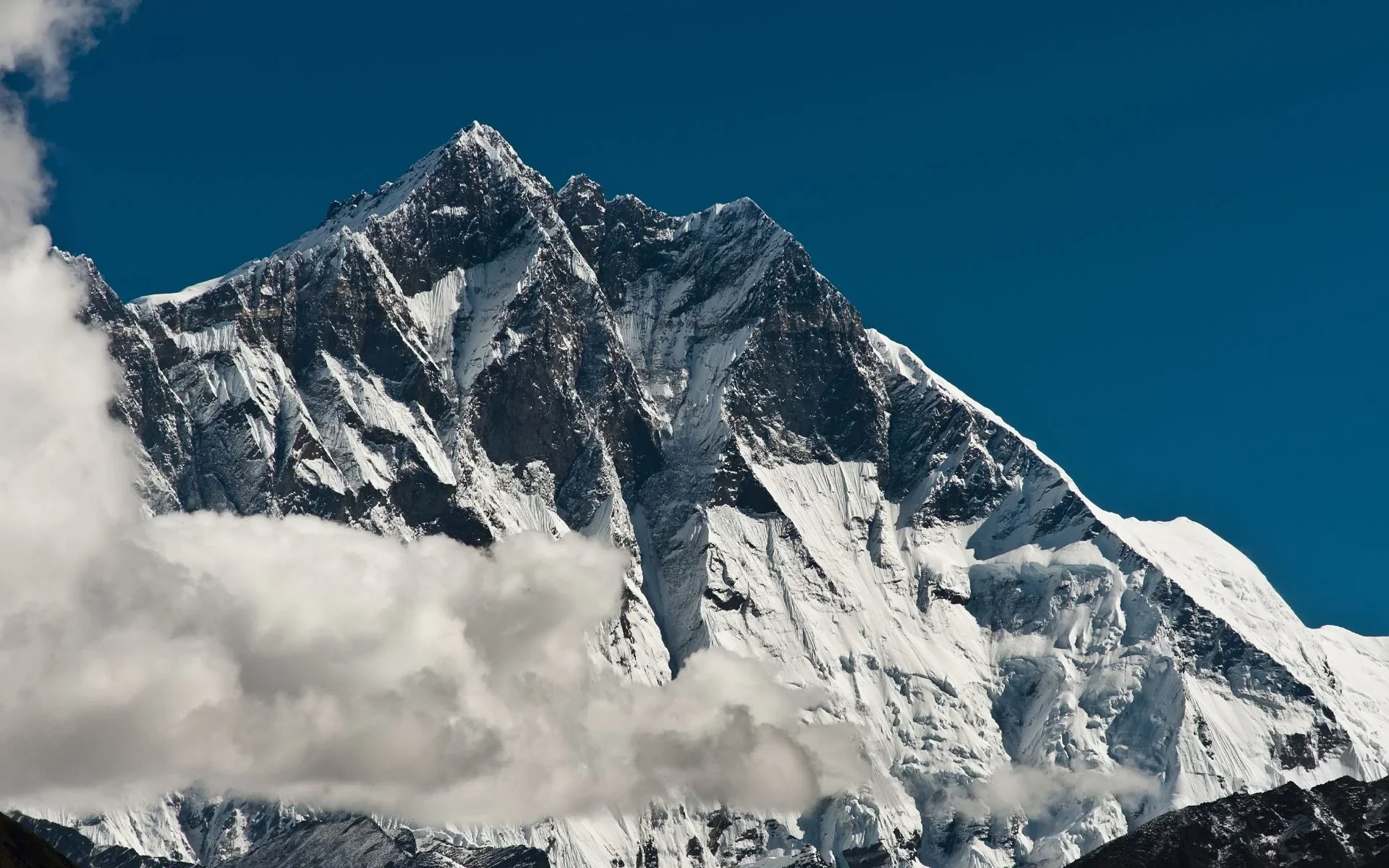
Lhotse rises to 8,516 meters, making it the fourth-highest mountain in the world and Nepal's third-highest. It sits in the Mahalangur range immediately south of Everest, connected to it through the South Col at around 7,900 meters.
Lhotse at a glance
Elevation: 8,516 m
World rank: 4th
Range: Mahalangur Himal
Region: Khumbu, adjacent to Everest
What is Lhotse known for?
The name Lhotse means "South Peak" in Tibetan, because it sits just south of Everest. Climbers reach it via the same route as Everest up to Camp III on the Lhotse Face before branching off, which makes the two mountains geographically inseparable. Its steep Lhotse Face is one of the most recognizable ice walls in the Himalaya.
Can you trek to Lhotse?
There is no separate Lhotse base camp trek for tourists. You view Lhotse clearly while walking the Everest route, especially from around Gorak Shep and Kala Patthar. Reaching the actual summit is a full 8,000-meter expedition alongside Everest teams.
4. Mount Makalu – The World's Fifth-Highest Mountain
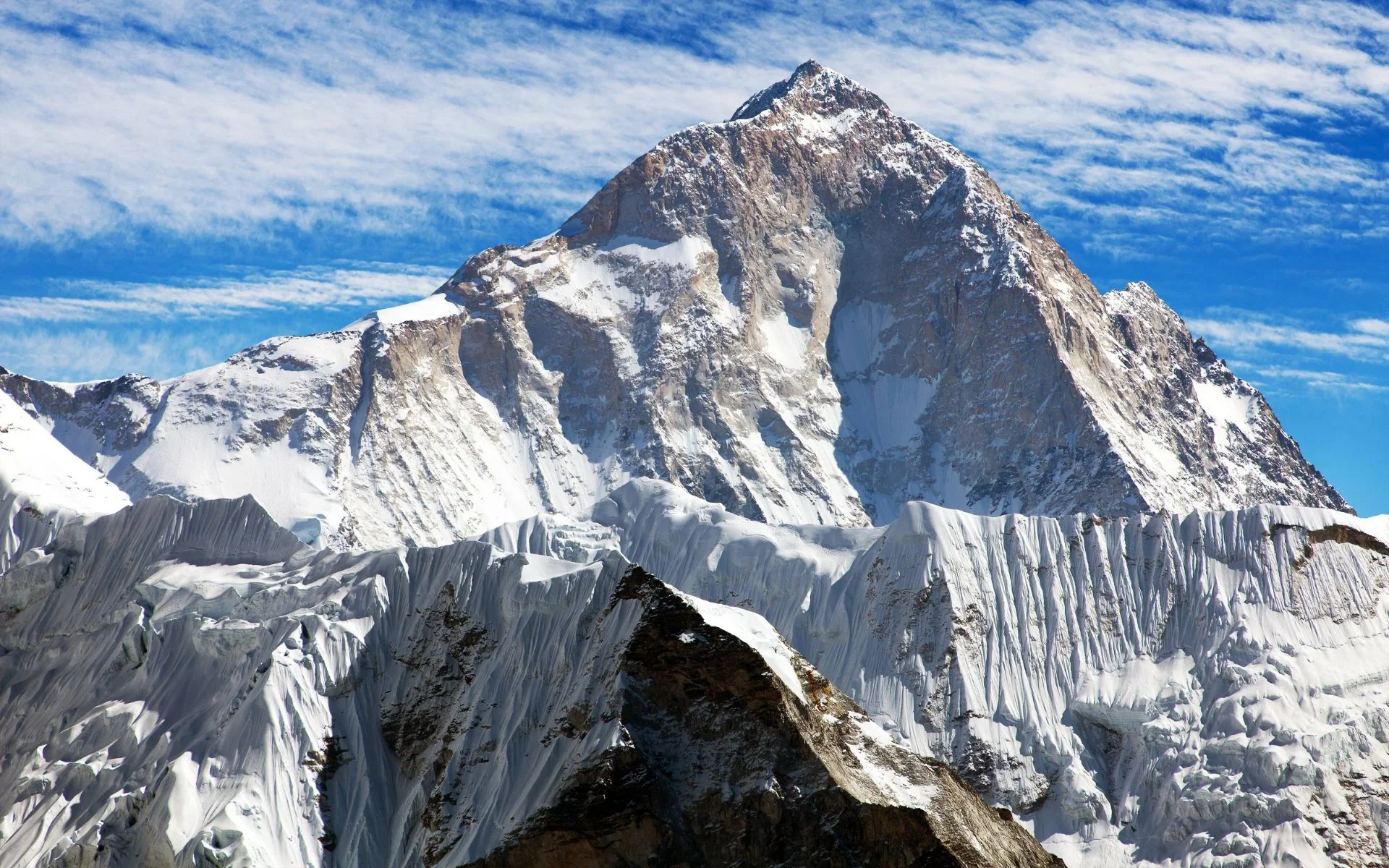
Makalu is the world's fifth-highest mountain at 8,463 meters and Nepal's fourth-highest. It stands in eastern Nepal within the Makalu-Barun National Park, about 19 kilometers southeast of Everest, and is famous for its near-perfect pyramid shape.
Makalu at a glance
Elevation: 8,463 m
World rank: 5th
Range: Mahalangur Himal
Region: Makalu-Barun, eastern Nepal
What makes Mount Makalu unique?
Its four-sided pyramid summit is one of the most striking silhouettes in the entire Himalaya. Makalu is considered technically difficult even by 8,000-meter standards, with steep exposed ridges near the top. The surrounding Makalu-Barun region is one of Nepal's richest protected wilderness areas.
Makalu Base Camp Trek
The Makalu Base Camp trek is a wild, quiet route reaching base camp at roughly 4,870 meters. It passes through pristine forest and high pastures with very few teahouses, so it demands solid planning, a licensed guide and buffer days for weather.
5. Cho Oyu – The Sixth-Highest Mountain in the World
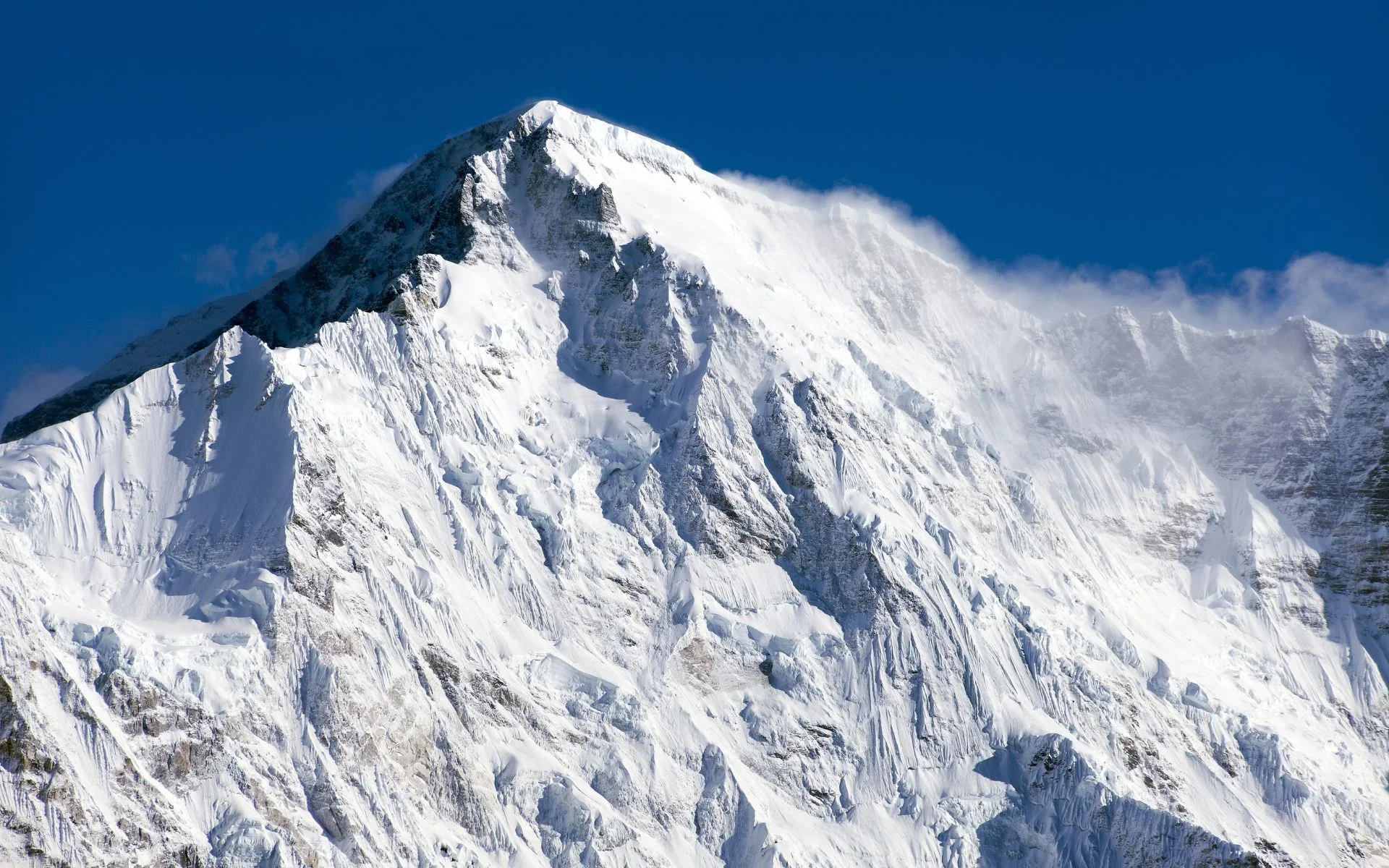
Cho Oyu is the sixth-highest mountain in the world at 8,201 meters and Nepal's fifth-highest. It sits in the Mahalangur range on the Nepal–Tibet border, about 20 kilometers west of Everest, near the Nangpa La trade pass.
Cho Oyu at a glance
Elevation: 8,201 m
World rank: 6th
Range: Mahalangur Himal
Region: Khumbu / Nepal–Tibet border
Why is Cho Oyu called the Turquoise Goddess?
The name comes from Tibetan, meaning "Turquoise Goddess," a reference to the color the mountain takes on in certain light. It is a broad, massive peak rather than a sharp spire.
Can you climb Cho Oyu from Nepal?
We want to be precise here, because Cho Oyu is often mislabeled as an "easy" 8,000-meter mountain. It is regarded as one of the more accessible high peaks for experienced high-altitude climbers because the standard route is less technical than most, but it is still an extremely serious and dangerous expedition, never a beginner objective. Most commercial ascents historically launch from the Tibetan side.
6. Dhaulagiri I – The White Mountain
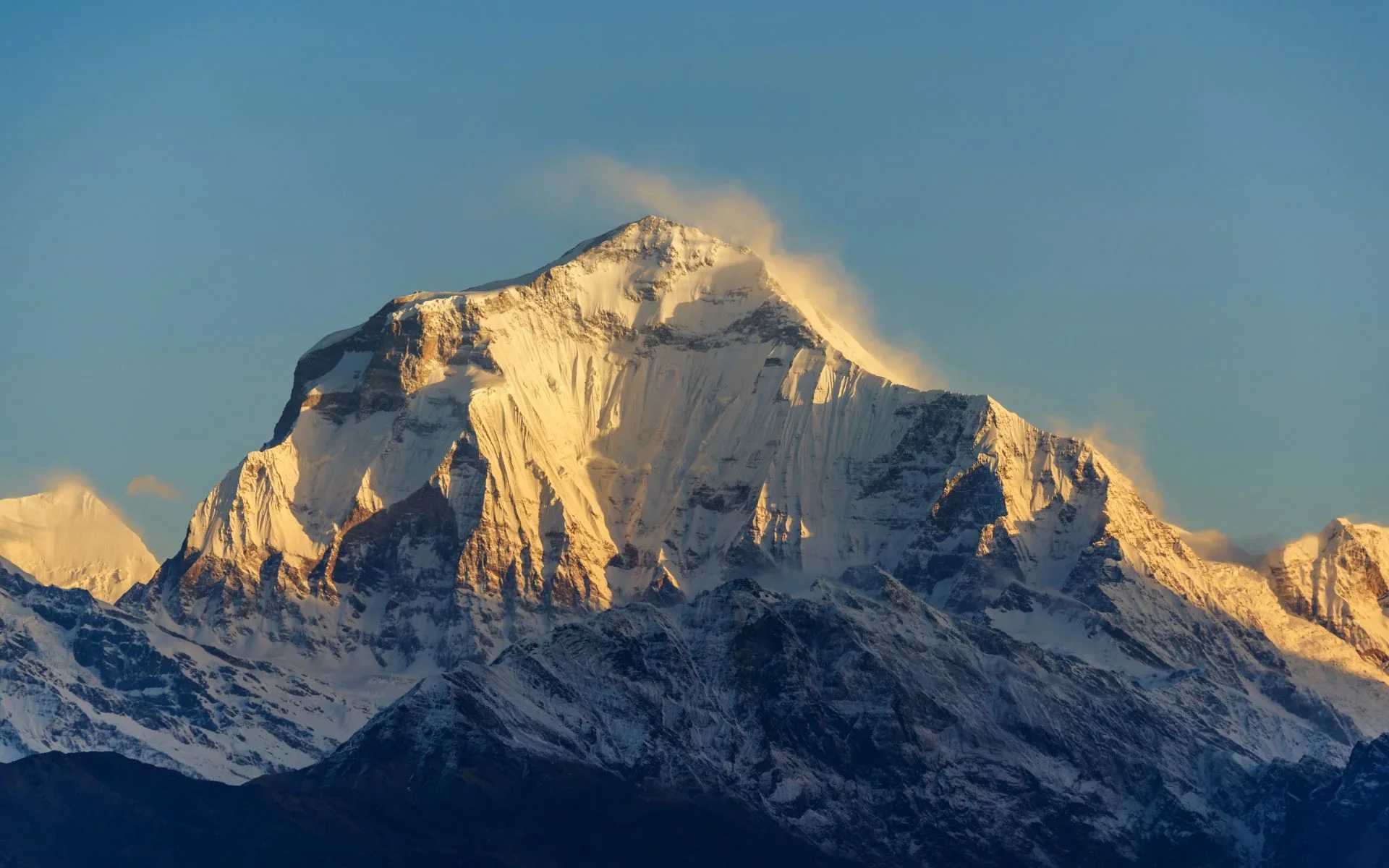
Dhaulagiri I reaches 8,167 meters, ranking as the seventh-highest mountain in the world and the sixth-highest in Nepal. It rises in western Nepal in its own Dhaulagiri range, west of the Kali Gandaki gorge that separates it from the Annapurna massif.
Dhaulagiri at a glance
Elevation: 8,167 m
World rank: 7th
Range: Dhaulagiri Himal
Region: Myagdi district, western Nepal
What makes Dhaulagiri special?
The name means "White Mountain" in Sanskrit. For a time after its 1808 discovery, it was believed to be the highest mountain on Earth. It faces Annapurna across one of the deepest gorges in the world, and the Kali Gandaki valley between them is a striking sight.
Dhaulagiri Base Camp and Trekking Region
The Dhaulagiri region is a challenging, high-altitude trekking area with glacier crossings and camping rather than teahouses. Trekkers exploring this western corridor often connect it to the Mustang and Muktinath areas along the Kali Gandaki.
7. Manaslu – The Mountain of the Spirit
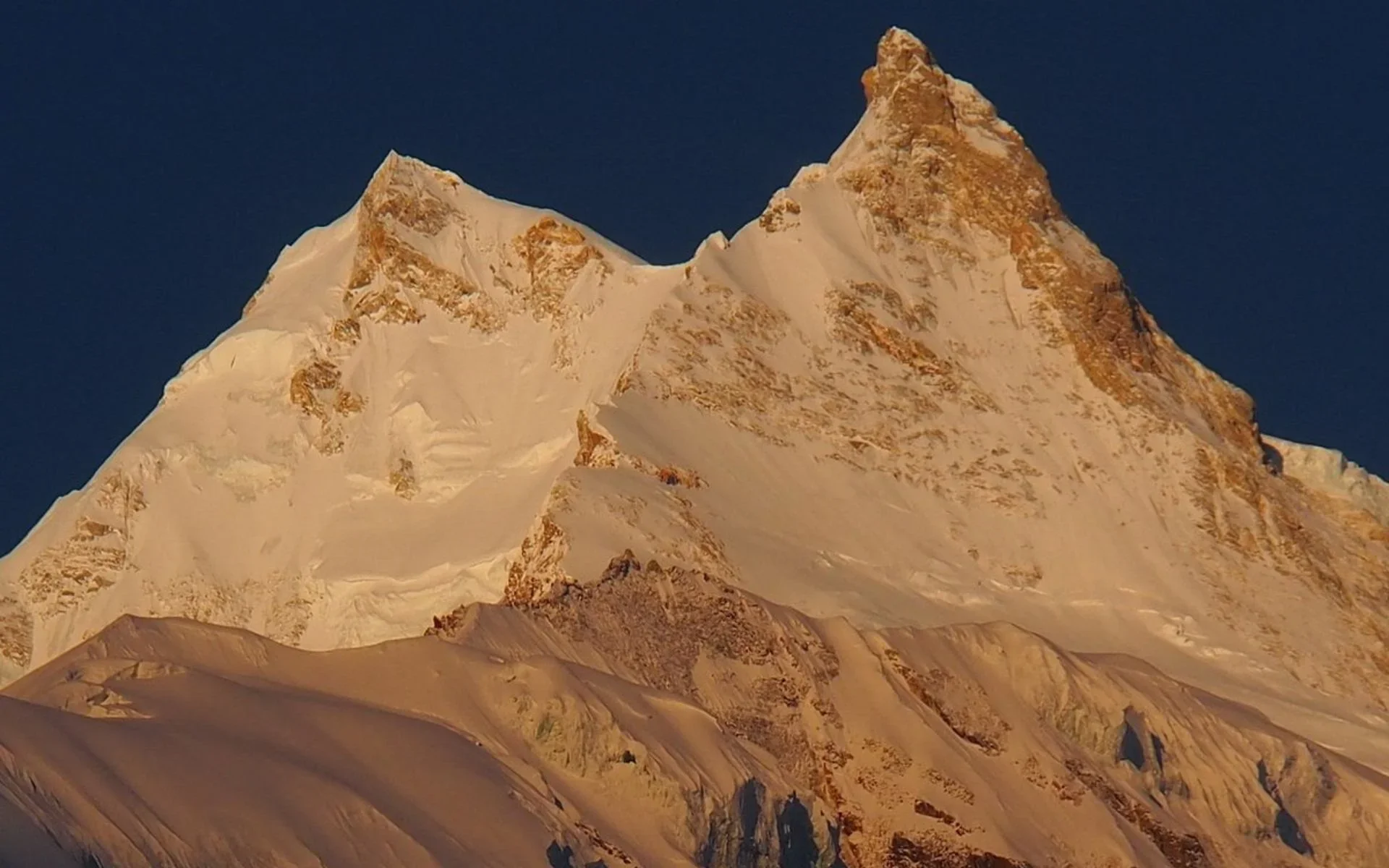
Manaslu is the eighth-highest mountain in the world at 8,163 meters and Nepal's seventh-highest. It dominates the Manaslu Himal in the Gorkha district of central Nepal and gives its name to the popular Manaslu Circuit.
Manaslu at a glance
Elevation: 8,163 m
World rank: 8th
Range: Manaslu Himal
Region: Gorkha, central Nepal
Why is Manaslu called the Mountain of the Spirit?
The name derives from the Sanskrit word "manasa," meaning intellect or soul, which translates roughly to "Mountain of the Spirit." The valleys around it carry strong Tibetan Buddhist culture, with mani walls, chortens and monasteries lining the trail.
Manaslu Circuit Trek
The Manaslu Circuit is a Restricted Area trek crossing the high Larkya La pass at around 5,106 meters. Under the 2026 rules a single trekker can get the permit but must hire a licensed guide, ratio capped at 1:7. Where jeep roads now reach into the lower valley, we recommend the alternative walking trails to escape the dust and vehicle traffic.
8. Annapurna I – The World's Tenth-Highest Mountain
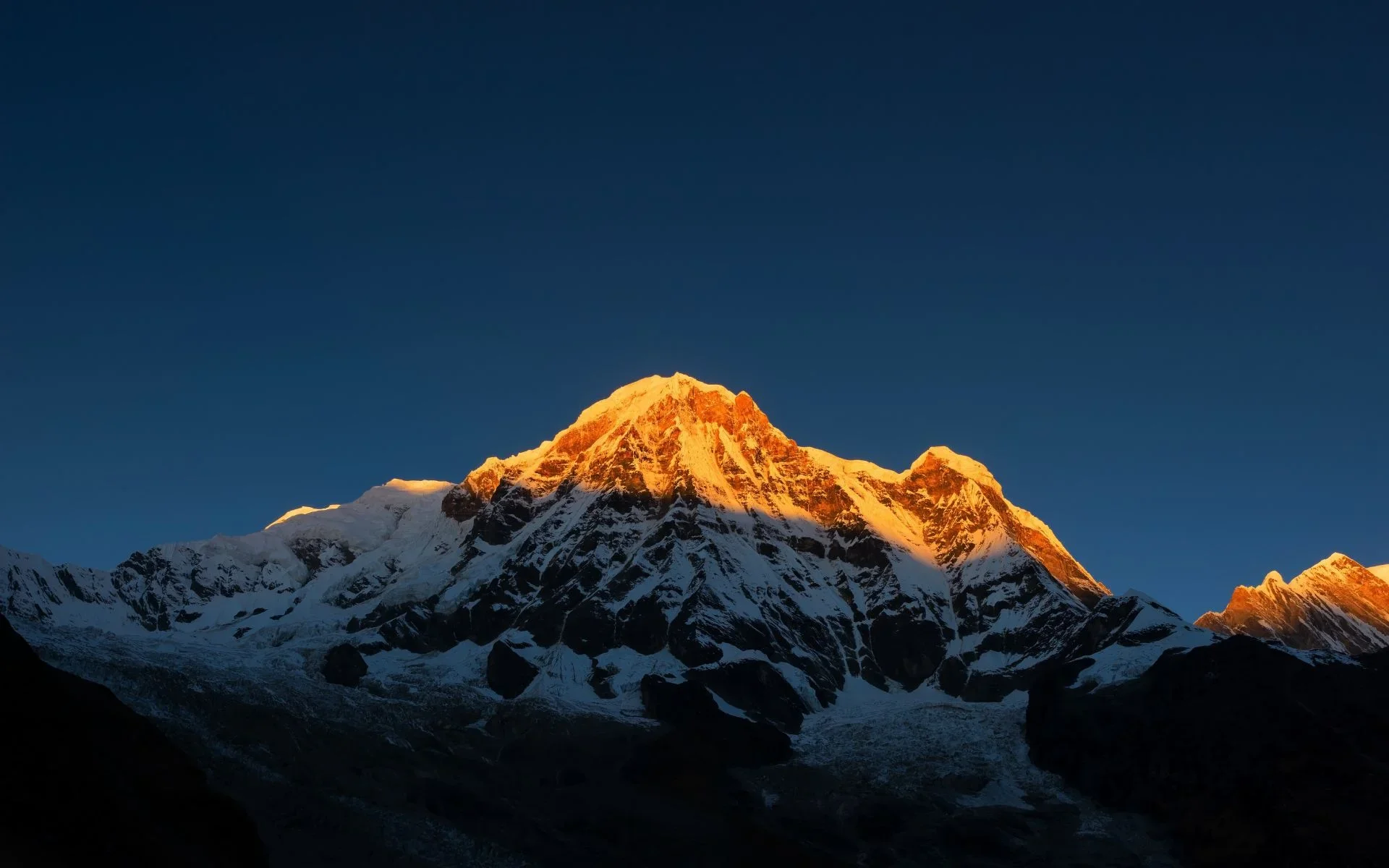
Annapurna I is the tenth-highest mountain in the world at 8,091 meters and Nepal's eighth 8,000-meter peak. It is the highest summit of the Annapurna massif in central Nepal and holds a landmark place in mountaineering history.
Annapurna I at a glance
Elevation: 8,091 m
World rank: 10th
Range: Annapurna Himal
Region: Central Nepal, north of Pokhara
What makes Annapurna famous?
Annapurna I was the first 8,000-meter peak ever climbed, by a French team led by Maurice Herzog in 1950. Note that "Annapurna" refers to the whole massif and range, while Annapurna I is the specific 8,091-meter summit. Despite its rank, the standard route is regarded as one of the deadliest, with heavy avalanche exposure.
Annapurna Trekking Routes
You cannot climb Annapurna I as a trekker, but the region offers Nepal's most loved walking routes. Consider the Annapurna Base Camp trek into the natural amphitheatre of the Annapurna Sanctuary, or the classic Annapurna Circuit over the Thorong La pass at 5,416 meters. For gentler options there is also the short Ghorepani Poon Hill trek.
How Many 8,000-Meter Mountains Are in Nepal?
Nepal is home to eight of the world's fourteen traditionally recognized mountains above 8,000 meters. These are Everest, Kanchenjunga, Lhotse, Makalu, Cho Oyu, Dhaulagiri I, Manaslu and Annapurna I.
It is worth separating two different questions. "The 8 highest mountains in Nepal" means the eight peaks over 8,000 meters. "All mountains in Nepal" is a much longer list, because the country has hundreds of major peaks below 8,000 meters, including famous trekking summits like Ama Dablam and Machhapuchhre that are stunning yet far shorter than the giants above.
Where Are the Highest Mountains in Nepal Located?
Nepal's eight highest mountains are spread across three broad zones: eastern Nepal, the central Khumbu region, and central-to-western Nepal.
Eastern Nepal: Kanchenjunga (Taplejung) and Makalu (Makalu-Barun)
Khumbu / Everest region: Everest, Lhotse and Cho Oyu, all in the Mahalangur range
Central Nepal: Manaslu (Gorkha) and Annapurna I (north of Pokhara)
Western Nepal: Dhaulagiri I (Myagdi)
This spread is why no single trek can show you all eight. Each region has its own culture, climate and access logistics.
Can You Trek to the Highest Mountains in Nepal?
Yes, you can trek to the base or a viewpoint of every one of these peaks without technical climbing, but reaching a base camp is entirely different from summiting. The table below separates the two.
Mountain | Trekking access | Summit climbing |
Everest | Everest Base Camp | Yes (expedition) |
Kanchenjunga | Kanchenjunga region trek | Yes (expedition) |
Lhotse | Everest region viewpoints | Yes (expedition) |
Makalu | Makalu Base Camp | Yes (expedition) |
Cho Oyu | Limited from Nepal | Yes (expedition) |
Dhaulagiri | Dhaulagiri region trek | Yes (expedition) |
Manaslu | Manaslu Circuit | Yes (expedition) |
Annapurna I | Annapurna Sanctuary / Circuit | Yes (expedition) |
Which Is the Highest Mountain in Nepal?
Mount Everest is the highest mountain in Nepal and the highest mountain on Earth, rising to 8,848.86 meters according to the joint Nepal–China elevation figure released in 2020. It stands in the Khumbu region of the Mahalangur range.
Which Is the Hardest Mountain to Climb in Nepal?
There is no single simple answer, because difficulty depends on several factors rather than height alone. Annapurna I has the highest historical death rate, Makalu and Kanchenjunga are technically brutal, and Everest carries extreme altitude and crowding risk.
The real variables are the technical climbing route, weather windows, avalanche exposure, absolute altitude, expedition logistics and the climber's own experience. Labeling any 8,000-meter peak as "easy" or "hard" without that context is misleading.
Best Treks to See Nepal's Highest Mountains
If your goal is to stand beneath these giants rather than climb them, a few classic routes deliver the closest, safest views.
Everest: the Everest Base Camp trek
Annapurna: the Annapurna Base Camp trek
Annapurna / Manang: the Annapurna Circuit trek
Manaslu: the Manaslu Circuit trek (Restricted Area, licensed guide required)
Makalu: the Makalu Base Camp trek
Kanchenjunga: the Kanchenjunga region trek (Restricted Area, licensed guide required)
Whichever you choose, respect the altitude. Above 3,000 meters your sleeping elevation should not rise more than 300 to 500 meters per day, with mandatory rest days at hubs like Namche Bazaar or Manang. Carry insurance that specifically covers high-altitude helicopter evacuation up to 6,000 meters and AMS, HAPE and HACE treatment, since this is legally required for Restricted Area Permits.
On the trail, carry enough Nepalese Rupees in cash because ATMs vanish past Namche Bazaar or Jomsom. Expect small upcharges of NPR 200 to 700 for charging devices, hot showers and Wi-Fi. Use a reusable bottle with a UV purifier or filter instead of buying plastic water, stick to fresh Dal Bhat for clean high-energy fuel, and always walk clockwise around mani walls and chortens, keeping them on your right.
Conclusion
Nepal is far more than Everest. Its eight 8,000-meter peaks stretch across the whole country, each one anchoring a different landscape, culture and trekking experience, from the remote glaciers of Kanchenjunga in the east to the deep gorges beneath Dhaulagiri in the west.
Understanding where these giants stand and how to reach them safely is the first step toward planning a Himalayan journey that fits your time, fitness and goals.
FAQs
How many 8,000-meter peaks are in Nepal?
Nepal is home to eight of the world's fourteen mountains above 8,000 meters: Everest, Kanchenjunga, Lhotse, Makalu, Cho Oyu, Dhaulagiri I, Manaslu and Annapurna I.
What is the highest mountain in Nepal?
Mount Everest is the highest mountain in Nepal and on Earth, rising to 8,848.86 meters based on the joint Nepal–China survey figure.
Is K2 in Nepal?
No. K2 (8,611 m), the world's second-highest mountain, sits on the China–Pakistan border in the Karakoram range, not in Nepal. Nepal's second-highest peak is Kanchenjunga at 8,586 meters.
Can tourists trek to the highest mountains in Nepal?
Yes. Trekkers can walk to base camps and viewpoints of most of these giants, such as Everest Base Camp, Annapurna Base Camp, Makalu Base Camp and the Kanchenjunga region, without any technical climbing.
Can you climb Mount Everest without trekking to Base Camp?
No. Every Everest summit expedition from Nepal begins by trekking to Everest Base Camp at 5,364 meters, where climbers spend weeks acclimatizing before pushing higher.
Which is the easiest 8,000-meter mountain to climb?
Cho Oyu is often considered one of the more accessible 8,000-meter peaks for experienced high-altitude climbers due to less technical terrain, but it remains an extremely demanding expedition, not a beginner objective.