Contents
The Mardi Himal Trek gives you high Himalayan scenery for a fraction of the price and time of Nepal's longer routes, which is exactly why so many travelers ask us the same first question: what does it actually cost? The honest answer is that a standard guided trip in 2026 lands somewhere between the mid-$300s and $700+ per person, and the gap comes down to a handful of choices you control.
Prices swing based on trip length, group size, whether you hire a porter, the class of transport you take out of Pokhara, and how comfortable you want your teahouse nights to be. Your biggest expenses are almost always the guide, transport, and food, while permits stay fixed and predictable. A truly budget-minded trekker can keep things lean, while a private, comfort-focused itinerary with a personal guide and porter costs noticeably more.
This is a working budget guide from our local coordination team, not a brochure. Below we break every cost line by line, show a real 5-day sample budget, and flag the hidden charges that quietly inflate the final bill.
How Much Does the Mardi Himal Trek Cost?
A standard guided Mardi Himal Trek costs roughly $1200+ per person in 2026. Budget arrangements can run lower, while private comfort trips run higher. The final figure depends on duration, group size, guide and porter setup, transport class, and accommodation standard.
Trek Style | Approx. Cost (Per Person) | What It Generally Includes |
Budget | $600–$850 | Basic teahouse rooms, simple meals, permits, tourist bus/local transport, shared licensed guide |
Standard | $850–$1299 | Licensed guide, teahouse accommodation, three meals daily, permits, private/shared ground transport |
Comfort/Private | $1299+ | Private guide, upgraded rooms where available, dedicated porter, private jeep transfers, extra services |
Duration and group size move this number the most. A larger group spreads the fixed cost of a guide and vehicle across more people, while a solo private trek concentrates those same costs on one wallet.
Published 2026 estimates vary a lot online, so don't treat a single headline number as gospel. Standard guided trips are being advertised anywhere from the mid-$300s to $700 and above, and the difference is nearly always in the inclusions rather than the mountain itself.
Mardi Himal Trek Cost Breakdown
The total Mardi Himal Trek cost splits into six main buckets: permits, guide, porter, accommodation, food and drink, and transport. Permits are fixed government fees, while guide, porter, food, and transport shift with your choices. Understanding each line helps you compare packages honestly instead of chasing the lowest sticker price.
Permit Costs
Mardi Himal sits inside the Annapurna Conservation Area, so you need the ACAP permit, costing NPR 3,000 (about $23) for foreigners and NPR 1,000 for SAARC nationals. A TIMS card is also generally required at NPR 2,000 for foreigners and NPR 1,000 for SAARC nationals.
Nepali citizens do not pay the foreigner ACAP rate, and children under 10 are typically exempt. There is no separate restricted-area permit here because Mardi Himal is not a restricted zone.
Most guided packages fold both permits into the total price, but always confirm this in writing. TIMS and guide-related rules have been shifting and enforcement varies, so verify the current requirement against Nepal Tourism Board and NTNC guidance before you pay. For the fuller route context, see our Mardi Himal trek guide.
Guide Cost
A licensed guide typically costs NPR 3,000 to NPR 4,500 per day (roughly $25 to $35), covering the guide's wage, meals, accommodation, and insurance. Nepal continues to strengthen licensed-guide enforcement across trekking regions, so plan on hiring one rather than trekking unsupported.
That daily rate usually rolls into a package price. A private guide dedicated to you or your pair costs more per person than a guide shared across a group. If budget is tight, joining a scheduled group departure is the single most effective way to cut the guide cost per head.
A good guide earns their fee here. Mardi Himal's upper section is a narrow ridge that can turn from clear to whiteout quickly, and a guide reads the weather, manages your pace, and handles teahouse logistics so you simply walk.
Porter Cost
A porter costs roughly NPR 2,500 to NPR 3,500 per day (about $20 to $28). One porter normally carries luggage for two trekkers, so sharing keeps the per-person cost modest. Porters are optional, not mandatory.
If you're fit and packing light, carrying your own bag on this relatively short trek is completely reasonable. But if you'd rather enjoy the ridgeline without a heavy load, splitting a porter with a trekking partner is affordable and directly supports local trail workers.
Whatever you decide, respect the standard load limits. A porter should not carry more than a fair, agreed weight, and reputable operators enforce this.
Accommodation Cost
Teahouse rooms on the Mardi Himal trail typically cost NPR 500 to NPR 1,500 per night for a basic twin-share room at lower elevations. Prices climb toward the upper camps because everything has to be carried up. Many packages bundle accommodation into the overall price.
Expect simple, clean rooms with shared bathrooms at lower villages like Sidhing, Forest Camp, and Low Camp. Higher up at High Camp, rooms are more basic and demand is heavier during peak season, which nudges prices up. Twin sharing is standard and the most cost-effective option.
Where a package quotes accommodation as included, it usually means the on-trail teahouses. City nights in Kathmandu or Pokhara are often billed separately, so check.
Food and Drink Cost
Budget roughly NPR 2,500 to NPR 4,500 per day for meals and drinks, rising as you gain altitude. Supplies are carried up the trail on foot and by mule, so a plate that costs little in Pokhara costs noticeably more at High Camp.
Item | Approx. Price (Trail) |
Breakfast | NPR 400–800 |
Lunch | NPR 500–900 |
Dinner (Dal Bhat) | NPR 600–1,000 |
Tea / Coffee | NPR 100–350 |
Bottled/mineral water | Avoid — filter instead |
Snacks (chocolate, biscuits) | NPR 150–500 |
Soft drinks | NPR 250–500 |
Order the Dal Bhat — lentil soup, rice, and vegetable curry. It's clean, high-energy fuel and usually comes with free refills, which is unbeatable value on a trek. Prioritize fresh, locally grown carbohydrates and lean toward vegetarian meals; meat is carried up the trail for days without refrigeration, so it's not worth the risk at altitude.
Skip plastic bottled water entirely. Carry a reusable bottle with a UV purifier, a Sawyer squeeze filter, or chlorine dioxide drops. It protects the trail environment and saves money.
Transportation Cost
The main transport legs are Kathmandu to Pokhara, then Pokhara to the trailhead and back. Not every itinerary starts and ends at the same point, so costs vary. Domestic transport rates fluctuate, so confirm live prices before booking.
From Kathmandu, a tourist bus to Pokhara is the budget choice, while flights and private vehicles cost more. From Pokhara, most itineraries reach the trail via Kande or Phedi, and many finish by descending to Sidhing and driving back to Pokhara. Options include:
Tourist bus (Kathmandu–Pokhara): the most economical intercity option, roughly a 6-7 hour ride.
Private vehicle: faster and flexible, but noticeably pricier when split among a small group.
Local jeep/bus (Pokhara–Kande/Phedi): short, cheap transfers to the trailhead.
Return transport (Sidhing–Pokhara): usually a shared or private jeep, since the descent point differs from the start.
If you're already exploring the region, our roundup of things to do in Pokhara is a useful way to build in a rest day before or after the trek.
Mardi Himal Trek Cost by Duration
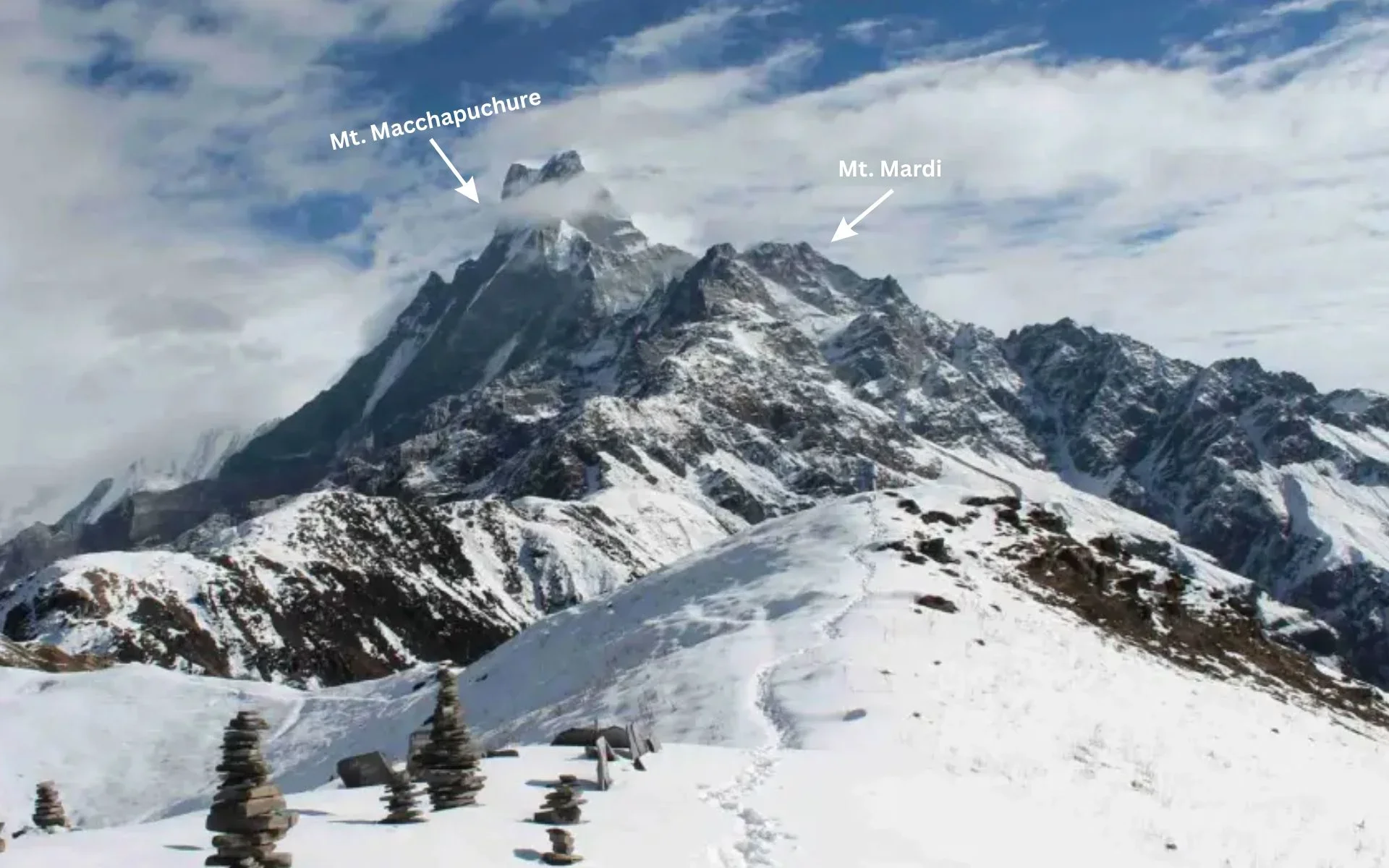
Mardi Himal is commonly done as a 3 to 7 day trek. Shorter versions cost less overall but pack in longer daily walks, while longer versions add gentler pacing and better acclimatization. The right length depends on your fitness, time, and appetite for long trail days.
3-Day Mardi Himal Trek Cost
The 3-day version suits travelers short on time who can handle intense daily distances. It compresses the ascent, meaning longer, harder walking days and less margin for weather. Total cost is lower simply because you're on the trail fewer nights, but the physical demand is significantly higher.
We only recommend this to genuinely fit hikers who are comfortable gaining elevation quickly within safe limits.
4-Day Mardi Himal Trek Cost
A 4-day trek is a popular sweet spot. It costs less than longer itineraries because of fewer accommodation and food nights, but expect a couple of long walking days to make up ground. It still reaches the highlight viewpoints while keeping the budget lean.
5-Day Mardi Himal Trek Cost
The 5-day itinerary is the most common short-trip format and the one we use as our main example. It balances reasonable daily distances with time to soak in the views. Here's a realistic standard-package budget for one person on a shared basis:
Expense | Estimated Cost |
Permits (ACAP + TIMS) | $40 |
Guide (shared) | $80–$120 |
Accommodation (4 nights) | $30–$60 |
Food & drink | $90–$150 |
Transportation | $30–$70 |
Miscellaneous (showers, charging, Wi-Fi, tips) | $40–$80 |
Estimated Total | $310–$520 |
Book this as a package and you'll typically see a single per-person figure in the $450 to $600 range once operator margins, staff insurance, and coordination are included.
7 Day Mardi Himal Trek Cost
Adding days raises accommodation, food, and staff wages, so the total edges up. That said, if the extra day is simply an easy acclimatization or scenic rest day, the increase is modest — you're mainly paying for a few more meals and one more night rather than a big jump in cost.
Longer itineraries are worth it if you want to walk the quieter NATT-style side trails, add Sidhing as a lower exit, or link the trek with a viewpoint like Australian Camp.
Mardi Himal Trek Cost for Solo vs. Group Trekkers
Group size is the single biggest lever on your per-person price. Fixed costs like the guide and vehicle stay roughly the same whether one person or six splits them, so bigger groups pay less each. Solo trekkers absorb the full fixed cost alone.
Group Size | Cost Per Person | Why |
1 (Solo) | Higher | Fixed guide and transport costs fall on one person |
2 People | Moderate | Guide, porter, and transport shared between two |
4–6 People | Lower | Fixed costs spread across more trekkers |
Larger Group | Often lowest | Group package pricing and shared logistics |
If you're travelling solo but budget-conscious, ask about joining a scheduled group departure. You keep the safety of a licensed guide while paying a shared rate.
What Is Included in a Mardi Himal Trek Package?
A standard package usually covers permits, a licensed guide, on-trail accommodation, meals, ground transport, and staff costs. Beyond that, inclusions vary widely between operators, so the smart move is to compare packages line by line rather than by the headline price alone.
Usually included:
Trekking permits (ACAP and TIMS)
Licensed guide
Teahouse accommodation on the trail
Meals (full board in most standard packages)
Ground transportation to and from the trailhead
Guide and staff wages, meals, and insurance
May be included, depending on the package:
Porter
Kathmandu accommodation
Pokhara accommodation
Airport transfers
Basic equipment (sleeping bag, down jacket loan)
Travel insurance assistance and coordination
Usually not included:
International flights
Nepal visa
Personal trekking equipment
Travel insurance
Snacks and extra drinks
Hot showers, Wi-Fi, and charging
Tips for the crew
Personal expenses
On the visa side, Nepal's 2026 fees remain $30 for a 15-day visa, $50 for 30 days, and $125 for 90 days, payable on arrival. Budget this separately.
Hidden Costs on the Mardi Himal Trek
The line items outside the package are where budgets quietly blow out. On the trail, services that feel free at a city hotel are billed individually, usually in cash. Expect to pay 200 to 700 NPR per service for extras.
Hot showers: gas-heated, charged per use.
Charging power banks and phones: a per-device fee at higher lodges.
Wi-Fi: localized networks are rarely included in the room rate.
Bottled water: pricey and environmentally poor — filter instead.
Snacks and extra drinks: chocolate, beer, and soft drinks add up fast.
Gear rental: if you didn't pack it, you'll rent it.
Tips: culturally expected for the crew (see below).
Extra accommodation: weather delays or a rest day in Pokhara.
Itinerary changes and emergencies: keep a contingency buffer.
None of these are huge on their own, but together they routinely add $40 to $100+ to a short trek.
Mardi Himal Trek Gear Rental Cost
Renting gear in Pokhara cuts your upfront equipment spend, and the trekking shops around Lakeside are well stocked. Daily rental rates are modest, making this a smart choice if you only trek occasionally.
Sleeping bag: around NPR 100–200 per day
Down jacket: around NPR 100–200 per day
Trekking poles: around NPR 100–150 per day (per pair)
Waterproof jacket: around NPR 100–200 per day
Backpack: around NPR 150–250 per day
Renting a sleeping bag and down jacket rather than buying them is the biggest saving for a first-time or one-off trekker.
How Much Cash Should You Carry for Mardi Himal Trek?
Carry roughly NPR 8,000 to NPR 15,000 per person for a 4-5 day trek. There are no reliable ATMs on the Mardi Himal trail, and teahouses do not take cards, so bring enough Nepalese Rupees before you leave Pokhara.
This cash covers hot showers, phone and power-bank charging, Wi-Fi, snacks, extra drinks, and your share of crew tips. Carry small denominations because change can be scarce at higher lodges. Withdraw and split your cash in Pokhara, where ATMs are plentiful, rather than assuming you'll top up on the way.
How to Reduce Your Mardi Himal Trek Cost
You can trim the budget meaningfully without cutting corners on safety or the licensed-guide requirement. The goal is smart savings, not the cheapest possible trek.
Travel in a small group to split the guide and transport costs.
Compare package inclusions line by line before comparing prices.
Trek in shoulder season when demand and lodge pressure ease.
Rent expensive gear in Pokhara instead of buying it.
Use shared or tourist transport rather than private jeeps.
Skip unnecessary upgrades and stick to twin-share rooms.
Plan your food and drink budget in advance, and lean on Dal Bhat with free refills.
If you're weighing seasons, our overview of the best time to visit Nepal helps you pick a window that balances weather and cost.
Is Mardi Himal Trek Worth the Cost?
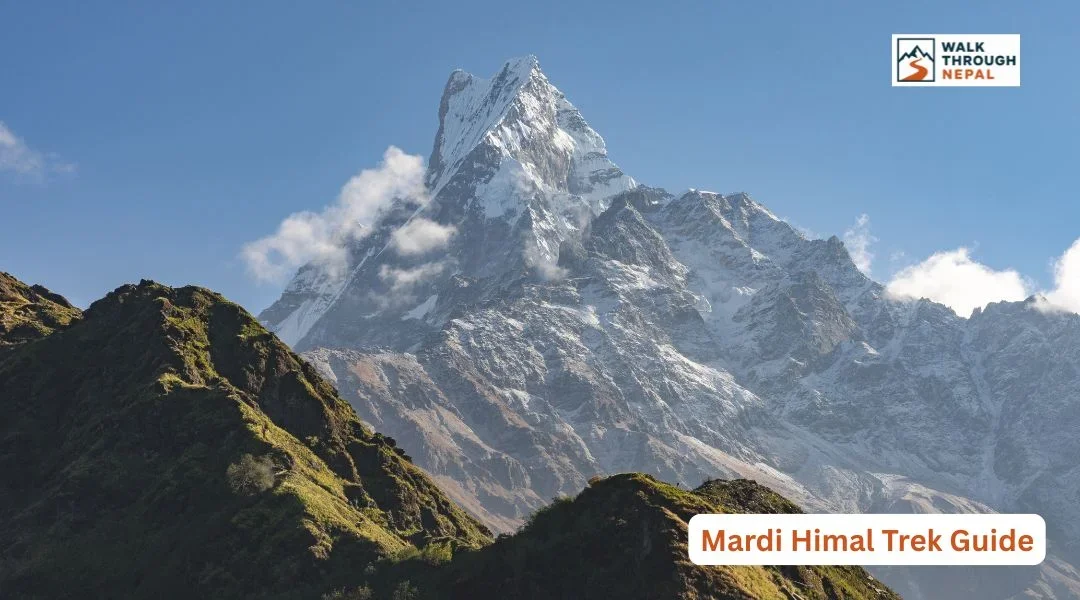
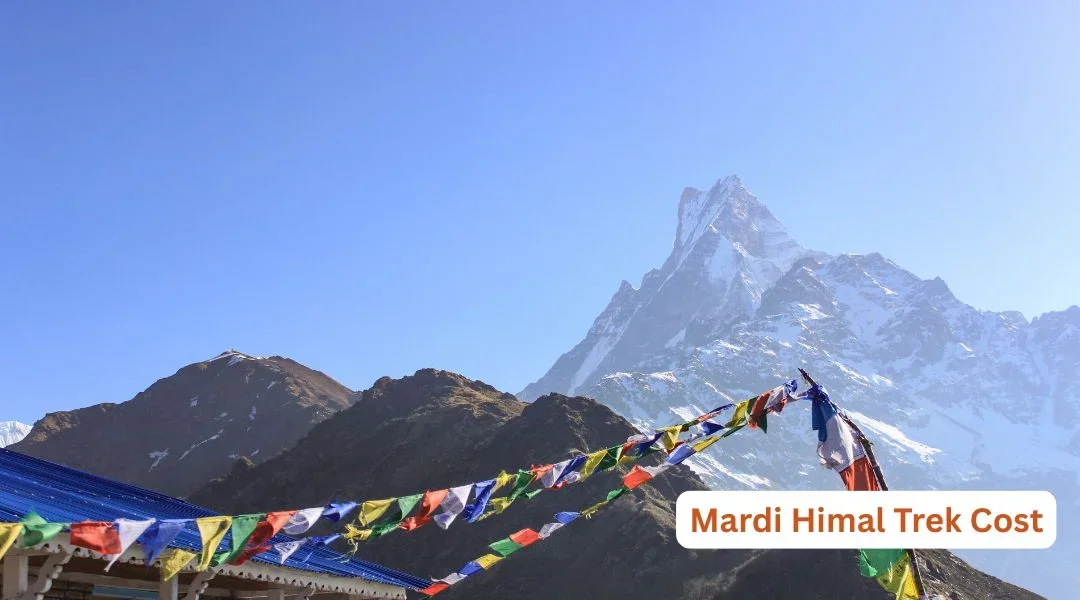
For a short trek, Mardi Himal delivers outsized value. You reach a high viewpoint around 4,500 meters at Mardi Himal Base Camp with front-row views of Machhapuchhre (Fishtail) and the Annapurna range, all within easy reach of Pokhara and without the crowds of the busier classics.
Weigh the price against what you get: a short 4-7 day trip, dramatic mountain scenery, straightforward access from Pokhara, comfortable teahouse nights, and the reassurance of a licensed guide. That combination makes it one of the better-value Himalayan treks — though we'd stop short of calling it the outright cheapest trek in Nepal, since that depends heavily on your inclusions.
Keep altitude in mind on the ridge. Stay hydrated with filtered water, pace your ascent sensibly, and never rush the climb to High Camp.
Mardi Himal Trek Cost vs. Other Popular Treks
Compared with Nepal's longer routes, Mardi Himal is short and comparatively affordable. Because itineraries and inclusions differ so much, this table shows relative cost rather than exact prices.
Trek | Typical Duration | Relative Cost |
Mardi Himal | 4–7 days | Lower |
Ghorepani Poon Hill | 5–8 days | Lower |
Annapurna Base Camp | 7–10 days | Moderate |
Annapurna Circuit | 10–14+ days | Higher |
Everest Base Camp | 12–16 days | Higher |
The shorter duration is the main reason Mardi Himal costs less — fewer nights, fewer meals, and fewer days of staff wages. If you want to compare directly, see our detailed breakdowns for the Ghorepani Poon Hill trek cost and the Annapurna Base Camp trek cost. Trekkers eyeing a first Himalayan trip should also read our take on the best trek in Nepal for beginners.
Cultural Etiquette and Crew Tipping
A little cultural respect goes a long way on this trail. Always walk clockwise around mani walls, stupas, and chortens, keeping these sacred structures on your right. Remove your shoes and hat before entering any temple or monastery, and never photograph inside a prayer hall unless a resident monk clearly permits it.
Tipping the crew is culturally expected and forms a vital part of their income. A fair guideline is 10% to 15% of your total trek cost, distributed among your guide and porter at the end of the trip. Hand tips over directly and with thanks.
A Quick Note on Safety and Insurance
Standard travel insurance is not enough for Himalayan trekking. You need a policy that specifically covers high-altitude emergency helicopter evacuation and treatment for altitude sickness (AMS, HAPE, HACE). Confirm your policy states this in writing before you travel.
On connectivity, Ncell gives solid coverage across the Annapurna region including the Mardi Himal trail, while Nepal Telecom (NTC) is the better bet if you're heading into more remote zones on other trips.
Frequently Asked Questions
How much does the Mardi Himal Trek cost in 2026?
Standard guided trips typically run $1299 per person in 2026, with budget setups lower and private comfort trips higher, depending on duration, group size, and inclusions.
Is a guide included in the Mardi Himal Trek cost?
In most packages, yes. A licensed guide costs about NPR 3,000 to NPR 4,500 per day and is strongly enforced under current rules.
How much does a porter cost for Mardi Himal?
Around NPR 2,500 to NPR 3,500 per day. One porter usually carries luggage for two trekkers, and it's optional.
How much do permits cost for Mardi Himal?
The ACAP permit is NPR 3,000 for foreigners and NPR 1,000 for SAARC nationals. A TIMS card is NPR 2,000 for foreigners and NPR 1,000 for SAARC nationals.
How much money should I carry for the Mardi Himal Trek?
Carry NPR 8,000 to NPR 15,000 per person in cash for a 4-5 day trek. There are no ATMs on the trail.
Is food included in the Mardi Himal Trek package?
Full-board packages include three meals a day; cheaper packages may only include breakfast. Always check meal inclusions.
Is accommodation included in the Mardi Himal Trek cost?
On-trail teahouse nights are usually included; Kathmandu and Pokhara city nights are sometimes separate.
Can I do the Mardi Himal Trek on a budget?
Yes — travel in a small group, use tourist buses, rent gear, eat Dal Bhat, and trek in shoulder season, all without dropping the licensed-guide requirement.
What is not included in the Mardi Himal Trek package?
Typically your visa, international flights, insurance, personal gear, snacks, drinks, hot showers, charging, Wi-Fi, and crew tips.