Contents
Pokhara is Nepal's second-largest city and, for most travelers, the real starting point of a Himalayan trip. It sits at the base of the Annapurna range with three lakes inside its valley, a string of viewpoints looking straight at Machhapuchhre and Dhaulagiri, and enough caves, waterfalls, temples, and adventure activities that people regularly stay longer than planned.
Some of these places sit right inside the city and take an hour. Others sit up on the surrounding hills and need a half-day trip. Here are 15 of the best places to visit in Pokhara, plus how to fit them into your schedule.
15 Best Places to Visit in Pokhara at a Glance
Place | Best For | Approx. Time |
|---|---|---|
Phewa Lake | Boating & views | 2-4 hrs |
Sarangkot | Sunrise & mountain views | Half day |
World Peace Pagoda | Views & hiking | 2-4 hrs |
Davis Falls | Sightseeing | 1 hr |
Gupteshwor Mahadev Cave | Culture & nature | 1 hr |
International Mountain Museum | Mountain history | 1-2 hrs |
Begnas Lake | Relaxation | Half day |
Rupa Lake | Nature | 2-3 hrs |
Tal Barahi Temple | Culture | 1-2 hrs |
Seti Gorge | Natural attraction | 30-60 min |
Bindhyabasini Temple | Religion & views | 1 hr |
Tibetan Refugee Camp | Culture & handicrafts | 1-2 hrs |
Mahendra Cave | Cave exploration | 1-2 hrs |
Bat Cave | Adventure | 1 hr |
Annapurna viewpoints | Mountain scenery | Depends on location |
1. Phewa Lake – The Heart of Pokhara
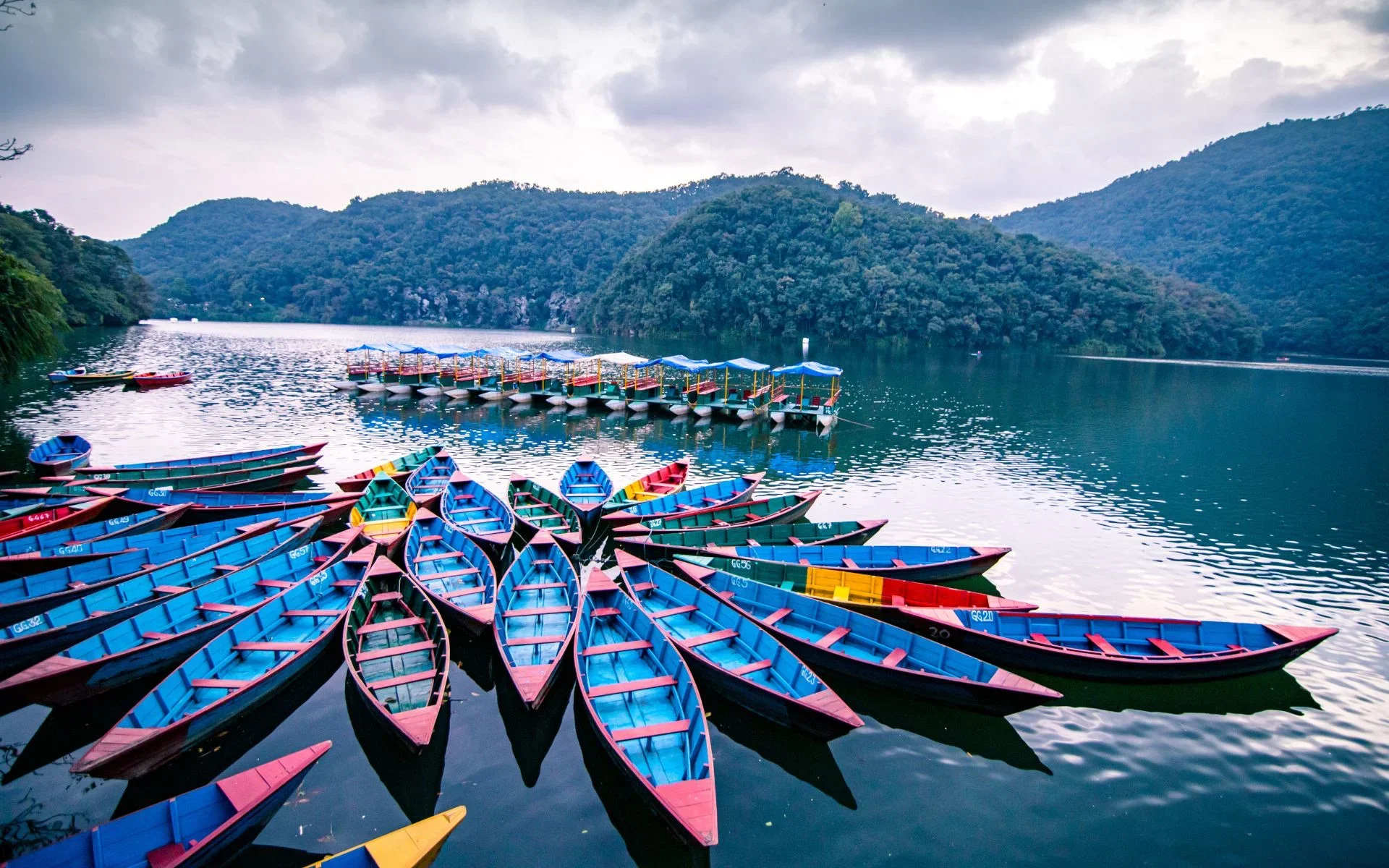
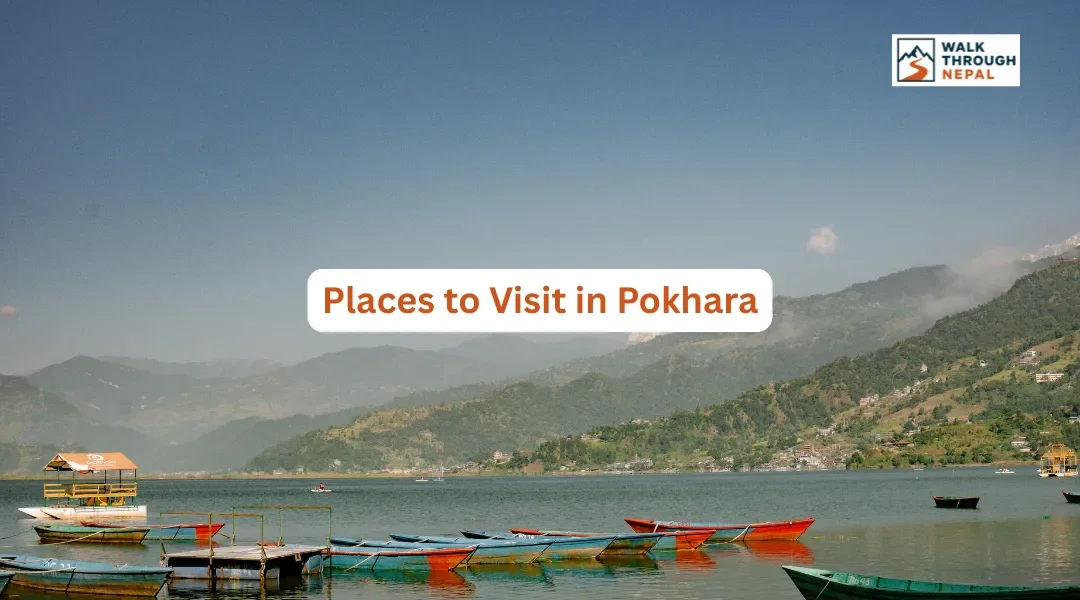
Phewa Lake is what most people picture when they think of Pokhara, and it's the one attraction almost every visitor to the city sees.
You rent a wooden boat from the ghats near Lakeside and row out toward Tal Barahi Temple, the small pagoda sitting on its own island in the middle of the lake. On a clear day the water reflects Annapurna and Machhapuchhre (Fishtail), which is why sunrise and sunset are the two times people specifically come down to the lakefront. If you want the fuller picture of Pokhara's lakes, including Begnas and Rupa alongside Phewa, our top 10 beautiful lakes of Nepal guide covers all three side by side.
2. Sarangkot – Best Place for Sunrise and Mountain Views
Sarangkot sits on a ridge above Pokhara at around 1,600 meters, and it's the single most popular sunrise viewpoint in the valley.
People drive or hike up in the dark to be there before first light, when the sun catches Annapurna, Dhaulagiri, and Machhapuchhre in sequence as the sky changes color. Sarangkot has also become one of Nepal's main paragliding launch sites, so it's common to see the sky filling with paragliders through mid-morning once the sunrise crowd starts heading back down. It's a 20-30 minute drive from central Pokhara, or a 2-3 hour hike if you'd rather walk up. Most visitors spend a half day here between the drive, the sunrise, and breakfast at one of the viewpoint cafés.
3. World Peace Pagoda – Panoramic Views Over Pokhara
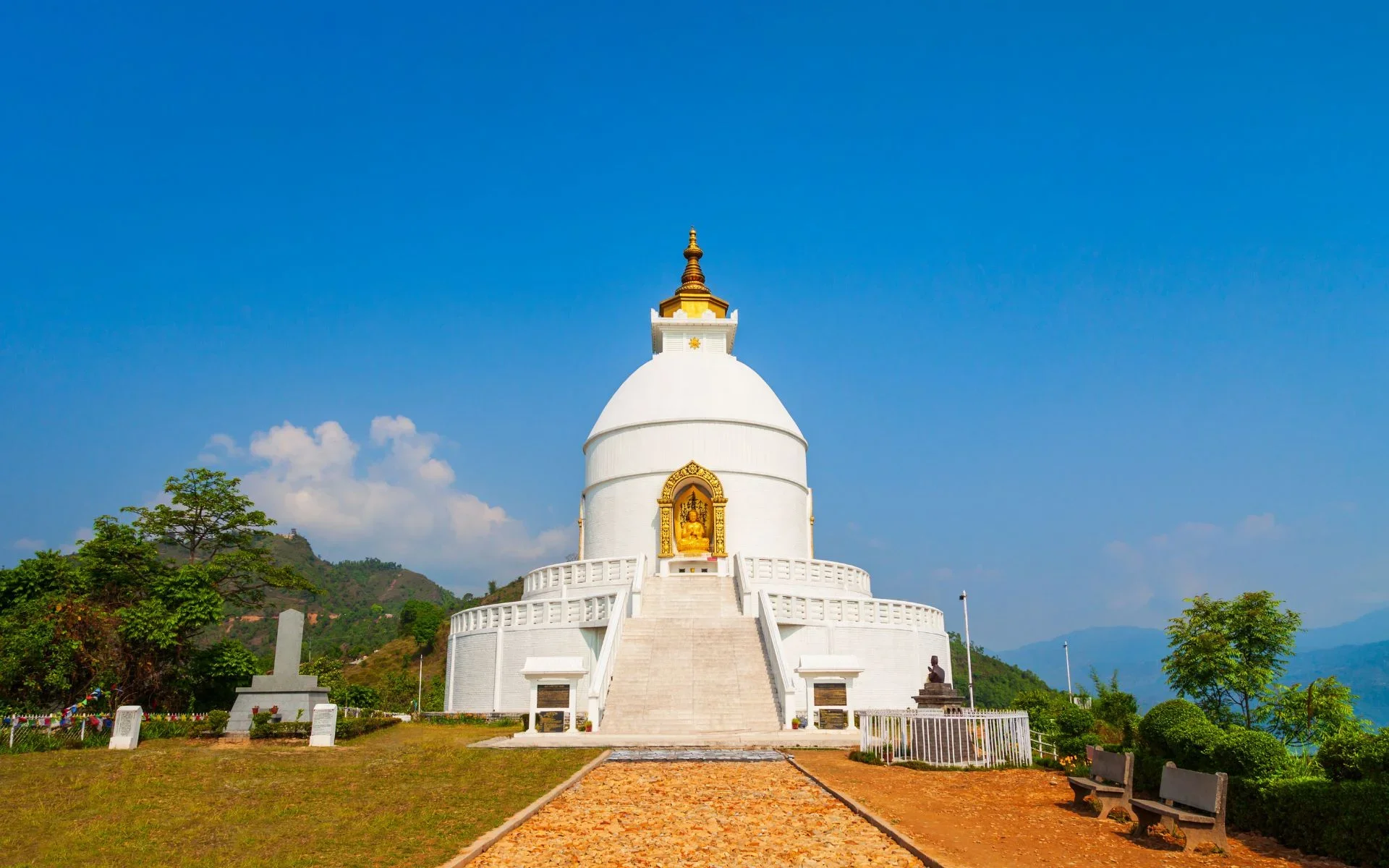
The World Peace Pagoda is a white Buddhist stupa sitting on Anadu Hill, on the opposite side of Phewa Lake from the city center.
It's one of the few spots in Pokhara where you get both the lake and the Annapurna range in a single wide view, with the pagoda itself framed against the mountains. You can either hike up through forest trails from the lakeside (roughly 1.5 to 2 hours one way) or take a boat across the lake and drive the rest of the way, which cuts the visit down to a couple of hours total. Late afternoon light is generally considered the best time to be up there.
4. Davis Falls – One of Pokhara's Famous Waterfalls
Davis Falls is a short waterfall where the Pardi Khola disappears underground into a narrow gorge, which is unusual enough that it's become one of the city's standard stops.
Water flow depends heavily on season: during monsoon (June-September) it's dramatic and full, while in the dry winter months it slows to a much thinner stream. It only takes about an hour to see, and it sits close enough to Gupteshwor Cave that most visitors combine the two in a single stop.
5. Gupteshwor Mahadev Cave – A Sacred Cave Beneath Pokhara
Gupteshwor Mahadev Cave is a limestone cave a short walk from Davis Falls, and it holds real religious significance as a Shiva shrine, not just a tourist stop.
Inside, you'll find natural rock formations along with a shrine dedicated to Lord Shiva, and in the wet season you can hear (and sometimes see) the same underground stream that feeds Davis Falls passing through the cave system. It's lit and walkable without any special gear, and most visitors are through in about an hour, easily paired with the waterfall next door.
6. International Mountain Museum
The International Mountain Museum is Pokhara's dedicated space for the history of Himalayan mountaineering, and it's worth an hour or two whether you're about to start a trek or just finished one.
Exhibits cover the history of Everest summits, the mountaineering equipment used across different eras of climbing, and the culture of the ethnic groups who live in Nepal's high mountain regions, including the Sherpa community. It gives useful context before heading into the hills, and it's a good option if you want a break from lakeside walking on a hot afternoon.
7. Begnas Lake – A Quieter Alternative to Phewa
Begnas Lake sits about 10 kilometers from Phewa, and it's where you go when you want the same boating and mountain-view experience without Lakeside's crowds.
Local fishing families still use the lake commercially, so early mornings often mean watching wooden boats out working rather than tourist paddle boats. The surrounding hills stay undeveloped, which keeps the whole area quieter and greener than the Phewa waterfront. For elevation and travel details on Begnas alongside Nepal's other major lakes, see our guide to the beautiful lakes of Nepal.
8. Rupa Lake – A More Natural Side of Pokhara
Rupa Lake is the smallest and least developed of Pokhara's three lakes, and it draws a different kind of visitor than Phewa or Begnas.
There's noticeable birdlife around the shoreline, especially early morning, and the surrounding terraces are still worked by local farming communities rather than tourism infrastructure. It receives far fewer visitors simply because there's less built up around it, which is exactly what makes it appealing if you want rural Pokhara rather than the lakeside strip.
9. Tal Barahi Temple – The Island Temple of Phewa Lake
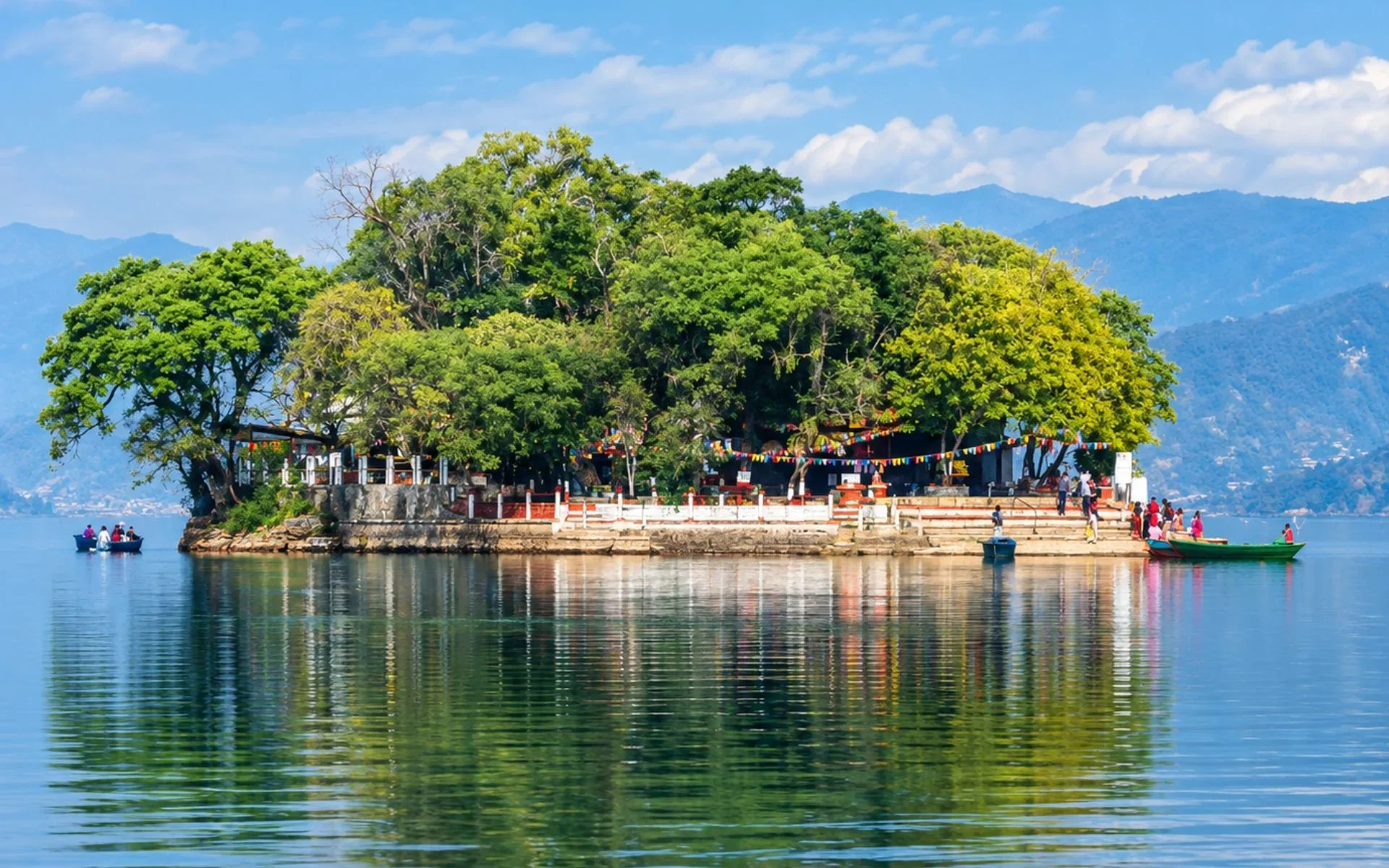
Tal Barahi Temple sits on a small island near the middle of Phewa Lake and is one of Pokhara's most visited religious sites.
The temple is dedicated to the goddess Barahi, and reaching it means a short boat ride out from the lakeside ghats, which is part of the experience for most visitors rather than an inconvenience. It gets busiest during Hindu festivals, when local devotees come to make offerings, so expect more boat traffic and a livelier atmosphere around those dates. As with any active temple in Nepal, dress modestly and remove your shoes before entering.
10. Bindhyabasini Temple – A Historic Temple With Mountain Views
Bindhyabasini Temple sits on a hilltop in Pokhara's old bazaar area and is one of the city's older and more locally significant temples.
Built in a pagoda style and dedicated to the goddess Bhagwati, it draws steady local foot traffic rather than just tourists, and festival days bring noticeably larger crowds. Because of its elevated position, you also get decent views back toward the Himalayan skyline from the temple grounds, on top of the cultural interest.
11. Mahendra Cave – Explore Pokhara Underground
Mahendra Cave is a limestone cave in northern Pokhara, known for its stalactite and stalagmite formations built up over a very long time.
The cave is walkable and accessible without technical gear, though the ground is naturally uneven in places, so proper shoes help. Most visits run 1-2 hours, and it's commonly combined with a stop at the nearby Bat Cave since both sit in the same part of the city.
12. Bat Cave – A Short Adventure Near Mahendra Cave
Bat Cave gets its name honestly: it's home to a resident colony of bats living inside the cave passages, visible as you move through with a guide.
It's a tighter, more adventurous space than Mahendra Cave, with narrower passages that make it feel more like actual exploring than a walkthrough exhibit. Because of that, it suits travelers who want something a little more physical over the course of a short one-hour visit, rather than families with very young kids.
13. Seti Gorge – See Pokhara's Hidden River
Seti Gorge is one of Pokhara's stranger natural features: the Seti River cuts through such a narrow channel in places that it disappears from view entirely, running beneath the city through solid rock.
Several viewing points around the city let you look down into the gorge, including near the K.I. Singh Bridge, and the contrast between how loud the river sounds and how little of it you can actually see is what makes it worth the short stop. Most viewpoints take 30 to 60 minutes, making it an easy add-on between other stops in the city center.
14. Tibetan Refugee Camp – Experience Tibetan Culture
Pokhara is home to a longstanding Tibetan refugee community, and the settlement here gives visitors a way to engage with Tibetan culture directly rather than through a museum display.
Local artisans produce carpets and other handicrafts on site, and many are available to purchase directly from the people who made them. Visiting respectfully means being mindful that this is a residential community with its own history, not a staged attraction, so a low-key visit focused on the handicraft workshops is the right approach. Most visits run 1-2 hours.
15. Lakeside Pokhara – The Best Area to Experience the City
Lakeside isn't just where most travelers sleep. It's the actual center of gravity for Pokhara's restaurants, cafés, gear shops, and trekking agencies, and it's worth treating as an attraction in its own right rather than just a base.
The strip runs along Phewa Lake's eastern shore, and an evening walk there covers live music venues, rooftop restaurants, and shops selling trekking gear and handicrafts, all within a few blocks. It's also where most independent trekkers organize permits and hire guides before heading into the hills, which makes it the natural starting point for whatever adventure comes next on your trip.
How Many Days Do You Need in Pokhara?
1 Day in Pokhara
Phewa Lake → Davis Falls → Gupteshwor Cave → World Peace Pagoda. A tight but workable loop that covers the city's signature sights.
2 Days in Pokhara
Day 1: city attractions, Phewa Lake, Davis Falls, Gupteshwor Cave, Tal Barahi Temple. Day 2: Sarangkot at sunrise, followed by a relaxed afternoon at Lakeside or Begnas Lake.
3 Days in Pokhara
Add Begnas and Rupa Lakes, the International Mountain Museum, an adventure activity like paragliding, and more unhurried time at Lakeside. Three days is also a realistic buffer if you're using Pokhara as a base before or after a trek, since it gives you room to rest without rushing the sightseeing.
How to Get Around Pokhara
Taxi: the easiest option for single trips between attractions, widely available around Lakeside.
Private vehicle: worth arranging for a full day covering Sarangkot, the World Peace Pagoda, and Begnas or Rupa Lake in one trip.
Local buses: the cheapest way to reach outlying spots like Begnas Lake, though schedules are less predictable.
Walking: entirely sufficient for Lakeside itself and nearby Phewa Lake attractions.
Scooter or motorbike: popular for travelers who want flexibility to reach viewpoints and lakes on their own schedule.
Organized tours: a straightforward option if you'd rather not plan logistics, especially for a single busy sightseeing day.
Frequently Asked Questions
What is the most beautiful place to visit in Pokhara?
Phewa Lake is generally considered Pokhara's most beautiful and most photographed spot, with Sarangkot a close second for mountain views.
What is Pokhara famous for?
Pokhara is known for Phewa Lake, sunrise views from Sarangkot, and as the main gateway city for Annapurna region treks.
How many days are enough for Pokhara?
2 to 3 days is enough to cover the main attractions comfortably; 1 day works if your schedule is tight.
What are the best places to visit in Pokhara for first-time visitors?
Phewa Lake, Sarangkot, World Peace Pagoda, and Davis Falls cover the essentials for a first trip.
Is Pokhara worth visiting?
Yes. Pokhara combines lakeside relaxation, Himalayan mountain views, cultural sites, and adventure activities in one compact valley, which is rare even within Nepal.
What is the best time to visit Pokhara?
September to November offers the clearest skies and best mountain visibility, with December to February a strong second choice.
Can you see the Himalayas from Pokhara?
Yes. On clear days you can see Annapurna, Machhapuchhre, and Dhaulagiri directly from the city, and even more clearly from Sarangkot or the World Peace Pagoda.
What are the best places to visit near Pokhara?
Begnas Lake, Rupa Lake, and Sarangkot are the most popular short trips just outside the city center.
What can you do in Pokhara besides trekking?
Boating on Phewa Lake, paragliding from Sarangkot, cave exploration at Mahendra and Gupteshwor, temple visits, and museum stops all work well without any trekking involved.
Is Pokhara good for a family trip?
Yes. Phewa Lake, the International Mountain Museum, Davis Falls, and Mahendra Cave are all manageable for families with kids of most ages.
Conclusion
Pokhara often gets treated as a stopover before or after a trek, but it holds up as a destination on its own. Between the lakes, the mountain viewpoints, the caves, and the cultural sites scattered across the valley, there's enough here for a slow multi-day stay without setting foot on a trail. If you have half a day, stick to Phewa Lake and Sarangkot. If you have three, add the lakes beyond Phewa, the museum, and a proper adventure activity, and let Lakeside fill in the evenings.
If Pokhara is part of a bigger Nepal itinerary, our team can help you design your trip around it, whether that means building in extra days in the valley or connecting it directly to an Annapurna region trek.