Contents
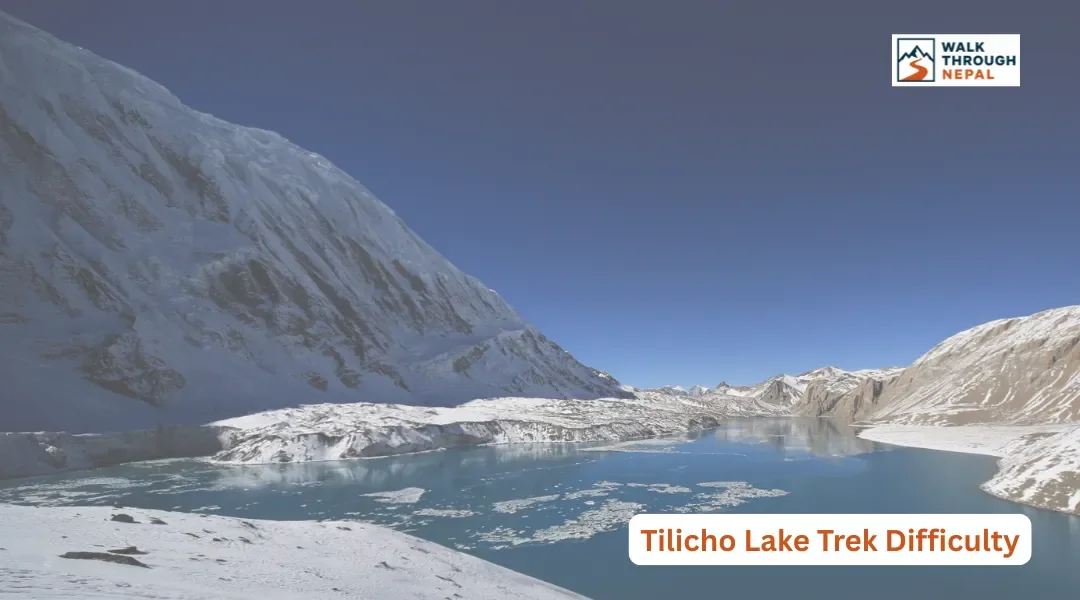
The Tilicho Lake Trek is a moderate to challenging high-altitude trek. The walking itself is manageable for reasonably fit trekkers, but the combination of high altitude, long walking days, steep sections, and unpredictable mountain weather makes it more demanding than a typical low-altitude hike.
The main factors that drive the difficulty are altitude, distance, daily walking hours, steep ascents and descents, high-altitude terrain, weather, acclimatization needs, and individual fitness. None of these require technical climbing skills, but together they add up to a real physical undertaking.
How Difficult Is the Tilicho Lake Trek?
Rating: Moderate to Challenging.
Difficulty Factor | Level |
|---|---|
Physical fitness | Moderate |
Altitude | Challenging |
Trail terrain | Moderate to Challenging |
Daily walking | Moderate |
Technical climbing | Low |
Weather | Variable |
Overall | Moderate to Challenging |
An important distinction: the Tilicho Lake Trek is not a technical mountaineering expedition. You will not need ropes, crampons, or climbing experience. The main challenge is endurance and altitude, not climbing skill.
Why Is the Tilicho Lake Trek Difficult?
High Altitude
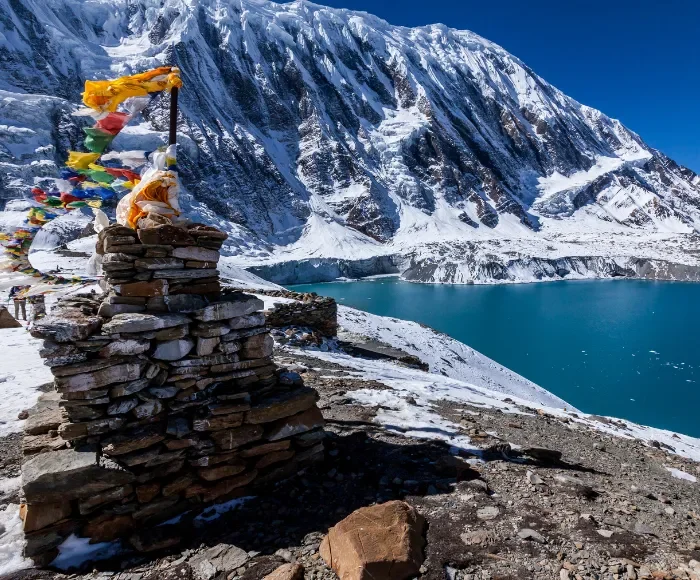
Tilicho Lake sits at approximately 4,919 meters, well above the elevation where Acute Mountain Sickness (AMS) becomes a real risk for many trekkers. At this height, oxygen availability drops significantly, which slows your walking pace and makes even moderate exertion feel harder than it would at sea level. This is why acclimatization days, most itineraries build one in around Manang (3,540 m), matter so much, and why untreated altitude symptoms should never be pushed through. Altitude is consistently the single biggest difficulty factor on this route, more than the terrain or the walking distance itself.
Long Walking Days
Trekking days on this route commonly run 5 to 8 hours, with the summit push from Tilicho Base Camp to the lake itself often the longest and most demanding day of the trip. Expect early starts, sustained uphill sections, descents that test your knees as much as your lungs, and less recovery time between days than you might be used to at lower altitude. We won't give you one fixed number of hours for the entire trek, because your actual daily walking time depends heavily on whether you do Tilicho as a standalone side trip or combine it with the full Annapurna Circuit.
Steep and Uneven Trails
The trail includes rocky sections, loose scree, and stretches with real elevation gain packed into a short distance, particularly on the approach from Tilicho Base Camp to the lake. Some sections between Khangsar and Tilicho Base Camp are landslide-prone, with narrow, exposed traverses where the trail has partially washed away in places. Technical climbing skills are not required, but sure-footedness genuinely matters here, especially on wet or icy ground.
Weather Can Increase the Difficulty
Snow, strong wind, rain, cloud cover, and cold temperatures can turn an otherwise manageable trail into a genuinely harder day. The same stretch that feels routine in clear October conditions can become slow and risky in poor visibility or fresh snow. For a full seasonal breakdown, see our best time for the Tilicho Lake Trek guide.
Tilicho Lake Trek Difficulty by Altitude
Difficulty on this route builds progressively as you climb from lower Manang toward the lake itself.
Lower Elevations
Walking here is generally easier, with more oxygen available and gentler grades. This is where most trekkers build their trail legs before the altitude starts to bite.
Manang
Around 3,540 meters, altitude becomes noticeably more present. Breathing takes more conscious effort on uphill stretches, and this is typically where itineraries schedule an acclimatization day before pushing higher.
Tilicho Base Camp
At roughly 4,140 meters, high-altitude conditions become a serious consideration. This is the staging point for the final push to the lake, and the thinner air here makes even routine tasks, like packing up in the morning, feel slower.
Tilicho Lake — 4,919 m
The final push from Tilicho Base Camp to the lake climbs around 760 to 800 meters over loose scree, often taking 7 to 8 hours round trip. This is the highest and most demanding stretch of the entire trek, where altitude, terrain, and exertion all peak at once.
Is Tilicho Lake Trek Difficult for Beginners?
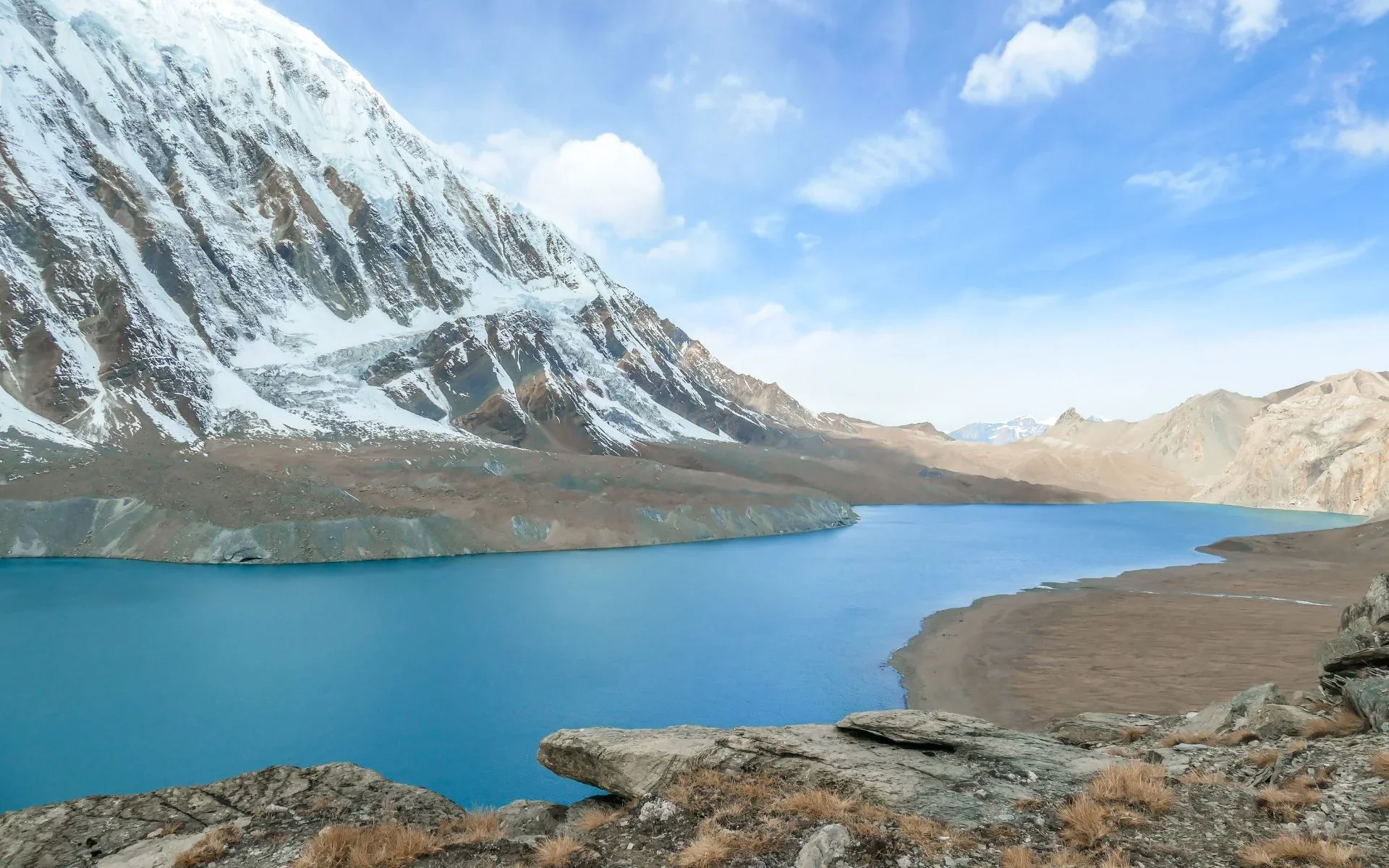
Yes, but it depends on the beginner. A complete beginner with good fitness, proper preparation, enough built-in acclimatization time, a sensible itinerary, and guide support may well be able to complete it. But someone with no hiking background and poor physical preparation should not treat Tilicho as an easy beginner trek simply because it doesn't involve technical climbing. Altitude does not care about climbing experience, it affects unprepared and prepared trekkers alike, just less predictably for the former.
What Fitness Level Do You Need for Tilicho Lake Trek?
You should be comfortable with walking for several hours at a stretch, handling repeated uphill sections, descending on uneven terrain without knee trouble, carrying a daypack, and doing this on multiple consecutive days without full recovery in between.
Cardio
Useful training activities include walking, running, cycling, stair climbing, and general hiking. The goal is building the aerobic base that makes thin air at altitude more manageable.
Strength
Focus on your quads, glutes, calves, and core. These are the muscle groups that carry you up and down rocky, uneven trail for hours at a time, day after day.
How to Prepare for the Tilicho Lake Trek
8 to 12 weeks before: build general cardiovascular endurance through regular walking, running, or cycling.
4 to 8 weeks before: add longer hikes, stair training, incline walking, and dedicated strength training for your legs and core.
Final 1 to 2 weeks: shift focus to recovery, sleep, light exercise only, and finalizing your equipment.
The goal is not to become an elite athlete. It is to make long days at altitude feel manageable rather than punishing.
Does Altitude Make Tilicho Lake Trek Harder?
Yes, and it is the defining factor in this trek's difficulty. High altitude reduces oxygen availability, which means you may feel breathless even while walking slowly. Headaches and fatigue can appear even in otherwise fit trekkers, and acclimatization is essential rather than optional. Increasing symptoms should never be ignored or pushed through.
Altitude Sickness Symptoms
Watch for headache, nausea, dizziness, unusual fatigue, loss of appetite, and sleep problems. If serious symptoms develop, the correct response is descending, not continuing upward and hoping they pass on their own.
Tilicho Lake Trek Difficulty in Different Seasons
Spring
Generally favorable, though early spring can still carry lingering snow at higher elevations, which adds difficulty to the final approach.
Autumn
Usually the easiest season from a weather perspective, with the most stable trail conditions of the year.
Monsoon
Rain and unstable trail conditions, including landslide risk on exposed sections, can meaningfully increase difficulty.
Winter
Snow and extreme cold can make the trek significantly harder, with the higher sections carrying real risk for underprepared trekkers.
Is Tilicho Lake Trek Harder Than Annapurna Circuit?
The full Annapurna Circuit is longer overall, and Thorong La Pass at 5,416 meters actually exceeds Tilicho Lake's elevation. So difficulty here really depends on the itinerary: a standalone Tilicho side trip is a shorter, more contained challenge, while combining Tilicho with the full circuit and Thorong La crossing creates a considerably more demanding multi-week trip. See our dedicated Annapurna Circuit Trek difficulty guide for the full comparison.
How to Make the Tilicho Lake Trek Easier
Choose a longer itinerary rather than the tightest possible schedule
Don't rush the route, especially the higher sections
Allow proper acclimatization time, including rest days
Walk slowly and steadily at altitude rather than pushing pace
Stay well hydrated throughout the trek
Carry appropriate warm and waterproof layers
Use trekking poles on steep and loose terrain
Hire a licensed guide for navigation and safety support
Keep buffer days in your schedule where possible
Start early on high-altitude summit days
We would not recommend cutting acclimatization time just to shorten your itinerary. That is the one shortcut that genuinely raises your risk on this route.
Can You Do Tilicho Lake Trek Without a Guide?
Independent trekking raises real questions around navigation on less obvious sections, monitoring weather changes, recognizing early altitude symptoms, understanding trail conditions day to day, coordinating logistics like permits and teahouse availability, and having support available if something goes wrong. A licensed guide is particularly valuable for first-time high-altitude trekkers, since they bring route knowledge and altitude awareness that is hard to replace with research alone.
What to Pack for a Difficult Tilicho Lake Trek
Good trekking boots, trekking poles, warm layers, a down jacket, a waterproof shell, gloves, sun protection, sunglasses, a water purification method, basic first-aid supplies, and appropriate sleeping gear for cold nights at altitude.
Who Is the Tilicho Lake Trek Suitable For?
Good for: regular hikers, fit first-time high-altitude trekkers, experienced trekkers, travelers who can walk several hours daily, and people comfortable with basic teahouse trekking.
Less suitable for: completely unprepared travelers, people uncomfortable with long walking days, those who want a low-altitude, easy trek, and travelers who don't have enough time built in for acclimatization.
Tilicho Lake Trek Difficulty: Quick Verdict
Overall: Moderate to challenging.
Technical climbing: Not normally required.
Fitness: Moderate.
Altitude: The major challenge.
Best preparation: Regular hiking, cardio, and strength training.
Beginner-friendly: Possible with preparation and the right itinerary.
Best season: Spring and autumn.
Frequently Asked Questions
How difficult is the Tilicho Lake Trek?
It is rated moderate to challenging, mainly due to high altitude, long walking days, and rocky terrain, rather than any technical climbing.
Is Tilicho Lake Trek suitable for beginners?
It can be, for beginners with good fitness, proper preparation, and a sensible, well-acclimatized itinerary. It is not a suitable first trek for someone with no physical preparation.
How fit do you need to be for Tilicho Lake?
You should be comfortable walking several hours a day on uneven terrain, on consecutive days, while carrying a daypack. Regular cardio and leg strength training beforehand make a real difference.
Is Tilicho Lake Trek harder than Annapurna Base Camp?
Generally yes, mainly because Tilicho Lake's 4,919 m elevation exceeds Annapurna Base Camp's roughly 4,130 m, adding a greater altitude challenge.
Is Tilicho Lake Trek harder than Annapurna Circuit?
It depends on the itinerary. A standalone Tilicho side trip is shorter and more contained, while combining it with the full circuit and Thorong La Pass (5,416 m) creates a more demanding overall trip.
How many hours do you walk each day on Tilicho Lake Trek?
Most days involve 5 to 8 hours of walking, with the summit day to the lake itself often the longest and most demanding.
Is altitude sickness common on Tilicho Lake Trek?
Mild symptoms like headache or fatigue are fairly common given the elevation. Proper acclimatization significantly reduces the risk of more serious AMS.
Do you need a guide for Tilicho Lake Trek?
A licensed guide is required for the route and is particularly valuable for navigation, altitude monitoring, and emergency support, especially for first-time high-altitude trekkers.
Can you do Tilicho Lake Trek without prior trekking experience?
Yes, with the right preparation, a realistic itinerary, and guide support, though prior hiking experience makes the long walking days feel more manageable.
What is the hardest part of Tilicho Lake Trek?
The final push from Tilicho Base Camp to the lake, which climbs roughly 760 to 800 meters over loose scree at the trek's highest altitude.
Conclusion
The Tilicho Lake Trek is challenging, but the challenge comes mainly from altitude, long walking days, and changing mountain conditions rather than technical climbing. With proper preparation, a sensible itinerary, and enough time to acclimatize, fit trekkers can take on the route without being experienced mountaineers.
Ready to Trek Nepal?
Not sure whether Tilicho Lake is the right trek for your fitness level? Walk Through Nepal can help you choose an itinerary that matches your experience, available time, and trekking goals.