Contents
How do you pack for a trek that takes you from sweating in a t-shirt to fighting frostbite in the same duffel bag?
That is the real challenge of the Annapurna Circuit. You start in warm, humid valleys around 800 meters. You climb through pine forests and dry high desert. Then you cross Thorong La Pass at 5,416 meters, where sub-zero temperatures and biting wind are just Tuesday.
Our guides have crossed that pass in every season, and one thing never changes. Trekkers do not fail because they packed too little. They fail because they packed too much of the wrong things.
This checklist is built from that experience. Full master list, layering explained, Thorong La-specific gear, season-by-season changes, backpack weight targets, and a printable version for before you fly.
Annapurna Circuit Trek Packing List at a Glance
Here is the master checklist at a glance. Every item below is broken down in detail through the rest of this guide, but if you just want the quick reference, this table covers the essentials by category for the standard autumn or spring itinerary.
Category | Essential Items |
Clothing | Base layers, trekking pants, fleece, down jacket, waterproof shell |
Footwear | Trekking boots, trekking socks, camp sandals |
Backpack | Daypack, duffel bag, rain cover |
Sleeping | Sleeping bag (-10C rating), liner |
Protection | Sunglasses, sunscreen, sun hat, gloves, beanie |
Trekking gear | Poles, headlamp, water bottles, purification |
Toiletries | Toothbrush, toothpaste, toilet paper, wet wipes |
Health | First-aid kit, personal medication, blister care |
Electronics | Phone, power bank, charging cables |
Documents | Passport, permits, insurance, cash |
Miscellaneous | Snacks, dry bags, ziplock bags |
Clothing for the Annapurna Circuit Trek
Clothing on the Annapurna Circuit works on the layering principle: several thin layers you can add or remove beat one thick jacket. You need moisture-wicking base layers, insulating mid layers, and a protective waterproof shell. This system handles both sweaty afternoon climbs at low elevation and freezing dawn starts above 4,000 meters.
Base Layers
Pack a moisture-wicking thermal top and thermal bottoms made of merino wool or synthetic fabric. These pull sweat away from your skin, which keeps you warm and prevents the clammy chill that hits when you stop for a break. Avoid cotton entirely; it holds moisture, dries slowly, and can leave you cold and miserable at altitude.
Mid Layers
A good fleece jacket is your everyday warmth workhorse. Many trekkers add a lightweight insulated (synthetic or light down) layer for flexibility. You will wear the fleece around teahouses in the evening and layer it under your shell on cold mornings.
Outer Layer
Carry a waterproof and windproof jacket, ideally with a hood, plus waterproof over-trousers. Weather on this route changes fast, and the wind screaming over Thorong La makes a windproof shell non-negotiable rather than optional.
Trekking Pants
Two to three pairs of quick-dry trekking pants are plenty. Convertible zip-off pants work well because lower valleys can be hot while high sections are cold. Resist the urge to overpack here; you can rinse and dry pants at lower teahouses.
Down Jacket
A proper insulated down jacket becomes essential the higher you climb. Around Thorong Phedi, High Camp, and the pass itself, a warm down jacket is what keeps you functional in freezing pre-dawn temperatures. You can rent one cheaply in Kathmandu or Pokhara if you do not own one.
Underwear and Socks
Bring enough underwear for a practical rotation without hauling excess weight. Pack 4-5 pairs of proper trekking socks; wool-blend socks reduce blisters and stay warm even when slightly damp.
Hats and Gloves
You need a sun hat or cap for the exposed dry sections, a warm beanie for cold mornings and evenings, lightweight liner gloves, and warm insulated gloves for the higher, colder sections including the pass. Cold hands ruin a summit-morning crossing faster than almost anything else.
Footwear for the Annapurna Circuit
Footwear can make or break your trek. The Annapurna Circuit throws rock, dust, mud, streams, and possible snow at you, so you need boots with grip, ankle support, and water resistance. Poorly chosen or un-broken-in footwear is the single most common cause of trek-ending blisters we see on the trail.
Trekking Boots
Choose mid-to-high cut boots with solid ankle support, aggressive grip, and a waterproof membrane. The most important rule: break them in for several weeks of walking before your trip. New boots straight out of the box will shred your heels over the long 6-8 hour walking days.
Trekking Socks
Wool-blend or synthetic hiking socks manage moisture and cushion your feet. Carry spare pairs so you always have a dry set, and consider thin liner socks under thicker ones to reduce friction.
Camp Shoes / Sandals
A pair of lightweight sandals or camp shoes is a small luxury that feels enormous after a long day. Letting your feet breathe in the teahouse each evening genuinely helps prevent blisters and hot spots.
Do You Need Waterproof Boots?
It depends on your season. In autumn's dry, dusty conditions, breathable boots may feel better, though waterproofing still helps at stream crossings and morning frost. In monsoon or winter with snow near the pass, waterproof boots are strongly advisable. For a full breakdown of terrain and difficulty, see our Annapurna Circuit difficulty guide.
Backpack and Luggage
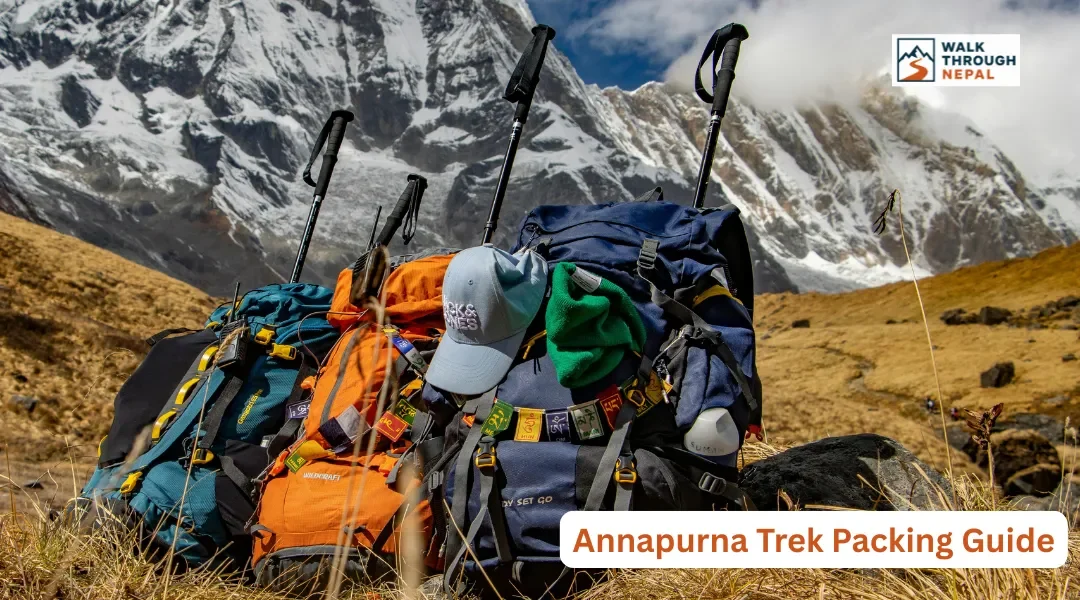
How much you carry on the Annapurna Circuit depends on whether you hire a porter. If you do, a porter carries your main duffel while you walk with a light daypack holding only daily essentials. If you carry everything yourself, careful packing and weight control become critical over the high passes.
Daypack
A 25-35 litre daypack is ideal. Keep accessible your water, snacks, rain shell, warm layer, sunscreen, sunglasses, headlamp, camera, documents, and cash. Even with a porter, you always carry your own daypack.
Duffel Bag
If using a porter or agency, a 60-80 litre duffel holds your sleeping bag, spare clothing, and gear you do not need during the day. Standard porter weight limits usually cap around 10-15 kg per porter, often shared between two trekkers.
Backpack Rain Cover
Always carry a rain cover. Weather shifts quickly, and a soaked sleeping bag or wet down jacket at altitude is a serious problem, not just an inconvenience.
Dry Bags and Ziplock Bags
Line your pack with dry bags or use large ziplock bags for electronics, documents, and spare clothes. They keep gear dry and organized, and they cost almost nothing.
Sleeping Gear
You will sleep in teahouses along the entire circuit, but the blankets provided are rarely warm enough at altitude. A quality sleeping bag is essential for cold nights above 3,000 meters, especially near Thorong Phedi and High Camp where temperatures drop well below freezing.
Sleeping Bag
Bring a sleeping bag rated to around -10C for autumn and spring, and -15C to -20C for winter. Renting in Kathmandu or Pokhara typically costs a few dollars per day and saves you buying and hauling one internationally.
Sleeping Bag Liner
A liner is optional but genuinely useful. It adds a few degrees of warmth, keeps your bag cleaner, and is much easier to wash than the bag itself.
Trekking Gear You Actually Need
You do not need to buy an expensive mountaineering kit for the Annapurna Circuit. A short list of reliable essentials covers the trek, with a few optional extras that depend on your season and preferences. Focus your budget on the items that matter for safety and comfort.
Essential: trekking poles, headlamp with spare batteries, water bottles or hydration system, water purification, sunglasses, and your daypack.
Useful but optional: gaiters (for mud or snow), microspikes (depending on season and snow near the pass), a trekking watch, and small binoculars.
On water, please avoid buying single-use plastic bottles along the trail; they create a serious waste problem in the mountains. Carry a reusable bottle paired with a purification method such as a UV purifier, a Sawyer squeeze filter, or chlorine dioxide drops.
What to Pack for Thorong La Pass
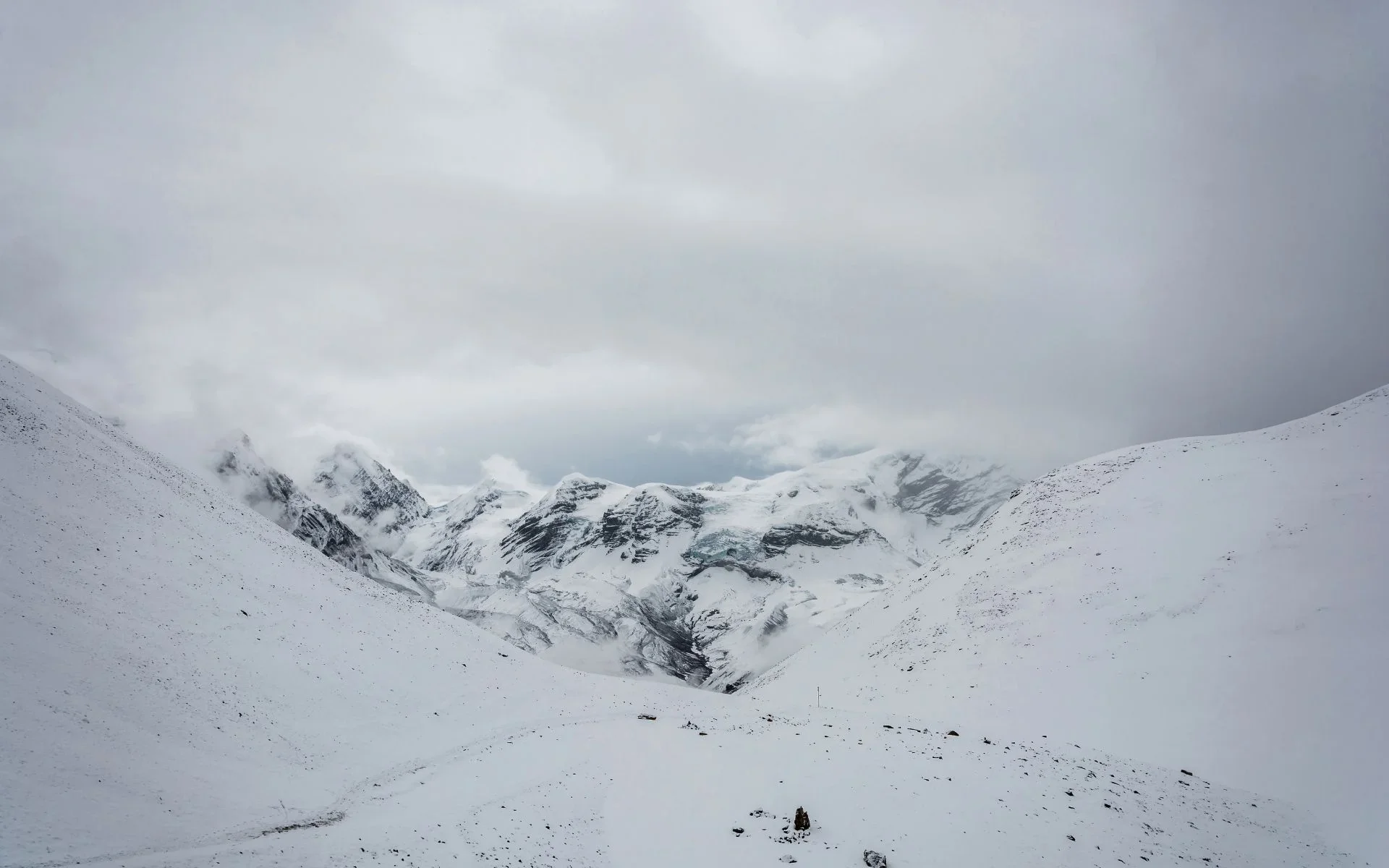
For the Thorong La Pass at 5,416 meters, keep your cold-weather gear accessible the night before: a warm down jacket, thermal base layers, insulated gloves plus liner gloves, a warm beanie, a windproof shell, sunglasses, sunscreen, headlamp, snacks, and water. You cross before dawn in freezing temperatures and strong wind.
The crossing usually starts around 4:00-5:00 AM from High Camp or Thorong Phedi, so you walk the first hours in darkness and deep cold. This is exactly when you want your warmest layers within reach, not buried at the bottom of your duffel.
You do not need to carry every layer in your daypack for the entire trek. Simply reorganize the night before the crossing so your down jacket, gloves, and beanie are on top and easy to grab.
Keep water from freezing by wrapping bottles in a sock or storing them inside your jacket. And go slowly: this is the highest point of the trek, and rushing the climb invites altitude sickness.
Toiletries and Personal Hygiene
Keep toiletries small and simple. Every gram counts, and teahouses have limited facilities. A compact kit keeps you clean without weighing you down.
Toothbrush and toothpaste
Biodegradable soap
Hand sanitizer
Wet wipes
Toilet paper (not always provided)
Quick-dry travel towel
Lip balm with SPF
Moisturizer and deodorant
A note on trail costs: hot showers at higher teahouses are gas-heated and usually cost extra, typically 200 to 700 NPR per shower. Charging power banks and phones, and using Wi-Fi, also often carry similar per-use fees. Budget for these small upcharges.
First-Aid and Health Essentials
Carry a personal first-aid kit tailored to your needs. It should cover common trekking issues, though it is never a substitute for proper medical care or a real evacuation plan.
Personal and prescription medication
Blister treatment (moleskin, tape)
Pain relief medication
Antiseptic and bandages
Rehydration and electrolyte sachets
Any altitude medication as advised by a qualified clinician
On insurance: standard travel insurance is not enough for this trek. You need a policy that specifically covers high-altitude emergency helicopter evacuation up to 6,000 meters and medical treatment for AMS, HAPE, and HACE. Carry your policy number and the insurer's emergency contact in your daypack.
On acclimatization, never rush the ascent. Above 3,000 meters, your sleeping elevation should not rise by more than 300-500 meters per day, with rest days built in around Manang. On altitude and diet, prioritize the traditional Dal Bhat (lentil soup, rice, and vegetable curry) for clean, high-energy fuel and free refills, and favor vegetarian meals since meat is carried up by foot over days without refrigeration.
Sun Protection and Altitude Essentials
UV exposure increases sharply at altitude, and the dry Manang-to-Mustang side of the circuit is intensely bright. Sun protection is a genuine safety item, not a comfort extra. Snow-glare near the pass can cause painful snow blindness without proper eyewear.
UV-protection sunglasses (category 3-4 for snow)
High-SPF sunscreen
Lip balm with SPF
Sun hat or cap
Water bottle and hydration system
Electronics and Gadgets
Keep electronics minimal. Charging is available at most teahouses but usually costs extra, and cold drains batteries fast. Store devices and power banks in an inside pocket at night to keep them warm.
Essential: smartphone, charging cables, power bank, and a headlamp.
Optional: camera and extra batteries, e-reader, and an action camera.
On connectivity, buy a local SIM in Kathmandu or Pokhara. Carry cables for everything, since a dead phone at altitude means no maps and no communication.
Documents and Money
Your documents and cash matter as much as your gear. There are no ATMs on the trail once you leave the roadheads, so you must carry enough Nepalese Rupees for the entire trek plus a buffer.
Passport and passport photos
Trekking permits (ACAP and TIMS)
Travel insurance details with evacuation cover
Emergency contact information
Digital and paper copies of key documents
Sufficient NPR cash
On visas, the Nepal tourist visa on arrival costs $30 USD for 15 days, $50 USD for 30 days, and $125 USD for 90 days. For permits, the Annapurna region uses the ACAP permit plus the e-TIMS QR card; check our full Annapurna permit guide for current details. For budgeting and exactly how much cash to carry, see our Annapurna Circuit cost guide.
Snacks and Food to Pack
Food is available at teahouses across most of the route, so your snacks should supplement local meals, not replace them. Carry lightweight, high-energy options for the trail between villages and for the long pass day.
Energy bars
Nuts and trail mix
Dried fruit
Chocolate
Electrolyte sachets
Do not overpack food. It is heavy, and the Dal Bhat and other meals along the trail provide better, cheaper fuel than a bag of imported snacks.
Annapurna Circuit Packing List by Season
Your packing list shifts noticeably by season. Temperatures, precipitation, and trail conditions all change, and each season demands a slightly different kit. Match your gear to when you actually plan to trek.
Spring Packing List (March to May)
Spring brings warming temperatures and blooming rhododendrons. Pack solid layering for cold high sections and warm valleys, strong sun protection, and a light rain shell for occasional showers. Days are pleasant but the pass remains cold.
Summer / Monsoon Packing List (June to August)
Monsoon means rain, mud, leeches, and slippery trails on the lower circuit. Prioritize a fully waterproof shell, waterproof pack liner and dry bags, quick-drying clothing, and gaiters.
Autumn Packing List (September to November)
Autumn is the most popular season with clear skies and stable weather. Pack standard layering for cold mornings and mild days, a warm sleeping bag, and full sun protection. Nights are cold, so do not skimp on the down jacket.
Winter Packing List (December to February)
Winter demands the warmest kit. Add heavier insulation, thicker thermals, insulated gloves, a balaclava, a warmer sleeping bag (-15C to -20C), and microspikes for snow near Thorong La. Snow can close the pass entirely, so confirm conditions with local guides before you commit.
Annapurna Circuit Packing List for Beginners
First-time trekkers tend to make the same avoidable mistakes. Knowing them in advance saves weight, money, and blisters. Here are the errors we see most often on the trail.
Packing far too many clothes
Bringing brand-new, un-broken-in boots
Carrying unnecessary electronics
Underestimating how cold the high sections get
Forgetting or under-packing sun protection
Carrying too much food
Not preparing for rain or snow
Ignoring total backpack weight
What NOT to Pack for the Annapurna Circuit
What you leave behind matters as much as what you bring. Every unnecessary item is weight you carry over a 5,416-meter pass. Leave these at home.
Excess clothing and jeans
Heavy books
Full-size toiletries and cosmetics
Multiple pairs of shoes
Unnecessary electronics
Excessive snacks
Bulky suitcases or hard luggage
The best Annapurna Circuit packing list is not the longest one. It is the one that covers changing conditions without making you carry weight you will never use.
How Much Should Your Backpack Weigh?
Backpack weight depends on whether you use a porter. If you carry everything yourself, aim for roughly 10-12 kg total excluding water. If you use a porter, keep your daypack to around 5-7 kg with daily essentials.
Remember that water counts. A full 2 litres adds 2 kg, so a pack that feels light empty can feel heavy fully hydrated. Rather than fixating on a single universal weight limit, pack sensibly for your fitness, then walk at a pace that lets your body acclimatize.
Buy, Rent, or Bring From Home?
Kathmandu's Thamel and Pokhara's Lakeside are full of gear shops. You can rent or buy most items affordably on arrival, which is handy for occasional-use gear like sleeping bags and down jackets. Use this table to decide.
Item | Bring | Rent | Buy in Nepal |
Sleeping bag | Yes | Yes | Yes |
Down jacket | Yes | Yes | Yes |
Trekking poles | Yes | Yes | Yes |
Boots | Yes | No | Yes |
Backpack | Yes | Yes | Yes |
Basic clothing | Yes | No | Yes |
The one thing we strongly advise against buying last minute is your trekking boots. Boots need weeks of breaking in, so bring your own well-worn pair rather than gambling on new footwear.
Sample 10-12 kg Annapurna Circuit Packing List
Here is a realistic weight breakdown for an autumn trek where you carry your own gear. Actual weights vary by brand, but this shows how a manageable load distributes across categories.
Category | Approx. Weight |
Clothing (layers, pants, socks) | 3.0 kg |
Footwear (worn boots + camp sandals) | 0.5 kg (packed) |
Backpack itself | 1.5 kg |
Sleeping bag + liner | 1.8 kg |
Toiletries | 0.5 kg |
Electronics + power bank | 1.0 kg |
First-aid kit | 0.5 kg |
Miscellaneous (dry bags, snacks, docs) | 1.0 kg |
Total (excluding water) | ~9.8 kg |
Printable Annapurna Circuit Trek Packing Checklist
Use this final checklist as your last tick-off before you fly. Print it or screenshot it.
Clothing:
Base layers
Trekking pants
Fleece
Down jacket
Waterproof jacket
Gloves (liner + insulated)
Beanie and sun hat
Trekking socks
Trekking Gear:
Daypack
Trekking poles
Headlamp
Water bottles + purification
Sleeping bag
Personal:
Toiletries
Medication
Sunscreen
Sunglasses
Documents:
Passport
Permits
Insurance
NPR cash
Final Annapurna Circuit Packing Checklist
Pack for changing conditions, not just the weather you expect in Kathmandu. Your Annapurna Circuit gear needs to cover warm lower valleys, cold high-altitude sections, possible rain or snow depending on the season, and the demanding Thorong La Pass.
Prioritize reliable footwear, a smart layering system, sun protection, hydration, and a manageable backpack over expensive or unnecessary equipment. Get those fundamentals right and the trek becomes far more enjoyable than a heavy, over-packed bag ever allows.
Frequently Asked Question
1. What should I pack for the Annapurna Circuit Trek?
Pack layered clothing (base, fleece, down jacket, waterproof shell), broken-in trekking boots, a warm sleeping bag rated to at least -10C, trekking poles, headlamp, sun protection, water purification, a personal first-aid kit, permits and sufficient NPR cash. Prioritize warm layers for the Thorong La Pass crossing at 5,416 meters.
2. How many clothes do I need for the Annapurna Circuit?
You need less than most people think. Two sets of base layers, 2-3 trekking pants, one fleece, one down jacket, one waterproof shell, 4-5 pairs of trekking socks and enough underwear for rotation. You can hand-wash and dry clothing at lower-elevation teahouses.
3. Do I need a sleeping bag for the Annapurna Circuit?
Yes. Teahouses provide blankets but nights above 3,000 meters get very cold, especially near Thorong Phedi. Carry a sleeping bag rated to -10C in autumn/spring and -15C to -20C in winter. You can rent one in Kathmandu or Pokhara for a few dollars per day.
4. Do I need trekking poles for the Annapurna Circuit?
Trekking poles are strongly recommended. They reduce strain on your knees during the long steep descent from Thorong La down to Muktinath and improve stability on loose or icy sections. You can buy or rent poles cheaply in Kathmandu and Pokhara.
5. What should I pack for Thorong La Pass?
For the Thorong La Pass at 5,416 meters, keep accessible a warm down jacket, thermal base layers, insulated gloves plus liner gloves, a warm beanie, windproof/waterproof shell, sunglasses, sunscreen, headlamp, snacks and enough water. You start the crossing before dawn in freezing temperatures and strong wind.
6. How heavy should my backpack be?
If you use a porter, keep your daypack to roughly 5-7 kg with water, snacks and essentials. If carrying everything yourself, aim for around 10-12 kg total excluding water. Remember water weight adds up quickly, so a load feels heavier fully hydrated.
7. Can I rent trekking gear in Nepal?
Yes. Kathmandu's Thamel and Pokhara's Lakeside have many gear shops renting sleeping bags, down jackets and trekking poles. You can also buy affordable branded and replica gear. However, we recommend bringing your own properly fitted, broken-in boots rather than buying them last minute.
8. What should I pack for the Annapurna Circuit in winter?
For winter (December-February) add heavier insulation: a warmer down jacket, thicker thermal layers, insulated gloves, a balaclava, warmer sleeping bag (-15C to -20C) and microspikes for snow near Thorong La. Snow can close the pass, so check conditions with local guides before departure.
9. Do I need hiking boots for the Annapurna Circuit?
Yes. Sturdy, waterproof, ankle-supporting trekking boots are essential for the mixed terrain of rock, dust, mud and possible snow. Break them in for several weeks before your trek to avoid blisters during long walking days of 6-8 hours.
10. What should I not bring on the Annapurna Circuit?
Leave behind excess clothing, heavy books, full-size toiletries and cosmetics, multiple pairs of shoes, unnecessary electronics, jeans and bulky luggage. The best packing list covers changing conditions without adding weight you must carry over Thorong La.