Contents
Thinking about trekking in Nepal but not sure where to start? You don't need previous trekking experience or an expedition-level fitness routine to explore the Himalayas. Nepal has several trails that are well suited to first-time trekkers, from short and relatively gentle hikes to longer routes that offer a proper introduction to high-altitude trekking.
But choosing a beginner trek isn't simply about finding the shortest or easiest trail. Altitude, walking hours, elevation gain, terrain, weather, and acclimatization can make a major difference. A few days on a lower-altitude trail can feel completely different from reaching a Himalayan base camp at 4,000 meters or more.
With experience across Nepal's major trekking regions, we've seen how often first-time trekkers choose a route based on its popularity rather than whether it actually matches their fitness, time, and comfort with altitude. This guide takes a more practical approach. We'll compare nine of the best beginner-friendly treks in Nepal, explain what each route is really like, and help you choose the one that fits your first Himalayan adventure.
Best Treks in Nepal for Beginners at a Glance
For beginners, the best treks range from easy low-altitude walks near Kathmandu and Pokhara to moderate Himalayan classics. Panchase and Balthali suit absolute beginners under 2,500 meters, while Ghorepani Poon Hill at 3,210 meters is the ideal first true Himalayan trek. ABC and the Circuit demand real training.
Trek | Difficulty | Highest Point | Typical Duration | Best For |
Panchase | Easy | ~2,500 m | 2–4 days | Absolute beginners |
Balthali | Easy | ~1,730 m | 3–4 days | Low-altitude hiking |
Ghorepani Poon Hill | Easy–Moderate | 3,210 m | 4–8 days | First Himalayan trek |
Ama Yangri | Moderate | ~3,800 m | 2–3 days | Short high-hill trek |
Mardi Himal | Moderate | ~4,500 m | 4–5 days | Active beginners |
Pikey Peak | Moderate | 4,065 m | 4–5 days | Everest views |
Langtang Valley | Moderate | ~3,870 m | 7–10 days | Longer first trek |
Annapurna Base Camp | Moderate | ~4,130 m | 9–12 days | Major first trek |
Annapurna Circuit | Moderate–Hard | 5,416 m | 12–16 days | Ambitious beginners |
1. Panchase Trek
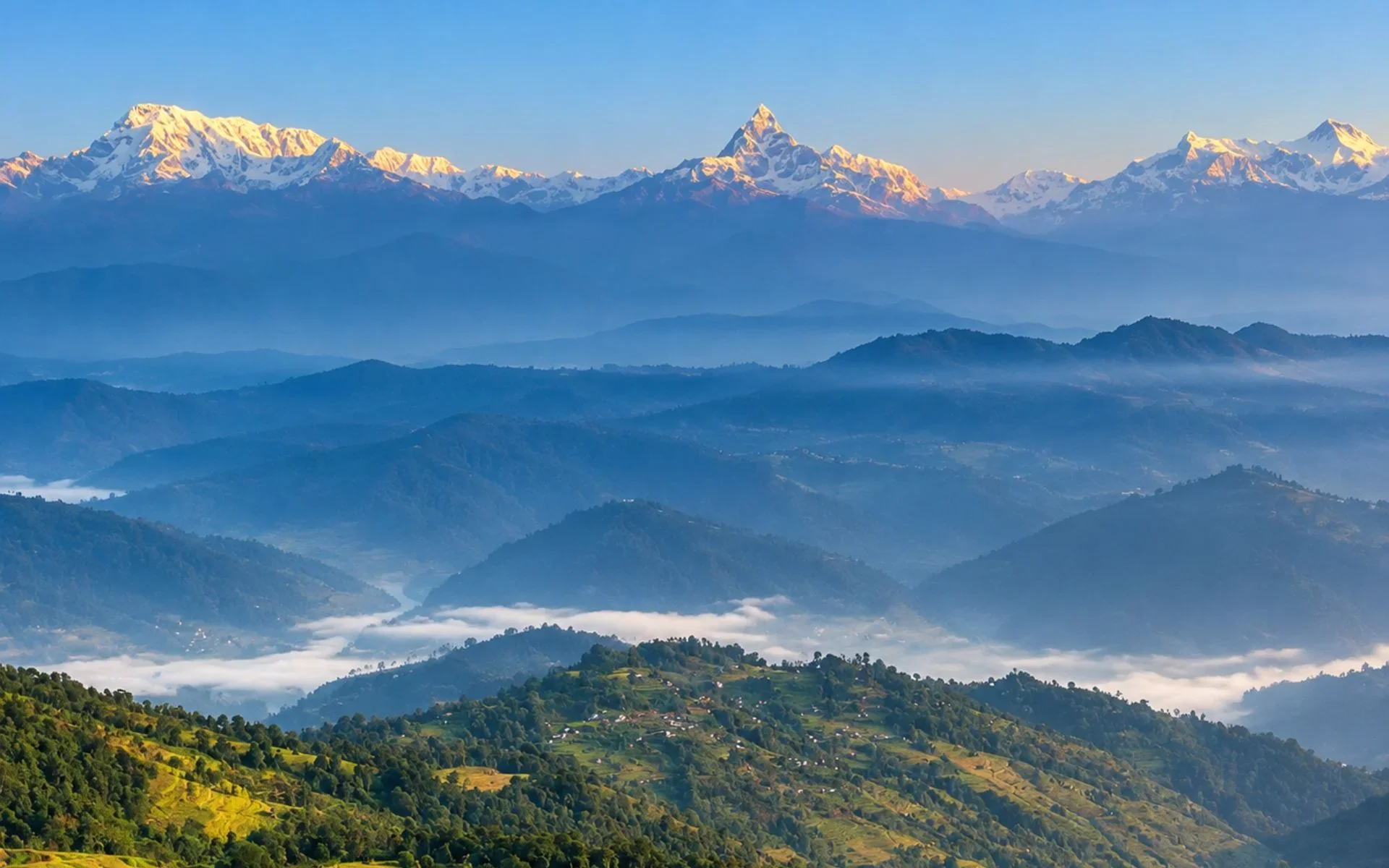
The Panchase Trek is the ideal "start here if you've never trekked before" option. Running 2 to 4 days from near Pokhara and topping out around 2,500 meters, it offers strong Annapurna views, quiet forest trails and Gurung and Magar culture without the crowds or altitude of the classic routes.
Because it stays low and short, Panchase carries almost no altitude risk, making it a genuinely gentle introduction. You get ridge-top panoramas, sacred forest, and a real taste of village hospitality within easy reach of Pokhara's lakeside comforts.
It is the trek we recommend when someone wants to test whether they enjoy multi-day walking before committing to anything bigger.
2. Balthali Village Trek
The Balthali Village Trek is the best low-altitude escape near Kathmandu. Over 3 to 4 days at roughly 1,730 meters, it weaves through terraced farmland, forests and Newari villages in the Kavre district, passing sites like Panauti and the Namo Buddha monastery.
Like Panchase, this is also a hike without any commitment to high altitude. The trails are gentle, the birdlife is rich, and the cultural depth around Panauti's temples and Namo Buddha's Buddhist community gives the walk real substance.
It offers a completely different beginner experience from Poon Hill: culture and countryside rather than snow peaks and stone staircases. For families or nervous first-timers, this is our safest recommendation.
3. Ghorepani Poon Hill Trek
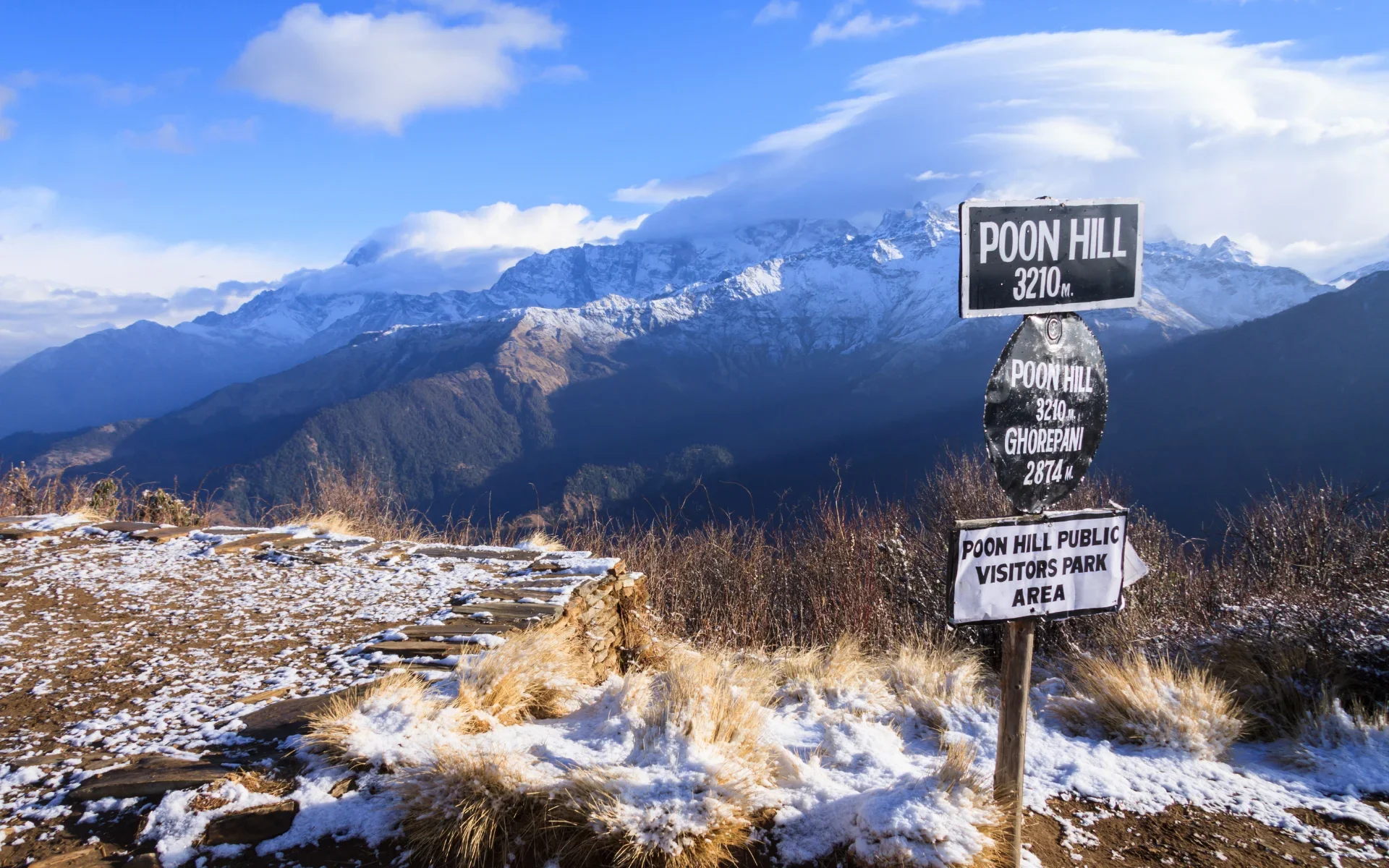
The Ghorepani Poon Hill Trek can be the best first Himalayan trek in Nepal. It peaks at 3,210 meters, runs a manageable 4 to 8 days, and delivers a sunrise mountain panorama over the Annapurna, Macchapuchare, and Dhaulagiri ranges. It stays low enough to keep altitude risk minimal while still feeling like a real Mountain journey.
We rank Poon Hill number one among our beginner options even though Panchase and Balthali sit at lower altitudes. The reason is simple: it gives first-timers the full teahouse trekking experience without pushing them into genuinely risky elevation. You walk through rhododendron forest, cross suspension bridges that hum underfoot, and sleep in warm lodges heated by a central stove.
The trek is not a simple hill hike, though. The stone staircase between Tikhedhunga and Ulleri is famous for humbling unprepared walkers, and the pre-dawn climb from Ghorepani to Poon Hill is a steep, cold effort rewarded by first light on Machapuchare and the Annapurna.
To plan properly, read our detailed guides on the Poon Hill trek cost, the best time to go, and the required permits.
4. Ama Yangri Trek
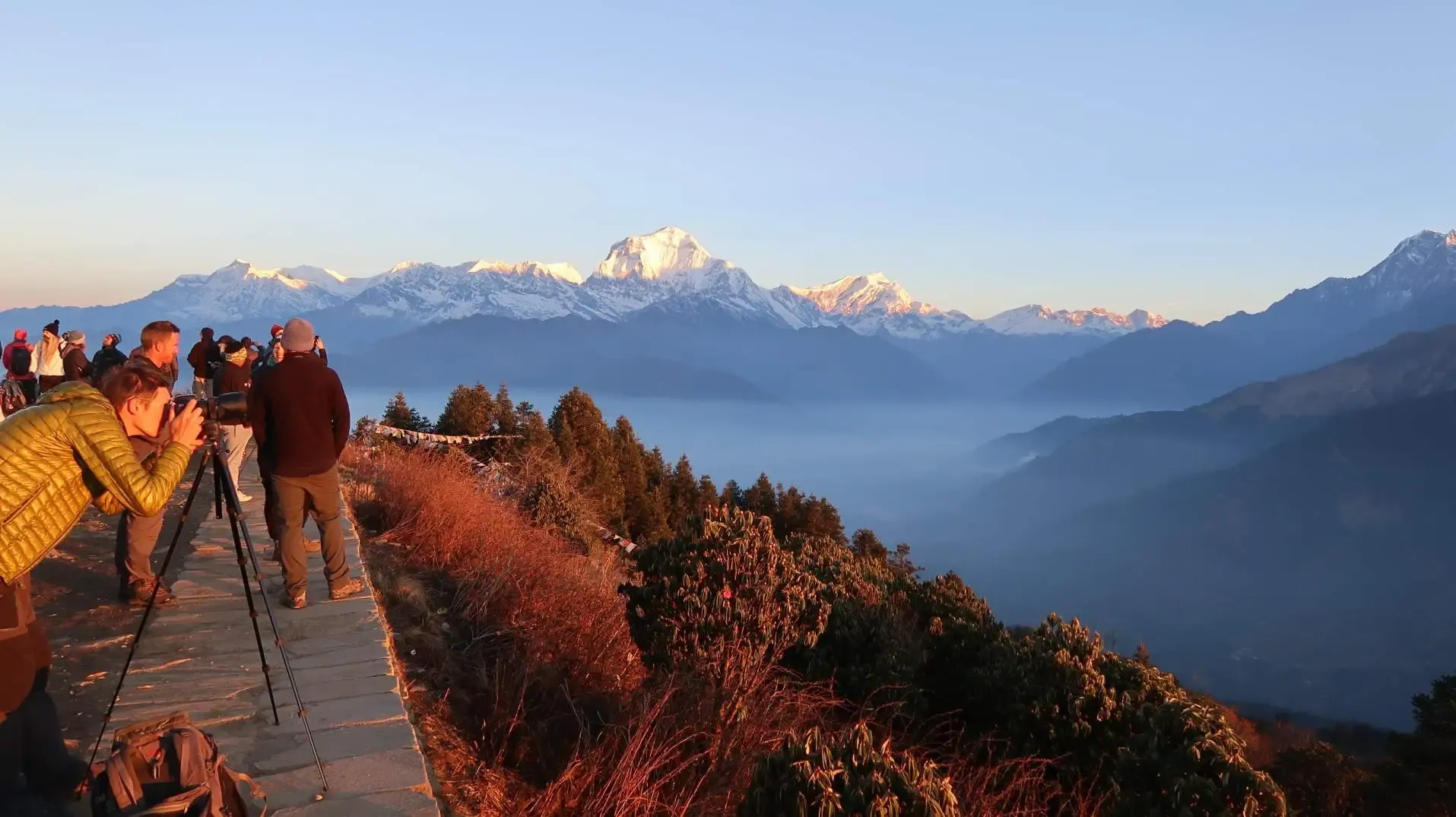
The Ama Yangri Trek is a short but higher-altitude walk near Kathmandu, reaching around 3,800 meters over 2 to 3 days in the Helambu region. It passes through Hyolmo and Tamang villages to a sacred summit viewpoint with sweeping Himalayan panoramas.
Here is the important distinction: short does not mean easy. Ama Yangri is brief, but its elevation means it should not be grouped with Balthali just because both take a few days. The climb to the summit is a steep, sustained effort, and the altitude is high enough to affect unprepared walkers.
Choose Ama Yangri if your time is limited but your fitness is solid and you want a genuine high-hill view close to the capital.
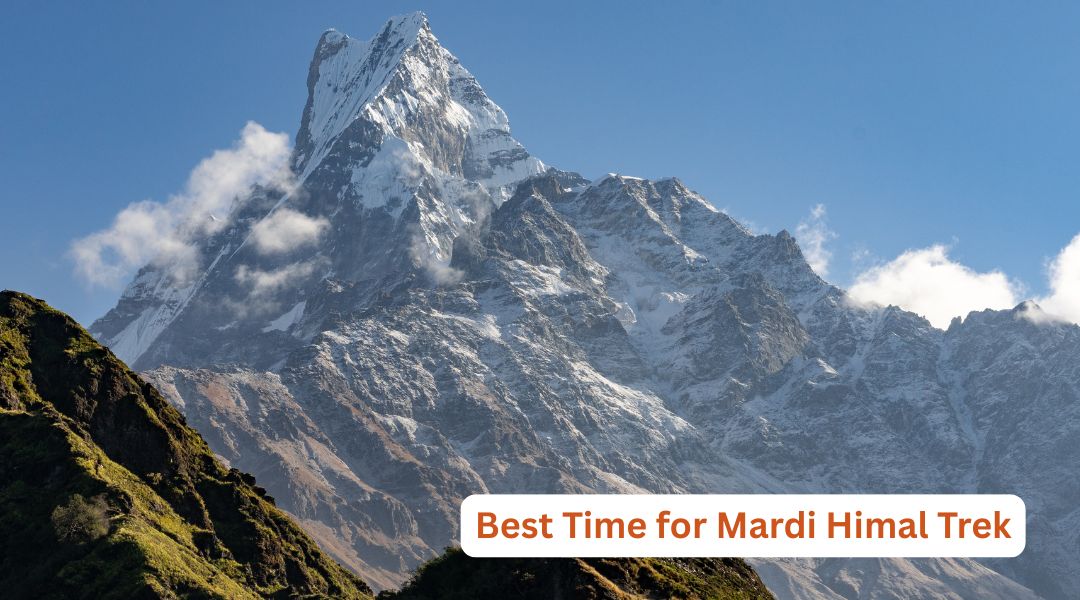
5. Mardi Himal Trek
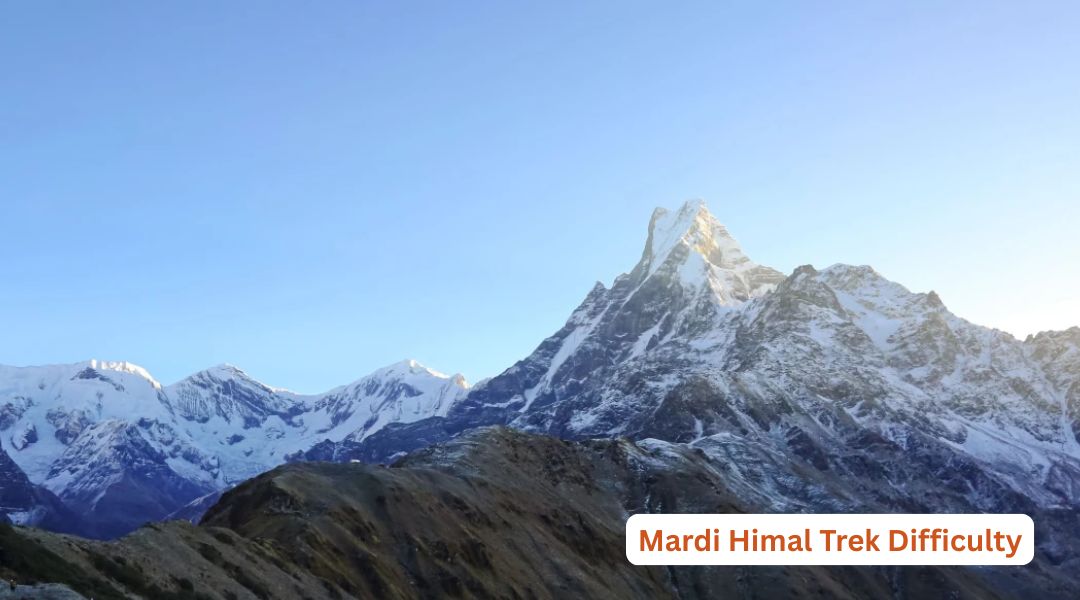
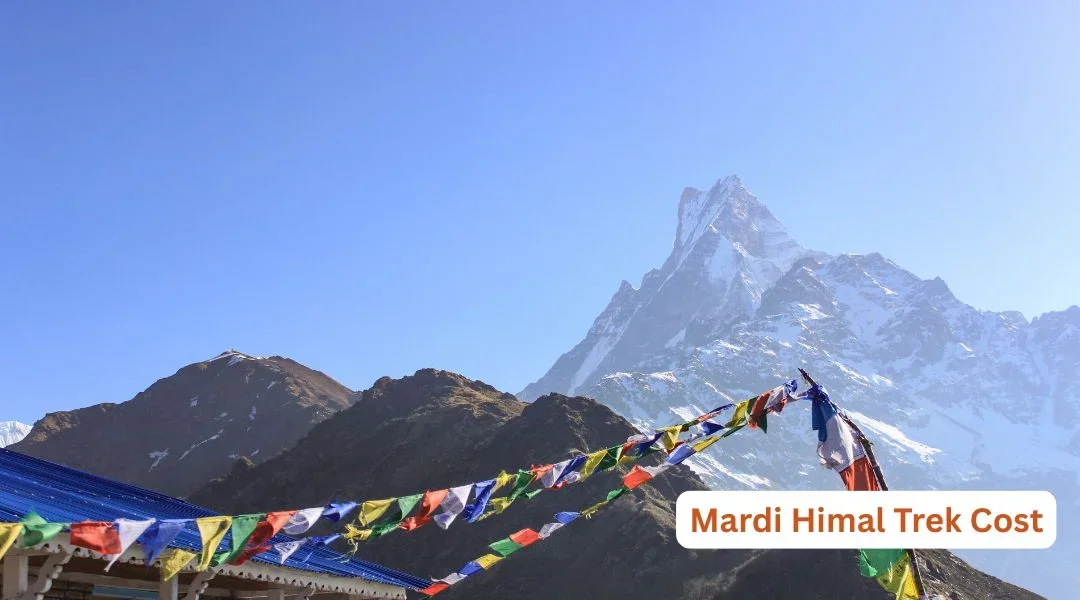
The Mardi Himal Trek is the natural step above Poon Hill. Over roughly 4 to 5 days it climbs a high ridge toward the base of Mardi Himal, reaching around 4,500 meters at the upper viewpoint. It suits beginners who already exercise regularly and are comfortable with sustained uphill walking.
We would not describe Mardi as "easy." The ridge walk is exposed, the final push to High Camp and beyond is steep, and the altitude gain is real enough to require sensible pacing. What makes it beginner-appropriate is the short duration and the option to stop at the viewpoint that matches your fitness on the day.
The payoff is one of the most intimate close-up views of Machapuchare in the entire Annapurna region, with far fewer crowds than the main sanctuary trail.
6. Pikey Peak Trek
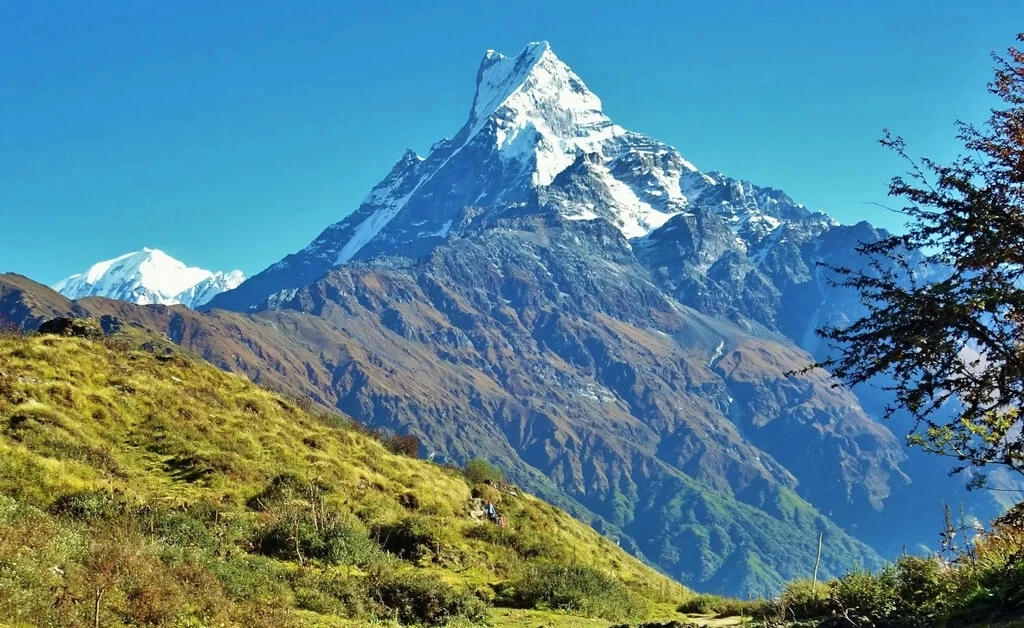
The Pikey Peak Trek is the most ambitious beginner option for Everest views. Over 4 to 5 days in the Solu region of the greater Khumbu, it climbs to 4,065 meters, offering a wide Everest panorama, Sherpa culture, rhododendron forest and superb sunrise and sunset scenes.
Pikey Peak is short, but it is best for fit first-time trekkers who are prepared for higher altitude. Do not treat it as equivalent to Panchase or Balthali. The summit push is cold and steep, and reaching 4,065 meters demands the same sensible pacing you would apply anywhere above 3,000 meters.
7. Langtang Valley Trek
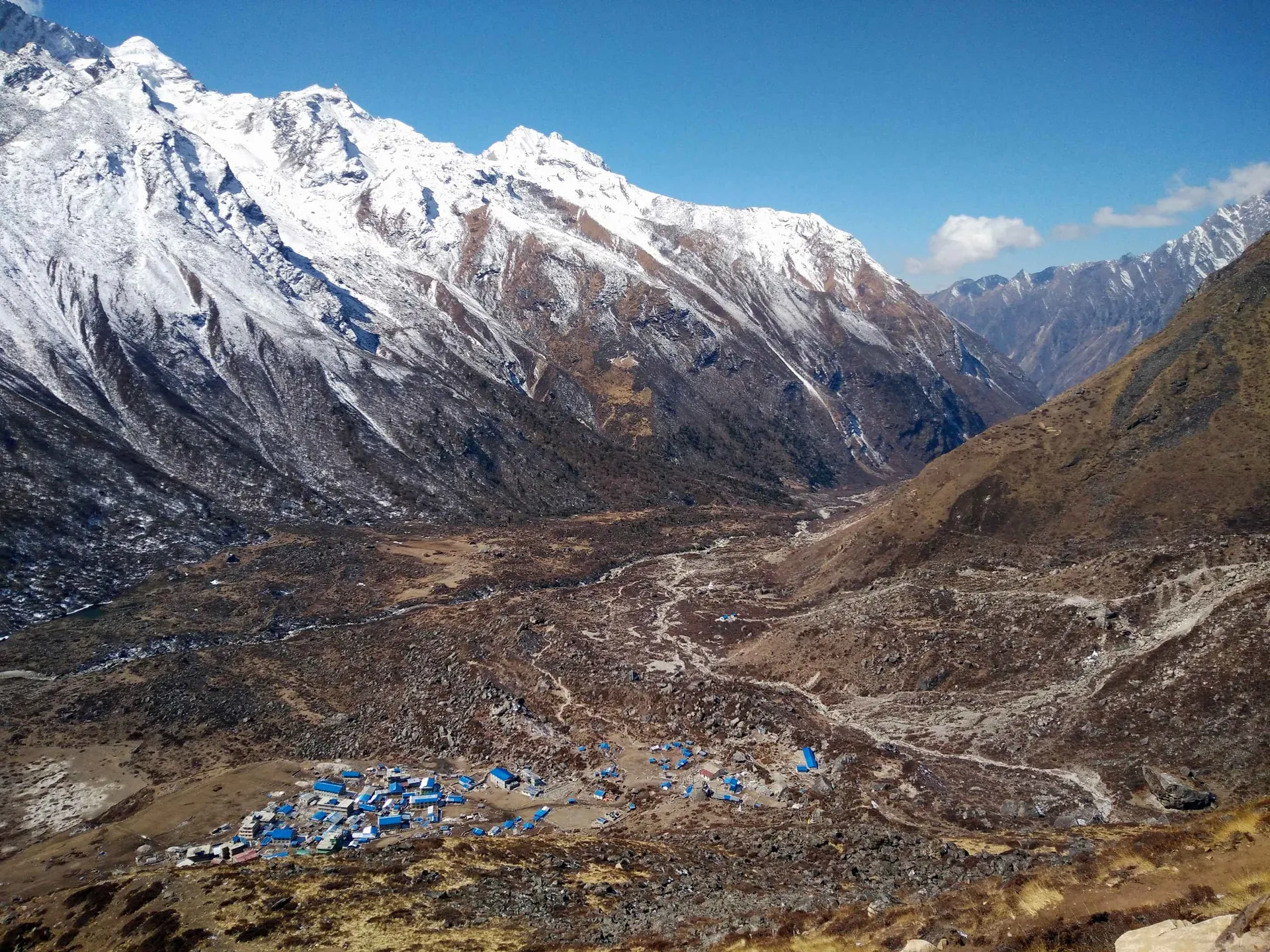
The Langtang Valley Trek is the best choice for a longer first Himalayan experience. Over 7 to 10 days it climbs to around 3,870 meters at Kyanjin Gompa through glacial valleys, yak pastures and Tamang villages, all within a relatively short drive of Kathmandu.
This is the trek for the reader who says, "I don't need the easiest route; I just want my first proper Himalayan trekking experience." It combines more days on trail with strong culture and dramatic valley scenery, and the community here is warmly rebuilding after the 2015 earthquake.
The moderate altitude keeps risk lower than ABC, but the drive in on rough mountain road and the consistent daily climbing still call for reasonable fitness. Nepal Telecom (NTC) is the more reliable network in this region, so pick your SIM accordingly.
8. Annapurna Base Camp Trek
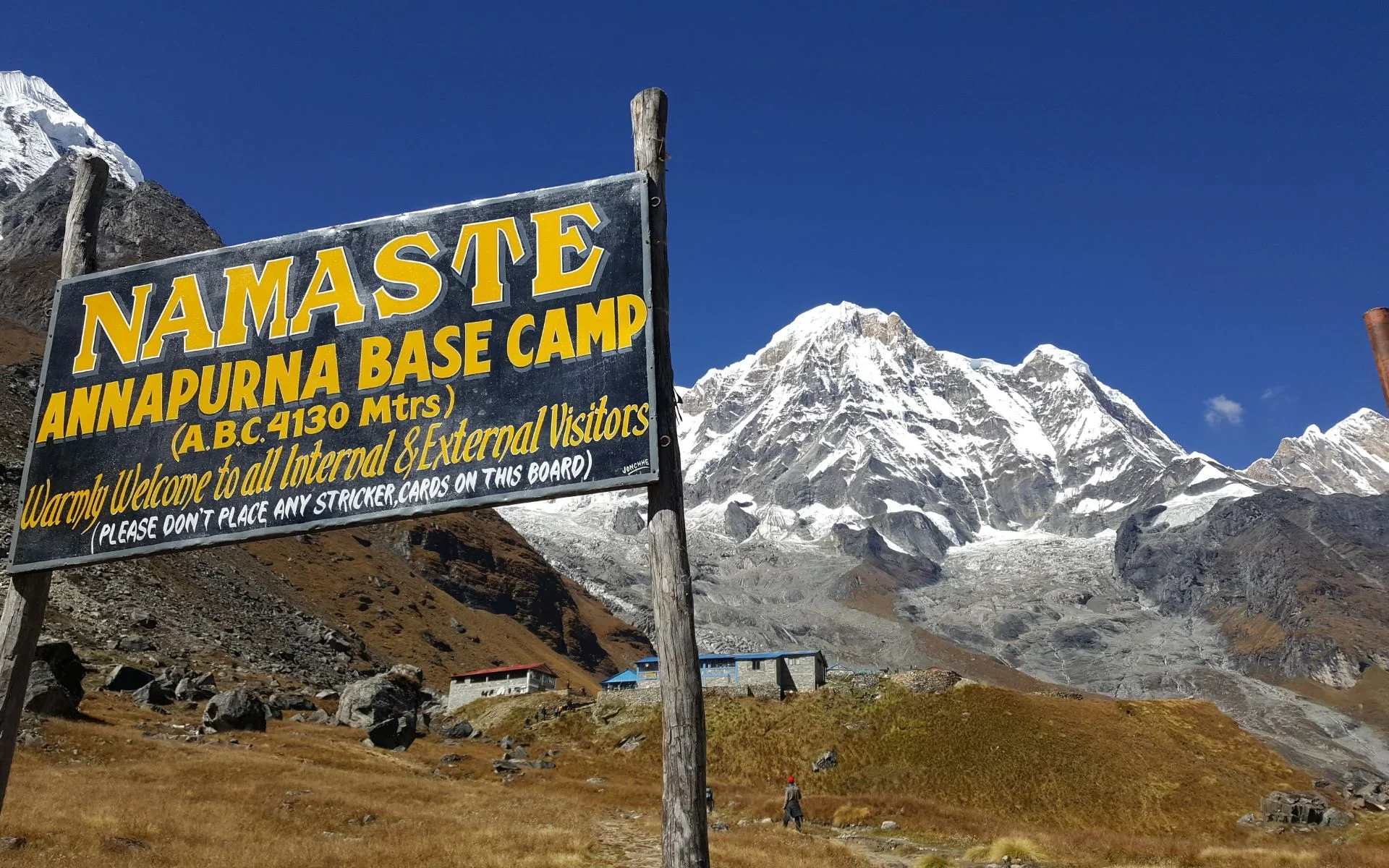
The Annapurna Base Camp Trek can be a first Himalayan trek for a fit, prepared traveler, but at roughly 4,130 meters across 9 to 12 days it is significantly more demanding than Poon Hill. Expect long walking days, thousands of stone steps, and a genuine need for altitude awareness in the upper sanctuary.
ABC walks you into a natural amphitheater ringed by peaks over 7,000 meters, and few first treks feel this dramatic. But the length and elevation mean it rewards training rather than optimism. Above 3,000 meters, your sleeping elevation should rise no more than 300 to 500 meters per day, so a properly built itinerary matters.
9. Annapurna Circuit Trek
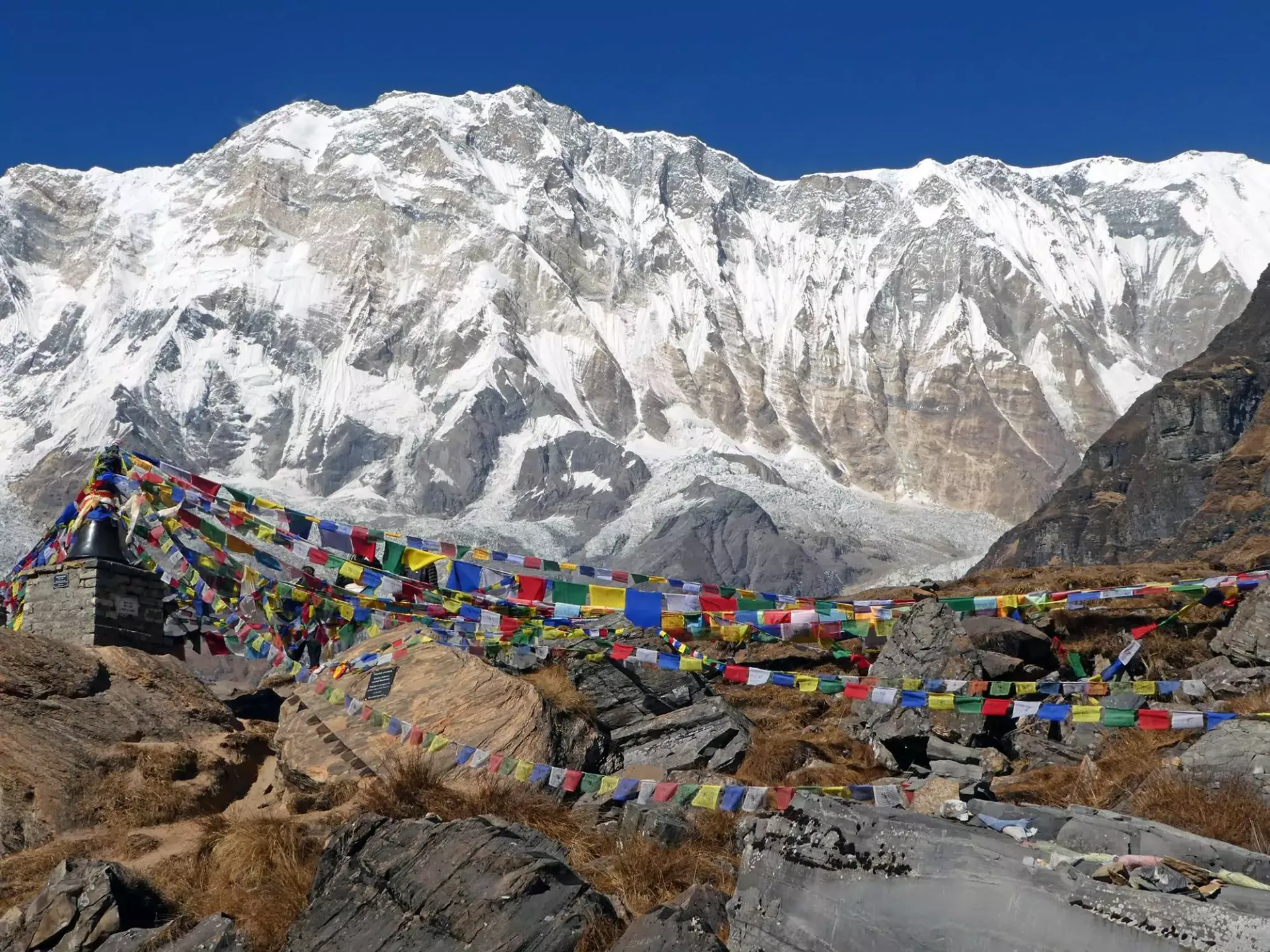
The Annapurna Circuit is not an easy beginner trek. However, a physically fit first-timer with proper preparation can absolutely take it on. Over 12 to 16 days it circles the massif and crosses the Thorong La Pass at 5,416 meters, the single biggest altitude challenge of any trek on this list.
The Circuit involves large elevation changes, a serious high pass, and a non-negotiable need for acclimatization, including a rest day at Manang. It rewards preparation more than any other beginner-accessible route in Nepal.
One practical note: much of the lower valley now has a jeep road. We steer travelers onto the alternative NATT walking trails to escape dust and vehicle traffic. Plan carefully using our guides to the route map and elevation, and the budget guide.
Which Trek Is Best for You?
Your ideal beginner trek depends on fitness, time and altitude tolerance. Choose a short low-altitude walk if you are brand new to hiking, a moderate Himalayan classic if you want mountain drama with manageable risk, or a longer challenging route only if you are willing to train seriously first.
Choose Panchase if you have little hiking experience and want a short, relatively easy introduction near Pokhara.
Choose Balthali if you want low altitude, culture and a short escape rather than a high Himalayan trek.
Choose Poon Hill if you want your first proper Himalayan trekking experience.
Choose Mardi Himal if you are active and want more challenge.
Choose Ama Yangri if you have limited time but are comfortable with a higher-altitude hike.
Choose Pikey Peak if you want Everest views and are prepared for higher altitude.
Choose Langtang if you want a longer mountain experience.
Choose ABC if you want a major Himalayan destination and are willing to train.
Choose the Annapurna Circuit if you are an ambitious, well-prepared beginner looking for a much bigger challenge.
Easy vs Beginner-Friendly vs Challenging
Not all beginner treks are equal. We split them into three honest categories so you can match the route to your real ability rather than its reputation. This distinction matters more than any single altitude number.
Easy beginner treks: Panchase and Balthali — low altitude, short, gentle terrain.
Beginner-friendly Himalayan treks: Poon Hill, and potentially Mardi Himal or Langtang depending on your preparation.
Challenging first treks: Pikey Peak, ABC and the Annapurna Circuit — higher, longer, and demanding of training.
What Should Beginners Consider Before Choosing a Nepal Trek?
Before choosing, weigh five decision factors: altitude, duration, terrain, fitness and purpose. The interaction between these matters more than any one alone — a short trek at high altitude can be harder than a long one at low elevation.
Altitude: How high will you actually sleep and hike? Anything above 3,000 meters requires acclimatization discipline.
Duration: Can your body handle several consecutive trekking days without breaking down?
Terrain: Stairs, steep climbs, rocky trails and long descents all take a toll — descents especially punish the knees.
Fitness: How comfortable are you with several hours of uphill walking?
Purpose: Do you want culture, mountain views, sunrise, Everest, a base camp, or simply an easy introduction?
How to Prepare for Your First Nepal Trek
Practical preparation beats natural fitness. Build walking endurance over several weeks, practice stairs and inclines, and break in your trekking shoes long before departure to avoid blisters on the trail.
Train with a light backpack to mimic real trekking load.
Learn basic altitude awareness and the early signs of AMS.
Don't overpack — carry only what you truly need.
Prepare for changing weather with layers, not bulk.
Choose an itinerary that matches your fitness, not your ego.
On safety, standard travel insurance is not enough. You must carry a policy covering high-altitude emergency helicopter evacuation up to 6,000 meters and medical treatment for AMS, HAPE and HACE. This is legally required for restricted-area permits and simply sensible everywhere else.
Food, Water and Cash on the Trail
Prioritize vegetarian meals up high. In Buddhist regions like the Khumbu, slaughtering animals is prohibited by local law, so all meat is carried up by foot or mule over days without refrigeration. Stick to fresh local carbohydrates, especially the classic Dal Bhat — lentil soup, rice and vegetable curry — which is clean, high-energy and comes with free refills.
Never buy plastic bottled water on the trail. Carry a reusable bottle with a UV purifier, a Sawyer squeeze filter, or chlorine dioxide drops. Also carry enough Nepalese Rupees in cash — ATMs vanish past Namche Bazaar or Jomsom, and lodges charge extra for services like NPR 200 to 700 to charge a power bank, take a gas-heated hot shower, or use localized Wi-Fi.
Culture and Etiquette
Always walk clockwise around mani walls, stupas and chortens, keeping these sacred structures on your right. Remove shoes and hats before entering any temple or monastery, and never photograph inside prayer halls unless a resident monk gives explicit permission. At the end of your trek, tipping is culturally expected — a standard 10% to 15% of the total trek cost distributed among your guide and porters is a vital supplement to their income.
Common Mistakes Beginners Make
The most damaging beginner mistake is assuming short equals easy. Ama Yangri and Pikey Peak are brief but high, and their altitude makes them harder than far longer low-elevation walks. Respecting altitude over duration prevents most first-trek problems.
Choosing a trek only because of its famous name.
Ignoring altitude and skipping acclimatization.
Underestimating long, knee-punishing downhill sections.
Bringing far too much gear.
Not training at all before arriving.
Buying new shoes right before departure and getting blisters.
Rushing to keep up with a fixed itinerary instead of pacing sensibly.
Choosing a difficult trek without enough recovery time built in.
Frequently Asked Questions
What is the easiest trek in Nepal for beginners?
The Balthali Village Trek is arguably the easiest at around 1,730 meters over 3 to 4 days, with Panchase near Pokhara a close second at roughly 2,500 meters.
Which trek is best for first-time trekkers?
Ghorepani Poon Hill is our top pick for a first proper Himalayan trek, peaking at 3,210 meters with a famous sunrise viewpoint and a manageable duration.
Can a beginner trek to Poon Hill?
Yes. At 3,210 meters over 4 to 8 days, Poon Hill involves stone-step climbing rather than dangerous terrain and suits reasonably fit beginners.
Is Annapurna Base Camp suitable for beginners?
ABC can be a first major trek for a fit, prepared traveler, but at roughly 4,130 meters over 9 to 12 days it is far more demanding than Poon Hill.
Is Pikey Peak good for beginners?
It suits ambitious, fit first-timers. At 4,065 meters over 4 to 5 days it is short but high, so it is not comparable to Panchase or Balthali.
What is the best short trek in Nepal?
For an easy short trek, choose Balthali (3 to 4 days). For a short high-hill view, Ama Yangri at around 3,800 meters over 2 to 3 days is excellent.
How fit do I need to be to trek in Nepal?
You should comfortably walk 4 to 6 hours over hills and stairs with a light daypack. Basic cardio training a few weeks beforehand makes a big difference.
Do I need a guide for my first Nepal trek?
Nepal now strongly enforces licensed guides across major regions, and restricted areas legally require one with a 1:7 guide-to-trekker cap. We strongly recommend a licensed guide for any first Himalayan trek.
What is the best beginner trek near Kathmandu?
Balthali at around 1,730 meters is the best easy option, while Ama Yangri at about 3,800 meters is the best short higher-altitude choice near the capital.
What is the best beginner trek near Pokhara?
Panchase (around 2,500 meters, 2 to 4 days) is the easiest near Pokhara, and Poon Hill at 3,210 meters is the best first Himalayan trek from the same region.