Contents
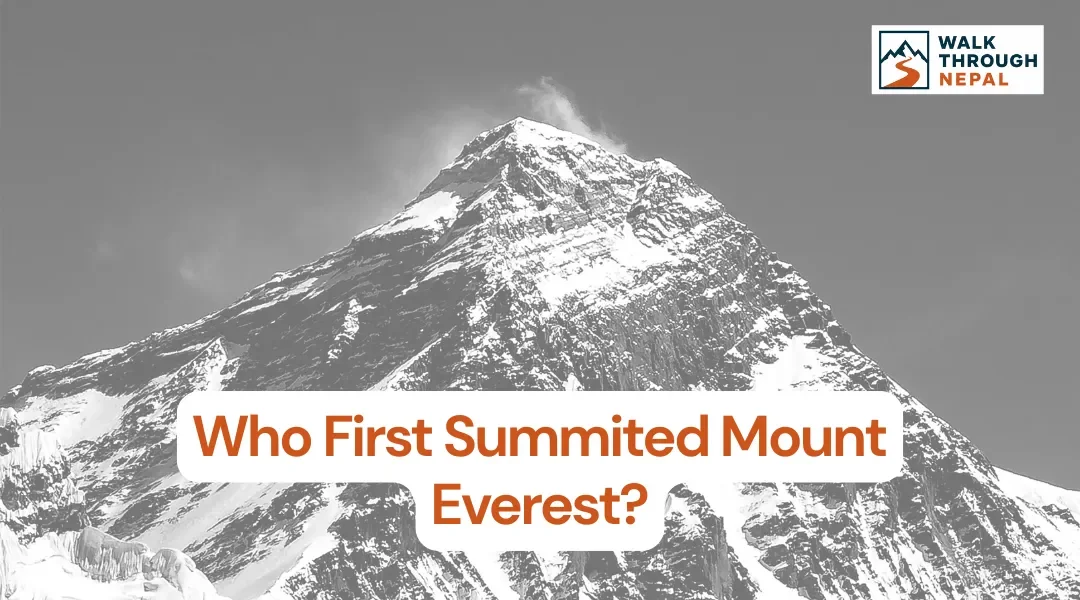
The first climbers confirmed to reach the summit of Mount Everest were Edmund Hillary, a mountaineer from New Zealand, and Tenzing Norgay, a Sherpa mountaineer, who stood on top of the world's highest peak together on May 29, 1953. They reached the summit via the South Col and Southeast Ridge route, as members of the 1953 British Mount Everest Expedition.
Their success came after more than three decades of failed attempts on the mountain, dating back to the 1920s. Hillary and Tenzing weren't the first people to try, but they were the first confirmed to succeed, and their ascent remains one of the defining moments in the history of exploration.
Who Were the First Climbers to Summit Mount Everest?
Edmund Hillary and Tenzing Norgay are recognized as the first climbers to successfully reach Everest's summit, doing so together on May 29, 1953. Both men are credited jointly, rather than one being labeled simply "the first" while the other is treated as secondary.
Edmund Hillary
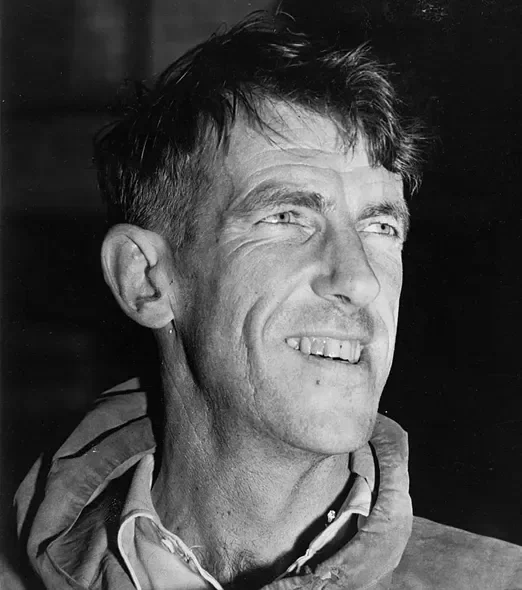
Edmund Hillary was a New Zealand mountaineer and beekeeper who had already built a strong reputation in Himalayan climbing before 1953, including earlier expeditions in Nepal that helped establish him as a serious candidate for the British Everest team.
Hillary's climbing partnership with Tenzing Norgay developed through the 1953 expedition itself, as the two were paired together for a summit attempt after another team had come close but turned back just short of the top days earlier. Their complementary skills, Hillary's technical climbing strength and Tenzing's deep high-altitude experience, made them a natural final pairing.
Tenzing Norgay
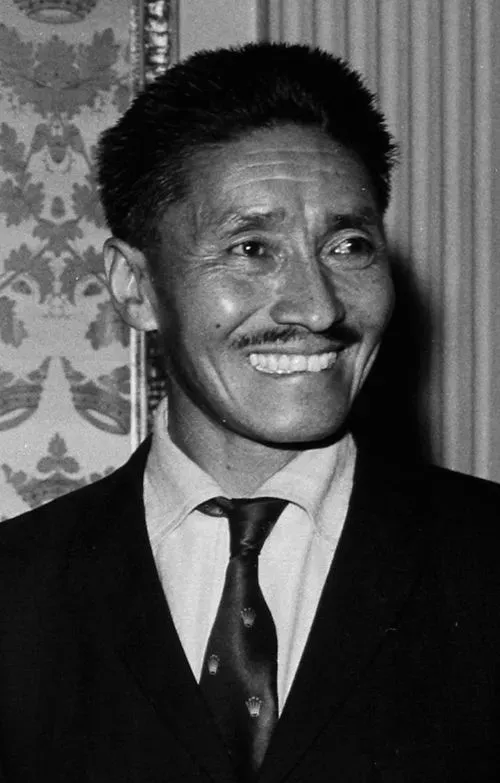
Tenzing Norgay was a Sherpa mountaineer with extensive experience on Everest expeditions well before 1953, having taken part in multiple earlier attempts on the mountain dating back to the 1930s, giving him a level of familiarity with its upper slopes that few other climbers of the era could match.
His knowledge of high-altitude climbing conditions, honed over years of expedition work, made him one of the most respected Sherpa climbers of his generation. Tenzing's exact birthplace and early life carry some historical uncertainty, with accounts differing between Nepal's Khumbu region and Tibet, but he is consistently and accurately described as a Sherpa mountaineer whose expertise was central to the expedition's success.
When Did Hillary and Tenzing Climb Mount Everest?
Hillary and Tenzing reached Everest's summit on May 29, 1953, at approximately 11:30 a.m., according to Royal Geographical Society records. They began their final summit push earlier that morning from a high camp, in clear but extremely cold conditions typical of the mountain's narrow spring climbing window.
After reaching the top, the pair spent a short time at the summit before beginning their descent back toward the South Col the same day, a demanding return made under the same extreme altitude conditions they'd climbed through hours earlier.
The 1953 British Mount Everest Expedition
Hillary and Tenzing didn't climb alone. Their summit was the result of a much larger, carefully organized British expedition built specifically to put a team on top of the mountain.
Who Led the 1953 Everest Expedition?
The 1953 British Mount Everest Expedition was led by John Hunt, a British Army officer responsible for organizing the expedition's overall strategy, logistics, and the selection of potential summit pairs.
Hunt structured the expedition around multiple candidate teams, allowing for more than one summit attempt if earlier ones fell short. That approach proved essential, since the first attempt, made by climbers Tom Bourdillon and Charles Evans, came close to the top but had to turn back before reaching it.
How Many Climbers Were Part of the Expedition?
The 1953 expedition included a large team of British climbers, high-altitude Sherpa mountaineers, and porters, all supporting the push toward the summit. Beyond Hillary and Tenzing, the team included climbers, expedition doctors, and dozens of Sherpas responsible for establishing and supplying the chain of camps up the mountain.
This scale matters because it reinforces that the successful summit wasn't the achievement of two people working in isolation. It was the result of an entire team's planning, logistics, and physical support, much of it carried out by Sherpa climbers whose contribution has historically received less recognition than it deserves.
How Did Hillary and Tenzing Reach the Summit?
The Route to Everest's Summit
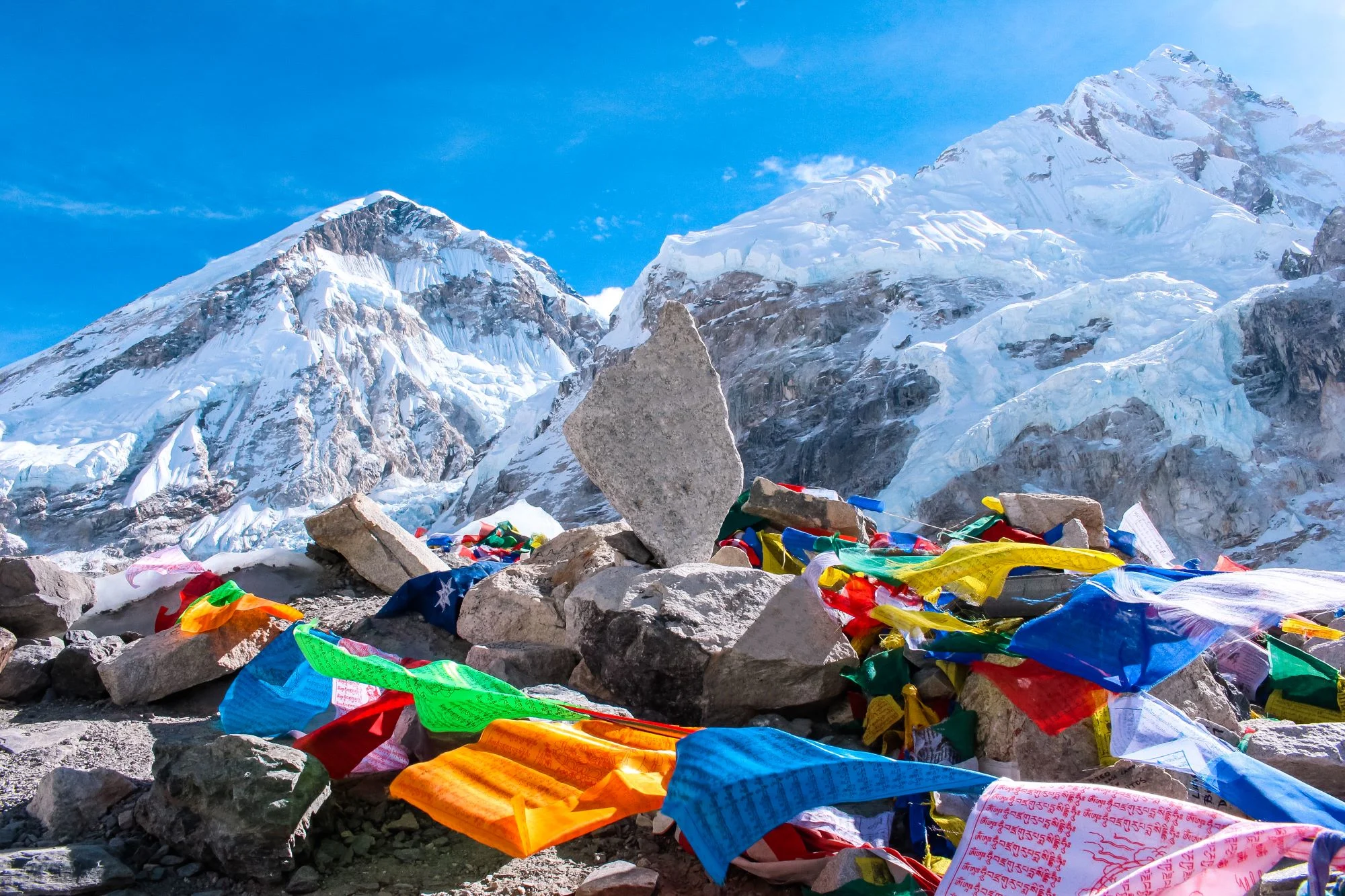
The 1953 expedition established a series of camps along the South Col route, starting from Everest Base Camp and moving up through the Khumbu Icefall, the Western Cwm, and the Lhotse Face, before reaching the South Col and pushing on toward the South Summit and the final ridge to Everest's true summit.
Each stage of the route presented its own obstacles, from the shifting ice of the Khumbu Icefall to the steep, exposed climbing of the Lhotse Face, all of which had to be navigated multiple times as the team ferried supplies and established higher camps.
The Final Summit Push
Hillary and Tenzing began their final push from a high camp, later referred to as Camp IX, departing early on the morning of May 29 with supplemental oxygen equipment that was still relatively new and unreliable technology at the time.
They climbed past the South Summit, a false summit that had turned back earlier expeditions, before reaching one last technical obstacle standing between them and the top. They reached the true summit at around 11:30 a.m..
The Hillary Step
The Hillary Step was a steep rock face near the summit that presented one of the final technical challenges of the climb, significant enough in 1953 that its successful ascent became closely associated with the expedition's success.
Hillary climbed the step first, using a crack between the rock and adjoining ice to work his way up, with Tenzing following closely behind. The obstacle would go on to become one of the most famous landmarks on the standard Everest route, discussed by nearly every climber who has attempted the mountain since.
Did Hillary or Tenzing Reach the Summit First?
For decades, both men publicly described their achievement as a shared, simultaneous success rather than a competition over who stepped onto the summit a moment before the other. Later accounts and interviews have touched on the physical detail of who was slightly ahead in the final steps, but the two climbers themselves consistently emphasized the achievement as a partnership.
The historically important fact is that Hillary and Tenzing are jointly recognized as the first people to reach Everest's summit together, not that one climber "beat" the other to the top.
Why Did It Take So Long to Climb Everest?
Everest wasn't successfully climbed until 1953 despite serious attempts stretching back to the early 1920s, largely because of a combination of technical difficulty, extreme altitude, and limited access to the mountain itself.
The 1921 Reconnaissance Expedition
The 1921 British Everest Reconnaissance Expedition was the first serious attempt to explore the mountain, sent to identify possible climbing routes from the Tibetan side, since Nepal remained closed to foreign travelers at the time.
The 1922 Attempts
The 1922 British Everest Expedition marked the first serious summit attempts on the mountain, along with the first use of supplemental oxygen, though the team fell well short of the summit and the expedition ended in tragedy when an avalanche killed seven Sherpa porters.
The 1924 Mallory and Irvine Expedition
The 1924 British Everest Expedition ended with the disappearance of climbers George Mallory and Andrew Irvine during their summit attempt, a mystery that remains unresolved to this day and one of the most significant moments in Everest's pre-1953 history.
Why Earlier Expeditions Failed
Earlier expeditions were held back by a combination of factors: unreliable early oxygen equipment, limited understanding of high-altitude physiology, primitive cold-weather gear by modern standards, and restricted access to the mountain, since Everest could only be approached from Tibet until Nepal opened its borders to foreign climbers in the early 1950s. For a broader look at how these early attempts fit into Everest's full climbing history, our Everest climbing season guide covers how conditions on the mountain have shaped expeditions across the decades.
What Happened During the 1953 Summit?
Time/Date | Event |
|---|---|
May 28 | Hillary and Tenzing begin final preparation at a high camp |
Early May 29 | Final summit push begins |
Morning | South Summit reached |
Around 11:30 a.m. | Summit reached |
May 29 | Descent begins |
The Royal Geographical Society records Hillary and Tenzing leaving their high camp early on May 29 and reaching the summit at approximately 11:30 a.m., before beginning their descent the same day.
What Did Hillary and Tenzing Do at the Summit?
At the summit, Hillary photographed Tenzing holding an ice axe with flags attached, including the flags of the United Kingdom, Nepal, India, and the United Nations, a photograph that remains one of the most iconic images in mountaineering history. Notably, no confirmed photograph of Hillary himself exists from the summit that day.
The pair spent roughly 15 minutes at the top, and Tenzing left a small offering of food in the snow as a Buddhist gesture of gratitude, while Hillary buried a small cross given to him by expedition leader John Hunt. Their photograph and brief account of the summit became the primary documentation of an achievement that, at the time, had no other way of being independently verified.
How Did the World React to the First Everest Summit?
News of the successful ascent reached Britain on June 2, 1953, timed almost exactly with the coronation of Queen Elizabeth II, a coincidence that dramatically amplified the story's impact and helped turn it into a global news event within days.
Hillary and Tenzing quickly became international figures, celebrated not just as mountaineers but as symbols of what human endurance and careful preparation could achieve. The achievement is widely regarded as one of the defining moments in the history of exploration and mountaineering.
Why Was the First Everest Ascent So Important?
A Mountaineering Breakthrough
The 1953 ascent proved definitively that Everest's summit was physically reachable, ending decades of uncertainty about whether the human body could function at that altitude at all.
A Major Achievement for Nepal and the Himalayas
The achievement drew global attention to Nepal and the Himalayas at a pivotal moment, shortly after Nepal had opened to foreign travelers, helping establish the country as a destination for mountaineering and trekking in the decades that followed.
The Importance of Sherpa Expertise
Tenzing Norgay's role in the summit began shifting international recognition toward Sherpa climbers, whose skill and high-altitude knowledge had quietly made every prior Everest expedition possible, even when they received far less credit for it than their British counterparts.
The Beginning of a New Era of Everest Climbing
The 1953 success opened the door to decades of further Everest expeditions, records, and eventually commercial climbing, transforming what had been an exploratory pursuit into one of the most closely followed chapters in modern mountaineering.
What Happened to Edmund Hillary After Everest?
After Everest, Edmund Hillary continued working in the Himalayas and expanded into polar exploration, leading the New Zealand section of the Commonwealth Trans-Antarctic Expedition and reaching the South Pole overland by vehicle in 1958.
Hillary went on to found the Himalayan Trust, a humanitarian organization that built schools, hospitals, and infrastructure across Nepal's Khumbu region, work he continued for decades. He remained closely connected to Nepal for the rest of his life and died in 2008, widely remembered both for his mountaineering achievement and for his long-term contribution to the communities that had supported it.
What Happened to Tenzing Norgay After Everest?
Tenzing Norgay remained deeply involved in mountaineering after 1953, serving as director of field training at the Himalayan Mountaineering Institute in Darjeeling from its founding in 1954, a role in which he helped train future generations of climbers.
He later founded his own trekking agency and continued supporting Himalayan mountaineering throughout his life. Tenzing became a lasting symbol of Sherpa mountaineering achievement, and his legacy helped shift global recognition toward the broader contribution Sherpa climbers have made to Everest expeditions since long before 1953. He died in 1986, having spent more than three decades as one of the most respected figures in Himalayan climbing.
First Everest Summit: Key Facts at a Glance
Fact | Answer |
|---|---|
First successful climbers | Edmund Hillary & Tenzing Norgay |
Date | May 29, 1953 |
Expedition | 1953 British Mount Everest Expedition |
Expedition leader | John Hunt |
Route | South Col / Southeast Ridge |
Summit time | Around 11:30 a.m. |
Summit elevation | 8,848 m, per the historical 1953 measurement |
Significance | First confirmed successful ascent |
Frequently Asked Questions
Who were the first people to climb Mount Everest?
Edmund Hillary and Tenzing Norgay were the first people confirmed to reach the summit of Mount Everest, on May 29, 1953.
When did Hillary and Tenzing climb Everest?
They reached the summit on May 29, 1953, at approximately 11:30 a.m.
Who was the first person to reach Mount Everest?
Hillary and Tenzing are recognized jointly as the first to reach the summit, having climbed the final section together rather than one climber reaching it independently of the other.
Did Edmund Hillary and Tenzing Norgay climb Everest together?
Yes. They climbed the final summit push together as a pair, as part of the larger 1953 British Mount Everest Expedition.
Who reached the summit first, Hillary or Tenzing?
Both men publicly described the achievement as a shared, joint success rather than a competition, and are credited together as the first to reach the summit.
How old was Edmund Hillary when he climbed Everest?
Edmund Hillary was 33 years old at the time of the 1953 ascent.
How old was Tenzing Norgay when he climbed Everest?
Tenzing Norgay was around 39 years old at the time of the 1953 ascent.
What route did Hillary and Tenzing take?
They climbed via the South Col and Southeast Ridge route, approaching from the Nepal side through the Khumbu Icefall, Western Cwm, and Lhotse Face.
Who led the 1953 Everest expedition?
The expedition was led by John Hunt, a British Army officer responsible for its overall organization and strategy.
Why did earlier Everest expeditions fail?
Earlier expeditions were limited by unreliable oxygen equipment, incomplete understanding of high-altitude physiology, less advanced cold-weather gear, and restricted access to the mountain before Nepal opened to foreign climbers.
Conclusion
Edmund Hillary, Tenzing Norgay, and the date May 29, 1953, together mark the first confirmed successful ascent of Mount Everest. It's a simple fact that sits on top of a much larger story: a carefully organized expedition led by John Hunt, supported by a full team of climbers, Sherpas, and porters, all working toward a single goal after more than three decades of earlier attempts had fallen short.
Hillary and Tenzing's achievement remains one of the most significant moments in the history of exploration, not just for what it proved was physically possible, but for the partnership, between two climbers and between two very different mountaineering traditions, that made it happen.
Want to Trek?
Interested in seeing the route Hillary and Tenzing helped pioneer? Talk to our local trekking coordinators or browse our Everest Base Camp trek, which follows much of the same Khumbu approach used by the 1953 expedition.