The Ghorepani Poon Hill Trek is generally considered a moderate, beginner-friendly trek, but it is not an easy stroll. The real challenges are several consecutive days of walking, the long stone staircase above Ulleri, and the pre-dawn climb to Poon Hill for sunrise. With reasonable fitness and a bit of preparation, most active travelers finish this trek without any prior high-altitude experience.
What actually shapes the difficulty comes down to a handful of factors: total distance, daily walking hours, elevation gain, staircase sections, weather, and how many days your itinerary spreads the trek across. We break each of these down below so you know exactly what to expect on the trail.
How Difficult Is the Ghorepani Poon Hill Trek?
Difficulty rating: Moderate / Beginner-friendly. The trek involves no technical climbing or glacier travel, but it does demand sustained stamina, strong knees for the descents, and comfort walking on stone steps for hours at a time. It suits first-timers who train beforehand, not people who show up with zero walking fitness.
Calling it simply "easy" undersells it. Poon Hill is beginner-friendly, but specific sections, especially the Ulleri staircase, can be genuinely demanding for anyone who does not walk regularly.
Factor
Difficulty
Overall trekking difficulty
Moderate
Technical climbing
Low
Altitude difficulty
Low to Moderate
Steep sections
Moderate
Stairs
Challenging
Daily walking
Moderate
Previous trekking experience
Not essential
Beginner suitability
Good, with preparation
Why Is the Poon Hill Trek Considered Moderate?
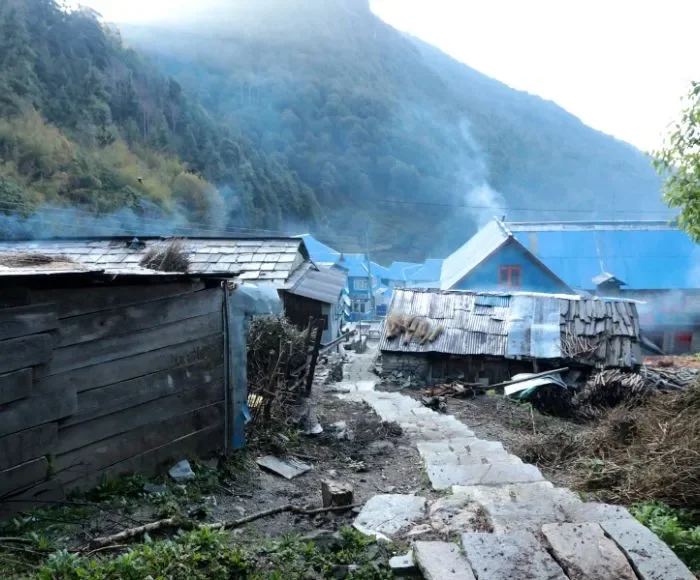
ghorepani path
The moderate rating comes from three compounding factors: multiple back-to-back walking days, a punishing staircase section, and a modest but real altitude gain. None of these is extreme on its own. Together, over 5 to 8 days, they add up to a trek that rewards preparation.
Long Days of Walking
Most Poon Hill itineraries have you walking 5 to 7 hours a day, including breaks, across 3 to 4 consecutive trekking days. The route mixes steady ascents with descents, so your legs rarely get a flat, easy stretch to recover on.
Because the days stack on top of each other, cumulative fatigue matters more than any single day's distance. Trekkers who pace themselves on day one usually handle day three far better than those who push hard early.
Steep Stone Steps
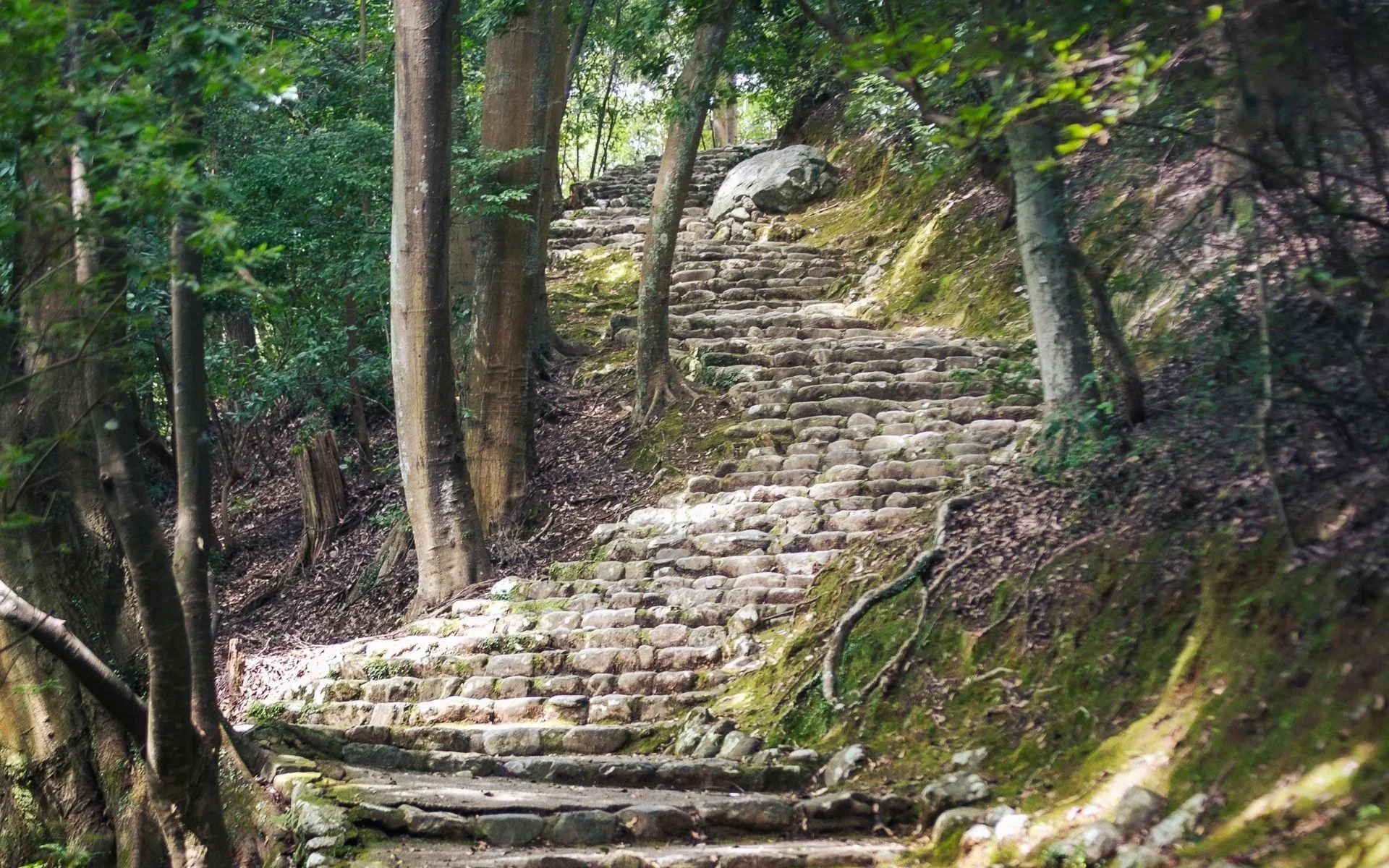
The staircase between Tikhedhunga and Ulleri deserves its own mention because it is the single most talked-about tough section on this route. It climbs roughly 1,500 to 3,300 stone steps (estimates vary by source) over a sustained, continuous ascent with very little flat ground to break the rhythm.
This section hits your quads, calves, and knees hard, especially on the way back down a few days later. Trekking poles help enormously here by taking pressure off your knees and giving you a rhythm on uneven stone. Two trekkers with the same fitness level can experience this staircase very differently depending on how much stair or hill training they have done beforehand.
Elevation and Altitude
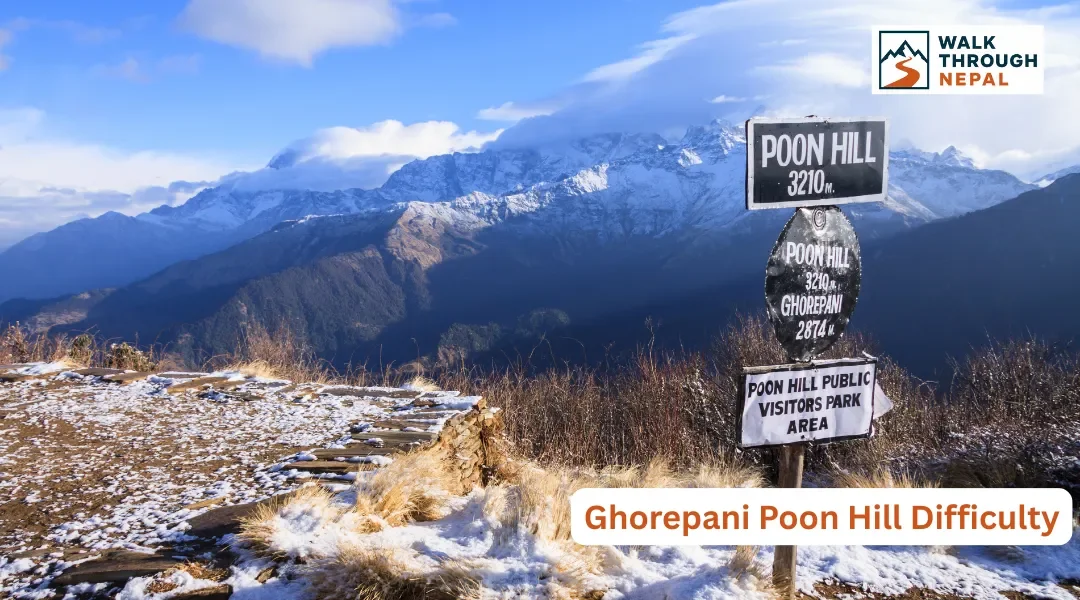
Poon Hill sits at 3,210 meters, the highest point on this trek. That is well below the altitude thresholds where serious altitude sickness becomes common, so it is far less of a concern here than on treks like Everest Base Camp or Annapurna Base Camp.
Still, some trekkers feel mild symptoms like headache or shortness of breath even at this height, particularly if they ascend too fast or arrive dehydrated. We cover this in more depth in our dedicated guide to Ghorepani Poon Hill Trek Altitude and Ghorepani Poon Hill Trek Altitude Sickness, but the short version is: altitude here is a minor factor, not the main challenge.
Ghorepani Poon Hill Trek Elevation Profile
The elevation profile runs from Pokhara (820 meters) up through Ulleri, Ghorepani, and Poon Hill, before dropping back down through Tadapani and Ghandruk. The steepest single climb sits between Tikhedhunga and Ulleri, gaining roughly 530 meters in a short distance.
Here is the rough sequence most itineraries follow:
Pokhara (820 m) to Nayapul/Birethanti (1,070 m) by road, then walk to Tikhedhunga (1,540 m)
Tikhedhunga (1,540 m) to Ulleri (2,070 m), the steep staircase climb
Ulleri (2,070 m) to Ghorepani (2,860 m), a long, steady uphill through rhododendron forest
Ghorepani (2,860 m) to Poon Hill (3,210 m), a short, steep pre-dawn climb, then back down to Ghorepani
Ghorepani (2,860 m) to Tadapani (2,630 m), a mix of ascents and descents through forest
Tadapani (2,630 m) to Ghandruk (1,940 m), mostly downhill, then drive back to Pokhara
You can see the full route breakdown in our Ghorepani Poon Hill Trek Map, and the altitude-specific notes in our Ghorepani Poon Hill Trek Altitude guide.
Ghorepani Poon Hill Trek Daily Walking Difficulty
Difficulty varies noticeably by day, with the second day generally rated hardest because of the Ulleri staircase. Actual walking hours depend on your pace, group size, and exact itinerary, so treat these as general ranges rather than fixed numbers.
Day
Route
Approx. Walking Time
Difficulty
Day 1
Pokhara to Tikhedhunga / Ulleri
4 to 5 hours
Moderate
Day 2
Ulleri to Ghorepani
4 to 6 hours
Moderate to Hard
Day 3
Poon Hill sunrise, then Ghorepani to Tadapani
6 to 7 hours
Moderate
Day 4
Tadapani to Ghandruk, then drive to Pokhara
4 to 5 hours
Moderate
If you are trekking with Walk Through Nepal, your guide will confirm exact distances and timing for your specific itinerary before departure, since routes and overnight stops can shift slightly with trail conditions.
Which Part of the Poon Hill Trek Is the Hardest?
The hardest sections are the Ulleri staircase and the pre-dawn Poon Hill climb, for very different reasons: one is pure leg strength, the other is cold, dark, and mentally tiring. Knowing what is coming helps you pace each section correctly.
Ulleri Stone Staircase
Source: Pexels; A continuous, steep staircase made of large, flat stone paving slabs ascends steeply through a lush green forest on the trial of Ghorepani
This is the trek's biggest physical test for most people. The climb is relentless, with almost no flat ground to recover on, and it comes early in the trek before your legs have adjusted to daily walking.
Climb to Poon Hill Before Sunrise
This section feels harder than its short distance suggests. You are climbing in the dark, often in near-freezing temperatures, on legs that are already tired from the previous two days, all while trying to reach the viewpoint before sunrise. Warm layers and a headlamp make a real difference here.
Ghorepani to Tadapani
This stretch mixes climbs and descents through rhododendron forest, so the difficulty comes from constantly changing rhythm rather than one long grind. Trail conditions after rain can also make the forest floor slippery in places.
Descending to Ghandruk
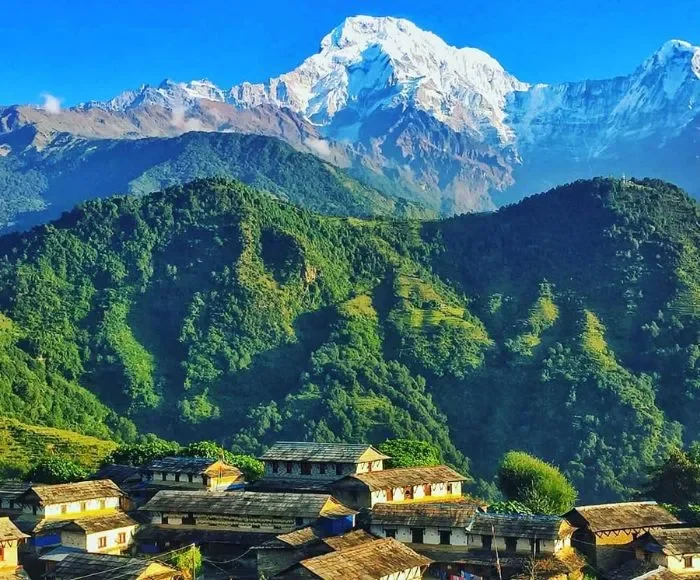
view from ghandruk
Do not underestimate downhill walking. The descent from Tadapani to Ghandruk is long and steady, and it puts real strain on knees, especially for trekkers who have not trained for downhill sections specifically.
Is the Ghorepani Poon Hill Trek Difficult for Beginners?
No previous trekking experience is usually necessary, provided you are reasonably active and prepare in the weeks before you fly to Nepal. This trek is a common first choice for people who have never done a multi-day trek anywhere.
A beginner should be comfortable with:
Walking several hours at a time, multiple days in a row
Climbing sustained uphill sections, including stone stairs
Walking on uneven, rocky, or root-covered terrain
Carrying a daypack for 4 to 6 hours
Recovering overnight and walking again the next morning
How Fit Do You Need to Be for Poon Hill?
If you regularly walk or hike: the trek is likely manageable with a few weeks of extra stair or incline training.
If you go to the gym: strength training helps with the staircases, but you still need cardio and endurance work, since gym strength alone does not prepare your lungs and legs for hours of continuous walking.
If you rarely exercise: start training at least 4 to 6 weeks before departure, building up walking duration gradually.
If you are an experienced trekker: the trek should generally feel manageable, though the Ulleri stairs and the elevation changes can still test your endurance on a bad day.
How to Train for the Ghorepani Poon Hill Trek
Walking and Cardio
Build up gradually: start with regular walks, add incline walking or stair climbing, then move to full hikes with elevation gain. Aim for at least one longer training hike per week in the month before you travel.
Leg Strength
Focus on squats, lunges, step-ups, and calf raises. These directly target the muscles that carry you up the Ulleri staircase and control your knees on the way down.
Endurance
Gradually increase the length of your weekend walks or hikes over several weeks, rather than jumping straight to a long day. Your body adapts to sustained effort better with steady progression.
Practice With a Daypack
Walking without weight in training does not fully prepare you for the trail. Load your daypack with water, a layer, and snacks, roughly what you will actually carry, and train with it on at least a few of your practice hikes.
Does Altitude Make Poon Hill Trek Difficult?
Altitude adds a small, manageable layer of difficulty rather than a major risk. Poon Hill's 3,210 meters is far below the altitude where serious acute mountain sickness typically develops, but sensible pacing still matters.
To keep altitude from becoming an issue: ascend gradually, drink plenty of water, rest when you need to, and pay attention to any headache, nausea, or unusual fatigue. If symptoms do not improve with rest, stop ascending and tell your guide immediately.
What Makes the Poon Hill Trek Easier?
Training for several weeks before you arrive
Starting each day's walk at a slow, steady pace
Taking regular short breaks rather than pushing through fatigue
Using trekking poles, especially on the Ulleri stairs and the Tadapani to Ghandruk descent
Carrying only what you actually need in your daypack
Staying hydrated throughout the day
Wearing broken-in, supportive trekking boots
Choosing a 8-day itinerary over a rushed 3 or 5-day version if you are unsure of your fitness
Hiring a guide and porter, so you are not carrying your full pack
Not rushing the climb to Poon Hill on sunrise morning
What Makes the Poon Hill Trek Harder?
Skipping physical preparation entirely
Rushing between villages instead of pacing yourself
Carrying a heavy backpack instead of using a porter
Wearing new or poorly fitted footwear
Arriving sleep-deprived from a long flight with no buffer day
Trekking during heavy rain, when stone steps get slippery
Trying to compress the itinerary into fewer days than recommended
Underestimating how much the stairs will affect your knees
Can You Do the Poon Hill Trek Without Previous Trekking Experience?
Yes, this trek is genuinely suitable for many first-time trekkers, and it is one of the most common starter treks in Nepal for exactly that reason. The distinction that matters is between having no trekking experience, which is fine, and having no physical preparation, which is where most difficulties actually come from.
Is Ghorepani Poon Hill Trek Worth It Despite the Difficulty?
For most travelers, yes. You get a moderate physical effort, spread over a relatively short 4 to 8 day trek, in exchange for one of Nepal's best sunrise viewpoints, traditional Gurung and Magar villages, and long stretches of rhododendron forest that turn bright red and pink in spring bloom season.
The trade-off is straightforward: a few demanding hours on the Ulleri stairs and one early, cold morning, against mountain views that most people remember for years. If that balance sounds right for you, the next step is picking an itinerary that matches your fitness and available time.
FAQs
Is the Ghorepani Poon Hill Trek difficult?
It is rated moderate, mainly because of consecutive walking days and the steep stone staircase near Ulleri, not because of extreme altitude or technical terrain.
Is Poon Hill Trek suitable for beginners?
Yes, it is one of the most beginner-friendly multi-day treks in Nepal, provided you prepare with a few weeks of walking and stair training beforehand.
How many hours do you walk each day on Poon Hill Trek?
Most days involve 4 to 7 hours of walking, including rest breaks, with the Poon Hill sunrise day usually running longest.
What is the hardest part of the Poon Hill Trek?
The stone staircase between Tikhedhunga and Ulleri, along with the pre-dawn climb to Poon Hill in the cold and dark, are the two sections trekkers find toughest.
How many stairs are there on the Poon Hill Trek?
The Ulleri section alone involves an estimated several thousand stone steps, though exact counts vary between sources and depend on where you start measuring.
Is Poon Hill harder than Annapurna Base Camp?
No. Poon Hill is shorter, reaches a lower elevation, and involves less cumulative altitude gain than Annapurna Base Camp, which makes it a lighter physical and altitude commitment overall.
Do I need to train for the Poon Hill Trek?
You do not strictly need to, but a few weeks of walking, stair climbing, and leg strength work will make the trek noticeably more enjoyable, especially on the Ulleri staircase.
Do I need previous trekking experience for Poon Hill?
No. Reasonable fitness and basic preparation matter far more than prior trekking experience for this particular route.
Is altitude a problem on the Poon Hill Trek?
Generally no. At 3,210 meters, Poon Hill sits well below the altitude range where serious acute mountain sickness typically becomes a concern, though sensible pacing and hydration still matter.
Can older travelers do the Poon Hill Trek?
Many older travelers complete this trek successfully, particularly with a slower-paced itinerary, trekking poles, and a porter to reduce the load they carry. Anyone with existing heart, lung, or joint conditions should check with a doctor before booking.
Ready to Trek Nepal?
If this breakdown has you leaning toward booking, the next step is matching it to the right itinerary and a guide who knows this route well. Browse ourGhorepani Poon Hill Trek packages, or reach out and we will help you pick the pace, group size, and season that fits your fitness level.