Contents
Phewa Lake is the first thing most travelers see when they arrive in Pokhara, and it's usually the last thing they remember on the way out. It sits right beside the Lakeside area, where water, hills, and Himalayan peaks all show up in the same view. People come here to row out on a wooden boat, visit the temple sitting on its own island, watch the light change over the water at sunset, and mostly just slow down for a while. This guide covers what Phewa Lake actually is, what there is to do around it, when to visit, and how to fit it into the rest of a Pokhara trip.
What Is Phewa Lake?
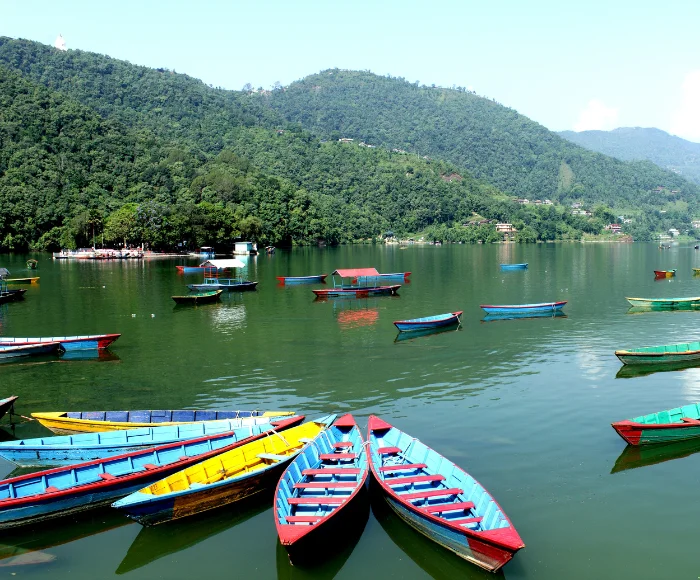
Phewa Lake sits at 742 meters elevation, directly against the eastern edge of central Pokhara, making it the most accessible major lake in Nepal. It's the second-largest lake in the country and the single most important reason Pokhara became a tourism destination in the first place.
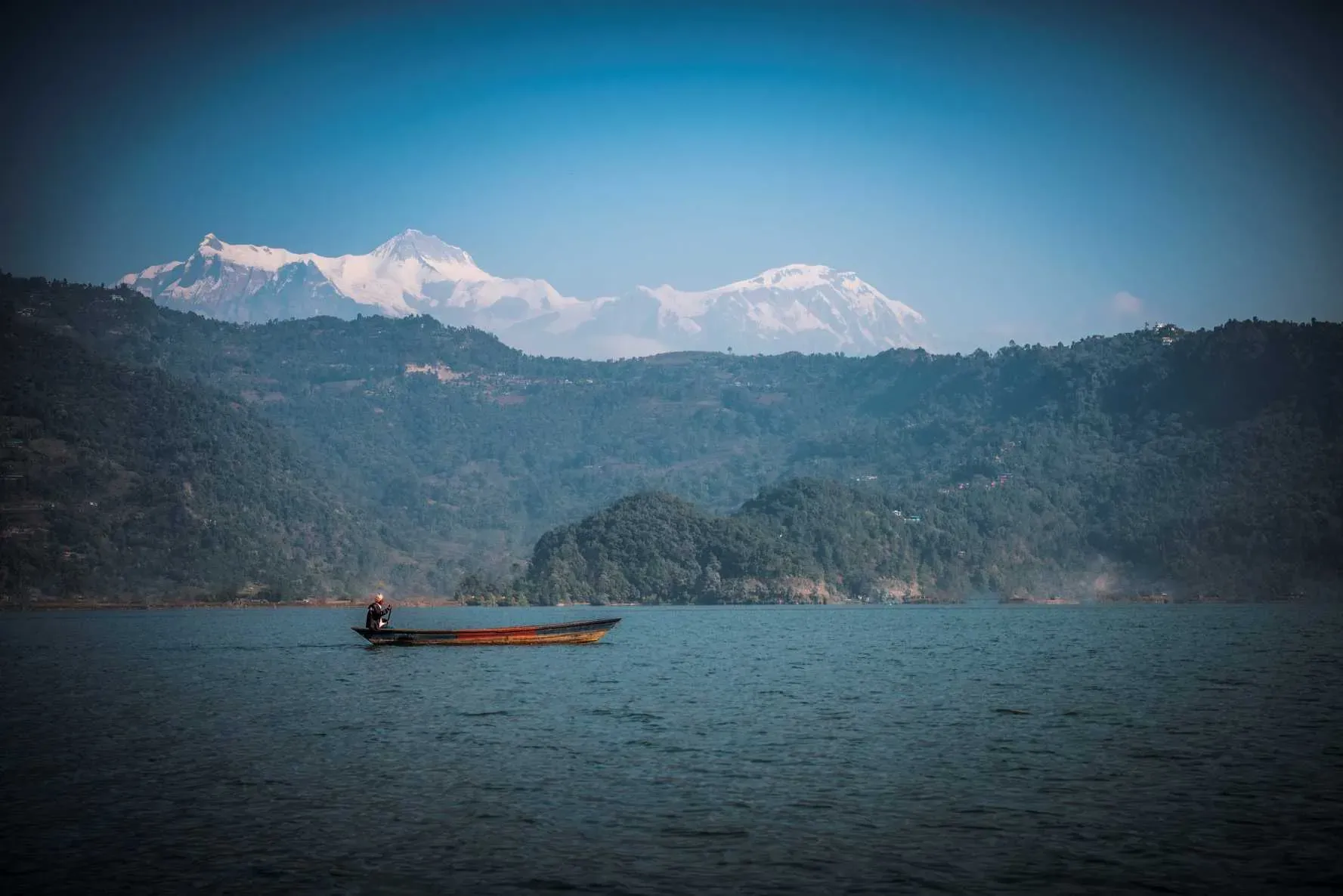
The lake runs parallel to Lakeside, Pokhara's main tourist strip, so the water, the cafés, and the trekking agencies all sit within a short walk of each other. On a clear day, the surrounding hills and the Annapurna range rise up behind the lake, with Machhapuchhre (Fishtail) visible on the northern skyline. That combination, water, hills, and mountains in one frame, is the main reason Phewa gets photographed as often as it does.
Why Is Phewa Lake Famous?
Phewa Lake's reputation comes down to a handful of things that consistently show up in why people visit Pokhara at all.
The Annapurna and Machhapuchhre reflections on calm water are the single most photographed scene in the city. Boating out to Tal Barahi Temple gives visitors an actual activity rather than just a viewpoint, and the Lakeside waterfront running alongside the lake means restaurants, cafés, and shops are never far away. Sunrise and sunset both draw people down to the water specifically for the light, and the whole lake is easy to reach on foot from almost anywhere in central Pokhara, which is rare for a natural attraction this scenic.
Things to Do at Phewa Lake
Go Boating on Phewa Lake
Boating is Phewa's signature activity, and it's usually the first thing travelers do after arriving in Pokhara.
Traditional wooden doonga boats are available for rent right along the ghats near Lakeside, either self-rowed or with a boatman if you'd rather not do the rowing yourself. A short loop out toward the middle of the lake and back typically takes 1 to 2 hours, longer if you're stopping at Tal Barahi Temple along the way. Morning trips tend to have calmer water and better reflections, while afternoon and evening boating gets busier and works well if sunset is part of the plan. Check conditions before heading out. Boating gets suspended on genuinely windy days, and it's worth confirming current rates directly with the boat operators rather than relying on a fixed price.
Visit Tal Barahi Temple
Tal Barahi Temple sits on a small island roughly in the center of the lake and is one of Pokhara's most visited religious sites.
Reaching it requires a boat ride out from the lakeside ghats, which is part of the experience rather than a detour. The temple is dedicated to the goddess Barahi and draws steady local devotion year-round, with noticeably larger crowds during Hindu festivals. Dress modestly and remove your shoes before entering, as with any active temple in Nepal.
Enjoy the Annapurna and Machhapuchhre Views
Clear-weather mornings give Phewa its best mountain views, with Annapurna South, Hiunchuli, and Machhapuchhre all visible from the water on a good day.
Reflections are strongest when the water is calm, which usually means early morning before wind picks up later in the day. Evening visibility depends more on the season. Autumn and winter tend to give the clearest skies, while spring haze and monsoon cloud cover can hide the peaks entirely for days at a time. This unpredictability is part of why the lake photographs so differently depending on when you visit.
Watch the Sunset
Sunset at Phewa is a daily ritual for a good part of Lakeside's population, both travelers and locals.
The waterfront fills up as the light turns orange and the mountains behind the lake darken into silhouette, with the water picking up the color when it's calm enough. Clear evenings without heavy cloud cover give the best results, and many visitors pair the sunset directly with dinner at one of the restaurants along the water.
Walk Around Lakeside
The Lakeside promenade running alongside Phewa is worth treating as its own activity, not just a place to pass through.
Restaurants, cafés, souvenir shops, and trekking agencies line the waterfront within a few blocks of each other, and the evening atmosphere, with lights coming on and the street filling up, is a genuinely different experience from the daytime lake views. It's an easy hour or more just walking, stopping, and people-watching.
Take Photos Around the Lake
Phewa rewards photographers at almost any time of day, though the best shots tend to center on a few consistent subjects: wooden boats against the water, Tal Barahi Temple on its island, mountain reflections in calm conditions, the Lakeside waterfront itself, and the sunrise or sunset light. Morning generally gives the sharpest mountain reflections, while evening gives the strongest color.
Phewa Lake and Tal Barahi Temple
Phewa Lake and Tal Barahi Temple are close enough to being a single attraction that they deserve a dedicated look together.
The temple sits on a small island roughly in the middle of the lake, and the only way to reach it is by boat from the lakeside ghats, a short ride of a few minutes each way. It holds real religious importance as a shrine to the goddess Barahi, not just a scenic stop, and local devotees visit throughout the year with larger gatherings during Hindu festivals. The boat journey out gives a different angle on the lake than you get from shore, with the surrounding hills and mountains visible in a wider sweep. Morning tends to be quieter for the visit, while late afternoon adds better light for photos on the way back.
Phewa Lake From Sarangkot and the Hills
Phewa looks like an entirely different lake once you see it from above.
From Sarangkot, the ridge above Pokhara, the full shape of the lake opens up against the Annapurna and Dhaulagiri ranges in the background, which is part of why Sarangkot's sunrise viewpoint draws so many visitors. It's also the main launch point for paragliding, with flights gliding directly down over the lake before landing near the shore. Combining Sarangkot in the early morning with time at Phewa Lake later in the day works well as a single itinerary, since the drive between them is short and the two experiences complement each other rather than repeating. For a fuller rundown of Sarangkot and Pokhara's other activities, see our guide to things to do in Pokhara.
Best Time of Day to Visit Phewa Lake
Morning
Calmer water, fewer people out on the lake, and the best chance of clean mountain reflections before wind and haze build up later in the day.
Afternoon
A practical window for combining Phewa with other Lakeside attractions, when the waterfront atmosphere is at its most active.
Evening
Sunset, a busier waterfront, and the restaurants and cafés along Lakeside filling up as the light fades.
How to Get to Phewa Lake
From Pokhara Airport: a short taxi or private vehicle ride, usually 15 to 20 minutes depending on traffic.
From Tourist Bus Park: taxi or local transport into Lakeside, typically under 20 minutes.
From Lakeside: walking distance for almost anyone staying in the area, since the lake runs directly alongside it.
From Kathmandu: fly into Pokhara (around 25 minutes in the air) or take a tourist bus or private vehicle, which generally runs 6 to 8 hours by road depending on conditions.
How Much Time Do You Need at Phewa Lake?
1 to 2 hours: a short boat ride out to Tal Barahi Temple and back, enough to say you've seen the lake properly.
Half day: boating, the temple visit, a walk along Lakeside, and a café stop or meal along the water.
Full day: Phewa Lake in the morning, a hike or drive up to the World Peace Pagoda in the afternoon, more Lakeside time, and sunset back at the water to close the day.
Phewa Lake vs Begnas Lake
Phewa Lake | Begnas Lake | |
|---|---|---|
Location | Central Pokhara | Southeast of Pokhara |
Crowds | More | Fewer |
Tourism | Highly developed | Quieter |
Boating | Yes | Yes |
Lakeside cafés | Many | Fewer |
Best for | First-time visitors | Peace & nature |
Phewa is the easier, more social choice with everything already built up around it. Begnas is what you pick if you want the same boating experience without the crowd. For more on Begnas and Pokhara's other lakes, see our lakes of Pokhara guide.
Phewa Lake Travel Tips
Check the weather before planning any mountain-view activity around the lake, since visibility changes fast. Wear sun protection during the day, especially out on the water where there's no shade. Keep valuables secure while boating, and follow whatever safety instructions the boatman gives you. Treat Tal Barahi Temple's religious setting with respect, including dress and behavior. Avoid littering around the lake and its shoreline. Build in extra time around Lakeside rather than rushing straight back to your hotel. And don't rely on a single weather forecast for mountain visibility. Conditions around Pokhara can shift within the same day.
Places to Visit Near Phewa Lake
Lakeside Pokhara runs directly alongside the lake and is the natural base for almost any visit here. Tal Barahi Temple sits on the lake itself, a short boat ride from shore. The World Peace Pagoda is reachable by a short hike or boat-plus-drive from the lakeside, with strong combined views of the lake and mountains. Sarangkot sits above the valley and gives Phewa's best elevated view, alongside sunrise and paragliding. The International Mountain Museum, Davis Falls, and Gupteshwor Mahadev Cave all sit within a short drive of Lakeside and pair naturally with a Phewa Lake day. Begnas Lake is the quieter alternative a short drive to the southeast. For the fuller list of Pokhara's attractions and how they connect, our guide to the best places to visit in Pokhara lays them all out together.
Phewa Lake for Different Travelers
For First-Time Visitors
Boating, Tal Barahi Temple, and a walk around Lakeside cover the essentials in a single visit.
For Couples
Sunset, a boat ride, and dinner at one of the lakeside restaurants make for a straightforward, low-effort evening.
For Families
Boating, the temple visit, and nearby attractions like Davis Falls keep the day varied without being physically demanding.
For Photographers
Morning reflections, clear mountain views, and the sunset light are the three windows worth building a shoot around.
For Trekkers
Phewa and Lakeside work well as a relaxing stop before or after an Annapurna, Mardi Himal, or Poon Hill trek, giving you somewhere to decompress on either end of the trail.
Frequently Asked Questions About Phewa Lake
Where is Phewa Lake located?
Phewa Lake sits directly beside Lakeside in central Pokhara, at an elevation of 742 meters.
What is Phewa Lake famous for?
It's known for boating, Tal Barahi Temple, mountain reflections of Annapurna and Machhapuchhre, and the Lakeside waterfront running alongside it.
Can you go boating on Phewa Lake?
Yes. Traditional wooden boats are available to rent along the lakeside ghats, either self-rowed or with a boatman.
How much time do you need at Phewa Lake?
1 to 2 hours covers a short boat trip; a half day allows time for the temple and a Lakeside walk; a full day can include the World Peace Pagoda as well.
What is the best time to visit Phewa Lake?
October to April overall, with October to November and March to April giving the clearest mountain views.
Can you see Mount Machhapuchhre from Phewa Lake?
Yes, on clear days Machhapuchhre (Fishtail) is visible from the lake, along with peaks in the Annapurna range.
How do you reach Tal Barahi Temple?
By boat from the lakeside ghats. It's the only way to reach the island, and the ride takes just a few minutes each way.
Is Phewa Lake worth visiting?
Yes. It's Pokhara's most accessible major attraction and combines mountain views, boating, culture, and a relaxed atmosphere in one place.
Is Phewa Lake the same as Lakeside Pokhara?
No. Phewa Lake is the lake itself; Lakeside is the tourist area of restaurants, cafés, and shops running along its shore.
Can you visit Phewa Lake and Sarangkot on the same day?
Yes, and it's a common pairing. Sarangkot at sunrise followed by Phewa Lake later in the day is a straightforward half-day-plus itinerary.
Final Thoughts
Phewa Lake isn't simply a lake to tick off a Pokhara itinerary. It's the place where the city's mountains, water, temples, cafés, and relaxed travel atmosphere all come together in one spot. Whether you have an hour for a quick boat ride or a full day to work through the temple, the Lakeside walk, and sunset, Phewa adjusts to however much time you give it.
For more on what else Pokhara offers, see our guides to things to do in Pokhara, the best places to visit in Pokhara, and the lakes of Pokhara. And if Phewa is just the start of a longer trip, our team can help you plan an Annapurna Base Camp Trek, Mardi Himal Trek, or Ghorepani Poon Hill Trek starting right from here.