Contents
Kathmandu is the capital and largest city of Nepal, sitting inside the Kathmandu Valley in the central part of the country. It's tucked into the foothills of the Himalayas at roughly 1,400 meters (4,600 feet), a bowl-shaped valley ringed by hills that keeps the city noticeably milder than the high mountains most travelers are ultimately headed toward.
For nearly every visitor to Nepal, Kathmandu is the starting point. It's where international flights land, where trekking permits get processed, and where the road and flight routes to Pokhara, Chitwan, and the Everest and Annapurna regions all begin. This guide breaks down exactly where Kathmandu sits, how it relates to the rest of Nepal, and how far it actually is from the places you're probably planning to visit next.
Where Is Kathmandu Located?
Kathmandu is located in central Nepal, within Bagmati Province and Kathmandu District, at approximately 27.7°N latitude and 85.3°E longitude. The city sits at an elevation of about 1,400 meters (4,600 feet) inside the bowl-shaped Kathmandu Valley, surrounded by the foothills of the Himalayas.
Kathmandu isn't in the high mountains itself; it sits in a mid-elevation valley well below the trekking regions to its north. That lower elevation is exactly why the city has a far milder climate than places like the Everest or Annapurna regions, even though both are reachable from Kathmandu within a day or two of travel.
Kathmandu's Location on the Map
On a map of Nepal, Kathmandu sits roughly in the center of the country, closer to the southern edge of the Himalayan range than to the high peaks themselves. The Kathmandu Valley forms a rough bowl surrounded by hills on all sides, with the Bagmati River running through the middle of it.
To the north, the land rises steadily toward the Himalayas and regions like Langtang and the approach to Everest. To the south, it drops toward the Terai lowlands and the Indian border. Major geographical features around the valley include the encircling hill ranges of Shivapuri, Phulchowki, Nagarjun, and Chandragiri, which are visible from much of the city on a clear day.
Which Country Is Kathmandu In?
Kathmandu is in Nepal, a landlocked country in South Asia sandwiched between India to the south, east, and west, and China (specifically the Tibet Autonomous Region) to the north.
Nepal's position between these two countries has shaped its history, trade routes, and culture for centuries. Kathmandu itself sits closer to the Indian border than to the Tibetan border, though the high Himalayan peaks that separate Nepal from China are visible from parts of the valley on clear days.
Is Kathmandu in India or Nepal?
Kathmandu is in Nepal, not India. The two countries are separate nations, though they share a long open border, close cultural ties, and a visa-free travel arrangement for their citizens, which sometimes leads to confusion about where one country ends and the other begins.
Where Is Kathmandu Located in Nepal?
Within Nepal, Kathmandu sits in Bagmati Province, inside Kathmandu District, inside the broader Kathmandu Valley. These three terms describe different scales of the same general area, and travelers often use them interchangeably without realizing they're not quite the same thing.
Kathmandu in Bagmati Province
Kathmandu is the capital of Bagmati Province, one of Nepal's seven federal provinces, named after the Bagmati River that flows through the valley. Bagmati Province covers a large stretch of central Nepal, extending from the Kathmandu Valley up toward parts of the Himalayas and down into sections of the Terai.
Kathmandu District
Kathmandu District is a smaller administrative unit within Bagmati Province, containing Kathmandu city along with several surrounding municipalities. It's one of three districts that make up the Kathmandu Valley, alongside Lalitpur and Bhaktapur districts.
Kathmandu Valley
The Kathmandu Valley is the broader geographical bowl that contains Kathmandu city itself, along with the neighboring cities of Lalitpur (Patan) and Bhaktapur. It's this valley, not just the city of Kathmandu, that holds most of Nepal's UNESCO World Heritage cultural sites.
Kathmandu Geography and Elevation
Kathmandu sits at roughly 1,400 meters (4,600 feet) above sea level, inside a basin-like valley ringed by hills that typically rise to around 2,000–2,800 meters. This basin geography traps warm air in the valley during the day and creates a noticeably different climate than the high-altitude trekking regions just a day's travel away.
The valley floor is relatively flat, formed from an ancient lakebed that dried out over thousands of years, which is part of why Kathmandu has been able to grow into such a dense urban center compared to the steep terrain found almost everywhere else in Nepal's hill and mountain regions.
How High Is Kathmandu?
Kathmandu sits at approximately 1,400 meters (4,600 feet) above sea level. That's high enough to give the city cooler evenings than the Terai lowlands, but still low enough that altitude sickness isn't a concern for visitors, unlike destinations above 3,000 meters on routes like the Everest Base Camp Trek.
Kathmandu's Location Relative to Major Nepal Destinations
Kathmandu functions as Nepal's central hub, with most other major destinations reachable by road or short domestic flight. Here's how the main travel regions line up relative to the capital.
How Far Is Kathmandu From Pokhara?
Pokhara sits roughly 200 kilometers west of Kathmandu, reachable by a 6–7 hour drive on the Prithvi Highway or a short domestic flight of around 25 minutes. Pokhara serves as the main gateway to the Annapurna region.
How Far Is Kathmandu From Chitwan?
Chitwan sits roughly 150–160 kilometers south of Kathmandu, generally reached by a 5–6 hour drive or a short domestic flight to Bharatpur Airport. Chitwan is Nepal's main hub for jungle safari and wildlife viewing.
How Far Is Kathmandu From Everest?
Everest itself is not geographically close to Kathmandu, but the capital functions as the primary gateway to the region. Most Everest Base Camp itineraries begin with a short flight from Kathmandu to Lukla, followed by roughly 8–9 days of trekking to reach Base Camp itself. There's no direct road or short flight straight to Everest; the mountain is reached entirely on foot once you're in the Khumbu.
How Far Is Kathmandu From Annapurna?
The Annapurna region is generally reached via Kathmandu to Pokhara, then onward by road or on foot depending on the specific trek, whether that's the Annapurna Base Camp Trek, the Annapurna Circuit, or the shorter Ghorepani Poon Hill Trek. Pokhara itself is the practical starting point for nearly all Annapurna region trekking.
Destination | Approximate relationship to Kathmandu | Why travelers go |
|---|---|---|
Pokhara | West | Annapurna trekking, lakes, mountain views |
Chitwan | South | Jungle safari and wildlife |
Everest Region | Northeast | Everest Base Camp and mountain expeditions |
Annapurna Region | Northwest, via Pokhara | Annapurna Base Camp, Circuit, Poon Hill |
Exact travel times shift depending on road conditions, flight schedules, and season, so treat these as general orientation rather than a fixed itinerary. Confirm live flight and road conditions with your operator before booking.
Why Is Kathmandu Important to Nepal?
Kathmandu functions as Nepal's political capital, its cultural core, and the near-universal starting point for travel to the rest of the country, all at once.
Political and Administrative Capital
Kathmandu is Nepal's capital city, home to the country's federal government, parliament, and most national administrative offices, including the ministries responsible for tourism and immigration.
Cultural and Historical Center
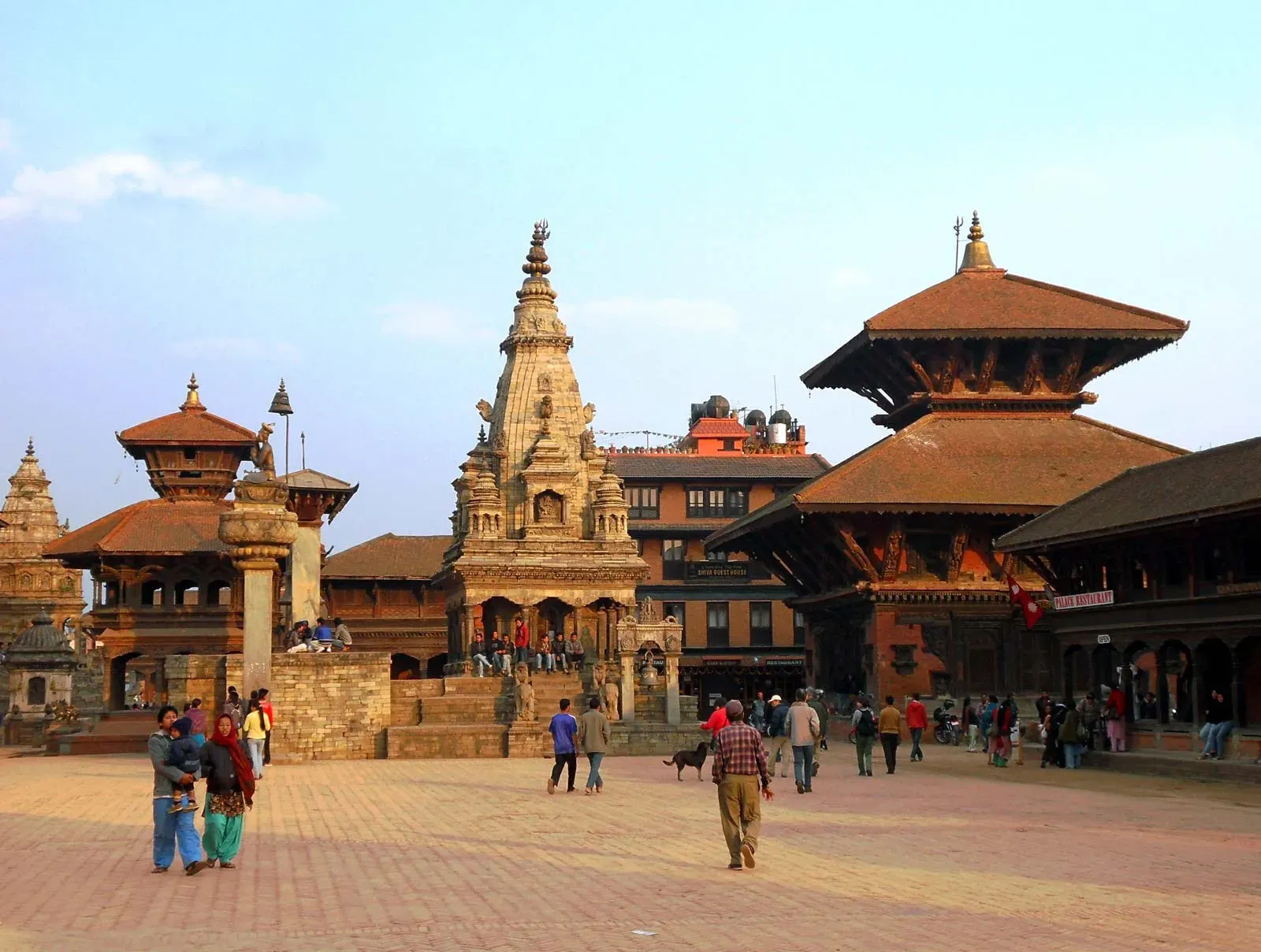
The Kathmandu Valley holds the highest concentration of historic temples, palace squares, and religious sites in Nepal, reflecting centuries of Newari architecture and craftsmanship layered across Kathmandu, Lalitpur, and Bhaktapur.
Gateway to Nepal's Mountains
Nearly every trekking and climbing expedition in Nepal, from Everest to Annapurna and Langtang, begins in Kathmandu, where permits are processed and flights or road transport toward the mountains are arranged. Browse the full range of Nepal treks and tours to see where a Kathmandu departure can take you.
Major International Travel Hub
Kathmandu's Tribhuvan International Airport handles the vast majority of Nepal's international air traffic, and remains the country's primary gateway even though Nepal now also has international airports in Pokhara and Bhairahawa, both of which currently see only limited scheduled international service.
What Is Kathmandu Known For?
Kathmandu is best known for its concentration of historic and religious sites, including Kathmandu Durbar Square, Swayambhunath (the Monkey Temple), Pashupatinath, and Boudhanath, alongside the distinct Newari culture that shaped the valley's temples, courtyards, and craftsmanship over centuries.
These sites, along with the old city's narrow streets and courtyards, make Kathmandu worth exploring on its own rather than treating it purely as a layover before heading into the mountains. Our Nepal heritage tour covers many of these landmarks in more depth if you want to build a trip around them.
Kathmandu Valley: What Is It and Where Is It?
The Kathmandu Valley is a broader geographical area than Kathmandu city alone. It traditionally consists of three historic cities, Kathmandu, Lalitpur (Patan), and Bhaktapur, each with its own Durbar Square and distinct cultural history, all sitting within the same hill-ringed valley.
The valley contains the majority of Nepal's UNESCO World Heritage cultural sites, a reflection of the fact that all three cities were once independent kingdoms before Nepal's unification in the 18th century.
Kathmandu vs Kathmandu Valley
Kathmandu | Kathmandu Valley |
|---|---|
A city | A geographical valley |
Capital of Nepal | Contains multiple cities |
Located in Kathmandu District | Includes Kathmandu, Lalitpur and Bhaktapur |
Major urban center | Larger cultural and geographical area |
Kathmandu Location FAQs
Where is Kathmandu located?
Kathmandu is located in central Nepal, within the Kathmandu Valley and Bagmati Province, at an elevation of roughly 1,400 meters.
Which country is Kathmandu in?
Kathmandu is in Nepal, a landlocked country in South Asia between India and China.
Is Kathmandu the capital of Nepal?
Yes, Kathmandu is Nepal's capital and its largest city.
Is Kathmandu in the Himalayas?
Not directly. Kathmandu sits in a valley at the southern edge of the Himalayan foothills, well below the high mountain regions, though the Himalayas are visible from parts of the valley on clear days.
How high is Kathmandu above sea level?
Kathmandu sits at approximately 1,400 meters (4,600 feet) above sea level.
Where is Kathmandu Valley?
The Kathmandu Valley is located in central Nepal and contains three cities: Kathmandu, Lalitpur, and Bhaktapur, surrounded by hills on all sides.
Is Kathmandu near Mount Everest?
Not geographically close, no. Kathmandu is the main gateway to the Everest region, but reaching Everest itself requires a flight to Lukla followed by several days of trekking.
How far is Kathmandu from Pokhara?
Pokhara is roughly 200 kilometers west of Kathmandu, about a 6–7 hour drive or a 25-minute flight.
How far is Kathmandu from Everest Base Camp?
There's no direct road distance, since Everest Base Camp is reached on foot. Most itineraries fly from Kathmandu to Lukla, then trek for roughly 8–9 days to reach Base Camp.
What province is Kathmandu in?
Kathmandu is in Bagmati Province, one of Nepal's seven federal provinces.
Final Answer: Where Is Kathmandu Located?
Kathmandu is located in central Nepal, within the Kathmandu Valley and Bagmati Province. It's Nepal's capital, largest urban center, and the principal gateway for travelers heading toward destinations such as Everest, Annapurna, and Chitwan.
Once you've got your bearings on where Kathmandu sits, the natural next question is where to go from there.
Ready to Trek Nepal?
Not sure how to fit Kathmandu, Pokhara, and a trek into one trip? Talk to our local trekking coordinators or browse tailored Nepal itineraries that start right from the capital.