Contents
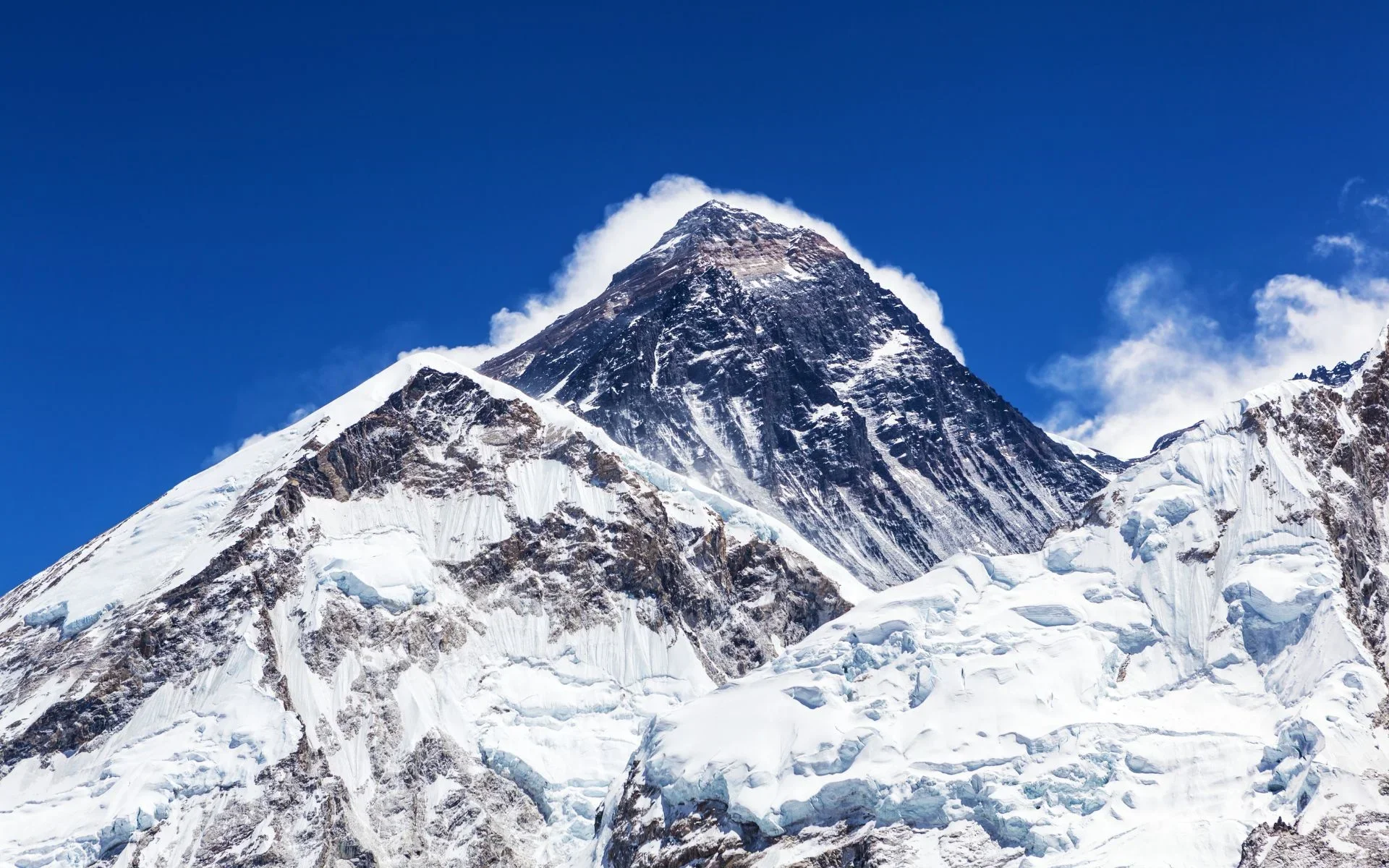
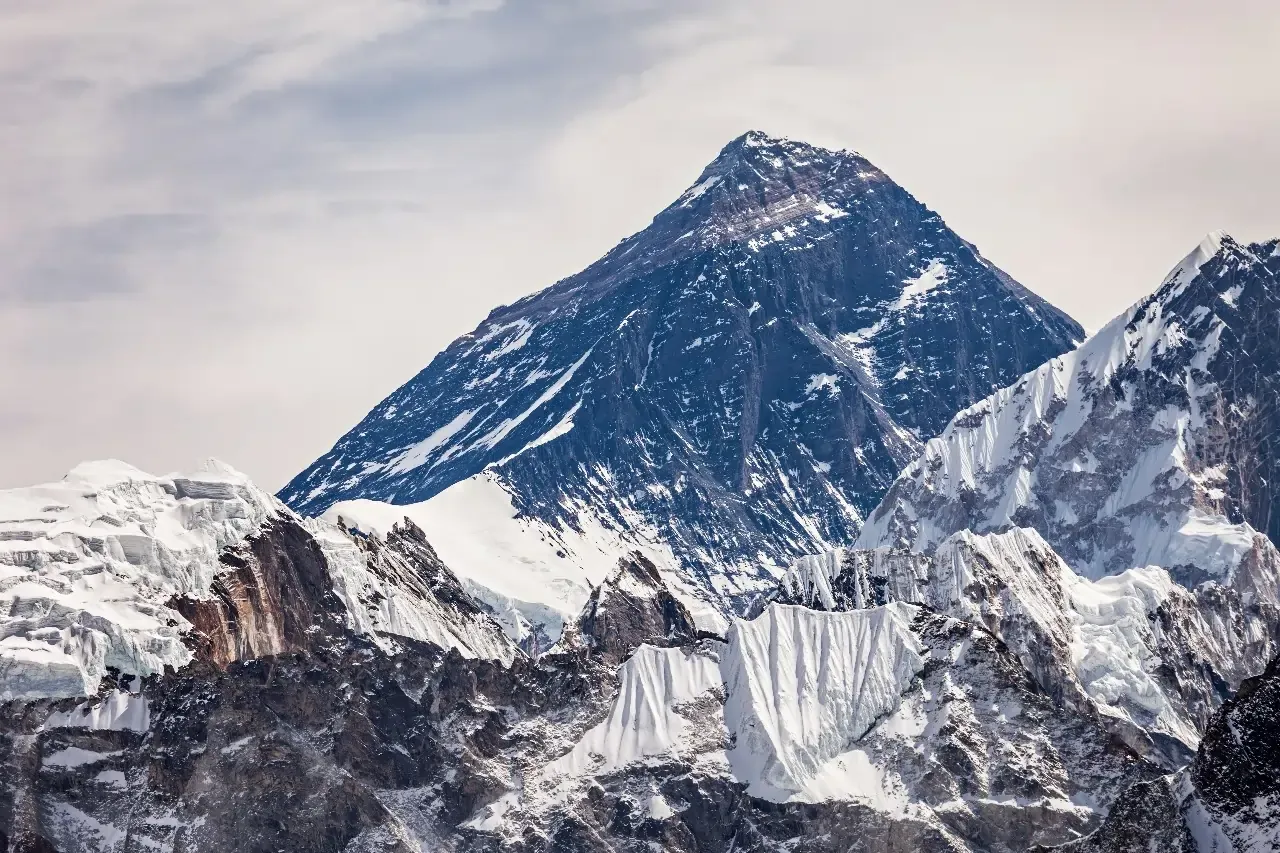
Mount Everest stands at 8,848.86 meters, the highest point on Earth above sea level, and it wasn't successfully climbed until 1953. It straddles the Nepal-China border, gets hit by some of the most extreme weather on the planet, and its summit rocks formed at the bottom of an ancient ocean millions of years before the Himalayas existed. Climbers have set records here that sound almost unbelievable, from summits completed in under 10 hours to a single Sherpa guide standing on top more than 30 times.
We put together this list of 15 facts about Mount Everest covering its geography, history, science, climbing records, and the human stories that make this mountain more than just the world's tallest peak. Whether you're planning a trek toward Everest yourself or just want the facts other lists get wrong, this is the rundown.
15 Incredible Facts About Mount Everest
1. Mount Everest Is 8,848.86 Meters High
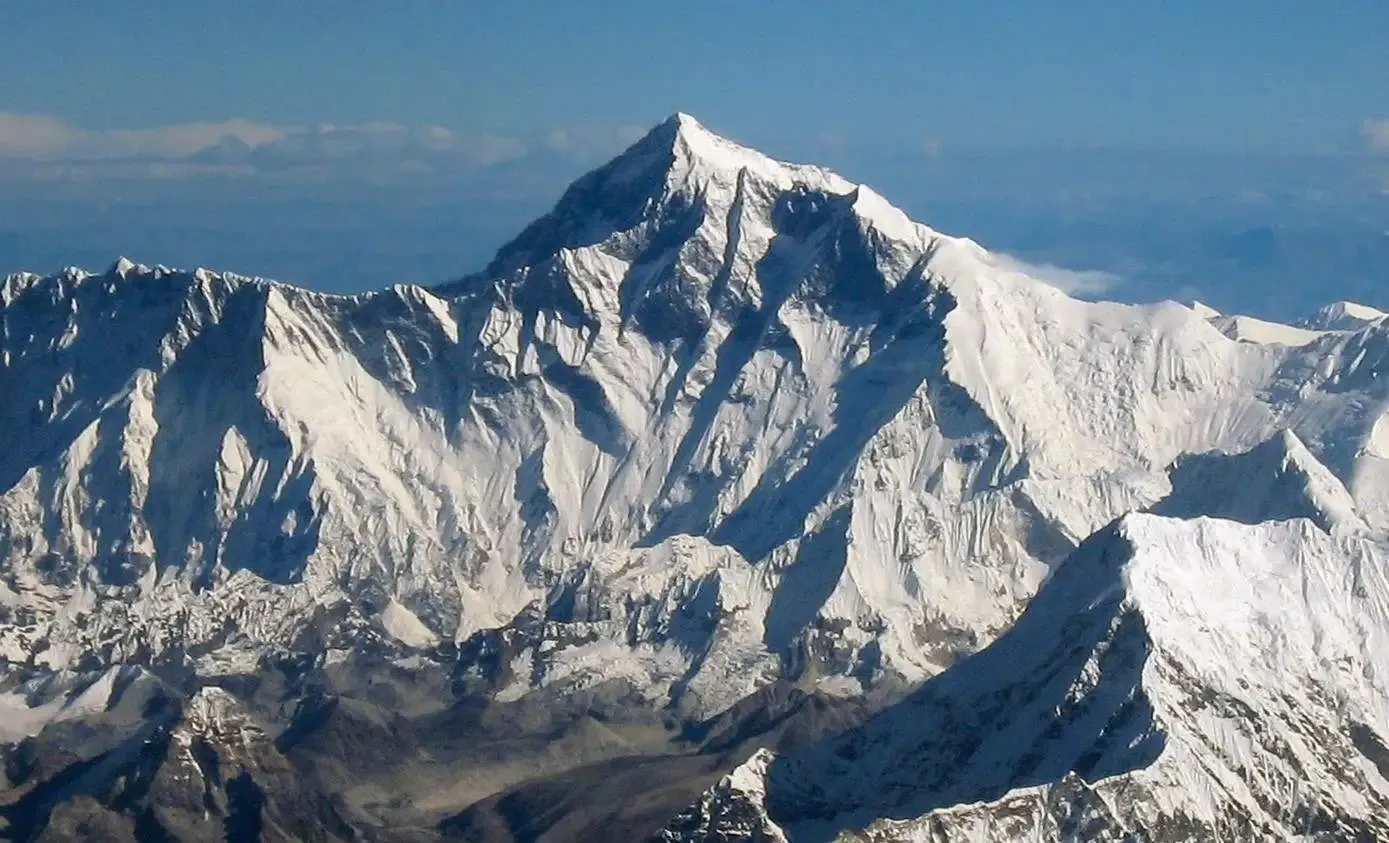
Mount Everest's official elevation is 8,848.86 meters (29,031.7 feet), a figure jointly confirmed by Nepal and China in a 2020 survey, ending decades of disagreement between the two countries' measurements.
Before that joint survey, Nepal had long used a 1954 Survey of India figure of 8,848 meters, while China's own measurements (which excluded the snow cap) put the summit slightly lower. The 2020 measurement used GPS and satellite technology alongside on-the-ground surveying from a Nepali survey team that trekked to the summit specifically to place equipment there. It's now the figure recognized by both governments and used in nearly every current source on Everest's height.
2. Everest Was First Successfully Climbed in 1953
Edmund Hillary, a New Zealand mountaineer, and Tenzing Norgay, a Sherpa climber from the Khumbu region, reached the summit together on May 29, 1953, becoming the first confirmed climbers to stand on top of Everest. They climbed via the South Col route from Nepal, part of a British expedition led by John Hunt.
The achievement mattered far beyond mountaineering circles. It came after more than three decades of failed British attempts on the mountain, and it proved that the summit, long considered a physiological limit for the human body, was actually reachable. Tenzing Norgay's role also shifted global recognition toward Sherpa climbers, whose skill and high-altitude knowledge had made every prior expedition possible even when they weren't credited for it. Climbers who want to walk in their footsteps today usually do it through a trek to Everest Base Camp, which follows much of the same approach the 1953 team used.
3. Mount Everest Lies on the Nepal-China Border
Everest sits directly on the border between Nepal and the Tibet Autonomous Region of China, with the mountain accessible from both sides through separate approaches. Nepal calls it Sagarmatha; in Tibetan, it's known as Chomolungma (also spelled Qomolangma).
The Nepal side is approached through the Khumbu region via Lukla, while the Tibet side is reached by road from Lhasa. Most commercial climbers and trekkers use the Nepal approach, partly because of easier permit access and partly because it's home to the classic Khumbu trekking trail system. For a full geographic breakdown, see our guide on where Mount Everest is located.
4. Everest Is Not the Tallest Mountain From Base to Summit
Everest is the highest point above sea level, but it isn't the tallest mountain when measured from base to peak. That distinction goes to Mauna Kea in Hawaii, which rises more than 10,000 meters from its base on the ocean floor, even though only about 4,207 meters of it sits above sea level.
The difference comes down to how you define "tallest." Everest wins on elevation above sea level, the standard most people mean when they ask which mountain is tallest. Mauna Kea wins if you measure the full rock structure from its underwater base, most of which is submerged. Both facts are correct; they're just answering different questions.
5. Everest's Summit Contains Rocks That Formed in an Ancient Ocean
The rock near Everest's summit is marine limestone, formed from sediment on the floor of the ancient Tethys Ocean roughly 400–450 million years ago, long before the Himalayas existed.
The limestone ended up at the top of the world's highest mountain because of plate tectonics. When the Indian tectonic plate collided with the Eurasian plate around 50 million years ago, the ocean floor between them was folded and thrust upward, eventually forming the Himalayan range. That means climbers standing on Everest's summit are technically standing on what was once an ancient seabed, a detail that gives the mountain a genuinely fascinating geological backstory beyond its height.
6. Sherpas Perform Puja Before Everest Expeditions
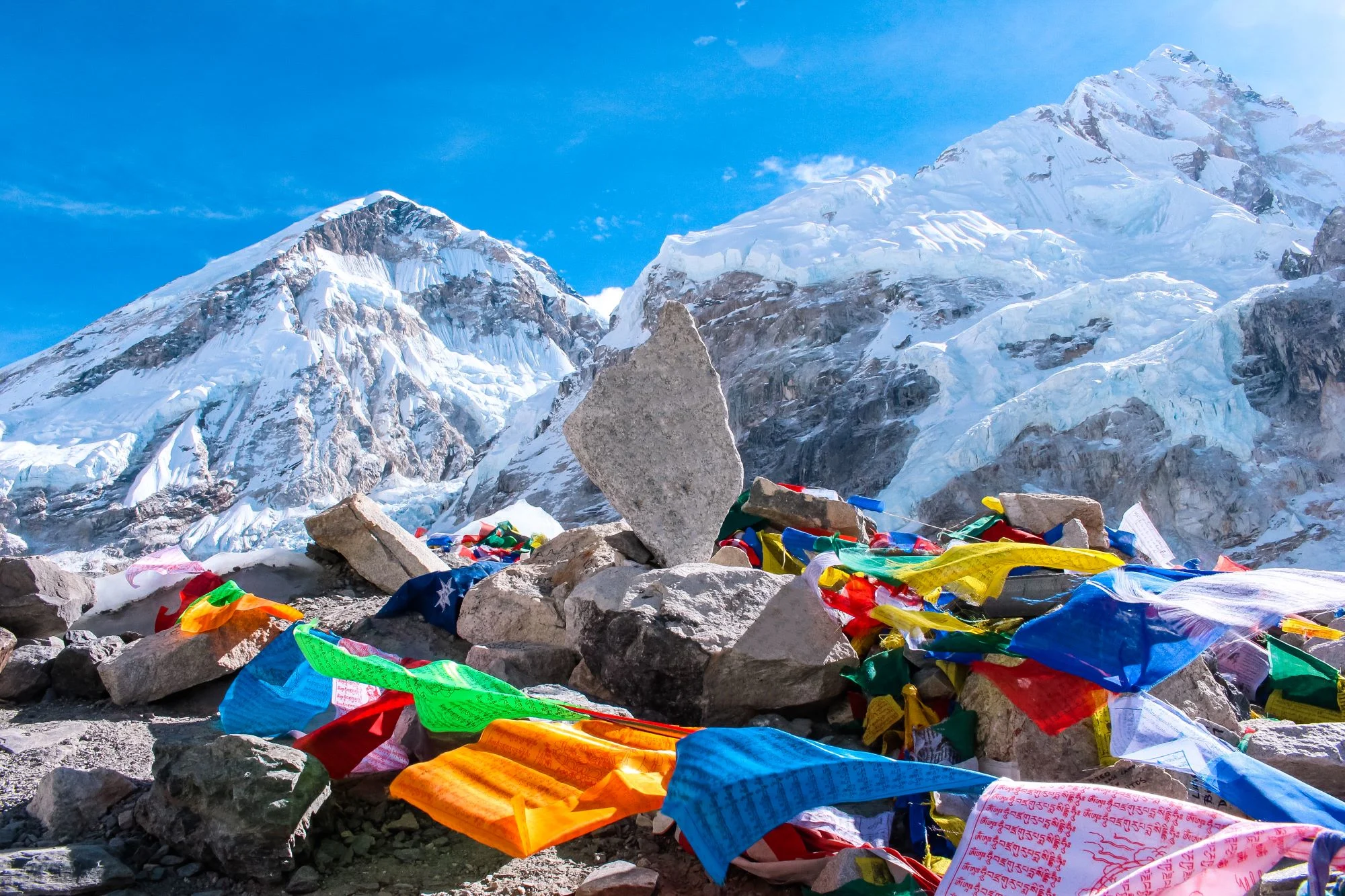
Before any Everest expedition on the Nepal side begins climbing, Sherpa guides and climbers typically take part in a puja ceremony, a Buddhist blessing ritual performed at Base Camp to ask for a safe journey up the mountain.
A local lama or a senior Sherpa leads the ceremony, which usually involves chanting, the burning of juniper branches, and the raising of prayer flags that stretch out from a central altar. This is a deeply rooted part of Khumbu culture, reflecting the region's Buddhist traditions and the reverence Sherpa communities hold for the mountain. Most foreign climbers and trekking teams take part out of respect, and expedition operators generally treat the ceremony as a non-negotiable part of the climbing schedule rather than an optional formality.
7. Kami Rita Sherpa Holds the Record for the Most Everest Summits
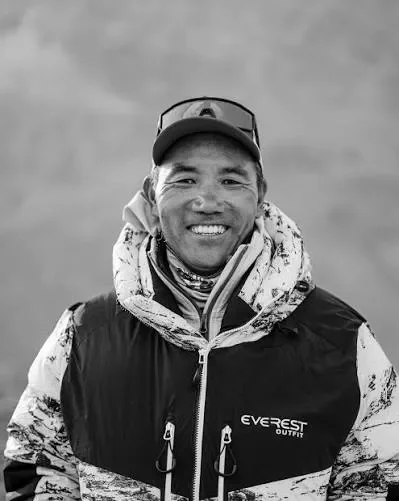
Kami Rita Sherpa holds the world record for the most Everest summits by any climber in history. He reached the top for the 32nd time on May 17, 2026, a record confirmed by Nepal's Department of Tourism.
Kami Rita, from Thame in the Solukhumbu district, first summited Everest in 1994 and has climbed it almost every year since, sometimes twice in a single season, while working as a high-altitude guide. His closest competitor, fellow Sherpa guide Pasang Dawa Sherpa, remains well behind his total. Because this record gets broken almost every climbing season, always check for the latest confirmed number before citing it elsewhere.
8. Everest's Weather Can Change Extremely Quickly
Everest's weather is shaped by high winds, sudden storms, extreme cold, and the influence of the jet stream, which can bring hurricane-force winds to the upper mountain with little warning.
Above 8,000 meters, temperatures regularly drop well below -30°C, and whiteout conditions can descend on the summit ridge within a short window, cutting visibility to almost nothing. This is exactly why expedition teams track forecasts so closely and wait for narrow weather windows, brief stretches of calmer conditions, usually in May, before attempting a summit push. A late or missed window is one of the most common reasons expeditions turn back without reaching the top.
9. Climbers Have Held Weddings on Everest
Everest has hosted at least one summit wedding, when Nepali couple Moni Mulepati and Pem Dorjee Sherpa married at the top of the mountain in 2005, a ceremony that drew international media attention.
Other couples have chosen to marry at Everest Base Camp instead, at a slightly more forgiving altitude but still with the mountain as the backdrop. These stories tend to stick with people precisely because they're such a contrast to Everest's usual reputation for danger and hardship, and they've become a recurring, lighter thread in Everest's broader climbing history.
10. People of Different Ages Have Summited Everest
Everest has been climbed by some of the youngest and oldest people to summit the mountain. American climber Jordan Romero summited at age 13 in 2010, and Indian climber Malavath Purna reached the top at age 13 in 2014, becoming among the youngest ever to do so.
On the other end, Japanese climber Yuichiro Miura summited at age 80 in 2013, and Japanese climber Tamae Watanabe reached the top at age 73 in 2012 as one of the oldest women to summit. These achievements say as much about training, acclimatization planning, and support teams as they do about age itself, since climbing Everest at either extreme requires serious preparation regardless of how many years someone has on the clock.
11. Some Climbers Have Reached the Summit in Less Than 10 Hours
The current fastest ascent of Everest with supplemental oxygen from Base Camp is 9 hours and 55 minutes, set by American climber Tyler Andrews on May 28, 2026, beating the previous record of 10 hours, 56 minutes held by Nepali climber Lhakpa Gelu Sherpa since 2003.
Both records were set via the South Col route on the Nepal side. It's worth being clear that a speed record like this is not representative of a normal Everest expedition. Standard guided climbs, which include weeks of acclimatization rotations between Base Camp and the higher camps, typically take around two months from arrival to summit and return, a pace that exists specifically to protect climbers from altitude sickness rather than to chase a clock.
12. More Than 340 People Have Died on Mount Everest
Everest has claimed more than 340 lives since expeditions began in the 1920s, according to the Himalayan Database, which tracks climbing history on the mountain in detail. Causes include avalanches, falls, extreme weather, and altitude-related illness, with the Khumbu Icefall counted among the most dangerous sections of the standard Nepal route.
One of the earliest and most famous losses came in 1924, when British climber George Mallory disappeared on the mountain during an early summit attempt, a story significant enough that we've covered it separately below. Everest's death toll reflects both the scale of the mountain's dangers and the sheer number of people who have attempted it, now well over 13,000 summits across a century of climbing.
13. George Mallory's Everest Mystery Remains Unresolved
British climber George Mallory and his climbing partner Andrew Irvine disappeared on Everest during their 1924 summit attempt, last seen by a fellow expedition member climbing toward the summit before clouds closed in around them.
Mallory's body was found in 1999, 75 years later, on the north side of the mountain, but no camera was recovered and Irvine's body has never been located. Because of this, it's genuinely unknown whether the pair reached the summit nearly 30 years before Hillary and Norgay's confirmed 1953 ascent. It remains one of mountaineering's great unanswered questions, and one of the more compelling stories connected to the mountain's early climbing history.
14. Everest's Main Climbing Season Is a Short Weather Window
Everest's primary climbing season on the Nepal side is a narrow window in spring, with most successful summits happening in mid-to-late May after weeks of acclimatization through April. Autumn attempts are technically possible but are far less common and far less reliable for standard Everest summit expeditions than they are on lower Himalayan treks.
The reason comes down to the jet stream. In spring, it typically shifts north of the summit for a short period, creating calmer wind conditions high on the mountain. Expedition teams track forecasts closely and hold at higher camps until that window opens, sometimes for days. June through August, the monsoon season, isn't just a landslide risk on lower approach roads; on the mountain itself, the bigger issue is heavy cloud cover, precipitation, and unpredictable weather patterns that make a summit push far too risky to attempt.
15. Mount Everest Is Still Rising
Mount Everest continues to grow taller, driven by the ongoing collision between the Indian and Eurasian tectonic plates. Current scientific estimates, based on a 2024 study published in Nature Geoscience, put Everest's uplift at around 2 millimeters per year, a rate that combines tectonic pressure with a process called isostatic rebound.
That figure isn't the same as saying Everest gets exactly 2 millimeters taller every single year. Erosion, snowfall variation, and other geological processes also affect the mountain's measured elevation, so the net change over any given year can differ from the underlying uplift rate. Scientists generally treat 2 millimeters annually as a solid working estimate rather than a fixed, guaranteed figure, and it's worth checking current geological literature before quoting an exact number in future updates.
Bonus Mount Everest Facts
A few more details worth knowing that didn't need a full section of their own:
Everest is called Sagarmatha in Nepal.
It's known as Chomolungma (or Qomolangma) in Tibetan.
The mountain is part of the Mahalangur Himal range.
Everest has two main climbing approaches: the South Col route from Nepal and the North Col route from Tibet.
The summit sits in the death zone, above 8,000 meters, where oxygen levels are too low to sustain human life for extended periods.
The Khumbu Icefall, just above Everest Base Camp on the Nepal side, is one of the most dangerous sections of the entire route, with shifting ice towers called seracs that can collapse without warning.
Why Is Mount Everest So Difficult to Climb?
Extreme Altitude
At 8,848.86 meters, Everest's summit sits well into the death zone, where the human body cannot acclimatize no matter how much time it's given, forcing climbers to move quickly once they pass roughly 8,000 meters.
Low Oxygen Levels
Air pressure at Everest's summit is only about a third of sea-level pressure, meaning each breath delivers a fraction of the oxygen a climber's body needs, which is why most Everest climbers use supplemental oxygen above the higher camps.
Freezing Temperatures
Summit temperatures regularly drop below -30°C, and wind chill can push that figure dramatically lower, creating serious risk of frostbite and hypothermia even on otherwise clear days.
High Winds and Sudden Weather
Jet-stream winds can hit the upper mountain at well over 100 km/h, and conditions can shift from clear skies to a whiteout in a short amount of time, which is why expedition teams plan so carefully around forecast weather windows.
Khumbu Icefall and Crevasses
The Khumbu Icefall involves navigating shifting glacial ice, deep crevasses, and aluminum ladder crossings, and it has to be crossed multiple times during a standard expedition's acclimatization rotations.
Long Acclimatization and Expedition Preparation
A standard guided Everest climb takes roughly two months, most of it spent on acclimatization rotations between Base Camp and the higher camps rather than climbing toward the summit itself. If that kind of high-altitude experience appeals to you without the full expedition commitment, our guide to the Everest climbing season breaks down how trekkers can time a Base Camp visit around the same weather windows climbers rely on.
Mount Everest Records at a Glance
Record | Person | Achievement |
|---|---|---|
First successful summit | Edmund Hillary & Tenzing Norgay | May 29, 1953 |
Most Everest summits | Kami Rita Sherpa | 32 summits (as of May 2026) |
Fastest ascent (with oxygen) | Tyler Andrews | 9 hours, 55 minutes (2026) |
Youngest male summiteer | Jordan Romero | Age 13 (2010) |
Youngest female summiteer | Malavath Purna | Age 13 (2014) |
Oldest male summiteer | Yuichiro Miura | Age 80 (2013) |
Oldest female summiteer | Tamae Watanabe | Age 73 (2012) |
Records like these change almost every climbing season, so treat this table as a snapshot rather than a permanent list, and verify current figures before republishing.
Frequently Asked Questions
What is Mount Everest famous for?
Mount Everest is famous for being the highest mountain on Earth above sea level, at 8,848.86 meters, and for the extreme difficulty, history, and record-setting climbs associated with reaching its summit.
How high is Mount Everest?
Mount Everest stands at 8,848.86 meters (29,031.7 feet), based on the joint 2020 Nepal-China survey.
Where is Mount Everest located?
Mount Everest sits on the border between Nepal and the Tibet Autonomous Region of China, in the Mahalangur section of the Himalayas.
What is Mount Everest called in Nepal?
In Nepal, Mount Everest is called Sagarmatha.
What is Mount Everest called in Tibet?
In Tibetan, Mount Everest is known as Chomolungma, sometimes spelled Qomolangma.
Who was the first person to climb Mount Everest?
Edmund Hillary and Tenzing Norgay were the first confirmed climbers to reach the summit, on May 29, 1953.
How many people have died on Mount Everest?
More than 340 people have died on Mount Everest since expeditions began in the 1920s, according to the Himalayan Database.
Why is Mount Everest so dangerous?
Everest is dangerous because of extreme altitude, low oxygen levels, freezing temperatures, sudden weather changes, and hazardous terrain like the Khumbu Icefall, all of which combine to make even well-prepared expeditions genuinely risky.
Can Mount Everest grow taller?
Yes. Current scientific estimates put Everest's uplift at around 2 millimeters per year, driven by ongoing tectonic collision and isostatic rebound, though actual measured elevation change can vary due to erosion and other factors.
What is the 2 PM rule on Mount Everest?
The "2 PM rule" is a commonly used turnaround guideline, not a universal official rule, where climbers are advised to turn back from the summit push if they haven't reached the top by around 2:00 PM, regardless of how close they are, to leave enough daylight for a safe descent. Exact turnaround times vary by expedition, route, and conditions.
Conclusion
Everest is a lot more than the world's highest mountain. Its geology tells the story of an ancient ocean floor pushed to the top of the planet, its climbing history holds one of mountaineering's great unsolved mysteries, and its record books keep getting rewritten by climbers pushing the limits of speed, age, and endurance.
You don't need to summit Everest to experience what makes it so remarkable. Even a shorter Everest Base Camp helicopter tour puts you in the same Khumbu valleys, past the same Sherpa villages, and within sight of the same summit ridge, without the technical climbing or the death-zone risk.
Ready to Trek Everest?
Curious about seeing Everest up close for yourself? Talk to our local trekking coordinators or browse tailored Everest region itineraries built around your fitness level and travel dates.