Contents
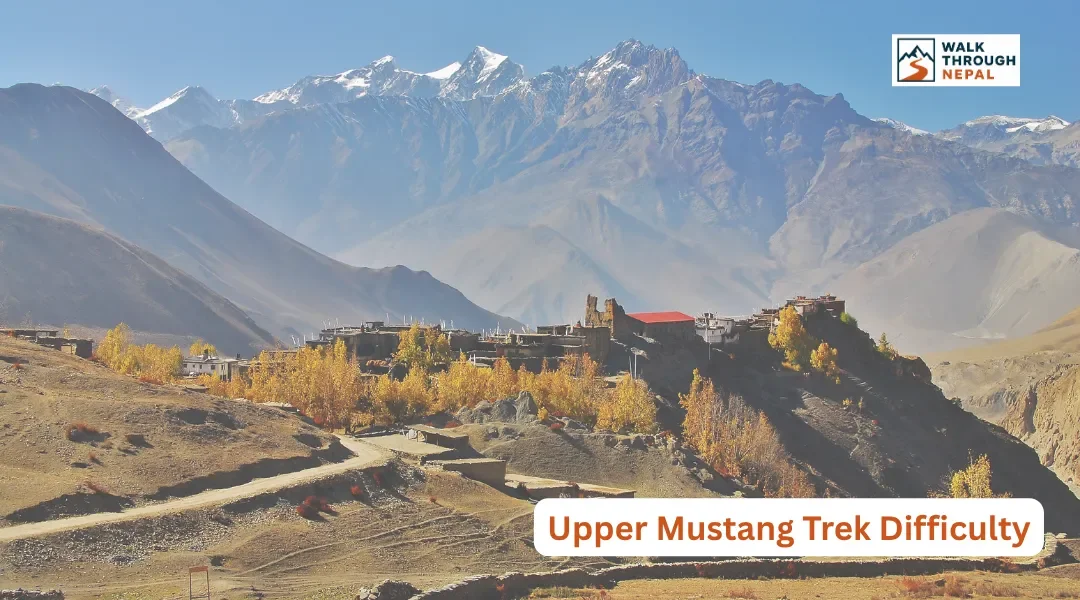
Upper Mustang does not test your legs the way Thorong La or the Everest passes do. It tests your patience with wind, your lungs against high-desert dryness, and your ability to keep walking through long, exposed days on trails the color of rust and bone.
Trekkers show up expecting altitude to be the challenge and leave talking about the wind instead. This guide breaks down exactly where the real difficulty comes from, day by day, so you know precisely what you're training for before you commit.
How Difficult Is the Upper Mustang Trek?
The Upper Mustang trek is rated moderate. The highest sleeping point sits near 3,840 meters at Lo Manthang, and the route tops out around 4,230 meters on the Ghar Gompa variation. Severe altitude sickness is uncommon here. The real difficulty comes from long daily stages of 6 to 7 hours, relentless afternoon wind, dust, and dry, uneven high-desert terrain rather than thin air.
If you can comfortably hike a full day carrying a daypack and handle repeated, unglamorous hours of walking rather than one dramatic summit push, you can do this trek.
What Actually Makes This Trek Difficult
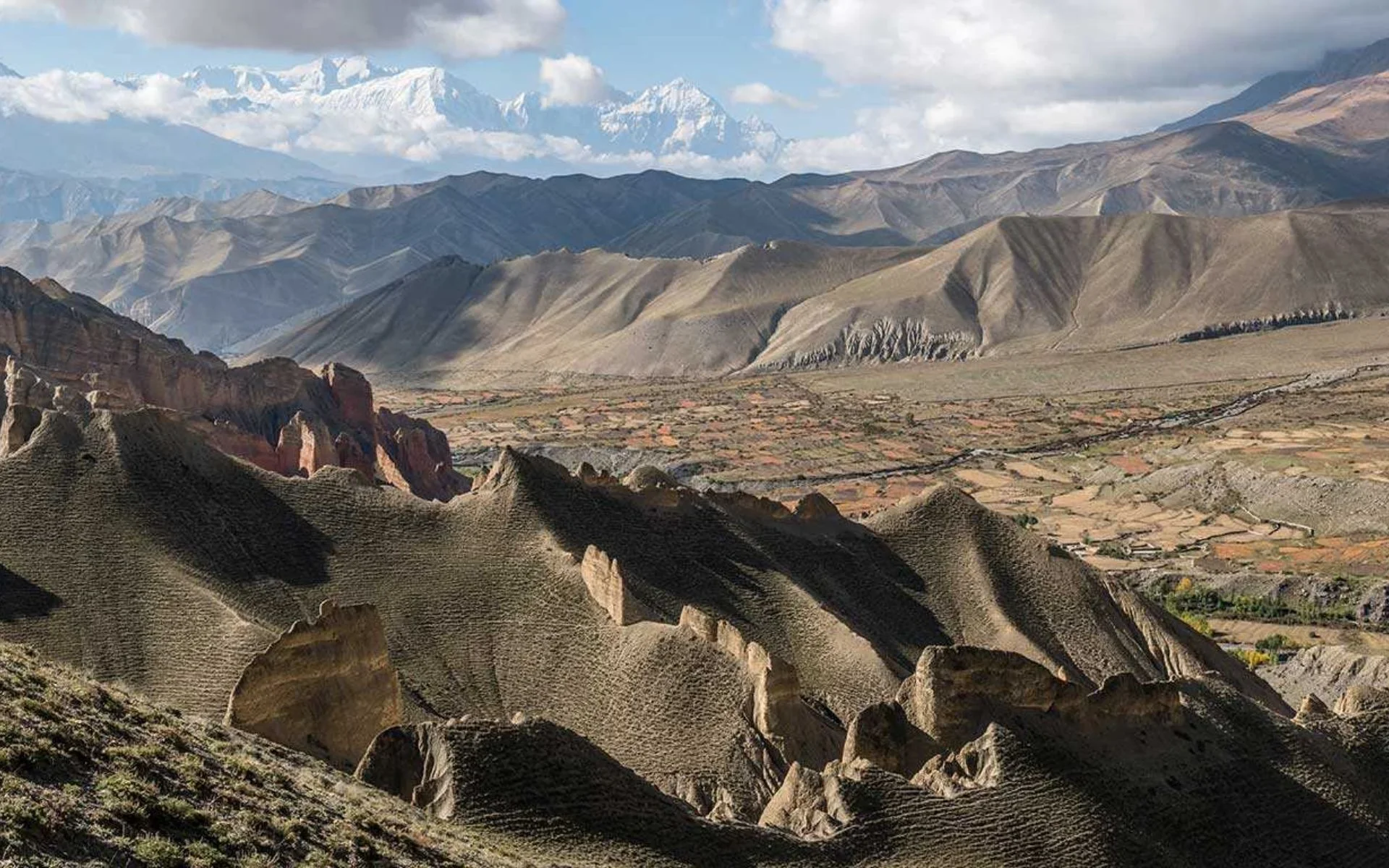
Most difficulty guides default to altitude as the headline factor. Here, that's the wrong lens. Compared to the Annapurna Base Camp trek or the Annapurna Circuit, Mustang is gentler on altitude but harder on stamina and comfort. You're covering a lot of hours across barren ridges and dry river valleys with almost no shade, and the wind, not the elevation, is what wears people down.
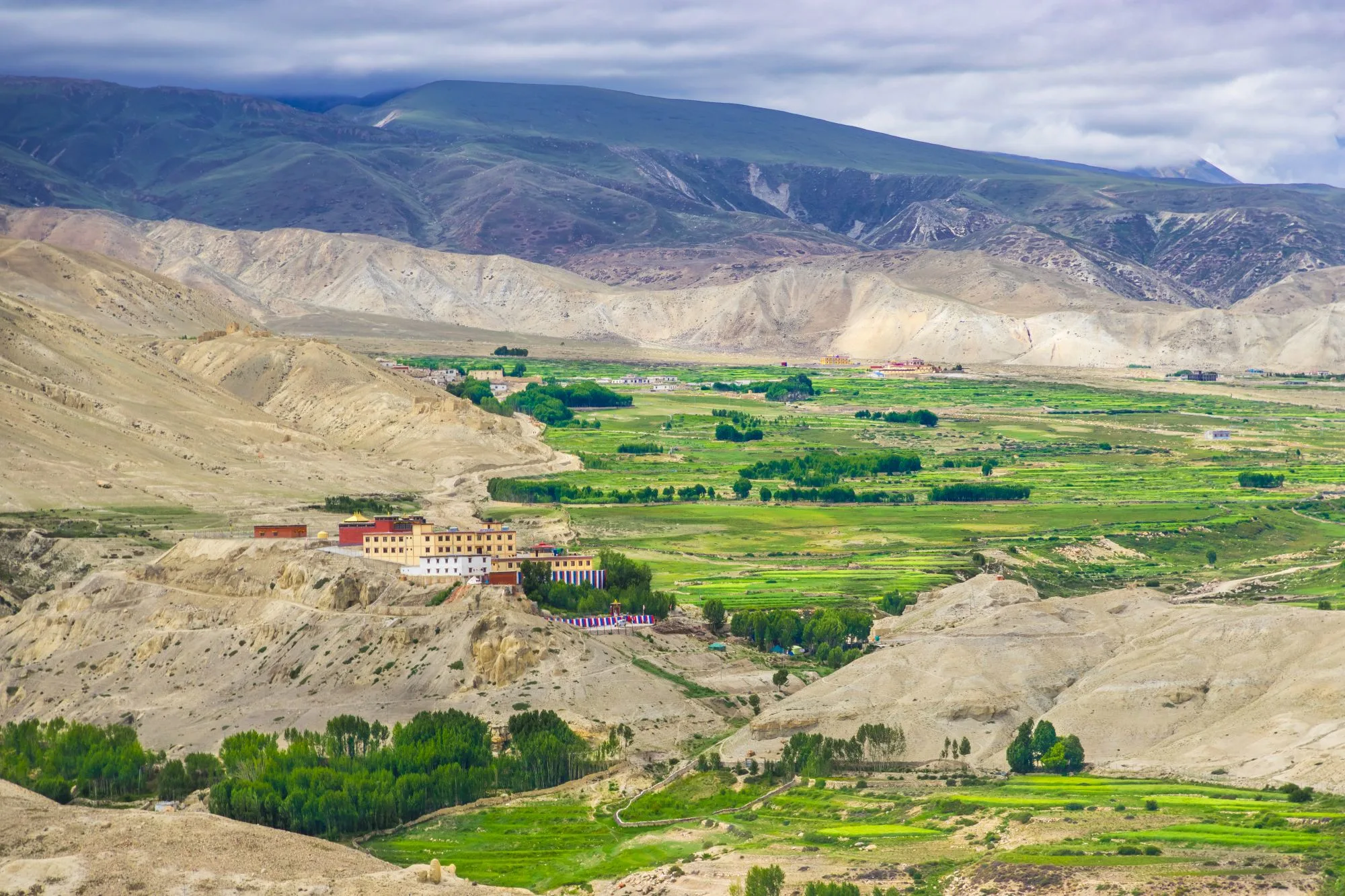
The terrain type surprises many first-timers too. This isn't lush forest and rhododendron; it's a cold, wind-scoured Tibetan plateau of ochre cliffs, eroded canyons, and mud-brick villages. The physical demand is steady and grinding rather than a single brutal effort, which is a different kind of hard than most trekkers expect walking in.
Who Should Consider This Trek
Upper Mustang suits trekkers who want cultural depth over extreme altitude challenge. It works well for reasonably fit walkers from their teens into their sixties and beyond, provided there are no serious cardiac or respiratory conditions, because the altitude curve here is genuinely forgiving compared to most Himalayan routes.
Complete beginners shouldn't rule it out, but they should train first rather than treat this as an easy starter trek just because the altitude is lower. If you've never trekked before, our best treks in Nepal for beginners guide is worth reading before committing to Mustang's long, remote days specifically.
Day-by-Day Difficulty Breakdown
The classic route runs from Jomsom north to Lo Manthang and back, alternating between wide dusty jeep tracks and older walking paths that climb over ridges and passes. Expect several ascents and descents of 400 to 600 meters per day rather than one single defining climb.
Day | Route | Elevation | Walking Time |
|---|---|---|---|
1 | Fly/drive to Jomsom, trek to Kagbeni | 2,810 m | 3-4 hrs |
2 | Kagbeni to Chele | 3,050 m | 6 hrs |
3 | Chele to Syangboche | 3,800 m | 6-7 hrs |
4 | Syangboche to Ghami | 3,520 m | 5-6 hrs |
5 | Ghami to Tsarang | 3,560 m | 5 hrs |
6 | Tsarang to Lo Manthang | 3,840 m | 5-6 hrs |
7 | Lo Manthang exploration (rest/acclimatize) | 3,840 m | Day trips |
8-12 | Return via Dhakmar, Ghar Gompa, Muktinath | up to 4,230 m | 5-7 hrs |
The Hardest Single Day
For most trekkers, the climb from Chele up toward Syangboche is the toughest day on the route: significant height gain across exposed switchbacks, with wind hitting you head-on by midday. It's also the day that rewards you with your first true view into the wind-carved canyons of Lo, so the difficulty and the payoff arrive together.
Terrain and Trail Conditions: What the Ground Actually Does
The ground underfoot is dry, gravelly, and often loose. Expect eroded clay cliffs, dry stream crossings, and long open stretches where the wind carries fine dust into everything you own. A buff or face covering isn't optional gear here, it's essential. Afternoons routinely bring strong headwinds, which is why local stages start early and finish by early afternoon rather than push into evening.
This constant exposure, not any single climb, is what makes multi-day stretches feel harder than the elevation numbers suggest on their own.
How Much Does Altitude Add to the Difficulty?
Upper Mustang stays mostly between 3,000 and 3,840 meters, with a brief high point near 4,230 meters. Acute Mountain Sickness is far less likely than on high-pass treks like Thorong La, but it's never zero, and the standard rule still applies above 3,000 meters: sleeping elevation should not rise more than 300 to 500 meters per day. The built-in rest day at Lo Manthang exists specifically to manage this, and skipping it to save a day is one of the more common ways trekkers turn a moderate trek into a genuinely difficult one. For the full breakdown of symptoms, prevention, and what your guide watches for, see our dedicated altitude guide.
Fitness Requirements and Training Plan
You need solid cardiovascular endurance and the ability to walk 6 to 7 hours a day for around two weeks on uneven terrain. You don't need to be an athlete. What you need is the base fitness to hold a steady uphill pace without total exhaustion, day after day, which is a different requirement than being able to run fast or lift heavy.
We recommend starting training 8 to 12 weeks before departure. The single best preparation is hill walking with a loaded daypack, the same load and terrain type you'll actually face on the trail.
Suggested Training Focus
Endurance: Long walks of 4 to 6 hours on hilly ground, ideally back-to-back on weekends to simulate consecutive trekking days.
Leg strength: Squats, lunges, and step-ups to protect your knees on the repeated descents.
Core stability: Planks and balance work for uneven, loose trail surfaces.
Pack conditioning: Train wearing the actual daypack you'll carry, not just walking unloaded.
Strong knees matter more than most trekkers expect here, because of repeated descents into and out of dry river valleys rather than one sustained downhill. Trekking poles take real load off your joints and help with balance when the wind picks up.
How Upper Mustang Compares in Difficulty to Other Nepal Treks
Against Annapurna Base Camp, Mustang is easier on altitude but similar or harder on stamina due to long daily walking hours, wind, and dust; ABC reaches 4,130 meters quickly, while Mustang climbs more gradually but for longer. Against the Annapurna Circuit and its Thorong La crossing near 5,400 meters, Mustang is meaningfully easier on the lungs but demands more consistent daily endurance since there's no single pass day to anchor your effort around. Against Everest Base Camp, the comparison flips: EBC's difficulty is almost entirely altitude-driven, while Mustang's is terrain and weather-driven, which makes them hard to compare on a single scale even though both sit in the "moderate to challenging" bracket.
Common Difficulty Mistakes Trekkers Make
A few patterns show up every season among trekkers who found this trek harder than expected. Many underestimate the wind and treat it as a minor inconvenience rather than the defining physical stressor it actually is, arriving without a proper buff or windproof shell. Others train for altitude gain specifically, doing stair climbs and elevation work, while neglecting the flat-out endurance walking that this route actually demands hour after hour.
A smaller but consistent group skips the Lo Manthang rest day to save a day on their itinerary, not realizing it's built in as much for physical recovery from the wind and dust as for altitude. And some trekkers arrive fit for cardio but with untrained knees, then struggle on the repeated descents that this route's terrain profile is full of.
Frequently Asked Questions
Is Upper Mustang harder than Annapurna Base Camp?
It's easier on altitude but similar or harder on stamina due to long daily walking hours, wind, and dust. ABC reaches 4,130 meters quickly, while Mustang climbs more gradually.
Do beginners struggle on this trek?
Beginners can complete it with proper training, since it requires no technical skills, but the long daily hours and wind catch untrained trekkers off guard more than the altitude does.
What is the hardest day on the route?
The climb from Chele to Syangboche is the toughest single day for most trekkers, combining the steepest sustained ascent with exposed, wind-battered terrain.
How many hours do I walk each day?
Most days run 5 to 7 hours, with a handful of shorter 3 to 4 hour days at the start and end of the trek.
Is altitude sickness a real risk on this trek?
It's less likely than on high-pass treks like Thorong La, since the highest point is around 4,230 meters, but standard acclimatization rules still apply above 3,000 meters.
How much training do I need before I go?
We recommend 8 to 12 weeks of preparation focused on long hill walks with a loaded daypack, leg strength work, and core stability for uneven terrain.
Is the wind really that big a factor?
Yes. Afternoon winds are strong and near-constant, which is why local stages start early and finish by early afternoon rather than push into the windier hours.
Do I need trekking poles?
They're strongly recommended, both for balance in the wind and to reduce knee strain on the trek's repeated descents into dry river valleys.
Can older trekkers handle this route?
Yes, reasonably fit trekkers well into their sixties and beyond regularly complete it, since the altitude curve is more forgiving than most other Himalayan treks.
Is this trek more about fitness or altitude tolerance?
Fitness and stamina matter more here than altitude tolerance. The route rewards steady endurance and wind resilience over the ability to handle thin air.
What should I train for that I might not expect?
Train your knees specifically for descents, not just your lungs for climbing, since the terrain profile involves as much down as up across dry valley crossings.
Does skipping the Lo Manthang rest day make the trek harder?
Yes. That day exists for physical recovery from wind and dust as much as altitude acclimatization, and skipping it tends to compound fatigue on the return stages.
Ready to Take On Upper Mustang?
Our licensed guides pace every group around the wind, the dust, and the daily distances covered here, adjusting the schedule to your group's fitness rather than forcing a fixed itinerary. Browse our Upper Mustang trek itinerary, check the permit requirements before you apply, or reach out through our inquiry page to start planning your training timeline.