Contents
“Can I actually do the Annapurna Base Camp trek?”
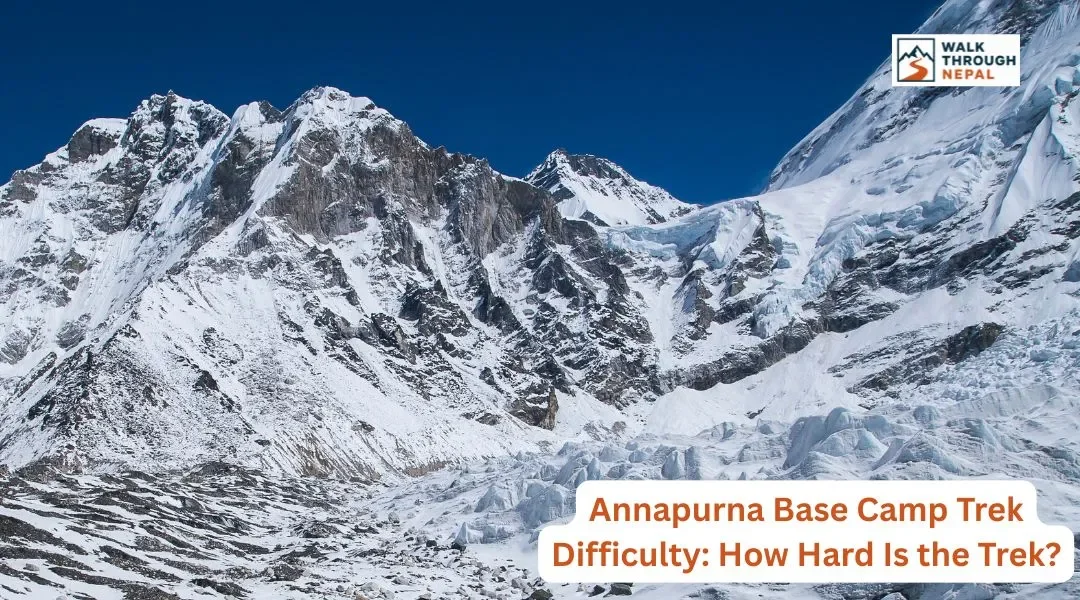
That’s the question most first-time trekkers ask before committing to the trail—and the honest answer is: probably, even if you’re not have any experience of trekking. Annapurna Base Camp is a moderate trek, not an extreme mountaineering expedition, but that doesn’t mean it’s easy. You’ll spend several days walking through changing terrain, climb thousands of stone steps, and eventually reach 4,130 meters above sea level.
What makes the trek difficult isn’t one brutal climb. It’s the combination of daily walking, steep ascents, altitude, weather, and how well your itinerary allows you to recover. Someone who rarely hikes may find it challenging, while a reasonably fit person with a well-paced itinerary can find it surprisingly manageable.
So, how difficult is the Annapurna Base Camp trek really? Let’s break down what makes the trail challenging, who can realistically complete it, and what you can do before the trek to make those difficult days much easier.
How Difficult Is the Annapurna Base Camp Trek?
Overall, the Annapurna Base Camp trek rates as moderate. This trek doesn’t require any technical climbing skills, ropes, or mountaineering skills, and the maximum sleeping altitude of 4,130 meters stays below the zone where severe altitude sickness becomes common. The real challenge is sustained daily effort over 7 to 12 days on uneven mountain terrain.
We find it more useful to break "moderate" into its parts rather than leave it as a single label. Difficulty on ABC is a mix of the following:
Physical endurance — can you walk uphill for hours, day after day?
Elevation — moderate altitude, but real above 3,000 meters.
Terrain — thousands of stone steps and rocky trails.
Daily walking — typically 5 to 7 hours.
Weather — snow, rain and heat all change the difficulty.
Recovery — how well you sleep and refuel between days.
Get those six factors right and the trek feels enjoyable. Ignore them and even a fit person can have a miserable time.
What Makes the Annapurna Base Camp Trek Difficult?
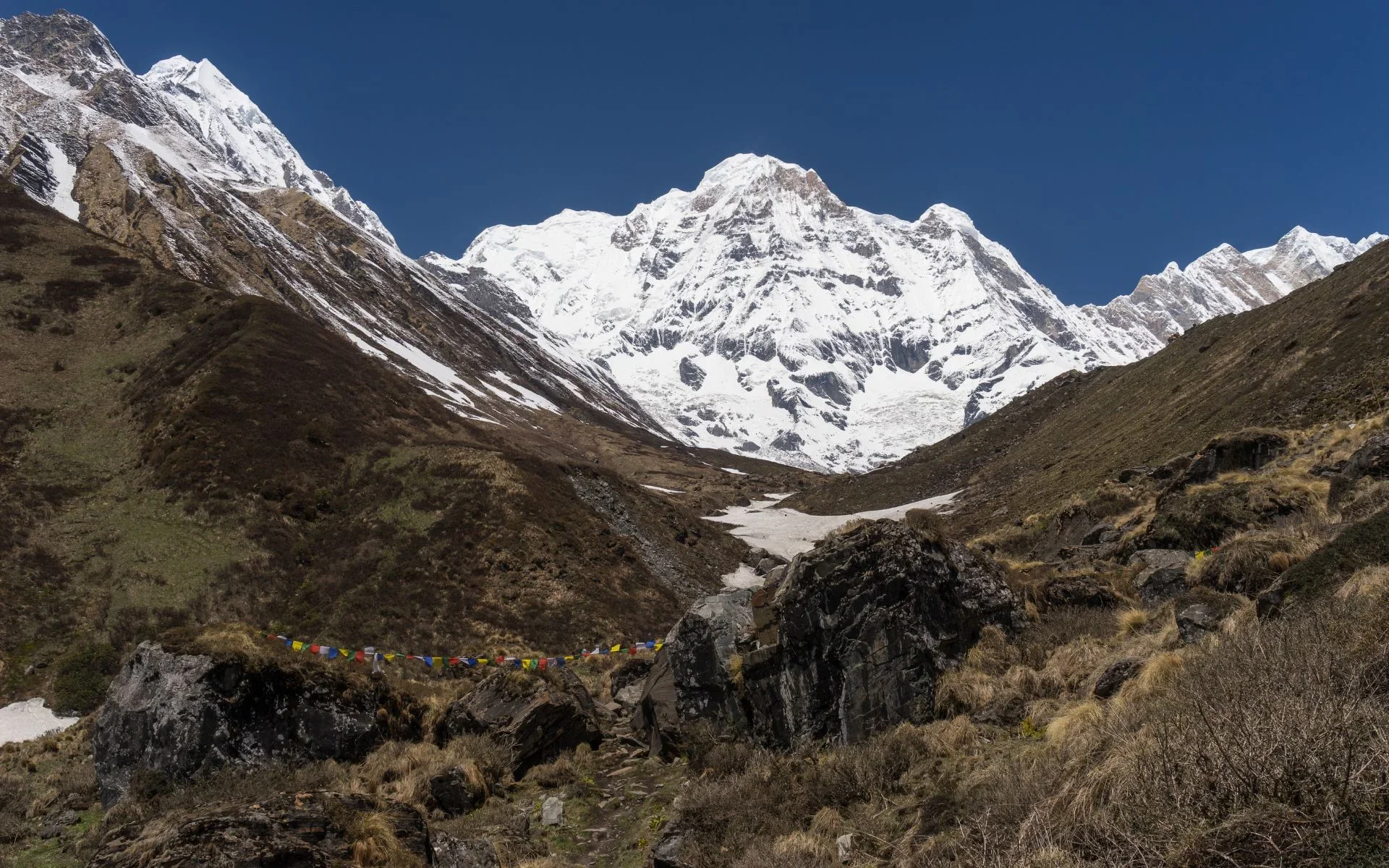
The hardest parts of ABC are the endless stone staircases, the accumulation of consecutive walking days, and the elevation gain above 3,000 meters. None of these are extreme individually, but together they demand steady endurance rather than short bursts of strength.
1. Long days of walking
You will walk most days regardless of how you feel. Sunny mornings and tired legs still add up to 5 to 7 hours of movement. The mental side of "walking again today" is what catches many first-timers off guard.
2. Steep ascents and descents
This trail is not a gentle uphill ramp. Sections like the climb to Chhomrong and the descent afterward involve thousands of stone steps. Steep downhill days are often harder on the knees than the climbs.
3. Altitude
Above 3,000 meters the thinner air makes you breathe harder and slows your pace. At 4,130 meters some people feel mild headaches or poor sleep. It is manageable with a sensible profile, but it is a genuine factor. For a deeper elevation breakdown we cover it separately.
4. Uneven terrain
Expect stone steps, muddy forest paths, rocky moraine near base camp, and slick sections after rain. Good footing and trekking poles reduce the strain considerably.
5. Weather
Weather can transform an easy day into a hard one. Lower-elevation forests get hot and humid, while spring snow near Machhapuchhre Base Camp and ABC can make the final push slippery and cold.
6. Consecutive trekking days
A single 6-hour day is fine. Six of them in a row, with tired muscles and less sleep at altitude, is what builds real fatigue. Pacing and recovery matter as much as raw fitness.
How Many Hours Do You Walk Each Day?
On the Annapurna Base Camp trek you typically walk 5 to 7 hours per day, with a couple of longer 7 to 8 hour stages depending on your itinerary. Distance alone is misleading here because elevation gain, stone steps and terrain matter far more than kilometers covered.
Shorter days often involve steep climbing that feels harder than longer, flatter days. A relaxed itinerary breaks the route into smaller stages, which lowers daily walking time and dramatically improves how the trek feels. Here is a realistic sample of daily effort:
Stage | Approx. Walking Time | Difficulty |
Nayapul / Jhinu to Chhomrong | 5-6 hours | Moderate, many steps |
Chhomrong to Bamboo / Dovan | 5-6 hours | Steep down then up |
Dovan to Deurali | 4-5 hours | Steady climb |
Deurali to ABC (4,130m) | 5-6 hours | Hardest, altitude gain |
ABC descent to Bamboo | 6-7 hours | Long, knee strain |
To protect against altitude, we never let sleeping elevation rise more than 300 to 500 meters per day once you are above 3,000 meters, and we build in a slower approach to base camp.
How Much Fitness Do You Need for ABC Trek?
You need solid aerobic endurance and reasonable leg strength for the Annapurna Base Camp trek, but you do not need to be an athlete. If you can comfortably walk uphill and climb stairs for a few hours without stopping, you have the base fitness to complete ABC with proper training.
The types of fitness that actually matter on this trail are:
Cardiovascular endurance — for sustained uphill effort at altitude.
Leg strength — for endless stone steps up and down.
Walking endurance — the ability to keep moving for hours.
Stair capacity — the single best predictor of comfort on ABC.
Recovery — bouncing back overnight for the next day.
So to answer the common worry directly: no, you do not need to be extremely fit. You need to be prepared. A few weeks of consistent walking and stair work makes an enormous difference to how enjoyable the trek feels.
Can Beginners Do the Annapurna Base Camp Trek?
Yes, beginners regularly complete the Annapurna Base Camp trek successfully. It is one of Nepal's most beginner-friendly Himalayan treks because it stays below extreme altitude, has excellent teahouse infrastructure, and can be spread across a comfortable itinerary. Preparation and pacing matter more than prior trekking experience.
If this is your first multi-day trek, focus on these points:
Choose a longer itinerary rather than the fastest one.
Train with regular walking before you arrive.
Walk at your own slow, steady pace — never race others.
Prioritize sleep and hydration for recovery.
Hire a licensed guide and consider a porter to carry weight.
Understand the basics of altitude so you know what to watch for.
Nepal now strongly enforces licensed guide rules across major regions, including Annapurna, so a good guide is both a safety asset and a regulatory reality. Beginners in particular benefit from a properly planned trek and experienced support rather than simply booking the cheapest or fastest package. When you compare options, check the full Annapurna Base Camp trek cost breakdown so you understand exactly what is included in your itinerary.
Is ABC Harder Than Other Popular Nepal Treks?
The Annapurna Base Camp trek sits in the middle of Nepal's difficulty scale. It is harder than short treks like Poon Hill but noticeably easier than high-altitude routes such as Everest Base Camp. Its defining challenge is consecutive walking days combined with moderate altitude rather than technical or extreme conditions.
Trek | Relative Difficulty | Main Challenge |
Poon Hill | Easier | Stairs, short duration |
Annapurna Base Camp | Moderate | Consecutive walking + altitude |
Mardi Himal | Moderate | Steeper, exposed sections |
Annapurna Circuit | Moderate-Hard | High pass at Thorong La |
Everest Base Camp | Harder | Higher altitude + longer trip |
Keep in mind that difficulty is subjective. A fit hiker may find ABC easy, while someone who skips training may find it tough.
How to Prepare for the Annapurna Base Camp Trek
Preparing for ABC means building walking endurance and leg strength over several weeks before your trip. Focus on hills and stairs rather than flat treadmills, and practice carrying a light loaded backpack. Good preparation turns a hard trek into a comfortable one.
Practical steps that consistently work for our trekkers:
Walk regularly, gradually increasing time on your feet.
Train on stairs and hills to mimic the stone steps.
Build endurance with back-to-back walking days on weekends.
Practice with a loaded daypack of 4 to 6 kilograms.
Break in your trekking shoes well before departure.
Prepare mentally for consecutive walking days.
On the trail, fuel matters as much as fitness. We advise sticking to fresh, locally grown carbohydrates and the classic Dal Bhat (lentil soup, rice and vegetable curry), which comes with free refills and provides clean, high-energy fuel. Prioritize vegetarian meals, since meat is carried up by foot over days without refrigeration.
Factors That Can Make ABC Trek Easier or Harder
The same trail can feel easy or exhausting depending on your choices. A gradual itinerary, good weather, proper gear and steady pacing make ABC noticeably easier, while rushing the schedule, carrying too much and poor preparation make it much harder.
Makes It Easier | Makes It Harder |
Good physical preparation | Little or no training |
Longer, gradual itinerary | Rushed, compressed schedule |
Comfortable steady pace | Racing or overexertion |
Clear, dry weather | Snow, rain or heat |
Light pack with a porter | Heavy overloaded backpack |
Good sleep and recovery | Poor rest at altitude |
Safety, Altitude and Practical Essentials
Even on a moderate trek, altitude and preparation deserve respect. Above 3,000 meters, watch for headaches, nausea or poor sleep, and never ascend faster than 300 to 500 meters of sleeping elevation per day. We build acclimatization into every itinerary.
A few essentials our team insists on:
Insurance: Carry a policy that specifically covers high-altitude helicopter evacuation up to 6,000 meters and AMS treatment. Standard travel insurance is not enough.
Cash: ATMs run out on the trail. Carry enough Nepalese Rupees in cash for extras like charging phones and hot showers, which typically cost 200 to 700 NPR per service.
SIM card: Ncell offers strong coverage throughout the Annapurna region.
Water: Skip plastic bottles. Use a reusable bottle with a UV purifier, Sawyer filter or chlorine dioxide drops to protect the local environment.
On cultural etiquette, always walk clockwise around mani walls, stupas and chortens, keeping them on your right. Remove shoes and hats before entering any monastery, and never photograph inside prayer halls without a monk's permission. At the end of your trek, tipping your crew is culturally expected — a combined tip of roughly 10% to 15% of your total trek cost, distributed among guides and porters, is a fair standard.
The Verdict: Is ABC Right for You?
The Annapurna Base Camp trek is a rewarding, moderate adventure that most reasonably fit travelers can complete with the right preparation. It is not about extreme altitude or technical skill — it is about steady walking, smart pacing, and respecting the mountains. Prepare well and it becomes one of the most enjoyable trips you will ever take.
If you're still deciding whether ABC is the right trek for your experience level, budget, or travel dates, our local team is happy to help. Walk Through Nepal can answer your questions, recommend the best itinerary for your goals, and help you plan a trek that feels challenging, enjoyable, and achievable from start to finish.
Reach out to Walk Through Nepal and get expert local advice before you book your Annapurna Base Camp adventure.
FAQs
1. Is the Annapurna Base Camp trek difficult for beginners?
No, ABC is one of Nepal's most beginner-friendly Himalayan treks. It's rated moderate rather than extreme, requires no technical climbing or ropes, and stays below the altitude zone where severe mountain sickness becomes common. Beginners regularly complete it successfully, provided they choose a longer, gradual itinerary, train beforehand with walking and stairs, and pace themselves rather than rushing.
2. How many hours do you walk per day on the ABC trek?
You'll typically walk 5 to 7 hours a day, with one or two longer 7 to 8 hour stages depending on your itinerary. Elevation gain and stone steps matter more than raw distance; a short, steep day can feel harder than a longer, flatter one.
3. What is the maximum altitude of the Annapurna Base Camp trek?
Annapurna Base Camp sits at 4,130 meters (13,549 ft). This is well below Everest Base Camp's 5,364 meters, which is part of why ABC is considered a more accessible high-altitude trek, though altitude sickness risk still exists above roughly 2,500 to 3,000 meters.
4. Do you need to worry about altitude sickness on ABC?
Yes, though the risk is lower than on higher routes. Research on Himalayan trekking puts AMS (Acute Mountain Sickness) rates around 30 to 40% of ABC trekkers experiencing some symptoms, with risk increasing notably past Chhomrong (2,170m) and Deurali (3,200m). The standard safety guideline of not gaining more than 300 to 500 meters of sleeping elevation per day once above 3,000m is accurate and matches current medical guidance for Himalayan acclimatization.
5. How fit do you need to be for the Annapurna Base Camp trek?
You don't need athletic-level fitness, but you do need solid aerobic endurance and leg strength, particularly the ability to climb stairs and walk uphill for hours without stopping. Stair capacity is widely cited as the single best predictor of comfort on this trail, since the route involves thousands of stone steps.
6. Is ABC harder or easier than Everest Base Camp?
ABC is moderate, while EBC is harder. ABC's main challenge is consecutive walking days combined with moderate altitude, whereas EBC involves higher altitude (5,364m vs 4,130m), a longer trip, and the added logistics and cost of the Lukla flight. ABC is generally considered more accessible for first-time trekkers.
7. Do I need a guide for the Annapurna Base Camp trek?
Yes. As confirmed earlier, licensed guides have been mandatory for foreign trekkers in the Annapurna Conservation Area since 2023, and this is now strictly enforced for the 2026 season. It's a regulatory requirement, not just a safety recommendation.
8. What is the best way to prepare physically for ABC?
Build walking endurance and leg strength over several weeks beforehand, focusing on hills and stairs rather than flat terrain, and practice hiking with a light loaded backpack (4 to 6 kg). Breaking in your trekking shoes before departure is also important to avoid blisters on multi-day walking.