Contents
Weather on the Annapurna Base Camp trek is a story of two worlds stacked on top of each other. Down in the Modi Khola valley you can walk in a t-shirt through humid forest, and two days later you are pulling on every layer you own at 4,130 meters. Understanding those swings, and how they shift by season, is what keeps your trek comfortable and safe.
This guide focuses purely on conditions: temperature, rain and snow, and how each changes as you climb. If you want help choosing dates, that lives in our best time for Annapurna Base Camp trek guide. Here, we stick to what the sky and thermometer are actually doing.
What Is the Weather Like at Annapurna Base Camp?
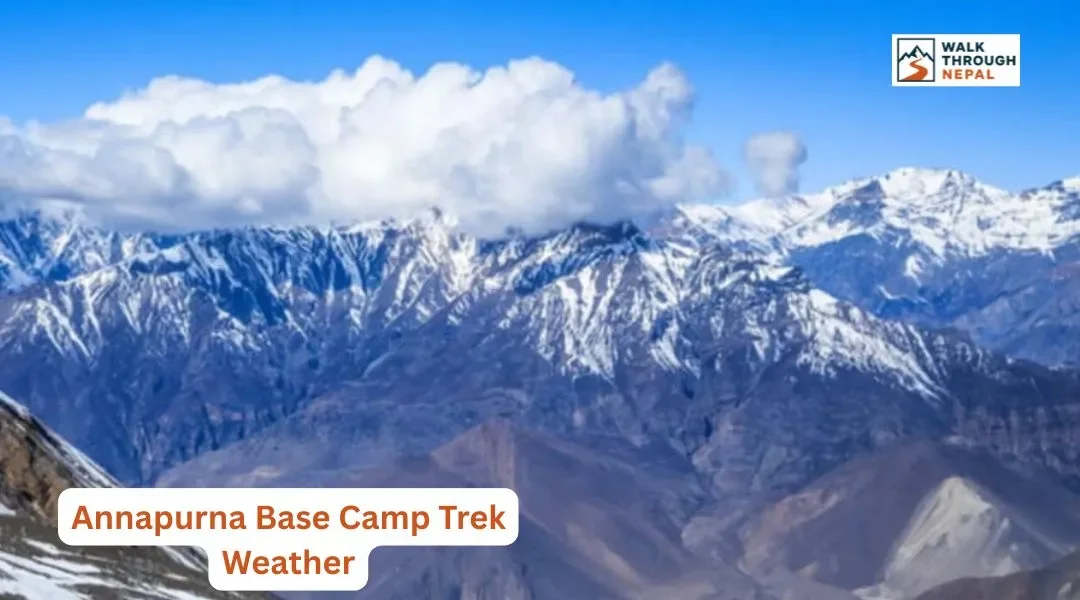
At Annapurna Base Camp, around 4,130 meters, expect cold, changeable alpine weather. Daytime highs typically hover near or just above freezing in shoulder seasons, while nights fall well below zero. Mornings are usually clearest; clouds often build after midday. Snow, wind and rapid shifts are all possible year-round.
The single most useful thing to accept early is that mountain weather is variable. Two travellers standing at ABC a week apart can have completely different experiences, one under blazing sun with the full Sanctuary rim glowing, the other in a whiteout with driving snow.
Days and nights differ sharply. Once the sun clears the ridgeline the temperature climbs quickly, but the moment it drops behind Annapurna South the cold arrives fast. Wind funnels down the valley, and even a clear night at ABC feels bitter. Cloud cover is common in the afternoons across most seasons, which is why guides push for early starts on your summit-day walk from Machapuchare Base Camp.
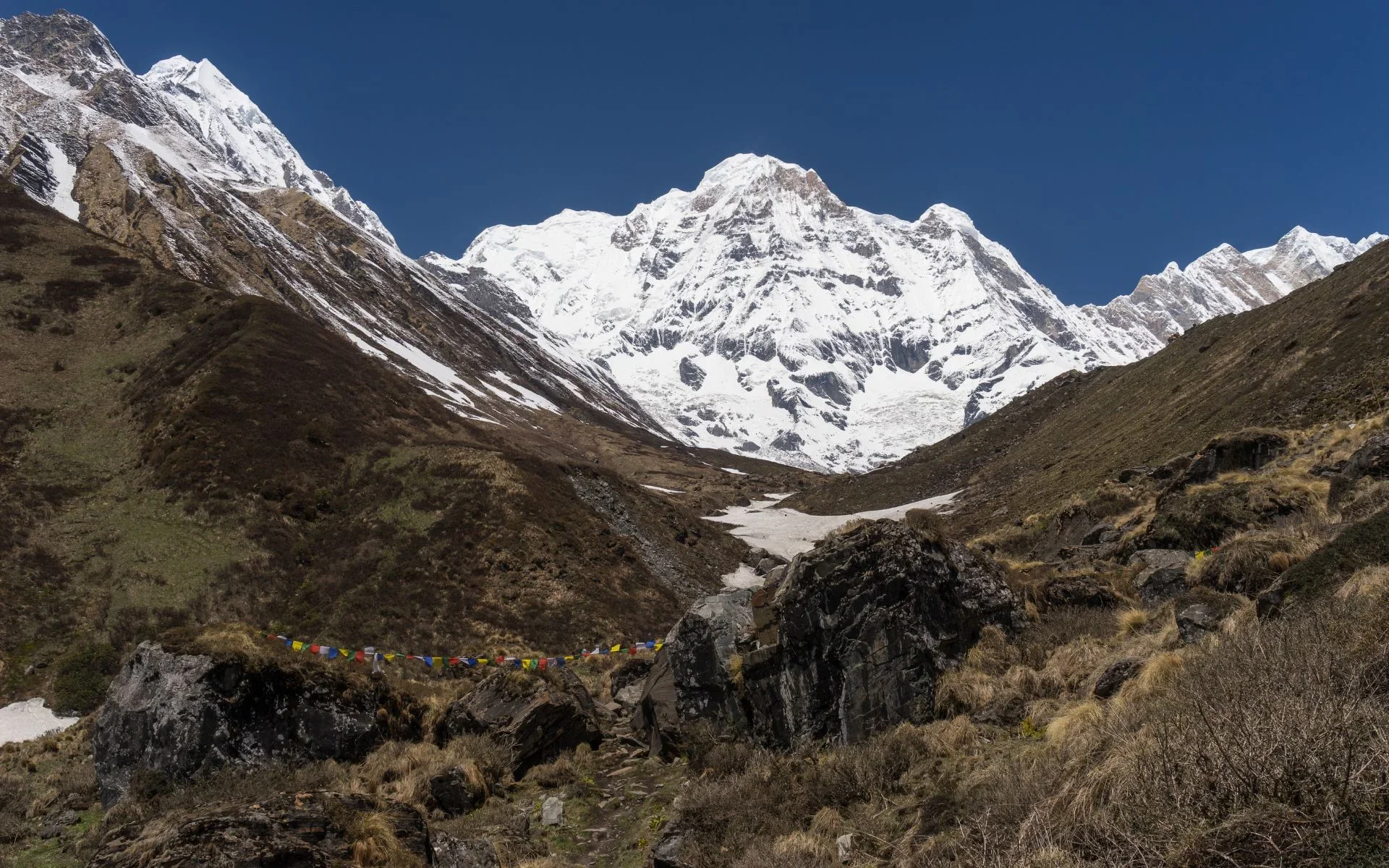
Annapurna Base Camp Weather by Season
The four seasons on this trek behave very differently. Spring and autumn give the most balanced conditions; monsoon is wet and green; winter is cold and snowy. None of them are "good" or "bad" in absolute terms, they simply demand different preparation.
Spring (March to May)
Spring brings warming temperatures, generally stable skies and the famous rhododendron blooms across the lower and middle trail. Lower elevations feel mild to warm, while ABC stays cold with sub-freezing nights. Afternoon haze and occasional pre-monsoon showers increase into May, and old winter snow may still cover the upper approach in March.
Early spring can still be genuinely cold up high, and you may cross snow patches on the steps above Deurali and near Machapuchare Base Camp. By April the forests below Chhomrong are alive with red and pink rhododendron, and this is one of the prettiest windows on the whole route. As May arrives, the air grows warmer and hazier, and short thunderstorms in the afternoon become more frequent as the pre-monsoon builds. Trail conditions are usually solid, though wet stone steps demand care after any rain.
Monsoon (June to August)
Monsoon delivers Nepal's heaviest rainfall, with wet, cloudy and humid conditions dominating the ABC trail. Expect frequent afternoon and overnight rain, leeches in the lower forests, slippery stone steps, reduced visibility and a higher risk of landslides and road disruption. Unlike Upper Mustang, ABC does not sit in a rain shadow and receives the full monsoon.
This is the season most trekkers are steered away from, and the reasons are practical rather than dramatic. The rain itself is warm and rarely constant all day, but the cumulative effect matters. Trails through the forest turn muddy and slick, leeches appear in damp sections below Bamboo and Dovan, and the mountains often vanish behind cloud for days. The road approach from Pokhara to trailheads like Nayapul or Kimche is more prone to landslides and delays.
That said, the landscape is at its most lush and green, waterfalls run full, and the trail is quiet. Clear windows do appear, often in the early morning, and dedicated monsoon trekkers who accept the trade-offs and build in extra buffer days can still reach ABC. If dry summer trekking is your goal, the true rain-shadow regions of Upper Mustang and Upper Dolpo are the better choice, but ABC is not one of them.
Autumn (September to November)
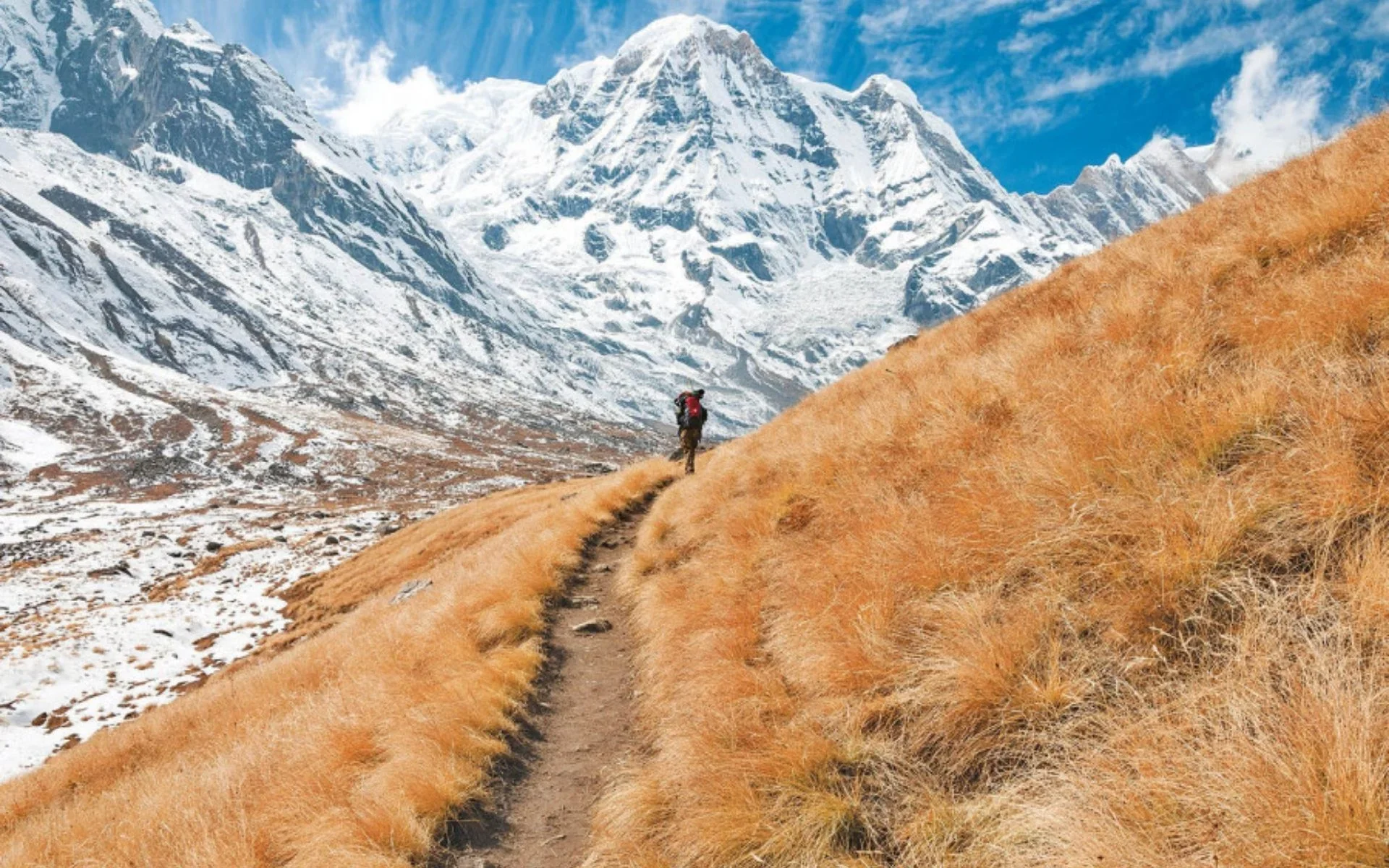
Autumn is widely regarded as the most reliable season for ABC. As the monsoon retreats through September, the air clears, humidity drops and visibility becomes excellent. October and November bring crisp, stable days with comfortable walking temperatures lower down and cold but manageable nights up high. This is also the busiest period.
Post-monsoon skies are typically the clearest of the year, which makes the Annapurna Sanctuary spectacular. Early September can still carry the tail of the monsoon with occasional showers, but by October conditions settle into a dependable rhythm: clear mornings, some afternoon cloud, cold evenings. November grows noticeably colder, especially at ABC, hinting at the winter ahead. Because so many people trek in this window, lodges in the upper valley fill quickly, so book ahead.
Winter (December to February)
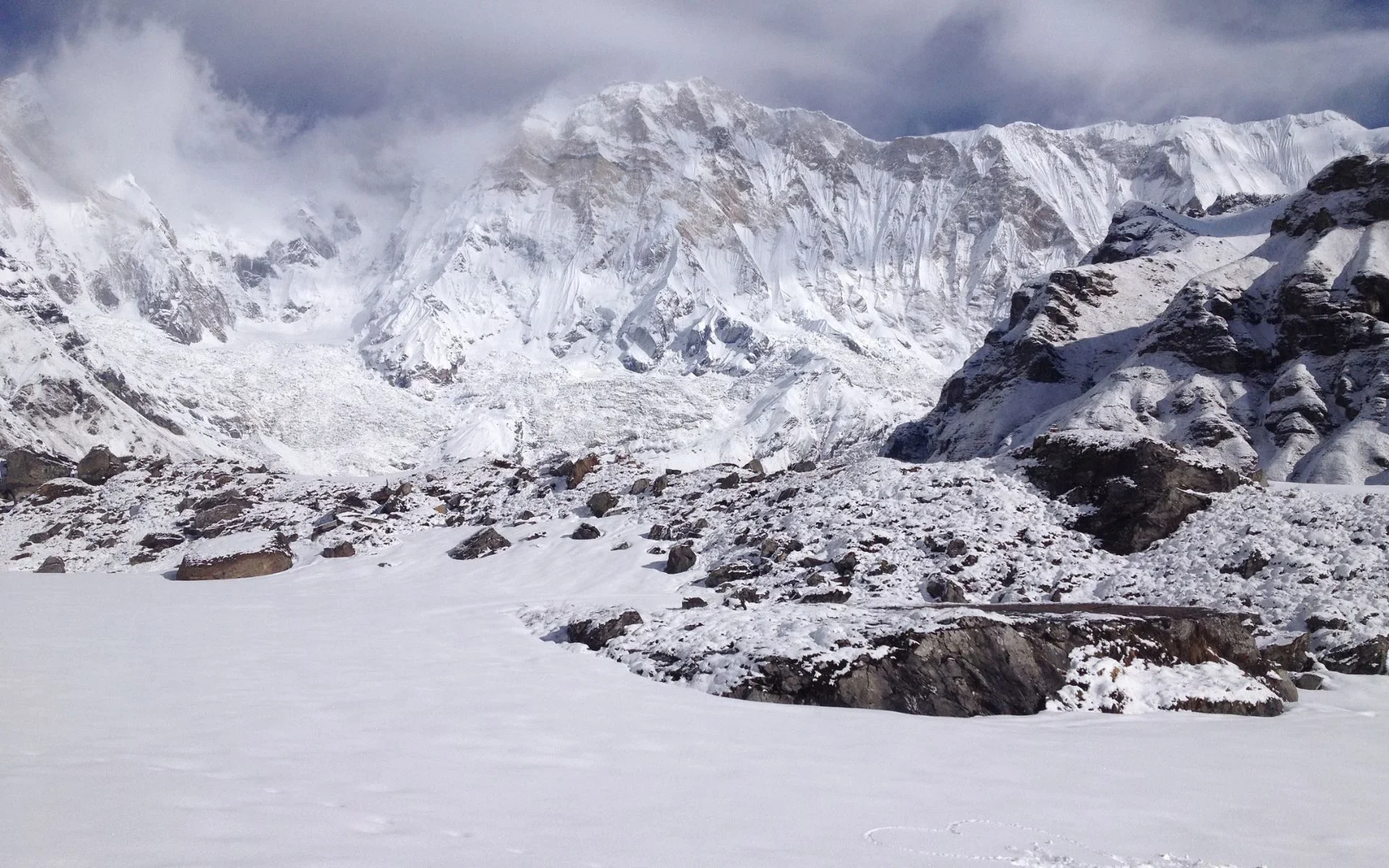
Winter brings the coldest temperatures and the greatest chance of snow. Lower sections remain walkable and often sunny, but ABC and the upper Modi Khola valley can be deep in snow, with overnight lows around minus 15 Celsius or colder. Days are short, some upper lodges may close, and heavy snowfall can temporarily block the final approach.
The difficulty in winter comes from cold and snow rather than the trail being harder to follow. Freezing nights demand a properly rated sleeping bag and full insulation, and the shorter daylight means earlier starts and finishes. After fresh snowfall the section above Deurali toward Machapuchare Base Camp and ABC carries genuine avalanche risk, and guides may hold trekkers back or reroute until conditions stabilise. On clear, calm winter days, though, the Sanctuary under fresh snow is stunningly beautiful and almost empty.
Annapurna Base Camp Temperature by Month
The table below gives a general picture of conditions by month across the elevation range of the trek. Treat these as typical patterns rather than exact forecasts, since Himalayan weather varies year to year and hour to hour. Lower trail refers to villages around 1,100 to 2,100 meters, and higher elevations refer to Deurali up to ABC at 4,130 meters.
Month | Lower Trail | Higher Elevations | Rain / Snow | General Conditions |
January | Cool, often sunny days, cold nights | Very cold, well below freezing at night | Snow likely up high | Cold, clear spells, snow risk |
February | Cool, milder than January | Cold, sub-freezing nights | Snow possible | Cold but improving, clearer skies |
March | Mild, pleasant | Cold, lingering snow up high | Occasional snow, light showers | Warming, rhododendrons begin |
April | Warm days | Cold nights, milder days | Occasional showers | Popular, blooms, mostly stable |
May | Warm to hot lower down | Cold nights | Afternoon storms increasing | Hazier, pre-monsoon building |
June | Warm, humid | Cold, wet | Heavy rain begins | Monsoon onset, cloud, leeches |
July | Warm, very humid | Wet, chilly | Heaviest rain | Wettest month, low visibility |
August | Warm, humid | Wet, chilly | Heavy rain continues | Green, wet, landslide risk |
September | Warm, clearing late | Cold nights | Rain easing through month | Monsoon retreating, greening clears |
October | Comfortable | Cold nights, crisp days | Mostly dry | Clearest views, busy, stable |
November | Cool | Cold, sub-freezing nights | Mostly dry, early snow possible | Clear, cold, excellent visibility |
December | Cool, sunny days | Very cold, snow likely | Snow up high | Cold, quiet, snow risk |
How Weather Changes With Altitude
On the ABC trek, weather is driven as much by altitude as by season. As you climb from roughly 1,100 meters toward 4,130 meters, temperatures drop steadily, conditions shift faster, wind exposure increases and snow becomes far more likely. The weather at your trailhead tells you almost nothing about what you will meet at ABC.
A rough rule is that air cools by several degrees for every 1,000 meters of ascent, but the real experience is starker because of wind and the loss of sunlight behind high ridges. You might leave Chhomrong in warm sunshine and arrive at Deurali in cold cloud the same afternoon. Nighttime temperatures become the real challenge higher up, and this is exactly why layering and a warm sleeping system matter so much.
Because your body is also adjusting to thinner air on this climb, weather and altitude planning go hand in hand. For elevation profiles and acclimatisation guidance, see our Annapurna Base Camp trek altitude guide, which explains the ascent in detail. You can also trace the full profile on our ABC trek map and route page.
Does It Snow at Annapurna Base Camp?
Yes, snow is common at Annapurna Base Camp. It is most likely in winter (December to February) and possible in early spring and late autumn. Fresh snow can also fall after storms in any season above roughly 3,000 meters. Season increases or decreases the odds, but it never guarantees a snow-free or snow-certain trail.
Recent snowfall changes the trek significantly. The steep steps and traverses between Deurali, Machapuchare Base Camp and ABC become slower and, in avalanche-prone conditions, temporarily unsafe. This is one of the strongest reasons to trek with an experienced local guide who can assess whether the upper valley is safe to enter after a fresh dump.
Does Rain Make the ABC Trek Difficult?
Rain rarely makes the ABC trek impossible, but it changes the difficulty. Wet stone steps and muddy forest sections become slippery, visibility drops, clothing and boots get soaked, and steep slopes carry higher landslide risk. Rain can also disrupt the road approach from Pokhara, delaying your start or return.
The practical takeaway is that wet conditions slow you down and demand more care rather than turning the trek into a technical challenge. Good waterproofs, trekking poles and a sensible pace handle most of it. For a fuller picture of what makes the route demanding, read our guide on how difficult the Annapurna Base Camp trek is.
What Should You Wear for ABC Weather?
Because ABC weather spans warm lowland days and freezing alpine nights, dress in layers you can add or remove quickly. The core principle is a moisture-wicking base layer, an insulating mid layer such as fleece or down, and a waterproof, windproof outer shell, plus warm accessories like a hat, gloves and a buff.
We keep this section deliberately short because gear choice deserves its own checklist. For the complete list covering every season, see our Annapurna Base Camp trek packing checklist. In short: weather tells you what conditions to expect, and the packing list tells you exactly what to bring for them.
Can Weather Affect the Annapurna Base Camp Trek?
Yes, weather influences almost every practical part of the trek. It affects your daily pace, mountain visibility, trail conditions, road transport to and from Pokhara, itinerary flexibility and safety decisions. Fresh snow, heavy rain or thick cloud can all prompt a schedule change, which is why a well-planned trek builds in buffer days.
A realistic itinerary assumes weather will vary rather than expecting identical days. That means allowing a spare day for delays, choosing early starts for clear mornings, and being ready to wait out a storm rather than push into risk. Our verified guides plan with exactly this flexibility in mind.
Which Season Has the Best Weather for ABC Trek?
Spring (March to May) and autumn (September to November) generally offer the most favourable combination of temperature, rainfall and visibility for the ABC trek. Autumn is usually the clearest and most stable, while spring adds warmth and blooming forests. The ideal choice depends on what you value most: views, weather, warmth or fewer crowds.
This is only a short answer on purpose. The full decision-making comparison, including crowds, permits and trade-offs, lives in our dedicated best time for Annapurna Base Camp trek guide.
Weather vs Best Time: What Is the Difference?
These two topics answer different questions. This weather guide tells you what conditions to expect, the temperature, rain and snow you will actually meet on the trail. The best time guide helps you decide which period to choose based on those conditions plus crowds, cost and personal priorities.
Think of it this way: read the weather page to understand the mountain, then read the best time page to pick your dates. Together they give you a clear, honest expectation of what your ABC trek will feel like.
Under current 2026 rules, licensed guides are strongly enforced across Nepal's trekking regions, and in a place where weather turns fast, that requirement works in your favour. A good guide reads snow, cloud and landslide risk daily and adjusts your plan to keep you safe and moving.
Frequently Asked Question
How cold does it get at Annapurna Base Camp?
At 4,130 meters, daytime temperatures at ABC often sit near freezing to a few degrees above in shoulder seasons, while nights commonly drop well below freezing. In winter, overnight lows can fall to around minus 15 Celsius or colder, especially with wind chill.
Does it snow at Annapurna Base Camp?
Yes. Snow is common at ABC and Machapuchare Base Camp in winter (December to February) and possible in early spring and late autumn. Fresh snow can appear after storms in any season above roughly 3,000 meters, so season alone never guarantees clear, snow-free trails.
What is the wettest month at Annapurna Base Camp?
July is typically the wettest month, sitting in the heart of the monsoon (June to August). Expect heavy afternoon rain, saturated trails, leeches at lower elevations and frequent cloud cover that hides the mountains for days at a time.
Which season has the clearest mountain views at ABC?
Autumn (late September to November) usually offers the clearest, most stable skies as monsoon moisture clears. Spring is also good but hazier late in the season. Views vary daily, so allowing buffer days improves your odds of clear mornings at ABC.
Can you trek to Annapurna Base Camp in monsoon?
It is possible but challenging. Monsoon brings heavy rain, slippery trails, leeches, reduced visibility and higher landslide and road-disruption risk. Unlike Upper Mustang, ABC does not sit in a rain shadow, so it receives full monsoon rainfall.
Does rain make the ABC trek dangerous?
Rain rarely makes the trek dangerous by itself, but it makes stone steps and mud slippery, reduces visibility and raises landslide risk on steep sections. Wet weather also affects road access to trailheads, so build flexibility into your itinerary.
What temperature should I prepare for at ABC?
Plan for a wide range: warm, humid lower forests possibly above 20 Celsius by day, and freezing or sub-freezing nights at ABC around 4,130 meters. A layered clothing system covering both extremes is essential across every season.
Why does the weather change so much on the ABC trek?
The trail climbs from subtropical forest near 1,000 meters to alpine terrain at 4,130 meters. Temperature drops with altitude, mountain weather shifts quickly, and afternoons often cloud over. The conditions at the trailhead are rarely the conditions at ABC.
Is winter trekking to ABC possible?
Yes, but it demands cold-weather gear and awareness of snow and avalanche risk on the final approach through the Modi Khola valley. Days are short, nights are bitter, and heavy snowfall can temporarily close the upper trail. Hiring an experienced guide is strongly advised.
Do I need a guide because of weather conditions?
Under current 2026 rules, licensed guides are strongly enforced in Nepal's trekking regions, and this benefits trekkers in variable weather. Guides read avalanche and landslide risk, adjust pacing and make safety calls when conditions turn quickly at altitude.